Azerbaijan
Western Asia · 294 destinations across 67 regions
Photography coming soonWhy visit?
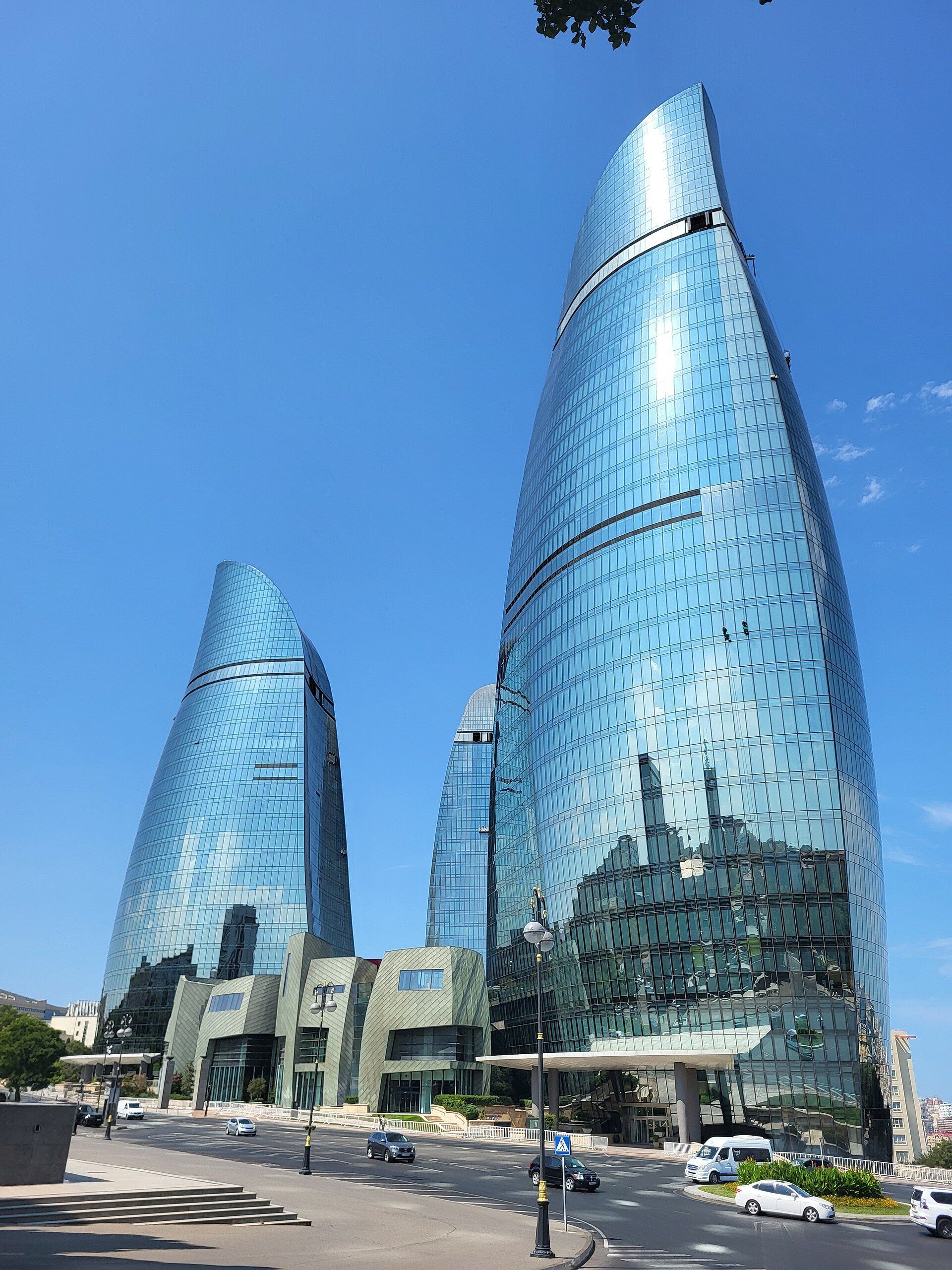
Azerbaijan is where the Caucasus meets the Caspian, a country that wears its contrasts openly: medieval caravanserais and flame-shaped glass towers in Baku, semi-desert mud volcanoes within an hour of the capital, and snow-fed alpine villages in the high north. Once a Silk Road crossroads and later a Soviet oil powerhouse, it has reinvented itself over two decades of petrodollar spending into one of the region's most polished — and most affordable — destinations for travelers willing to look beyond the usual European itinerary.
The appeal is range. In a single trip you can wander the UNESCO-listed walled Old City (Icherisheher) of Baku, soak in the cosmopolitan boardwalk culture along the Caspian, drive into the Greater Caucasus to villages like Xinaliq perched above 2,000 m, and taste a cuisine — plov, dolma, qutab, and endless tea — that blends Turkic, Persian, and Russian influence. English is patchy outside Baku, but Azerbaijanis are famously hospitable, and a little Russian or Azerbaijani goes a long way.
It suits independent travelers, culture-and-history seekers, road-trippers, and anyone wanting Silk Road atmosphere without Western-Europe prices. It is less ideal for travelers who need seamless English everywhere or who want beach-resort polish — the Caspian coast is industrial more than idyllic.
What is the landscape and climate like?
Azerbaijan sits on the western shore of the Caspian Sea, bordered by Russia (Dagestan) to the north, Georgia to the northwest, Armenia to the west, and Iran to the south. The exclave of Nakhchivan is separated from the main country by Armenian territory. The terrain divides roughly into the Greater Caucasus mountains in the north (peaks above 4,000 m, including Bazardüzü, the country's highest), the Lesser Caucasus in the west, the broad central Kura-Aras lowland, and the arid Absheron Peninsula around Baku.
Azerbaijan claims an unusually wide spread of climate zones. The lowlands and Caspian coast are semi-arid to dry-subtropical — hot, sometimes humid summers and mild winters. The Lankaran region in the far southeast is humid subtropical, lush with tea plantations and citrus. The mountains are alpine, cold and snowy in winter, cool in summer. Baku is notoriously windy (its name is often glossed as "city of winds"), with strong gusts off the Caspian year-round.
Tell us your dates and we'll tailor your Azerbaijan trip around them.
WhatsAppWhen is the best time to visit?
Late spring (April–June) and autumn (September–October) are the sweet spots nationwide: warm but not scorching in the lowlands, and the mountains are accessible and green. Summer (July–August) is hot and humid in Baku and the lowlands but is the only reliable window for high-mountain villages like Xinaliq and Laza. Winter (December–March) brings skiing at Shahdag and Tufandag resorts in the north, while Baku stays cool, grey, and windy.
Festivals worth planning around: Novruz (Persian/Zoroastrian new year, around 20–21 March) is the country's biggest celebration, with bonfires, sweets, and public festivities. Baku also hosts the Azerbaijan Grand Prix (Formula 1) on its street circuit, typically in spring or early summer — book accommodation far ahead, as prices spike.
Do you need a visa?
Most visitors need a visa, but Azerbaijan runs a convenient ASAN Visa e-visa system (evisa.gov.az) that issues a single-entry 30-day visa to citizens of a long list of countries, usually within three business days. Citizens of CIS countries (and Turkey, among others) often enter visa-free; some nationalities can use express e-visa processing for a higher fee.
A critical entry note specific to Azerbaijan: travelers with evidence of a visit to the occupied territories of Nagorno-Karabakh (or who have entered via Armenia into that region) may be denied entry and blacklisted. There is no open land border between Azerbaijan and Armenia.
Want us to time your trip around a festival? We'll handle it.
WhatsAppHow much does it cost?
The currency is the Azerbaijan Manat (AZN), divided into 100 qəpik. The manat is relatively stable and roughly on par with the US dollar in recent years (commonly around 1.7 AZN ≈ 1 USD).
Typical daily budgets:
- Budget:
40–70 AZN/day ($25–40) — hostels/guesthouses, plov and qutab from local cafés, public transport and shared taxis. - Mid-range:
120–250 AZN/day ($70–150) — comfortable 3-star hotels, sit-down restaurants, a private driver for a day trip. - Luxury: 500+ AZN/day (~$300+) — Baku's international five-star hotels, fine dining, private guides.
Cards (Visa/Mastercard) are widely accepted in Baku hotels, malls, and restaurants; ATMs are plentiful in cities but scarce in mountain villages, so carry cash for rural travel. Tipping is appreciated but not obligatory — rounding up or ~5–10% in restaurants is normal; some upscale venues add a service charge.
How do you get there?
The main gateway is Heydar Aliyev International Airport (GYD) in Baku, a modern hub served by the national carrier AZAL (Azerbaijan Airlines) plus Turkish Airlines, Gulf carriers, low-cost Buta Airways, and seasonal European routes. Secondary international airports include Ganja (KVD), Nakhchivan (NAJ), and Lankaran (LLK).
Key land borders: with Georgia (the Red Bridge / Lagodekhi and Balakən crossings are the busiest and easiest, with regular marshrutkas and trains between Baku and Tbilisi) and with Russia (Dagestan) in the north and Iran in the south (Astara). The Baku–Tbilisi night train is a popular, comfortable overland option.
The Caspian is technically crossable by cargo ferry from the new Baku International Sea Trade Port (at Alat, south of Baku) to Aktau (Kazakhstan) or Turkmenbashi (Turkmenistan), but schedules are erratic and cargo-prioritized — only for adventurous travelers with flexible timing.
We handle the bookings and budgeting — you just travel.
WhatsAppHow do you get around?
Distances are manageable and the road network from Baku has improved dramatically. Options:
- Domestic flights: AZAL/Buta connect Baku to Ganja, Nakhchivan, and Lankaran — useful mainly for Nakhchivan, which is otherwise reachable only via Iran or by air.
- Rail: Azerbaijan Railways runs intercity trains (Baku–Ganja, Baku–Sheki area via Laki, and the international Baku–Tbilisi service). Comfortable but slower than driving.
- Intercity buses & marshrutkas: Frequent and cheap from Baku's main bus station (Baku International Bus Terminal) to Sheki, Ganja, Quba, Lankaran, etc.
- Taxis & rideshare: In Baku, use the apps Bolt and Uber (and local Baku Taxi/9000) to avoid haggling. The distinctive purple "London-style" Baku taxis run on meters. Outside cities, hiring a driver for the day is common and affordable.
Common pitfalls: unmetered taxis quoting inflated fares to obvious tourists (use an app), and overcharging at airport taxi ranks. Public transport in Baku uses the rechargeable BakiKart for the metro and buses.
What are the local customs?
Azerbaijan is a secular, majority-Shia-Muslim country with a relaxed, hospitable culture. Greetings are warm — a handshake among men, and tea (çay) is offered constantly; accepting it is good manners. Dress in Baku is modern and cosmopolitan, but modest dress (covered shoulders and knees) is expected at mosques, where women should bring a headscarf and everyone removes shoes.
Hospitality can be insistent: hosts may refuse your offer to pay or pile food on your plate — gracious acceptance is the norm. Photography is generally fine, but avoid photographing military or government/border installations. Politics is sensitive: the conflict with Armenia over Nagorno-Karabakh is a deeply emotional subject — let locals lead any such conversation. Tipping etiquette is light (see Money & Costs). Alcohol is legal and openly available.
Prefer to talk it through? We're a WhatsApp message away.
WhatsAppIs it safe?
Azerbaijan is generally safe for travelers, with low rates of violent crime; petty theft and taxi overcharging are the main day-to-day concerns. The standout caution is geopolitical: the regions in and around Nagorno-Karabakh and the border zones with Armenia have been the site of conflict, and access is restricted or prohibited. Do not attempt to travel there independently.
Natural hazards include mountain weather (sudden cold, snow, and rough roads in the high Caucasus) and summer heat in the lowlands. Tap water in Baku is generally chlorinated but most visitors drink bottled water, especially in rural areas. No special vaccinations are required for most travelers, but routine immunizations should be up to date.
Which regions stand out?
- Absheron Peninsula & Baku — the capital, Caspian coast, oil-era heritage, the fire-temple of Ateshgah, and Yanar Dag (the "burning mountain").
- Greater Caucasus North (Quba–Qusar–Khinalug) — dramatic mountain villages, Shahdag ski resort, and the ancient settlement of Xinaliq.
- Sheki & the Northwest — Silk Road caravanserais, the ornate Sheki Khan's Palace, forested foothills, and traditional sweets (halva).
- Ganja & the Center-West — the country's second city, with classical heritage and gateways to Göygöl National Park's alpine lakes.
- Lankaran & the Southeast (Talysh) — humid subtropical lowlands, tea and citrus plantations, Hirkan forests, and Caspian beaches.
- Gobustan & the Semi-Desert South — UNESCO-listed prehistoric rock art and a field of bubbling mud volcanoes.
- Nakhchivan (exclave) — a separate, arid region with the Momine Khatun mausoleum and salt-cave health tourism, reachable mainly by air.
Tell us your dates and we'll tailor your Azerbaijan trip around them.
WhatsAppWhere should you go?
- Baku — the cosmopolitan capital: the walled Old City (Icherisheher), the Flame Towers, Heydar Aliyev Center, and the Caspian boardwalk (Bulvar).
- Sheki — a charming Silk Road town famed for its painted Khan's Palace and caravanserai-turned-hotel.
- Gobustan — open-air museum of Stone Age petroglyphs, plus nearby mud volcanoes.
- Quba — northern town and base for the Caucasus, with the unique Krasnaya Sloboda (Red Town), a historic Mountain Jewish community.
- Xinaliq (Khinalug) — one of Europe's highest and oldest continuously inhabited villages, with its own language.
- Ganja — historic second city, birthplace of the poet Nizami, with Soviet and classical architecture.
- Lankaran — subtropical southeastern town near tea plantations and Hirkan National Park.
- Göygöl — a stunning emerald alpine lake formed by a 12th-century earthquake, in a national park near Ganja.
- Ateshgah & Yanar Dag — the Zoroastrian/Hindu fire temple and the perpetually burning hillside, both near Baku.
- Shahdag & Tufandag — the country's modern winter-sports resorts in the Greater Caucasus.
- Naftalan — a spa town famous (and unusual) for its therapeutic crude-oil baths.
- Nakhchivan City — capital of the exclave, with the landmark Momine Khatun mausoleum.
Regions & States
Azerbaijan has 67 regions with guides — pick one to drill into its destinations.
Abseron
8 destinations
Agcabedi
4 destinations
Agdam
4 destinations
Agdas
4 destinations
Agstafa
6 destinations
Agsu
4 destinations
Astara
6 destinations
Bakı
12 destinations
Balaken
4 destinations
Beyləqan
3 destinations
Bərdə
4 destinations
Biləsuvar
4 destinations
Cəbrayıl
4 destinations
Cəlilabad
4 destinations
Daşkəsən
5 destinations
Füzuli
4 destinations
Gədəbəy
4 destinations
Gəncə
1 destination
Goranboy
4 destinations
Göyçay
4 destinations
Göygöl
5 destinations
Hacıqabul
4 destinations
İmişli
4 destinations
İsmayıllı
6 destinations
Kəlbəcər
6 destinations
Kürdəmir
4 destinations
Laçın
4 destinations
Lerik
5 destinations
Lənkəran
6 destinations
Masallı
4 destinations
Mingəçevir
1 destination
Naftalan
1 destination
Naxçıvan
9 destinations
Neftçala
4 destinations
Oğuz
5 destinations
Qax
5 destinations
Qazax
5 destinations
Qəbələ
6 destinations
Qobustan
4 destinations
Quba
5 destinations
Qubadlı
4 destinations
Qusar
5 destinations
Saatlı
4 destinations
Sabirabad
4 destinations
Şabran
4 destinations
Salyan
4 destinations
Şamaxı
6 destinations
Samux
4 destinations
Şəki
6 destinations
Şəmkir
5 destinations
Sirvan
1 destination
Siyəzən
4 destinations
Sumqayıt
1 destination
Şuşa
3 destinations
Tərtər
4 destinations
Tovuz
5 destinations
Ucar
4 destinations
Xaçmaz
4 destinations
Xankəndi
1 destination
Xızı
5 destinations
Xocalı
4 destinations
Xocavənd
4 destinations
Yardımlı
4 destinations
Yevlax
5 destinations
Zaqatala
5 destinations
Zəngilan
4 destinations
Zərdab
4 destinations
Not sure where to start in Azerbaijan? Tell us how you like to travel and we'll shape the route.
WhatsAppTop Destinations
The places first-time and returning travellers ask for most.
Adigun
Adigun is a village in Saatly Rayon, south-central Azerbaijan…
Agalikand
Agalikand is a small village in the Biləsuvar district of…
Agdaban
Agdaban is a village in the Kəlbəcər District of western Azerbaijan…
Aggol National Park
Ağgöl National Park (Ağgöl Milli Parkı) is a protected wetland…
Aghali
Aghali is a village in the Zəngilan District of southern Azerbaijan…
Aghdam
Aghdam (Ağdam) is a city in southern Azerbaijan that was completely…
Aghdash
Aghdash (Ağdaş) is the administrative centre of Ağdaş Rayon in…
Aghjabadi
Aghjabadi (Ağcabədi) is a mid-sized city in central Azerbaijan and…
Aghsu
Aghsu (Ağsu) is the administrative centre of Ağsu Rayon in central…
Agstafa
Agstafa (Ağstafa) is the administrative centre of Ağstafa Rayon in…
Aliabad
Aliabad is a village in the Zaqatala District of north-western…
Alkhanli
Alxanlı (also transliterated Alkhanli, Alikhanly) is a village and…

Contact Us
Get in touch with us.
Get in touch
Contact Us
Tell us where you'd like to go and how you like to travel. A real Tripcuro planner — not a bot — will craft an itinerary around you.
- Personalised, hassle-free planning end-to-end
- Transparent pricing, no hidden costs
- 24/7 support for complete peace of mind