
Heilongjiang Sheng
China · Province · 23 destinations with guides
Photography coming soonWhy visit?
Heilongjiang (黑龙江省) is China's northernmost province, a vast frontier of dark forests, frozen rivers, and Russian-influenced cities pressed up against the Siberian border. Named for the Heilong Jiang — the "Black Dragon River" the rest of the world knows as the Amur — the province sprawls across some 454,000 square kilometres of taiga, wetland, and black-soil farmland, with the Lesser Khingan and Zhangguangcai mountain ranges framing a broad central plain. Winters here are the coldest in China, plunging below −30 °C in January and creating the conditions for the country's most spectacular ice and snow tourism.
The province's character is shaped by three forces: the long Russian presence that gave Harbin its onion domes and rye-bread bakeries, the Manchu and Hezhen heritage of its eastern river valleys, and the rugged Northeast Chinese (Dongbei) culture of plain-spoken farmers, hearty stews, and baijiu-fuelled hospitality. Heavy industry built much of modern Heilongjiang — the Daqing oilfields, the railway hubs, the timber mills — but the post-industrial province now leans hard into tourism: ice festivals, ski resorts, aurora hunting in Mohe, wetland birding at Zhalong, and tiger-watching outside Harbin.
For travellers, Heilongjiang is a study in extremes. Summers are surprisingly mild and green, with long days perfect for forest park hiking and river cruises along the Russian border. Winters transform the same landscape into a glittering, brutally cold playground where entire cities are carved from ice. Few Chinese provinces feel as distinct from the rest of the country.
When is the best time to visit?
Late December through February is the headline season. The Harbin International Ice and Snow Sculpture Festival officially opens 5 January and runs until the ice melts (typically late February), but the ice city is fully illuminated from around 24 December. Expect daytime highs of −15 °C and nights below −25 °C — pack genuine expedition-grade gear, not a city overcoat. This is also the only realistic window for skiing at Yabuli (December–March) and for chasing the aurora borealis in Mohe, where Beiji Village near the Arctic Circle gives China's best northern-lights odds, particularly around the winter solstice.
June to early September is the secret shoulder. Temperatures sit at a pleasant 20–28 °C, the wetlands at Zhalong fill with red-crowned cranes raising chicks, and the Heilongjiang River opens for cruises out of Heihe and Mohe. Late August brings the Harbin Beer Festival, a legacy of the city's century-old brewing tradition. Avoid May (dust storms, mud season as the ground thaws) and late October to early December (cold but no snow yet — the worst of both worlds).
Tell us your dates and we'll shape a Heilongjiang Sheng route around them.
WhatsAppHow do you get around?
Harbin Taiping International Airport (HRB) is the primary gateway, with regional flights into Mudanjiang Hailang (MDG), Mohe Gulian (OHE), Qiqihar Sanjiazi (NDG), Jiamusi Dongjiao (JMU), and Heihe Aihui (HEK). Mohe is a six-hour flight from Harbin via Beijing or a 14-hour direct overnight train — the train is the better story.
The high-speed rail network is the backbone for southern and central Heilongjiang. The Harbin–Qiqihar HSR covers 286 km in about 85 minutes; Harbin–Mudanjiang is roughly 90 minutes; Harbin–Yichun is around 2 hours. North of Yichun the line ends and conventional sleeper trains take over: Harbin to Mohe is roughly 1,200 km and runs overnight, an experience worth doing once for the dawn arrival in the taiga.
For destinations off the rail spine — Wudalianchi, Zhalong, Jingpohu, Yabuli — long-distance buses leave from Harbin's Nangang or Sankeshu coach stations, typically ¥80–¥180 one-way. Many resorts also run dedicated shuttles in winter (Yabuli's ski train and bus packages are bookable through Harbin agencies). In-city, Harbin has a small metro (lines 1–3) and ubiquitous Didi ride-hailing; expect ¥15–¥40 for cross-town rides. Self-driving is feasible in summer but inadvisable in winter — black ice and remote stretches without fuel.
Where should you go?
- Harbin — provincial capital and the heart of the ice festival, with Russian Orthodox cathedrals, Central Avenue's stone-paved promenade, and the Songhua River as its frozen winter stage.
- Mohe — China's northernmost county and the country's only realistic spot for aurora viewing; Beiji Village is the literal end of the road.
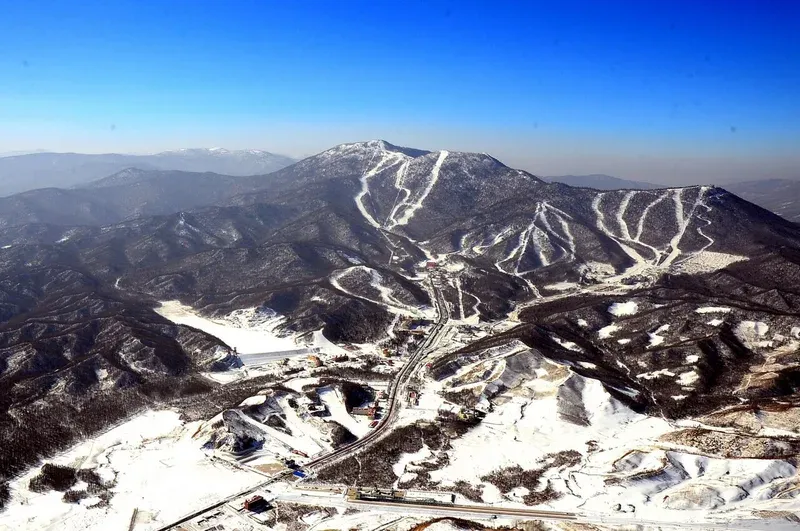
- Yabuli — China's premier ski resort, host of the 1996 Asian Winter Games, with around 30 runs and a vertical drop of roughly 900 m.
- Mudanjiang — gateway to eastern Heilongjiang and the launch point for Jingpohu (Mirror Lake) and the underground waterworld of nearby volcanic plateaus.
- Heihe — Amur River port directly across from Russian Blagoveshchensk, the most accessible Sino-Russian border crossing.
- Qiqihar — old railway town and base for Zhalong National Nature Reserve, China's most important red-crowned crane wetland.
- Yichun — "forest capital" deep in the Lesser Khingan range, a summer escape of boreal hiking and timber-town heritage.
- Daqing — oilfield city with surprisingly good wetland and lake parks alongside its industrial heritage museums.
- Jiamusi — Sanjiang Plain hub and access point to Wofoshan ski area and Hezhen ethnic minority villages on the Russian border.
- Jixi — coal city with access to Xingkai (Khanka) Lake on the Russian border, China's largest border lake.
- Suifenhe — duty-free border town with heavy Russian foot traffic and turn-of-the-century railway architecture.
- Wudalianchi National Forest Park — UNESCO Global Geopark of five linked volcanic lakes and mineral springs that double as a working sanatorium.
- Jingpohu National Forest Park — long, narrow volcanic-dam lake known for tree-mirroring stillness and the Diaoshuilou waterfall.
- Zhalong National Nature Reserve — 2,100 km² of reed wetland near Qiqihar, home to roughly 260 bird species including most of the world's wild red-crowned cranes.
- Ilan Boo (Yilan) — last region in China where Manchu is still spoken natively in a handful of villages along the Songhua.
Want the scenic legs and stays booked for you? Just ask.
WhatsAppWhat should you eat?
Heilongjiang sits firmly in the Dongbei (Northeastern) culinary tradition, with three forces shaping the table: long winters that demand preserved and pickled foods, Manchu hunting-and-foraging roots, and a century of Russian neighbours. The staple is wheat — flour-based pancakes, dumplings (jiaozi), and breads — rather than the rice that dominates southern China. Fresh raw vegetables appear more often here than anywhere else in the country, often as a zhanjiang cai platter of cucumber, scallion, and lettuce dipped in fermented soybean paste.
Don't leave without trying guo bao rou (锅包肉), the sweet-and-sour battered pork that Harbin claims as its invention; xiao ji dun mogu, chicken stewed slowly with hand-foraged hazel mushrooms; suan cai bai rou, sour-pickled cabbage with thin-sliced pork belly; and the Heilongjiang River fish banquet (得莫利炖鱼 / quan yu yan), where freshwater catches from the Amur — sturgeon, taimen, kaluga — are stewed whole with potatoes and noodles in a single iron pot. In Harbin, the Russian inheritance shows up as hong chang (红肠), a smoked garlic sausage sold at the Qiulin company shops on Central Avenue, alongside da lieba, dense brick-shaped Russian rye, and Modern (马迭尔) ice cream sticks eaten outdoors at −20 °C because the cold somehow makes them taste better. Expect a meal of dumplings and stew at a neighbourhood place to run ¥50–¥80 per person; a fish banquet at a riverside restaurant in Harbin or Mohe runs ¥200–¥400 per person.
Vegetarians will find Dongbei cuisine challenging — even "vegetable" dishes are often cooked with pork — but tofu, di san xian (potato, eggplant, and pepper), and the cold cucumber salads are reliable. Halal options are easier than expected thanks to the substantial Hui Muslim population in Harbin and Qiqihar.
What is the culture like?
The Harbin International Ice and Snow Sculpture Festival (officially 5 January – late February; soft opening late December) is the cultural anchor of the province and one of the world's four great winter festivals. It actually comprises three sites: the monumental Ice and Snow World on Sun Island, the Sun Island International Snow Sculpture Expo, and the lantern-lit ice sculptures of Zhaolin Park downtown. Entry to Ice and Snow World runs around ¥330 in peak season.
Beyond the ice, the Harbin Beer Festival (late August) celebrates the legacy of Harbin Brewery, founded by Russians in 1900 and still China's oldest. The Harbin Summer Music Concert (Ha Xia), held biennially in early August, draws orchestras and choirs to a city built around the violin and accordion. The Mohe Aurora Festival clusters around the summer solstice (21 June), the only date when Mohe sees true white nights, and shoulders into a winter aurora-viewing season. Smaller but worth knowing: Wudalianchi Drinking Water Festival at the start of the fifth lunar month, when locals descend on the volcanic mineral springs in a half-medical, half-festival ritual; and Hezhen ethnic gatherings in Tongjiang and Jiejinkou near Jiamusi, featuring the salmon-skin-clothed minority's fish-skin crafts and reindeer-bone music.
Local crafts to look for include Harbin Russian-style nesting dolls and amber from the trans-border trade, Hezhen fish-skin embroidery, and birch-bark goods from the Oroqen of the Greater Khingan range.
Travelling during a festival? We'll plan around the crowds.
WhatsAppWhat are the standout experiences?
Sleep on a Mohe sleeper train, then chase the aurora to Beiji Village. Board the K7039 from Harbin at dusk, wake to taiga and birch forests, and continue 90 minutes north by car to the Arctic Village stele marking China's geographical apex. Aurora odds peak around the winter solstice and during summer geomagnetic storms.
Walk Central Avenue (Zhongyang Dajie) in a blizzard. Harbin's 1.4-km cobblestone pedestrian street is lined with Art Nouveau and Baroque buildings dating from the Chinese Eastern Railway era. Eat a Modern ice cream stick on the move, duck into Huamei Café for borscht, and emerge onto the frozen Songhua to ride a horse-drawn sled.
Watch red-crowned cranes lift off at Zhalong. Twice-daily flight demonstrations (typically 9:30 and 14:30) at the reserve outside Qiqihar bring 30–50 cranes overhead at close range. Spring (April–May) and autumn (September–October) are the wild migration peaks; summer guarantees fledglings.
Ski a full week at Yabuli. Three connected mountains, the longest run at over 5 km, and a season running roughly mid-November to late March. Lift tickets run around ¥320–¥520 a day depending on resort sector; the Club Med at Yabuli is the easiest all-inclusive option for first-timers.
Cruise the Heilong Jiang from Heihe. Summer river cruises trace the Sino-Russian border with Blagoveshchensk visible across the water; some itineraries permit a day-trip into Russia for travellers with the right visa, while the simpler one-hour boat loops require only a Chinese ID or passport. Pair with a soak in the volcanic mineral springs of Wudalianchi a few hours south.
Top Destinations
Every destination in Heilongjiang Sheng with a guide — tap a place for the full guide.
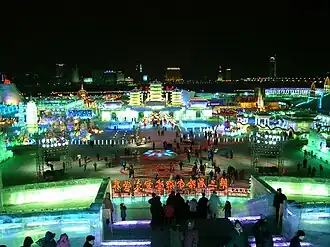
Acheng
Acheng (阿城) is a district of Harbin in southern Heilongjiang…

Daqing
Daqing (大庆, "Great Celebration") is an oil city on the Songnen Plain…

Harbin
Harbin (哈尔滨 HÄ?'Ä›rbÄ«n), capital of Heilongjiang Province, is…

Heihe
Heihe (黑河; HÄ“ihé) is a border city in the far north of Heilongjiang…
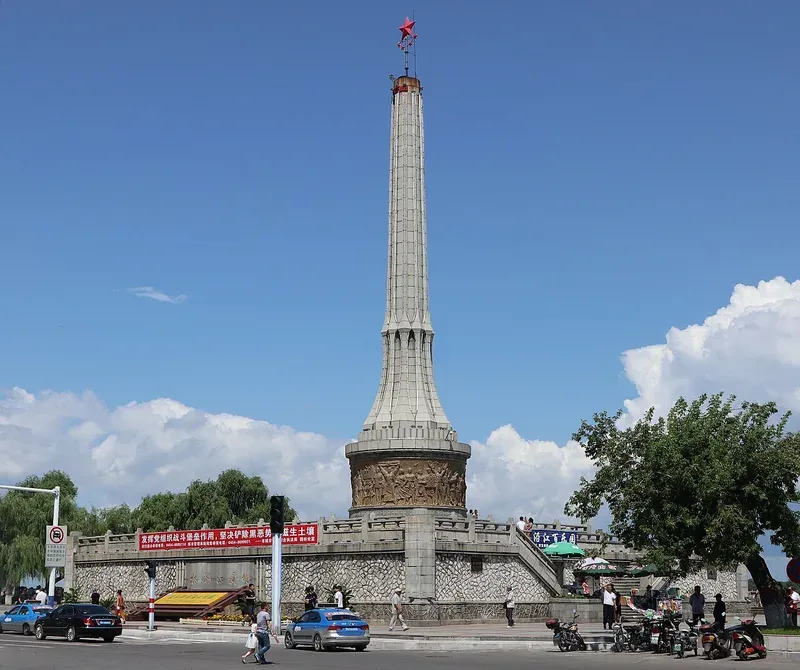
Jiamusi
Jiamusi (佳木斯) is a riverside prefecture-level city of roughly 1.8…
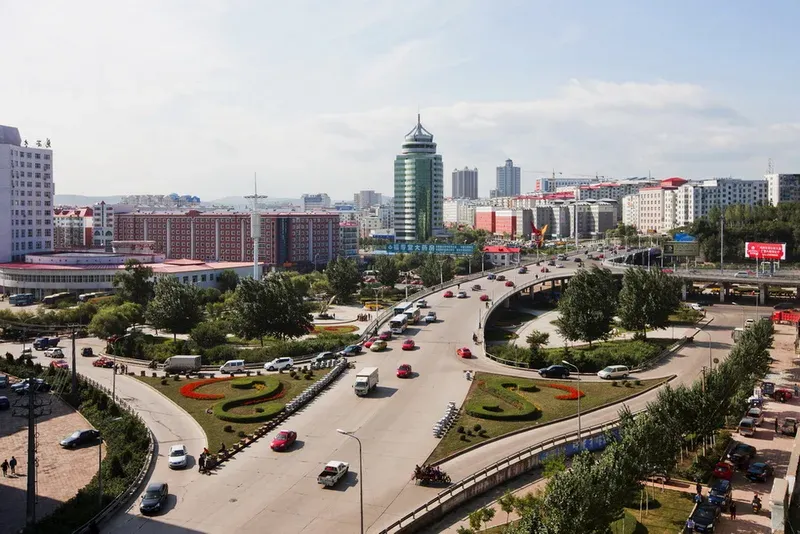
Jixi
Jixi (鸡西) is a prefecture-level city tucked into the far southeast of…
Mohe
Mohe (æ¼ æ²³, Mòhé) is China's northernmost county-level city…
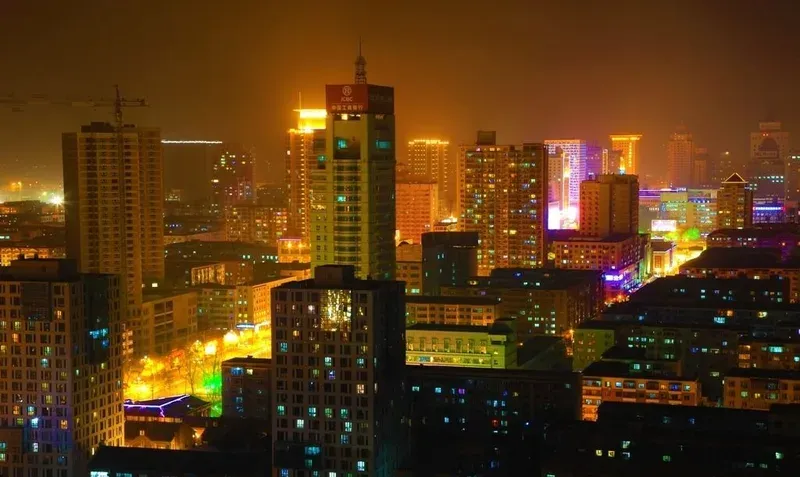
Mudanjiang
Mudanjiang (牡丹江) is a mid-sized city of around 700,000 in…
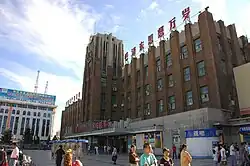
Qiqihar
Qiqihar (é½?é½?哈尔), founded as a walled garrison city in 1691, sits…
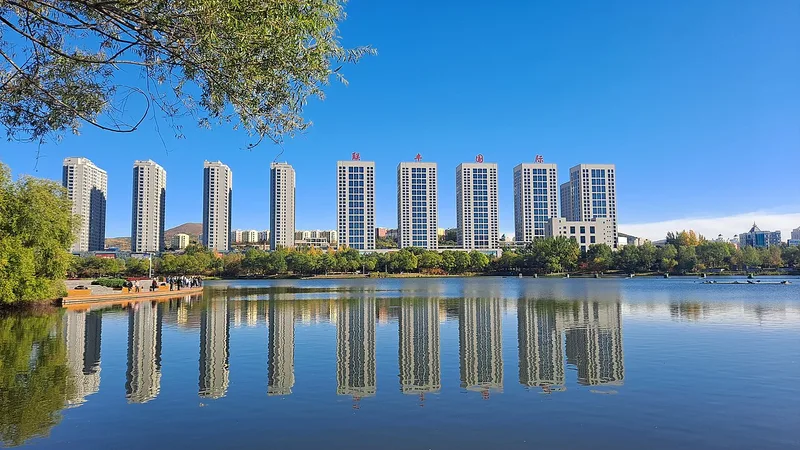
Shuangyashan
Shuangyashan (å?Œé¸å±±, "Twin Duck Mountain") is a prefecture-level…
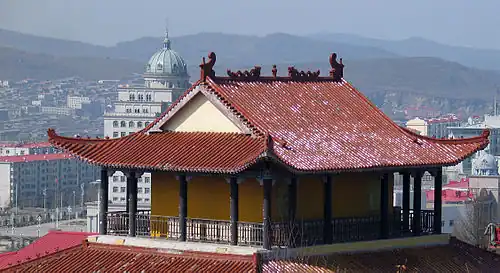
Suifenhe
Suifenhe (绥芬河) is a small but bustling border city in the…
Yabuli
Yabuli (亚布力) is a small town in the foothills of the Zhangguangcai…
Beiji Village
Beiji was a sleepy logging and farming hamlet on the Sino-Russian…
Hegang
Hegang (鹤岗) is a prefecture-level city in eastern Heilongjiang…
Ilan Boo
Ilan Boo — known in Mandarin as Yilan (ä¾?å…°) and historically as…
Jingpohu National Forest Park
Jingpohu National Forest Park (镜泊湖国家森林公园) protects China's largest…
Qitaihe
Qitaihe (七台河) is a prefecture-level city in eastern Heilongjiang…
Suihua
Suihua (绥化) is a prefecture-level city in central Heilongjiang…
Tahe
Tahe (塔河) is a county in the Daxing'anling (Greater Khingan)…
Wudalianchi
Wudalianchi (五大连池), meaning "Five Connected Ponds," is a county-level…
Wudalianchi National Forest Park
Wudalianchi — literally "Five Connected Pools" — is one of the most…
Yichun
Yichun (伊春) sits in the Lesser Khingan (Xiao Hinggan) Mountains of…
Zhalong National Nature Reserve
Zhalong National Nature Reserve (扎龙自然ä¿?护区) is one of China's most…
Pair the highlights of Heilongjiang Sheng into one easy trip — we'll plan the route.
WhatsApp
Contact Us
Get in touch with us.
Get in touch
Contact Us
Tell us where you'd like to go and how you like to travel. A real Tripcuro planner — not a bot — will craft an itinerary around you.
- Personalised, hassle-free planning end-to-end
- Transparent pricing, no hidden costs
- 24/7 support for complete peace of mind