
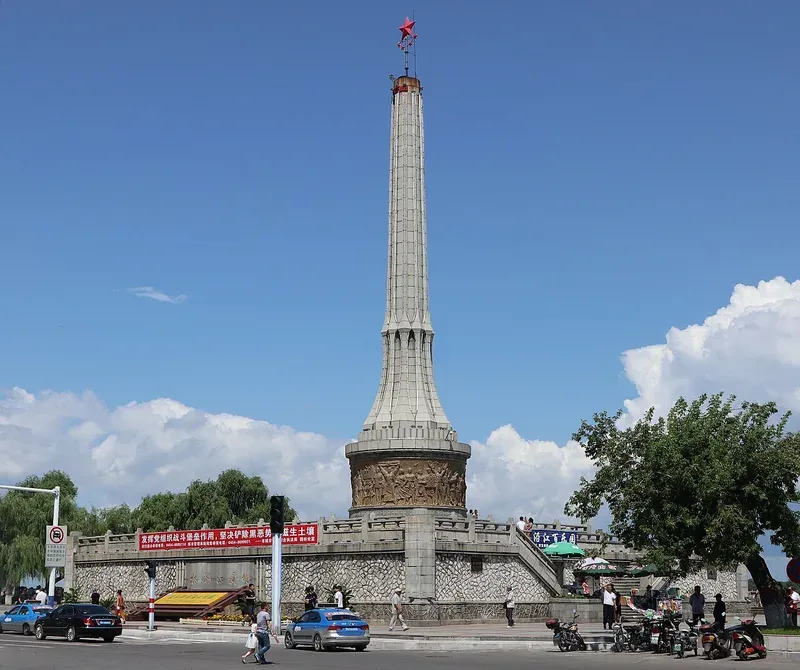
Jiamusi
Heilongjiang Sheng, China
Why visit Jiamusi?
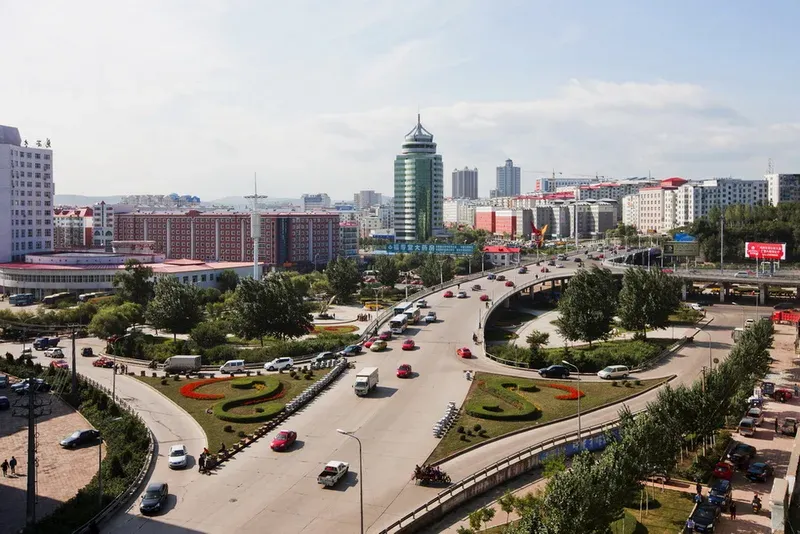
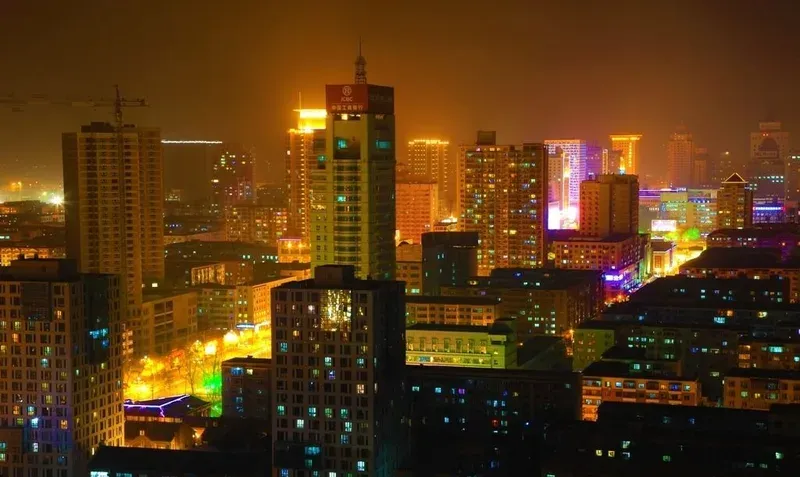
Jiamusi (佳木斯) is a riverside prefecture-level city of roughly 1.8 million in the far northeast of Heilongjiang Province, sitting on the south bank of the Songhua River where it bends toward its confluence with the Heilong (Amur) and Wusuli rivers. Often called "the city where the sun rises first in China" because of its position near the country's easternmost point, Jiamusi grew from a small fur-trading post into a regional industrial and agricultural hub during the 20th century, fed by the vast black-soil farmland of the Sanjiang Plain. The city itself is workmanlike rather than picturesque — wide Soviet-influenced boulevards, riverfront parks, and blocks of plain mid-rise housing — but it is the natural gateway to one of China's largest surviving wetland ecosystems and to the remote border country along the Russian frontier.
The climate is severely continental: long, dry, brutally cold winters and short, warm, humid summers. January averages drop to around −23°C at night and the river freezes solid for months, while July highs reach 28°C with the year's heaviest rainfall (July and August each see well over 100 mm). The sweet spots are late May through September for wetlands, river trips and birdwatching, and December through February for ice-and-snow tourism and skiing — bring serious cold-weather gear if you come in winter, as wind chills routinely push perceived temperatures below −30°C. October is brief but spectacular for autumn colour; April and November are awkward shoulders best avoided.
The built-up area is divided across several urban districts. Qianjin District (å‰?进区) is the commercial core, holding the main railway station, Wanda Plaza and most hotels. Xiangyang District (å?‘阳区) to its west is the older shopping and dining belt around Jiefang Road. Dongfeng District (东风区) stretches east toward the airport and the East Market. Jiaoqu (suburban district) and the outlying counties — Tangyuan, Huachuan, Tongjiang, Fujin and Fuyuan — are where the wetlands, ski slopes and Russian-border sights lie.
Planning Jiamusi? Tell us your dates and we’ll tailor the trip.
Ask on WhatsAppHow do you get there?
By Plane
Jiamusi Dongjiao Airport (JMU) sits on Andong Road in Songjiang Township, Dongfeng District, about 10 km east of the city centre. It handles daily domestic flights from Beijing, Shanghai (Pudong and Hongqiao), Guangzhou and Harbin, plus seasonal international service to the Russian Far East (Khabarovsk in particular). A taxi from the airport into central Qianjin District runs roughly ¥30–50 and takes 20–25 minutes; airport shuttle buses meet most arrivals and cost around ¥15 to the city.
By Train
Jiamusi has two stations of note. Jiamusi Railway Station (佳木斯站, No. 179 Zhanqian Road, Qianjin District; +86 0454 8920010) is the long-standing conventional station, rebuilt 2016–2018 with new north and south concourses; it handles most overnight sleeper services. Jiamusi West Railway Station (佳木斯西站, Xilin Road, Qianjin District) is the modern high-speed terminus and the better option for fast trains from Harbin.
Frequent services run from Harbin (6–8 hours, ¥36–196 on conventional trains; faster on the high-speed line via West Station). Other useful connections: Shenyang (13–15 hours, ¥67–362), Beijing (24 hours, ¥179–544), Tianjin (23–24 hours, ¥179–544), Dalian (about 20 hours), Yantai (36 hours, ¥248–750), Panjin (16–20 hours, ¥78–411), plus regional trains from Mudanjiang, Hegang and Shuangyashan. Lianjiangkou Station (莲江å?£ç«™), in a suburb west of the city, is a secondary stop on the Suijia and Hegang lines. Book sleeper berths several days ahead in summer and around Chinese New Year.
By Car / Road
The main long-distance bus terminal is Jiamusi Passenger Station (佳木斯客è¿?ç«™, No. 128 Shunhe Street, Qianjin District; +86 454-8698535), with a secondary depot at 146 Zhanqian Lu nearby. Useful scheduled coaches:
| Route | Departures | Duration | Fare |
|---|---|---|---|
| Jiamusi – Harbin | 06:30, 08:30, 10:30, 12:30, 14:30, 16:30 | 5–6 hrs | ¥100 |
| Jiamusi – Mudanjiang | 07:00, 09:00, 11:00, 13:00, 15:00, 17:00 | ~3 hrs | ¥70 |
| Jiamusi – Qiqihar | 06:00, 08:00, 10:00, 12:00, 14:00 | ~4 hrs | ¥90 |
| Jiamusi – Jiamusi East Station | every 10–15 min | 30 min | ¥2 |
Driving from Harbin takes roughly 5–6 hours along the G1011 Ha-Tong Expressway (about 380 km); the road is in good shape but winter conditions can be treacherous, with black ice common from late October through March. In summer, river boats from Harbin also ply the Songhua, though schedules are seasonal and irregular.
City buses cover most of the urban area; fares are flat ¥2–5 depending on route, paid in coins or by Alipay/WeChat QR. The high-frequency airport-and-East-Station shuttle (every 10–15 min, ¥2) is useful for connecting between the main rail and bus hubs.
Taxis flag down readily; the meter starts at around ¥6 and runs about ¥1.80 per kilometre, with a small surcharge late at night. For longer trips out to the ski resort or wetlands, agree the fare with the driver in advance — expect ¥150–300 round trip including waiting time. Didi Chuxing works reliably in central Jiamusi and is usually cheaper than flagging.
Shared bikes (Meituan, Hellobike) are abundant in the Qianjin and Xiangyang core and good for the flat riverside; QR-unlock typically needs a Chinese phone number and a verified Alipay account. The riverfront promenade along Binjiang Road is genuinely walkable. Scam risk is low compared with bigger Chinese cities, but always check meter use in taxis and avoid the few touts around the train station offering "tours."
What are the things to do?
Sanjiang Nature Reserve (三江自然湿地ä¿?护区) — Vast wetland on the Sanjiang Plain near the Heilong/Wusuli/Songhua confluence; UNESCO-listed Ramsar site and a magnet for migratory cranes, storks and waterfowl. Best May–September. Suburban Jiamusi / Fuyuan direction.
Honghe Nature Reserve (洪河自然ä¿?护区) — Over 16,000 hectares of marshland in Tongjiang/Fuyuan, notable for rare marsh plants and large breeding populations of red-crowned cranes and Oriental white storks. Birdwatching peaks April–May and September–October.
Sanjiangkou Wetland Park (三江å?£æ¹¿åœ°å…¬å›) — A more accessible suburban wetland at the literal "Three Rivers' Mouth," open 08:00–18:00 daily, free. Boardwalks, birdwatching towers and seasonal boat rides. Reachable by city bus or a 30-minute taxi.
Fuyuan Port (抚远å?£å²¸) — The easternmost port town in China, on the Heilong River opposite Russia's Khabarovsk; come for the symbolic "first sunrise in China" monument and views across the border. Day trip from Jiamusi (~3 hrs by road).
Jiamusi Zoo (佳木斯动物园) — Modest urban zoo with rides for children; useful if travelling with kids on a cold day.
Wusu (乌è‹?镇) — Tiny riverside settlement near Fuyuan often billed as the easternmost inhabited point in China.
Jinjiekou (è¡—æ´¥å?£) — Hezhe ethnic minority village on the Heilong River, worth a stop for fish-skin handicrafts and traditional culture.
Wofoshan Skiing Resort (å?§ä½›å±±æ»‘雪场), Zhongda Village, Dalai Town, suburban Jiamusi. Daily 08:30–17:30 in winter; lift-and-rental day passes ¥100–200. Beginner to intermediate runs, equipment rental on site; one of the better small ski hills in Heilongjiang and far less crowded than Yabuli.
Jiamusi Ice and Snow World (佳木斯冰雪大世界), along Binjiang Road. Open December–February, 09:00–18:00 daily; from ¥50/person. Illuminated ice sculptures, ice slides, snow tubing and themed lantern displays — a smaller-scale, easier-to-visit cousin of Harbin's famous festival.
Jiamusi Music Fountain Square (佳木斯音ä¹?喷泉广场), Zhongshan Street Civic Square, Qianjin District. Free shows nightly 18:00–22:00. The city's evening gathering spot; bigger themed performances on holidays.
Kite-flying at Riverside Park (风ç?放飞活动, 江边公园 on Binjiang Road). Weekends and holidays in spring, 10:00–16:00. A genuine local tradition rather than a tourist draw — bring or buy a kite and join in.
Songhua River cruises in summer. Short sightseeing boats run from the Binjiang Road waterfront on warm-weather afternoons.
Day trip to Fuyuan for the first sunrise — set off before dawn (in summer, that means around 02:30) to watch the sun rise over the Heilong River at China's easternmost point.
Planning Jiamusi? Want these on a customised itinerary?
Ask on WhatsAppWhere to eat?
Jiamusi eats squarely in the Dongbei (Northeast) tradition: hearty stews, fermented cabbage, hand-rolled dumplings, plenty of pork, and big shared portions designed to fight off the cold. Freshwater fish from the Songhua and Heilong rivers — especially carp, catfish and the prized huangyu (yellowcheek carp) — appear on most local menus, often served whole in a stew. Vegetarians can manage with eggplant-based Disanxian, vegetable dumplings and the abundant tofu and cold-vegetable side dishes, but a strict plant-based diet is hard work here; halal options exist around the small Hui Muslim quarter near the mosque in Xiangyang District.
- Old Northeast Stew Restaurant (è€?东北炖è?œé¦†), No. 45 Zhongshan Street, Qianjin District. 11:00–22:00. Classic Dongbei comfort food — pot-wrapped pork (guobaorou), Disanxian, pork-and-vermicelli stew. Per head ¥50–80.
- Northern Dumpling Restaurant (北方饺å?馆), No. 65 Jiefang Road, Xiangyang District. 11:00–22:00. Handmade dumplings; the pickled-cabbage-and-pork filling is the one to order. Per head ¥40–60.
- Jiamusi Roast Duck Shop (佳木斯烤鸭店), No. 65 Jiefang Road, Xiangyang District. 10:30–21:30. Long-established roast duck plus a full menu of Northeast home cooking. Per head ¥90–100.
- Riverside fish restaurants along Binjiang Road in summer — order whole stewed Songhua river fish with vermicelli; ¥120–200 per person depending on the fish.
- Street food at Jiamusi East Market — grilled skewers, jianbing, sticky-rice cakes and dumplings for ¥10–30.
Where to drink?
The local drink culture is split between hard Northeast liquor (the regional baijiu, often drunk neat with meals), Harbin Beer (brewed three hours upriver and effectively the local lager), and a fast-growing café scene catering to students and young professionals.
- Coffee Time (咖啡时光), No. 36 Tongjiang Road, Xiangyang District. 09:00–22:00. Reliable independent café with espresso drinks, light meals and Wi-Fi.
Tap water is not safe to drink anywhere in Jiamusi — use the boiled-water thermoses provided in hotels, or buy bottled water (¥2–3 for 550 ml from any xiaomaibu shop). Ice in upmarket restaurants and chain cafés is generally fine; avoid it at street stalls.
Planning Jiamusi? We’ll book the stays and dining for you.
Ask on WhatsAppWhere to stay?
- Budget
- Mid-range
- Upscale
What should you buy?
Jiamusi is not a shopping destination in the Beijing/Shanghai sense, but it covers the basics. Bargaining is normal at markets and small independent stalls (start at roughly half the asking price); fixed prices apply in malls and department stores.
- Jiamusi Wanda Plaza (佳木斯万达广场), No. 88 Chang'an Road, Qianjin District. Daily 10:00–22:00. The city's flagship mall — international and domestic chains, cinema, food court, indoor children's play.
- Central Department Store (中心百货商场), intersection of Chang'an Road and Tongjiang Street, Xiangyang District. Daily 09:00–21:00. Long-running general department store, good for everyday Chinese brands and cold-weather clothing.
- Jiamusi East Market (佳木斯东市场), No. 56 Dongfeng Road, Dongfeng District. Daily 07:00–17:00. Fresh produce, dried mushrooms and forest foods from the Lesser Khingan range, handicrafts and local Northeast specialties.
- Hezhe fish-skin crafts from Jinjiekou village — wallets, small bags and embroidered panels made from carp or salmon skin, an intangible-heritage tradition of the Hezhe people. Buy at source if you can; otherwise look at souvenir stalls along Zhongshan Street.
Where to go next?
- Harbin — 6–8 hours by train (or under 4 hours on the fastest high-speed services) west. Heilongjiang's capital and the spiritual home of China's ice-and-snow tourism; essential winter pairing with Jiamusi.
- Fuyuan — about 3 hours by road east. China's easternmost city, the Heilong River border with Russia, and the legendary "first sunrise" viewpoint.
- Tongjiang — roughly 2.5 hours northeast. Russian-border town at the confluence of the Songhua and Heilong, gateway to the Sanjiang wetlands and to summer crossings into Nizhneleninskoye.
- Mudanjiang — about 3 hours by bus south. Base for Jingpo Lake (Jingpohu) and the volcanic Underground Forest.
- Hegang — 1.5 hours north by road. Coal-mining city and trailhead for the Lesser Khingan forest scenery.
- Yichun — about 5 hours west. The "forest capital" of China, best in autumn for boreal-forest colour and in winter for low-key snow trips.
Nearby in Heilongjiang Sheng
More places to explore around Jiamusi.
Guide content as of May 2026. Portions adapted from Wikivoyage, CC BY-SA 4.0.

Contact Us
Get in touch with us.
Get in touch
Contact Us
Tell us where you'd like to go and how you like to travel. A real Tripcuro planner — not a bot — will craft an itinerary around you.
- Personalised, hassle-free planning end-to-end
- Transparent pricing, no hidden costs
- 24/7 support for complete peace of mind