
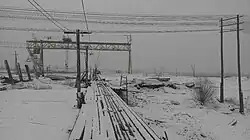
Mohe
Heilongjiang Sheng, China
Why visit Mohe?
Mohe (æ¼ æ²³, Mòhé) is China's northernmost county-level city, perched on the south bank of the Heilong (Amur) River in the Daxing'anling region of Heilongjiang Province, directly across the water from Russia's Amur Oblast. Often dubbed the "Arctic of China," it markets itself almost entirely on its latitude: this is the only place in the country where the aurora borealis is occasionally visible, where the midnight sun lingers around the summer solstice (up to ~21 hours of daylight), and where a winter cold snap can drop the mercury below −50°C. The extreme minimum on record is −53°C. Beyond superlatives, Mohe has a real history — Sushen and Tungusic peoples lived here long before Qing-era gold rushes turned the upper Amur into a frontier boomland, and the region's identity is still shaped by the catastrophic May 6, 1987 forest fire that destroyed much of the surrounding taiga.
The climate is subarctic with discontinuous permafrost: annual mean around −5.5°C, ferocious winters (January highs around −18°C, lows around −35°C), short but warm summers (July highs in the mid-20s°C), and most precipitation falling in July and August. There are essentially two tourist seasons, both worth coming for. Winter (December–February) is the headline act — the Ice and Snow Cultural Festival kicks off around 21 December, hot-water-into-ice-crystal stunts work properly only below −30°C, and the snow-blanketed taiga is genuinely spectacular. Summer solstice (mid–late June) draws crowds for the midnight sun and aurora-chasing at Beiji Village. Avoid the shoulder seasons unless you specifically want quiet: spring is windy and muddy, autumn is brief with early hard frosts.
The town itself is small and easily walkable, but the marquee sights — Beiji Village (the "Arctic Village"), Beihong Village, Heilongjiang First Bay — are 30–80 km away on forest roads, so plan around a chartered car or a tour package rather than urban sightseeing.
Planning Mohe? Tell us your dates and we’ll tailor the trip.
Ask on WhatsAppHow do you get there?
By Plane
Mohe Gulian Airport (OHE) is China's northernmost airport, roughly 8 km west of the city centre. Scheduled flights connect to Beijing–Capital, Harbin, Jiagedaqi, and (seasonally) Jieyang. Direct services are limited and most international visitors will route via Harbin Taiping (HRB). Taxis from the airport into town are typically ¥30–50; some hotels arrange free or low-cost pickups for guests booking multi-day packages.
By Train
Mohe Railway Station is China's northernmost railway station and the most common way in for domestic travellers. The marquee service is the overnight sleeper from Harbin (train numbers K7039/K7041, typically ~13–14 hours), with onward/alternate services via Jiagedaqi. Hard sleeper (硬å?§) is the sweet spot for comfort vs. price; book through 12306 (the official app/site) ideally a few days in advance, and longer ahead during the December festival window and the June solstice peak. The station is on bus route to the County Government area for ¥2.
By Car / Road
There are no direct intercity buses from Harbin — the ~1,200 km journey is done by train or car. From Mohe itself there are scheduled coach services westward into Inner Mongolia:
- Mohe → Yakeshi: departures 08:00, 10:00, 14:00; ¥100; ~6 hours.
- Mohe → Hulunbuir (Hailar): departures 09:00, 12:00, 16:00; ¥150; ~7 hours.
Self-driving is feasible in summer but demanding in winter — roads ice over, services are sparse, and snow can close stretches without warning. See Driving in China and Winter driving before attempting it. Carry your passport or Chinese ID at all times: this is a sensitive border zone and document checks at police points are routine.
Inside the city centre two local bus lines cover what most visitors need:
- Mohe County Government ↔ Mohe Railway Station: every 30 minutes, ¥2.
- Mohe County Government ↔ Mohe Scenic Area: hourly, ¥3.
For the out-of-town sights (Beiji Village, Beihong Village, Heilongjiang First Bay, Jiucun Shibawan wetland), public transport is sparse to nonexistent and distances are long. The standard options are:
- Chartered car with driver — by far the most common arrangement; expect roughly ¥600–1,000/day depending on itinerary, season, and vehicle, with winter rates noticeably higher.
- Day tours from Mohe city, bookable through guesthouses and the larger hotels; usually the cheapest way to combine Beiji Village + Heilongjiang First Bay in a single day.
- Local buses to Beiji run twice daily (around 10:50 and 16:00, ¥25) but timings shift seasonally — confirm at the station the day before.
Taxis exist in town and run on negotiated fares; flagfall is around ¥5–8 but for any out-of-centre trip agree the price before getting in. Didi (æ»´æ»´) coverage is limited and unreliable, particularly outside peak hours. Walking works for the immediate downtown area; for anything else, don't underestimate the distances or — in winter — the cold. Carry layered insulation rated to at least −30°C even on short excursions.
What are the things to do?
Beiji Village (北æž?æ?‘) — China's "Arctic Village," 30 km north of Mohe city. The whole reason most people come: northernmost-point markers, the "Northern Lights Plaza," birch-log cabins, a partially frozen Heilong River view across to Russia, and the rare summer-solstice chance of seeing the aurora. Open 24/7; free entry to the village itself though individual attractions inside charge.
Heilongjiang First Bay (黑龙江第一湾) — the dramatic horseshoe bend where the Heilong River loops back on itself, ~30 km from Beiji Village. Observation platform reached via a long boardwalk/stair climb through forest; best at sunrise or sunset. 08:00–18:00, ~¥50.
Beihong Village (北红æ?‘) — about 50 km north of Beiji Village; quieter, more rustic, traditional wooden houses, excellent stargazing in winter and a stronger sense of "northernmost settlement" than Beiji which has become touristy. Open 24 hours, free.
Santa Claus Village Scenic Area (圣诞æ?‘) — themed park inside Beiji Village with Santa's House, reindeer sleds, year-round Christmas decor, and Arctic-culture exhibits. Kitschy but the kids will love it. 08:30–17:30, ¥60.
Reindeer Park (驯鹿公园) — near the Santa Claus Village; interact with domesticated reindeer and learn about Ewenki herding traditions, one of the few places in China to do so. 08:30–17:00, ¥50.
Jiucun Shibawan National Wetland (ä¹?曲å??八弯国家湿地) — "Nine Bends and Eighteen Turns," ~15 km from town. Elevated walkways and observation towers over a winding wetland system; superb in summer for birdlife and golden-hour photography. 07:00–18:00, ¥80. Phone: +86 457 654 3210.
May 6th Fire Memorial Hall (五六ç?«ç?¾çºªå¿µé¦†) — sobering museum near downtown Mohe dedicated to the 1987 forest fire that killed more than 200 people and burned roughly a million hectares of taiga. Photos, recovered relics, firefighting equipment, environmental restoration exhibits. 08:00–17:00, free.
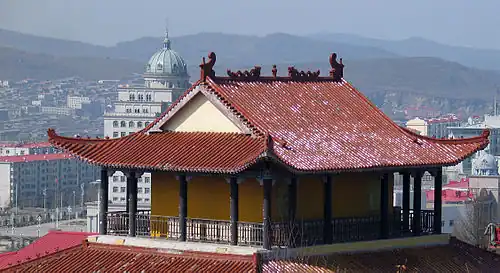
Guanyin Mountain (观音山) — 5 km from the city, accessible by local bus or taxi. A large bronze Guanyin statue overlooks the forest; quiet, popular with pilgrims, modest hiking trails. 08:00–18:00, free.
Chase the aurora at Beiji Village around the summer solstice (roughly 20–22 June). Sightings are rare and never guaranteed — Mohe is at ~53°N, the southern edge of plausible auroral activity — but the village leans into it with all-night viewing platforms and a festival atmosphere. Even without lights, the "white night" of dusk-that-never-becomes-dark is the real show.
Witness "frozen water into ice" (泼水æˆ?冰) at the Mohe Ice and Snow Cultural Festival. In −30°C or colder air, a thrown cup of just-boiled water vaporises into an arc of glittering ice crystals before it hits the ground. Locals will happily demonstrate; do it yourself with care and the right gloves.
Stand on the northernmost point of China — there's a stone marker at the tip of the Heilong River bend at Beiji Village. Cheesy, mandatory, and the photo every visitor takes.
Snowmobile and dog-sled rides are widely offered in winter at Beiji and the Santa Claus Village; rates are negotiable, typically ¥100–300 per ride depending on distance.
Cross-border river-watching — in winter the Heilong (Amur) freezes solid; you can walk to the riverbank and see the Russian village of Ignashino on the far side. Do not step onto the ice — the international border runs through it and crossings are illegal.
Hike the taiga in summer along the marked trails near Guanyin Mountain and the wetland; bring DEET, the mosquitoes in July are notorious.
Stargazing at Beihong Village — minimal light pollution, dry winter air, exceptional views of the Milky Way on clear nights.
Time your visit to a festival: the Aurora Festival (æž?光节) around the summer solstice and the Ice and Snow Cultural Festival around 21 December are the two anchors of Mohe's tourist calendar.
Planning Mohe? Want these on a customised itinerary?
Ask on WhatsAppWhere to eat?
Mohe's food is Dongbei (Northeastern Chinese) at heart — heavy, warming, generously portioned — with strong forest and river influences and traces of Russian and Oroqen/Ewenki cooking. Expect a lot of stews, river fish, wild mushrooms, pickled cabbage (suÄ?ncài), potato-and-beef dishes, dumplings, and game. Signature local plates worth seeking out: dùn yú (slow-stewed Heilong River fish, often with potato and vermicelli in a heavy iron pot), xiÇŽojÄ« dùn mógu (chicken stewed with wild mushrooms), dí lú kÇŽo ròu (iron-pot grilled meat), suÄ?ncài bÄ?irou (sour cabbage with pork belly), and any lùròu (venison) dish — Mohe is one of the few places in China where it's commonplace.
Vegetarian options exist but are limited; ask for sù (ç´ ) dishes — stir-fried wild mushrooms, potato shreds, eggplant. There is no significant halal infrastructure.
- Budget: Beiji Village family guesthouse kitchens (家庭旅馆) — most guesthouses in Beiji serve set dinners to their guests for around ¥40–60 per person, often the best food you'll eat in the region; reindeer stew and river fish appear regularly. Book the meal when you book the room.
- Budget: Mohe Night Market stalls (near the County Government) — skewers, dumplings, jiÄ?nbÇ?ng, hot soy milk; ¥20–40 fills you up. Operating hours shorten dramatically in winter.
- Mid-range: Beijicun Renjia (北æž?æ?‘人家) in Beiji Village — solid sit-down spot specialising in stewed Heilong River fish and venison hotpot; mains ¥60–120.
- Mid-range: Mohe Dongbei Renjia (漠河东北人家) — generous Dongbei standards: guÅ? bÄ?o ròu (sweet-sour fried pork), dìsÄ?nxiÄ?n (potato/eggplant/pepper stir-fry), suÄ?ncài hotpot; ¥80–150 per person.
- Upscale: hotel restaurants at the Beiji Mansion and similar 4-star properties offer set Russian-Chinese fusion menus (borscht, dark bread, salt-cured river fish, blueberry desserts) for ¥200–400 per head.
Where to drink?
Mohe's drinking culture is robust and unsubtle. BáijiÇ” (sorghum spirit) is the default, often a local Heilongjiang brand at 50%+ ABV, drunk neat with food; expect to be toasted enthusiastically if you eat with locals. Harbin Beer (哈尔滨啤酒) and Snow Beer (XuÄ›huÄ?) are the everyday lagers. Russian influence shows up in kvas (格瓦斯) — a mildly fermented rye-bread drink sold in bottles and on tap — and in cheap vodka sometimes labelled as Russian import (verify before paying premium prices).
Non-alcoholic standbys: wild blueberry juice (è“?莓æ±?) from the Daxing'anling forests, served everywhere and genuinely good; birch-sap drink (桦树æ±?) in spring; hot soy milk (dòujiÄ?ng) and fresh xiào dòufu nÇŽo at breakfast stalls. Proper coffee shops are rare — the Santa Claus Village area has a couple of café-style places aimed at tourists; otherwise expect convenience-store instant or hotel-lobby coffee.
Bars in the Western sense barely exist outside hotel lounges. Most evening drinking happens at shÄ?okÇŽo (barbecue) restaurants and dinner tables. In Beiji Village, a couple of cabin-style guesthouse bars open during the festival weeks.
Water safety: tap water is not potable and should be boiled or treated even for brushing teeth if you're cautious. All hotels and guesthouses provide thermos flasks of boiled water; bottled water (¥2–5) is everywhere. In winter, drink more than you think you need — the dry cold is severely dehydrating.
Planning Mohe? We’ll book the stays and dining for you.
Ask on WhatsAppWhere to stay?
Mohe's lodging splits between the city centre (practical for transport and food) and Beiji Village (atmospheric, closer to the headline sights but a 30 km commute back to town). Winter rates around the December festival and June solstice can double or triple, and rooms genuinely sell out — book at least a month ahead for those windows.
- Budget: Beiji Village family guesthouses (北æž?æ?‘家庭旅馆) — dozens of family-run jiÄ?tíng lÇšguÇŽn in Beiji offer simple heated rooms with shared or private bathrooms; ¥120–250/night in shoulder season, ¥250–500 around festivals. Most include hearty home-cooked meals for a small surcharge. Book through Ctrip/Trip.com or Meituan.
- Budget: Mohe city guesthouses near the railway station — basic clean rooms from ¥150–250/night; convenient for early trains but characterless.
- Mid-range: Beijicun Lijia Dayuan (北æž?æ?‘æ?Žå®¶å¤§é™¢) in Beiji Village — comfortable kang-bed rooms in a courtyard property, decent winter heating, ¥350–600/night.
- Mid-range: Mohe Beiji Holiday Hotel (漠河北æž?å?‡æ—¥é…’店) in town — reliable 3-star, helpful with car charters and tours; ¥300–500/night.
- Upscale: Beiji Mansion Hotel (北æž?庄园酒店) — the closest thing to a proper resort in Beiji Village; large heated rooms, on-site restaurant, tour desk; ¥600–1,200/night, peaking higher around the solstice and festival.
- Upscale: Mohe Shenzhou Beiji Hotel (漠河神州北æž?大酒店) — the main "international-standard" option in Mohe city itself, reliable Wi-Fi, English-speaking staff at the front desk; ¥500–900/night.
What should you buy?
Mohe is not a shopping destination, and what's available reflects the frontier-and-forest economy. Worth picking up:
- Wild forest products — dried songrong (pine mushrooms), muer (black fungus), wild blueberries, lingonberries, and pine nuts harvested from the surrounding Daxing'anling forests. Sold loose at the Mohe central market and in shops along the main street near the County Government.
- Birch-bark and pine handicrafts — small boxes, carved figurines, and ornaments produced by local Oroqen and Ewenki artisans; the Santa Claus Village gift shops carry these alongside the kitsch.
- "Northernmost" memorabilia — passport-style stamps from the "Northernmost Post Office" at Beiji Village, certificates, postcards mailed from China's most northerly mailbox. Small fees apply (¥10–30).
- Reindeer and birch-syrup products — small jars of birch sap syrup and reindeer-themed souvenirs; quality varies, taste before buying loose syrup.
- Cold-weather gear — if you've underestimated winter, Mohe's downtown shops sell heavy down coats, fur-lined boots, and dÅ?ngmào (winter hats) at honest prices.
Bargaining is moderate — expected at markets and souvenir stalls, less so at fixed-price shops. Mobile payment (WeChat Pay, Alipay) is universal; foreign cards rarely work, so set up Alipay's Tour Card or carry sufficient cash.
Where to go next?
- Jiagedaqi (加格达奇) — ~430 km south, ~7 hours by train. Administrative centre of the Daxing'anling forest region and a logical break on the journey south; reasonable hotels and onward connections.
- Hulunbuir / Hailar (海拉尔) — ~7 hours by bus (¥150). Inner Mongolia's grasslands, very different landscape and culture; pair with Mohe for a forest-to-steppe two-week trip.
- Yakeshi (牙克石) — ~6 hours by bus (¥100). Forest-and-mining town in Inner Mongolia, gateway to the eastern Daxing'anling and onward to Hulunbuir.
- Harbin (哈尔滨) — ~13–14 hours by overnight sleeper train. The big show: Russian colonial architecture, Saint Sophia Cathedral, and the world-class Harbin Ice and Snow World in January–February. Most Mohe trips begin or end here.
- Heihe (黑河) — further down the Heilong River; another Sino-Russian border city, with a ferry/bridge crossing to Blagoveshchensk and a much milder summer climate.
- Russia: Amur Oblast — directly across the river, but there is no tourist border crossing at Mohe itself. To visit Russia, route via Heihe–Blagoveshchensk or Manzhouli, and ensure you have a valid Russian visa arranged in advance.
Nearby in Heilongjiang Sheng
More places to explore around Mohe.
Guide content as of May 2026. Portions adapted from Wikivoyage, CC BY-SA 4.0.

Contact Us
Get in touch with us.
Get in touch
Contact Us
Tell us where you'd like to go and how you like to travel. A real Tripcuro planner — not a bot — will craft an itinerary around you.
- Personalised, hassle-free planning end-to-end
- Transparent pricing, no hidden costs
- 24/7 support for complete peace of mind