
Yabuli
Heilongjiang Sheng, China
Why visit Yabuli?
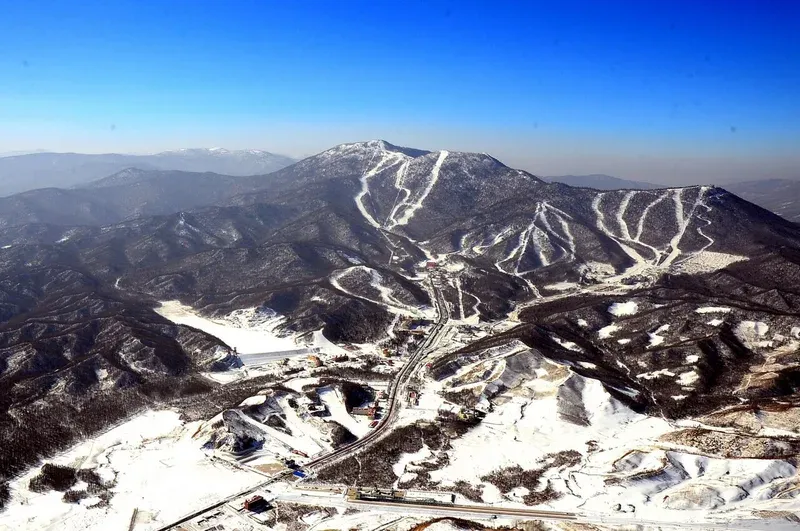
Yabuli (亚布力) is a small town in the foothills of the Zhangguangcai range, about 200 km southeast of Harbin, that owes its modern fame to a single thing: snow. Long a logging settlement on the eastern Manchurian frontier, Yabuli reinvented itself as China's premier ski destination after hosting the 1996 Asian Winter Games, and today the Yabuli Ski Resort (亚布力滑雪旅游度å?‡åŒº) is the largest and most established alpine ski area in the country. The mountains here — peaking around 1,374 m at Daguokui Shan (大锅盔山) — are modest by Alpine standards but offer the longest vertical drop in China and the most reliable natural snowfall, with a season that runs roughly mid-November through late March.
The character of Yabuli is split. The original town along the Binsui railway line is a workaday northeastern Chinese settlement of low-rise apartments, dumpling shops, and snowmobile rentals; the resort area, 25 km south, is a purpose-built cluster of hotels, lifts, and pistes spread across two main bases — the older Windmill Plaza (风车山庄) area used by the national ski team, and the newer, more polished Sun Mountain (阳光度å?‡æ?‘) area developed by Club Med and Wanda. In summer the resort pivots to hiking, mountain biking, and a fast-growing conference scene (the Yabuli China Entrepreneurs Forum meets here each February). Winters are seriously cold — January averages hover around -18°C and overnight lows of -30°C are common — so come dressed for it; the best ski conditions are typically late December through early March, while September and October offer crisp air and dramatic birch-and-larch autumn colour without the crowds.
Planning Yabuli? Tell us your dates and we’ll tailor the trip.
Ask on WhatsAppHow do you get there?
By Plane
The nearest airport is Harbin Taiping International Airport (HRB), about 240 km northwest of the resort. Most international and domestic visitors fly into Harbin and continue overland; transfer time is roughly 3–3.5 hours by road. During ski season many hotels run direct shuttle buses from HRB (¥150–250 per person, advance booking required); a private taxi or chartered car runs ¥800–1,200 one way. There is no metro link from the airport to the train station; the airport shuttle bus into central Harbin costs ¥20 and takes about an hour.
By Train
Yabuli is served by two stations on the Binsui line between Harbin and Suifenhe:
- Yabuli South Railway Station (亚布力å?—ç«™) — the closer station to the resort (about 7 km from the Sun Mountain base) and the one most visitors should aim for. Multiple daily trains from Harbin (about 2 hours, ¥30–50 on conventional services; faster D-series trains around 1.5 hours, ¥60–90).
- Yabuli Railway Station (亚布力站) — in the town proper, about 25 km from the resort; useful if you're staying in town but otherwise inconvenient.
Book through the 12306 app or Trip.com; tickets for weekend ski trains sell out a week or more in advance in peak season. From Yabuli South, taxis to the resort bases run ¥30–60; many hotels include a free station pickup if you book direct.
By Car / Road
From Harbin, take the G1011 Ha-Mu Expressway (哈牡高速) southeast; the drive is about 200 km / 2.5–3 hours in good conditions. Roads are well maintained but winter driving demands snow tyres and experience — black ice and blowing snow are routine, and self-drive is not recommended for first-time visitors to northeastern China. From Mudanjiang, it's about 130 km / 1.5 hours northwest on the same expressway.
Long-distance buses run from Harbin's Nangang Bus Station to Yabuli town (¥60–80, ~3 hours), but onward transport from town to the resort is awkward; the train is the easier option.
Within the resort area, most visitors rely on free hotel shuttle buses that loop between Sun Mountain, Windmill Plaza, the ski school, and the gondola bases — schedules are posted at hotel concierge desks and intervals are typically 20–30 minutes during ski hours. Taxis are scarce inside the resort but can be summoned via hotel front desks; expect ¥20–50 for short hops between bases. Didi (滴滴出行) works in Yabuli town but coverage at the resort itself is patchy; download it before arrival and link a usable payment method (Alipay or WeChat Pay are essentially mandatory — foreign cards rarely work at point of sale).
The resort is not walkable in the way a European ski village is: bases are spread across several kilometres of valley, and walking in -25°C with ski gear is not a plan. Inside each base (Sun Mountain in particular) everything is within a five-minute walk. Watch for unmetered taxis quoting inflated fares to visiting skiers at Yabuli South station; agree the price before getting in, or ask your hotel to dispatch a car.
What are the things to do?
Yabuli is fundamentally a "do" destination rather than a "see" one, but a few sights are worth a detour:
Yabuli Ski Resort (亚布力滑雪旅游度å?‡åŒº) — the main attraction in its own right, with sweeping mountain views from the top of the Sun Mountain gondola even for non-skiers. Gondola sightseeing ticket around ¥160. Open daily roughly 08:30–16:30 in winter.
Daguokui Shan (大锅盔山) — at 1,374 m, the highest peak in the area and the top of the longest ski run in China (about 5 km descent). Accessible by gondola in winter; summer hiking trails reach the summit from the Windmill base.
Tonghua Forest Park (通化森林公园) adjacent to the resort — broadleaf and conifer forest with marked summer trails, frozen waterfalls in winter. Entry around ¥40.
China Entrepreneurs Forum Pavilion (中国ä¼?业家论å?›æ°¸ä¹…会å?€) — a glass-and-timber conference complex at Sun Mountain, architecturally interesting and open to walk-around viewing outside event dates.
Downhill skiing and snowboarding — the core activity. The resort has roughly 30 marked runs across three connected ski areas, ranging from broad beginner slopes near Sun Mountain to genuine black-diamond pitches off Daguokui Shan. A full-day lift pass at Sun Mountain runs roughly ¥420–680 depending on date; ski/snowboard rental ¥200–400/day; group lessons from ¥300, private instructors ¥600–1,200 per hour. Lift queues are real on weekends and Chinese public holidays — go midweek if you can.
Cross-country skiing on the former Asian Winter Games trails near Windmill Plaza — quieter and cheaper than the alpine pistes.
Snow tubing, snowmobiling, and dog-sledding at the base areas (¥100–300 per activity) — fun for families and non-skiers.
Ice fishing on frozen reservoirs nearby — arranged through hotels, typically a half-day with equipment and a hot lunch for ¥300–500.
Summer mountain biking and hiking — the resort runs the gondola through summer for downhill biking; rental bikes ¥150–250/day.
Hot springs — several resort hotels (notably Club Med and the Sheraton) have indoor/outdoor onsen-style pools, included for guests or ¥150–250 day passes for visitors.
Yabuli China Entrepreneurs Forum — if your dates align (early February), the resort fills with China's tech and finance elite; lectures are not public but the buzz around Sun Mountain is its own spectacle.
Planning Yabuli? Want these on a customised itinerary?
Ask on WhatsAppWhere to eat?
The food in Yabuli is Northeastern Chinese (东北è?œ, Dongbei cai) — hearty, generous, heavy on pork, potatoes, mushrooms, and pickled cabbage, ideally suited to recovering from a day on the slopes. Signature regional dishes to seek out include guo bao rou (锅包肉, crispy sweet-sour pork), xiao ji dun mogu (å°?鸡炖蘑è?‡, chicken stewed with wild mushrooms), suan cai bai rou (é…¸è?œç™½è‚‰, sour-cabbage and pork belly hotpot), and di san xian (地三鲜, stir-fried potato, eggplant, and pepper). Hotel restaurants dominate at the resort itself; for more local flavour, head into Yabuli town.
- Dongbei-style canteens at Windmill Plaza — a cluster of no-frills restaurants near the older ski base serving big-platter Northeastern home cooking; mains ¥30–80, beer ¥10–15.
- Sun Mountain food court — multiple counter-service stalls (noodles, dumplings, Korean bibimbap, hotpot) at the Sun Mountain base; ¥40–80 per person, convenient for ski lunches.
- Club Med all-inclusive buffet — open to non-guests at lunch and dinner for around ¥350–450 per person; broad international spread plus Chinese hot dishes.
- Sheraton Yabuli Resort restaurants — the Feast all-day dining buffet runs around ¥288–388, and there's a dedicated hotpot restaurant where a generous Northeastern hotpot for two comes to roughly ¥400.
- Local dumpling houses in Yabuli town — jiaozi by the jin (500g, around 50 pieces) for ¥30–50; ask hotel staff for current favourites as they turn over frequently.
Vegetarians will manage but not flourish: many "vegetable" dishes are cooked with lard or pork stock, and English menus are rare. Learn or screenshot wo chi su (我å?ƒç´ — "I'm vegetarian") and bu yao rou (ä¸?è¦?肉 — "no meat"). Halal options are very limited at the resort; the Sheraton can arrange halal meals with notice.
Where to drink?
Northeastern China takes drinking seriously, and Yabuli is no exception. Locally relevant pours:
- Harbin Beer (哈尔滨啤酒) — the regional lager, ubiquitous and cheap (¥8–15 in restaurants, ¥25–40 in hotel bars).
- Baijiu — Northeastern brands like Beidacang (北大仓) are common; expect 40–53% ABV and toasting that doesn't stop until the bottle does. Approach with caution.
- Hot rice wine and ginseng-infused spirits sold in resort shops as gifts; some restaurants serve warmed rice wine in winter.
- Hot drinks — re shui (hot water) is the default offering everywhere; cafés at Sun Mountain and Club Med serve standard espresso drinks at international prices (¥35–55 for a latte).
Apres-ski centres on hotel bars: the Sheraton lobby bar, Club Med's bar (included for guests), and a couple of independent spots around Sun Mountain plaza. Yabuli town has a handful of cheap local KTV-and-beer joints — fun for the curious, not polished.
Water safety: do not drink tap water anywhere in Yabuli or northeastern China. Bottled water is sold everywhere (¥2–5 for 500ml); hotel rooms typically provide a kettle and complimentary bottles. Ice in resort hotels is made from filtered water and is safe; outside the resort, skip ice.
Planning Yabuli? We’ll book the stays and dining for you.
Ask on WhatsAppWhere to stay?
Rates below are approximate winter (peak-season) doubles per night; expect 30–50% discounts in shoulder seasons and significant surcharges around Chinese New Year and the Entrepreneurs Forum dates.
Budget
- Yabuli Ski Hostel area guesthouses (亚布力滑雪场附近民宿) — a cluster of family-run minsu near Windmill Plaza offering twins and dorms from ¥150–300/night, often with shared bathrooms and shuttle to the lifts. Book via Trip.com or Meituan.
- Yabuli town budget hotels — chain hotels like Hanting (汉庭) Yabuli in town from around ¥200–350; cheaper than the resort but you'll need to commute 20+ km to ski.
Mid-range
- New Beijing Hotel Yabuli (亚布力新北京饭店) — long-standing resort hotel at Windmill Plaza, traditionally used by the national ski team; doubles roughly ¥600–1,000 in season. Ski-in/ski-out access to the older slopes.
- Holiday Inn Yabuli (亚布力å?‡æ—¥é…’店) — modern mid-range option near the gondola base, doubles around ¥800–1,400; reliable Western breakfast.
Upscale / resort
- Club Med Yabuli — all-inclusive resort at Sun Mountain with ski-in/ski-out access, lift passes, lessons, meals, and drinks bundled; all-in rates typically ¥2,500–4,500 per person per night double occupancy. The easiest option if you don't speak Chinese.
- Sheraton Yabuli Resort — full-service five-star at Sun Mountain with on-site hot springs, multiple restaurants, and reliable English-speaking staff; doubles ¥1,500–3,500 in season.
What should you buy?
Yabuli is not a shopping destination. Expect resort-priced ski gear shops (Decathlon-level basics through brands like Nordica and Rossignol), souvenir stalls selling pine-nut snacks, ginseng products, and northeastern dried mushrooms, and a few small supermarkets at each base for snacks and instant noodles. For anything beyond essentials, stock up in Harbin before you come. Bargaining is uncommon in resort shops and supermarkets; small souvenir stalls may flex 10–20% if you ask politely.
Where to go next?
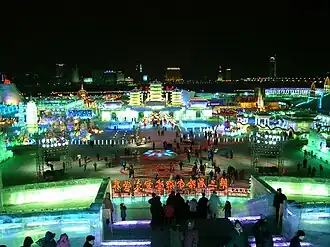
- Harbin (哈尔滨) — 200 km / ~3 hours by road or 1.5–2 hours by train. The provincial capital and home of the spectacular Harbin International Ice and Snow Festival (January–February); pair with Yabuli for the classic northeastern winter trip.
- Mudanjiang (牡丹江) — 130 km / 1.5 hours southeast. Gateway to Jingpo Lake (镜泊湖), a frozen volcanic-dam lake spectacular in winter, and the Mirror Lake waterfall.
- Mohe (æ¼ æ²³) — China's northernmost town, an overnight train from Harbin; deep-winter trip for sub -40°C cold and a shot at the aurora borealis. For serious cold-weather travellers only.
- Changbaishan / Changbai Mountain (长白山) — about 600 km south in Jilin province; another major ski area in winter and a stunning volcanic crater lake in summer. A 1–2 day trip via Mudanjiang.
- Vladivostok, Russia — roughly 500 km east via Suifenhe and the border crossing; possible as a multi-day extension for travellers with a Russian visa, reachable by train from Harbin.
- Suifenhe (绥芬河) — 280 km east on the same Binsui rail line; a Sino-Russian border town with bilingual signage and a curious Russian-Chinese trading culture, good for a one-day curiosity stop.
Nearby in Heilongjiang Sheng
More places to explore around Yabuli.


Guide content as of May 2026. Portions adapted from Wikivoyage, CC BY-SA 4.0.

Contact Us
Get in touch with us.
Get in touch
Contact Us
Tell us where you'd like to go and how you like to travel. A real Tripcuro planner — not a bot — will craft an itinerary around you.
- Personalised, hassle-free planning end-to-end
- Transparent pricing, no hidden costs
- 24/7 support for complete peace of mind