
Beiji Village
Heilongjiang Sheng, China
Why visit Beiji Village?
Beiji was a sleepy logging and farming hamlet on the Sino-Russian border until domestic tourism discovered it in the 2000s. Today its calendar is split sharply in two: a deep, theatrical winter when the river freezes solid and temperatures collapse to -40°C, and a brief, intense summer drawing visitors hoping to catch the "white nights" and (occasionally) the northern lights around 21–22 June, when locals stage a Polar Light Festival. The village proper is small — a grid of low wooden houses, a riverfront square, a few guesthouse lanes — and walkable end-to-end in under an hour.
The climate is subarctic with discontinuous permafrost. January averages a low of -36°C and the winter season effectively runs mid-October to late April; summers (June–August) are short, often surprisingly warm (20–28°C daytime), and mosquito-heavy in the forest. Shoulder seasons are unrewarding: May is mud, September a brief flash of yellow larch before the freeze. Most travellers come either for the Spring Festival / Ice & Snow season (late December through February) or for the solstice window in late June. Mobile signal is patchy outside the village itself, and parts of the surrounding preserve have none — download offline maps before you arrive.
Administratively the village is a scenic area inside the larger Beiji Village National Forest Park; entry is gated and ticketed. The Russian bank opposite is the Amur Oblast village of Ignashino — you can see it clearly but cannot cross here.
Planning Beiji Village? Tell us your dates and we’ll tailor the trip.
Ask on WhatsAppHow do you get there?
By Plane
The nearest airport is Mohe Gulian Airport (IATA: OHE), China's northernmost commercial airport, about 50 km southwest of Beiji Village. It has daily flights to Harbin (HRB, ~2 hr) and seasonal connections to Beijing and Hailar. There is no airport bus to the village; a chartered taxi or guesthouse pickup runs roughly ¥300–400 one way and takes 60–90 minutes depending on road conditions. In deep winter, allow more time and confirm the driver has winter tyres and a working heater.
By Train
Mohe Railway Station in Mohe town (about 80 km from Beiji Village) is China's northernmost station and the most atmospheric way in. The signature service is the overnight K7039 sleeper from Harbin (≈13 hours, hard sleeper around ¥200, soft sleeper ¥300–350); there are also connections via Jiagedaqi. Book on 12306 or via a Chinese-speaking agent — sleepers sell out fast around the solstice and Spring Festival. From the station to Beiji Village expect a taxi of ¥300–500 one way, or pre-arrange transfer through your guesthouse.
By Car / Road
The drive from Mohe town to Beiji Village is roughly 80 km on the S207 provincial road through forest preserve — paved, scenic, and slow in winter when ice and drifting snow are routine. From Harbin the overland route is ~1,200 km (15+ hours) and not recommended for self-drivers unfamiliar with winter conditions. A few daily public buses run from Mohe Bus Station to Beiji Village for ¥25 one way; departures typically cluster in the morning and confirm same-day return is possible before boarding. Note the Beiji Village scenic-area entry ticket of around ¥65 (as of January 2019) is charged on top of any transport cost.
The village core is small enough to walk in any season — bring serious cold-weather gear in winter, including face cover and insulated boots rated to -40°C. Beyond the village (Santa Claus House, the ski slope, viewpoints along the river road) there is no public transport; you'll need to hire a local driver for a half- or full-day, typically ¥200–400 depending on distance and season. Guesthouses can arrange this and it's the standard approach. Ride-hailing apps (Didi) do not reliably cover this area. In winter, snowmobiles and dog-sled rides are offered as both transport and experience at the riverfront square.
What are the things to do?
Northernmost Point of China (中国最北点) — the cape on the Heilong River bend marking the country's geographical apex, with a stone marker and viewing platform. Inside the scenic area; covered by the entry ticket.
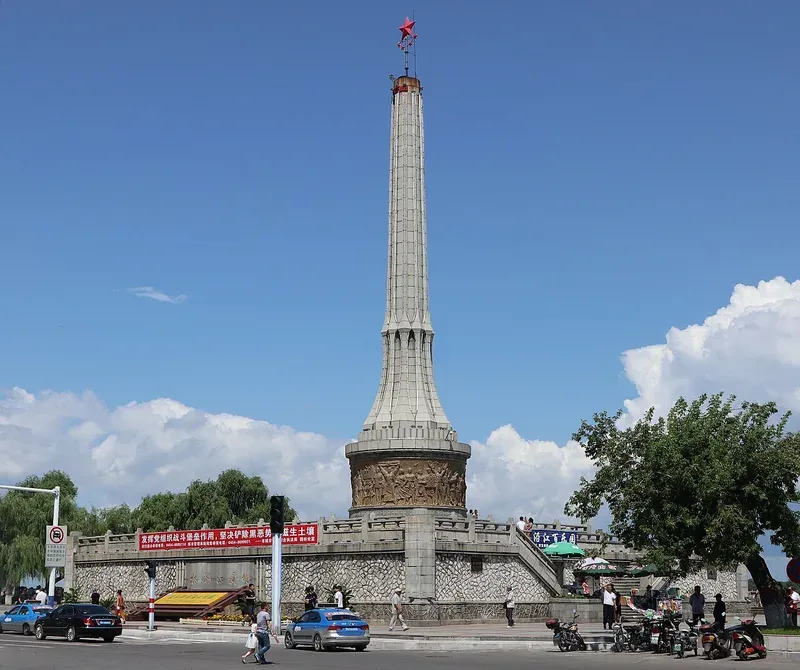
Northernmost Outpost / Sentry Post (神州北æž?哨所) — a working PLA border post; a viewing area and obelisk are open to visitors.
Northernmost Post Office (北æž?邮局) — the small red-roofed post office where you can mail postcards stamped with a distinctive "northernmost" cancellation. Souvenir postcards ¥5–10; international mailing available.
Riverfront Square and "Find the North" Plaza (找北广场) — the village's social heart on the Amur, with photo markers, sculpture, and (in winter) a frozen-river walkway onto the ice.
Snowman Valley (雪人谷) — a seasonal winter installation of carved snow figures along a short forest trail; only open roughly December–February.
Heilong River (Amur) viewpoint — look directly across to Russia from any point along the village's north bank; best at dawn or dusk.
Greater Khingan taiga forest — the surrounding preserve is itself a sight, particularly for the late-September larch turn and the rime-ice "wusong" mornings in January–February.
Chase the aurora and white nights around the summer solstice (20–22 June). Sightings are rare and depend on solar activity, but the Polar Light Festival in the village runs bonfires, performances, and an all-night atmosphere on the riverfront regardless.
Ski at the Beiji Village ski area, roughly 25 km from the village, with beginner-friendly slopes; open in winter only.
Visit the Santa Claus House (圣诞è€?人æ?‘) theme park next to the ski site — kitsch, but genuinely fun in deep snow with kids; best in December–February.
Walk on the frozen Amur in January–February when the ice is thick and locals mark a safe path; do not stray beyond marked areas (it is an active border).
Try winter sled experiences: dog sleds, reindeer sleds, and snowmobiles run from the village square at posted per-ride rates.
Hike a short forest loop in summer — guesthouses can point out trails into the preserve; bring strong mosquito repellent.
Cross-river views of Russia — bring binoculars; the Russian village opposite is small but visible.
Planning Beiji Village? Want these on a customised itinerary?
Ask on WhatsAppWhere to eat?
The food is rugged Northeast Chinese (Dongbei) cooking adapted to a forest economy — game, river fish, potatoes, mushrooms, pickled vegetables, and heavy stews — served in family-run guesthouse dining rooms and a handful of small restaurants near the village square. Signature dishes to look for: stewed Heilong River fish (often the cold-water "leng shui yu"), wild-mushroom and chicken stew (xiaojidun mogu), suancai bairou (pickled cabbage with pork belly), blueberry-glazed pork ribs, and dadalian (large dumplings) with venison or wild-mushroom fillings. Vegetarians can eat passably on stir-fried potato (di san xian), pickled cabbage, and mushroom dishes; halal options are essentially absent — travellers with strict dietary needs should plan to self-cater partly.
- Budget: most farm-stay guesthouses serve a fixed-menu dinner for ¥40–60 per person; ample and the easiest option.
- Mid-range: small sit-down restaurants along the main village road serve fish hotpots and stews for groups, typically ¥80–150 per person depending on fish choice.
Where to drink?
The drink to know is local blueberry wine (lanmei jiu) — fruity, low-tannin, and often very sweet; the ice wine version is the standout and travels well. Bottles ¥80–300 depending on producer. Baijiu is widespread, as it is anywhere in Dongbei, and locals will press it on you at dinner. Hot milk tea, salted or sweet, is common in winter. There are no real bars or cafés in the Western sense — drinking happens at guesthouse tables. Tap water is not safe to drink; stick to bottled or boiled water, which guesthouses provide in thermoses by default.
Planning Beiji Village? We’ll book the stays and dining for you.
Ask on WhatsAppWhere to stay?
Beiji Village runs on small family-operated guesthouses (家庭旅馆) and farm stays (农家ä¹?). There are no national or international chains. Rates spike sharply around the Spring Festival and the late-June solstice; book ahead for both. Most properties include a heated kang (traditional brick bed) option and a home-cooked breakfast.
- Budget: family guesthouses clustered near the village entrance, typically ¥80–150 per night per bed in shared rooms; quality is variable but warmth and food are reliable.
- Mid-range: better-appointed farm stays with private rooms and ensuite bathrooms run ¥250–450 per night in season. Look for properties advertising "地暖" (underfloor heating) — a meaningful upgrade in January.
- Upscale: there is no true upscale tier in the village. The closest equivalent is one of the larger guesthouse compounds aimed at tour groups (¥500–800 in peak season). For higher comfort, base in Mohe town, where mid-tier business hotels offer a more standard experience and day-trip in.
What should you buy?
The local specialty, by a wide margin, is wild blueberries (è“?莓) — the subarctic forests yield them in quantity and they are processed into jams, juices, dried candies, chocolates, and wines (including a respected ice wine). Roadside stalls and a cluster of shops near the village entrance sell branded packs; expect ¥30–80 for jams and dried products, ¥80–200+ for wines. Other buys: lingonberry and pine-nut products, birch-bark crafts, and postcards from the Northernmost Post Office — the cancellation is the real souvenir, and they will mail internationally for you. Prices in shops are largely fixed; mild bargaining is acceptable at outdoor stalls.
Where to go next?
- Mohe (æ¼ æ²³) — 80 km / ~1.5 hr by road. The county seat and transport hub; worth a half-day for the 2·87 Fire Memorial Museum commemorating the 1987 Greater Khingan fire.
- Beihong Village (北红æ?‘) — about 60 km east along the river; quieter and less developed than Beiji, with arguably better aurora viewing and a genuinely off-grid feel.
- Longjiang Diyi Wan (龙江第一湾) — ~80 km from Beiji; a dramatic horseshoe bend of the Heilong River with a hilltop viewpoint reached by long boardwalk staircase.
- Jiuquan (Aurora) Glacier National Geopark and Daxing'anling forest viewpoints — day-trips from Mohe through the taiga; best in early autumn for colour.
- Heihe (黑河) — ~10 hr by road or via Harbin connections; another Sino-Russian border city facing Blagoveshchensk, with regular crossings and a markedly different atmosphere.
- Harbin (哈尔滨) — overnight train south. The provincial capital and home of the Harbin Ice and Snow Festival (January–February); the natural pairing with a Beiji winter trip.
Nearby in Heilongjiang Sheng
More places to explore around Beiji Village.


Guide content as of May 2026. Portions adapted from Wikivoyage, CC BY-SA 4.0.

Contact Us
Get in touch with us.
Get in touch
Contact Us
Tell us where you'd like to go and how you like to travel. A real Tripcuro planner — not a bot — will craft an itinerary around you.
- Personalised, hassle-free planning end-to-end
- Transparent pricing, no hidden costs
- 24/7 support for complete peace of mind