
Qiqihar
Heilongjiang Sheng, China
Why visit Qiqihar?
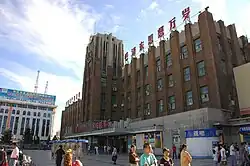
Qiqihar (é½?é½?哈尔), founded as a walled garrison city in 1691, sits on the Nen River in western Heilongjiang and was for a time the seat of the military government of Heilongjiang Province. Originally a Manchu-only city, it gradually opened to Han settlers and was transformed into a major transportation hub by the arrival of the Chinese Eastern Railway in 1903. The Japanese occupation of 1931–1945 expanded it further as a military and industrial base, and traces of that layered history — Manchu garrison, Russian-influenced railway town, Japanese-era industry, and post-1949 socialist construction — still shape its streetscape. Today it is Heilongjiang's second city, with a population of around 1.5 million in the urban core and 6.1 million across the prefecture.
Most travellers come for one reason: cranes. The vast Zhalong wetland on the city's southeastern outskirts is one of the world's most important breeding grounds for the red-crowned crane, and the city has built much of its tourism identity around the bird. Beyond Zhalong, Qiqihar is also famous across northeast China for its open-fire barbecue (烧烤) culture, which draws weekend visitors from Harbin. The urban core is split across three districts — Longsha (龙沙, the older, leafier south with the main park and rail station), Tiefeng (é“?锋, around the original railway station), and Jianhua (建å?Ž, the newer commercial centre with most of the better hotels).
Climate is sharply continental and unforgiving in winter: January averages run from −12°C high to −23°C low, and the city is snow-bound from November to March. The sweet spot for a visit is late April through June, when the cranes return to Zhalong to breed and temperatures are mild (14–22°C). July and August are warm (27–29°C) but bring most of the year's rain. Autumn (September–early October) is short, dry, and pleasant. Avoid December–February unless you are specifically chasing winter scenery and are equipped for deep cold.
Planning Qiqihar? Tell us your dates and we’ll tailor the trip.
Ask on WhatsAppHow do you get there?
By Plane
Qiqihar Sanjiazi Airport (IATA: NDG, ICAO: ZYQQ) lies about 13 km southeast of the city centre on South Buquine Street in Longsha District (tel. +86 0452 2393727). It is a small regional airport with scheduled flights from Beijing, Qingdao, and Shanghai Pudong; for most other Chinese cities you will need to connect via Beijing or fly into Harbin Taiping (HRB) and continue by high-speed rail.
A taxi from the airport to central Jianhua or Longsha runs roughly ¥40–60 and takes 25–35 minutes depending on traffic. Airport shuttle buses are timed to arriving flights and serve the city centre for around ¥20.
By Train
Qiqihar is a major rail junction and trains are by far the most useful way in.
- Qiqihar Railway Station (é½?é½?哈尔站), 130 Zhanqian Street, Tiefeng District (tel. +86 0452 12306). The historic main station, originally built in 1909 and rebuilt in 1979, with its most recent major renovation completed in September 2015. Handles most conventional services (K, T, Z trains).
- Qiqihar South Railway Station (é½?é½?哈尔å?—ç«™), No. 1 Nenjiang Ring Road, Longsha District. Handles high-speed (G and D) services.
Useful connections:
- Harbin — 1–2 hours on G/D high-speed trains; 3–4 hours on K trains.
- Beijing — 6–7 hours on direct G high-speed services; 14 hours on overnight Z and T sleepers.
- Hailar (gateway to the Hulunbuir grasslands) — about 6–7 hours on K-class express trains.
- Bei'an — about 3–4 hours on train K382.
Book a few days ahead during summer holidays (July–August) and Chinese New Year via the 12306 app or website; foreign passports are accepted but require ID verification at the station window or self-service kiosk.
By Car / Road
Qiqihar is connected to Harbin by the G10 Suifenhe–Manzhouli Expressway (about 290 km, 3.5–4 hours' drive); the road is in good condition but watch for ice and reduced visibility from November to March. Long-distance buses from Harbin's main bus stations run frequently (around 4 hours, ¥80–120) and terminate at Qiqihar's main bus station near the Tiefeng railway area. Self-driving from further afield (e.g. from Hailar, ~650 km west) is possible in summer but not recommended in winter.
The city is flat and grid-like, which makes short trips easy, but the three central districts are spread out enough that you'll want wheels for most outings.
- Taxis are abundant and cheap. Flagfall is ¥6, and you can cross the city for around ¥20. Insist on the meter (打表, dÇŽ biÇŽo); most drivers use it without issue.
- Buses cover the city well at a flat ¥1–2 per ride, but route signage is in Chinese only. Bus No. 1 and No. 2 down Longhua Road are useful for reaching Longsha Park and the train station.
- Didi (滴滴出行) ride-hailing works reliably and is often cheaper than a flagged taxi; you'll need a Chinese phone number and a payment method (Alipay or WeChat Pay) tied to it.
- Walking is pleasant in the older Longsha district around the park and along Bukui Street, but distances between districts are too far to cover on foot.
Scams are minimal but a few drivers at the airport and main railway station will quote flat fares to obvious foreigners — politely insist on the meter or order a Didi instead.
What are the things to do?
Zhalong Nature Reserve (扎龙国家级自然ä¿?护区), Zhalong Town, Tiefeng District (tel. 0452 5904068). The reason most travellers come to Qiqihar — a vast 210,000-hectare wetland that protects roughly a quarter of the world's wild red-crowned cranes, along with white-naped cranes, hooded cranes, and hundreds of other bird species. The park staff release habituated cranes for flight demonstrations at scheduled times each morning; arrive at opening to catch them. Open 07:30–17:00; admission ¥75. Buses to the reserve depart from the bus station on Longhua Road (é¾™å?Žè·¯) or near the train station, take about 1 hour, and cost ¥5. Best visited April–June during breeding season; July–September is workable but wetter.
Longsha Park (龙沙公园), No. 36 Gongyuan Road, Longsha District (tel. +86 452-2424264). The city's century-old central park — leafy, lively, and full of locals doing tai chi, ballroom dancing, and morning exercise. Includes a small zoo, lakes, and a Soviet-era martyrs' memorial. Open 05:30–21:00; free.
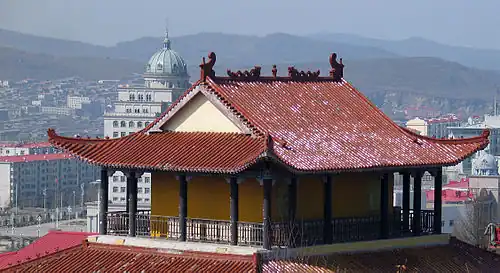
Dacheng Temple (大乘寺, "Big Buddha Temple"), Minhang Road No. 499, Tiefeng District. A 31,000 m² Buddhist complex south of the West Manchu Revolutionary Martyrs Cemetery, founded in 1943 by Kong Yushu and now a Heilongjiang Province cultural relic protection unit. Built in traditional Chinese style with multiple halls, side chapels, and Buddha statues. Open 08:00–15:00; free.
Bukui Street (å?œå¥Žå¤§è¡—), Jianhua District. The main pedestrianised commercial drag and the easiest place to feel the city's everyday rhythm — shopping, snack stalls, and street life, especially in the evenings.
Summertime night market, southern end of Gongyuan Road (公园路). Operates 18:00–21:00 in the warm months only — grilled skewers, beer, and the casual chaos that is northeastern Chinese summer nightlife.
Morning birdsong roundabout (around 47.308044, 123.949783). Around sunrise, a group of older men gather at a small roundabout-park with a central statue and hang their songbird cages from the trees. The birds call back and forth — a uniquely Chinese morning ritual that's well worth the early alarm.
Watch the crane release at Zhalong. This is the marquee experience. Aim to be at the gate when the reserve opens at 07:30 to catch the morning flight demonstration; bring a telephoto lens if you have one, and binoculars if you don't.
Eat your way through a Qiqihar barbecue night. The city's barbecue culture is a destination in itself for Chinese foodies — pick a busy local place in Jianhua District in the evening and order beef and lamb skewers, grilled mushrooms, and local Harbin beer. The whole street fires up around 18:00.
Use Qiqihar as a rail springboard. The station is a major junction, and tickets to harder-to-reach northeastern destinations (Hailar, Mohe, Bei'an) are often easier to buy here than in Harbin.
Wander Longsha Park at dawn. Watching the city wake up — tai chi, fan dancers, retired men playing Chinese chess, choirs of older women — is a real cultural experience and costs nothing.
Catch the morning birdcage gathering at the roundabout (see See). Pair with a walk and breakfast nearby.
Planning Qiqihar? Want these on a customised itinerary?
Ask on WhatsAppWhere to eat?
Qiqihar's defining food is its barbecue (烧烤). The Daur-language root of the city's name means "natural pasture," and the surrounding Nenjiang grasslands have given the city a deep meat-grilling tradition that fuses Manchu, Mongolian, Korean (Chaoxian), Hui, Daur, and Ewenki influences into something locals will tell you is better than anything in Harbin. Beef and lamb are the stars; cuts are typically marinated in-house, then grilled by diners themselves over charcoal at the table. The other regional staples are northeastern Chinese standards — stewed pork with sauerkraut, dumplings, and cold noodles — alongside freshwater fish from the Nen River.
- Rice Halal Best Beef and Mutton main shop (米家清真æž?å“?牛羊肉总店), 31 Yumin Street, Jianhua District (tel. +86 13704824680). A well-regarded local halal kebab chain serving beef and lamb skewers in the classic Qiqihar style. Open 11:00–21:00. Around ¥90 per person.
- Bukui Street barbecue strip, Jianhua District. The pedestrian street and its side alleys host dozens of barbecue joints that fire up in the evening; pick one that's full of locals.
- Halal options are unusually plentiful for a Chinese city of this size thanks to the local Hui community — look for the green crescent-and-star signage (清真).
Where to drink?
The local drinks pairing with grilled meat is, almost by law, Harbin Beer (哈尔滨啤酒) — light, clean, and brewed since 1900 in the provincial capital. The other local favourite is peach juice (桃æ±?), a non-alcoholic regional staple that pairs surprisingly well with rich barbecue.
Café and bar culture are limited compared to Harbin or Shenyang; most evening drinking happens at barbecue restaurants and night-market stalls rather than dedicated bars. The Wanda Plaza complex in Jianhua District has the most concentrated cluster of cafés, milk-tea shops, and Western-style bars.
Tap water is not safe to drink — stick to bottled water (¥2–3 per 500 ml from any convenience store) or boiled water, which is provided free in hotels and at all train stations.
Planning Qiqihar? We’ll book the stays and dining for you.
Ask on WhatsAppWhere to stay?
Mid-range
- All Seasons Hotel Qiqihar Bukui Street branch (全季酒店é½?é½?哈尔å?œå¥Žå¤§è¡—店), 88 Bukui Street, Jianhua District (tel. +86 4526130777). Reliable Huazhu-group chain hotel in the heart of the commercial district, with breakfast included. Check-in 14:00, check-out 12:00. Around ¥300.
- Boya Yufeng Hotel Qiqihar (铂亚御风酒店é½?é½?哈尔店), No. 149 Nanma Road, Tiefeng District (tel. 0452-2463333). Clean chain hotel with breakfast in central Tiefeng, convenient for the main railway station. Check-in 14:00, check-out 12:00. ¥600–1,200.
Upscale
- Wanda Realm Hotel Qiqihar (é½?é½?哈尔万达嘉å?Žé…’店), No. 1 Xinjiang Road, Jianhua District (tel. +86 18686664422). The city's leading international-standard hotel, in central Jianhua attached to the Wanda Plaza complex. Airport pick-up service and full breakfast. Check-in 14:00, check-out 12:00. From around ¥800.
What should you buy?
Qiqihar is not a major shopping destination, but a few things are worth picking up.
- Crane-themed handicrafts — paintings, paper-cuts, and embroidery featuring red-crowned cranes are sold at the Zhalong reserve gift shops and at souvenir stalls along Bukui Street.
- Northeastern food products — Nen River freshwater fish (dried), wild mushrooms, hazelnuts, and Daur ethnic specialities are good gifts to take home; look in the supermarkets along Bukui Street.
- Bukui Street and Buxi Street in Jianhua District are the main commercial shopping zones, with department stores, mid-range fashion, and the Wanda Plaza mall complex.
Bargaining is not standard in shops, malls, or chain restaurants — prices are fixed. At market stalls and souvenir shops, polite negotiation (10–20% off the asking price) is acceptable.
Where to go next?
- Harbin (~290 km, 1–2 hours by high-speed rail) — Heilongjiang's provincial capital; ice festival in winter, Russian-influenced architecture, and far more dining and nightlife than Qiqihar.
- Hailar / Hulunbuir grasslands (~650 km west, 6–7 hours by K-class train) — the great Inner Mongolian grasslands, best in summer for horse-riding and yurt stays.
- Bei'an (~3–4 hours by train K382) — a smaller northeastern city useful as a stepping stone toward Wudalianchi volcanic geopark.
- Wudalianchi (~6 hours by combined train and bus from Qiqihar via Bei'an) — a UNESCO Global Geopark of young volcanoes, lava fields, and mineral-spring resorts.
- Mohe (overnight train, ~14+ hours north) — China's northernmost town, gateway to the "Arctic village" and the only place in China where you can reliably see the aurora borealis.
- Changchun (~5–6 hours south by high-speed rail) — capital of Jilin Province, with the former Manchukuo Imperial Palace and excellent ski access in winter.
Nearby in Heilongjiang Sheng
More places to explore around Qiqihar.
Guide content as of May 2026. Portions adapted from Wikivoyage, CC BY-SA 4.0.

Contact Us
Get in touch with us.
Get in touch
Contact Us
Tell us where you'd like to go and how you like to travel. A real Tripcuro planner — not a bot — will craft an itinerary around you.
- Personalised, hassle-free planning end-to-end
- Transparent pricing, no hidden costs
- 24/7 support for complete peace of mind