
Mudanjiang
Heilongjiang Sheng, China
Why visit Mudanjiang?
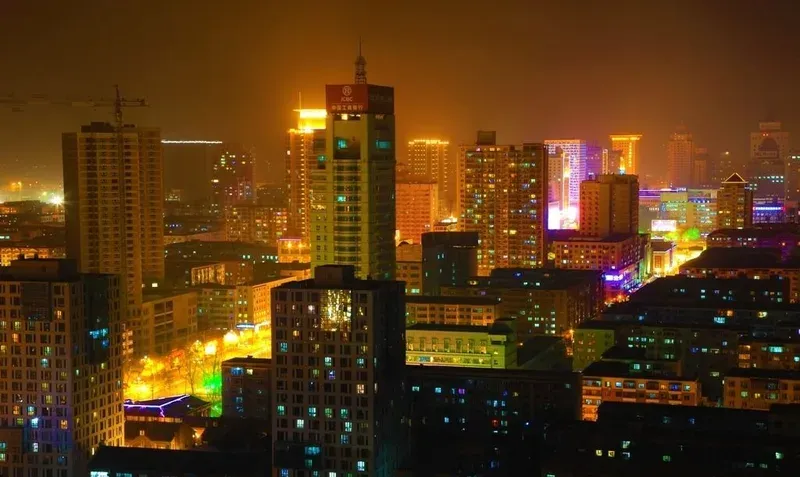
Mudanjiang (牡丹江) is a mid-sized city of around 700,000 in southeastern Heilongjiang Province, named for the Mudan River that loops through it. It sits in a valley ringed by forested hills near the Russian border, and it has long served as a crossroads — between the ancient Bohai Kingdom whose capital lay just southwest of here, the Russian Far East via Suifenhe, and the broader Northeast Chinese rail network. For most travellers, Mudanjiang is less a destination than a base: it is the gateway to Jingpo Lake, China's largest mountain barrier lake, and to the Bohai ruins at Ning'an. The city itself is workmanlike and Soviet-flavoured around the rail station, with newer commercial blocks and pleasant riverside walks softening the edges.
The climate is firmly continental and the seasons unforgiving. July and August are warm (averages 26–28°C max) and account for nearly half the annual precipitation; winters are brutally cold, with January lows around −21°C and the river frozen solid. The sweet spot is late May through mid-September for hiking and lake trips, and December through February if you specifically want ice and snow scenery — the same conditions that made nearby Hailin's "Snow Town" famous. Spring and late autumn are short, dry, and dusty.
Administratively, Mudanjiang Prefecture covers four urban districts (Aimin, Dong'an, Yangming, Xi'an), four county-level cities (Muling, Suifenhe, Hailin, Ning'an), and two counties (Dongning, Linkou). The four urban districts form the city proper; the train station and most hotels sit in Dong'an and Xi'an, on either side of the Mudan River.
Planning Mudanjiang? Tell us your dates and we’ll tailor the trip.
Ask on WhatsAppHow do you get there?
By Plane
Mudanjiang Hailang International Airport (MDG) lies about 9 km southwest of the city centre. It has scheduled flights to Beijing, Shanghai, Shenyang, Guangzhou, Qingdao and Yantai, plus a seasonal Seoul connection. A taxi into town runs roughly ¥30–50 and takes 20–25 minutes; airport shuttle buses meet most flights and run to the railway station area.
By Train
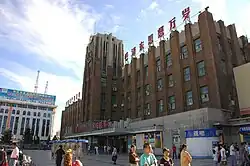
Mudanjiang Railway Station (牡丹江站) at 181 Guanghua Street, Dong'an District (+86 0453 8825562) is the main hub. The North Station, opened July 2023, is now the largest comprehensive transport hub in eastern Heilongjiang and handles the bulk of high-speed services.
Useful connections:
- Harbin — 4h30–6h on conventional trains (¥25–75); roughly 2 hours by high-speed rail.
- Beijing — about 21 hours on conventional sleepers (¥171–516); approximately 7 hours by high-speed rail.
- Dalian — 18–19 hours (¥81–438).
- Shenyang — 12–14 hours.
- Manzhouli — 20 hours (¥78–270).
- Suifenhe — frequent regional services to the Russian border.
Book sleepers a few days ahead in summer and around Chinese New Year; the 12306 site or Trip.com both work.
By Car / Road
The G11 (Hegang–Dalian) expressway and the G10 (Suifenhe–Manzhouli) intersect near Mudanjiang, making road approaches straightforward. Drive times: Harbin ~3h30 (around 330 km), Suifenhe ~2h30 (around 200 km), Jilin City ~6h. Long-distance buses also run from Harbin and Suifenhe, and there are cross-border coaches from Vladivostok, Ussuriysk and Pogranichniy in the Russian Federation — useful if you are routing in from Primorsky Krai. From Changbaishan in Jilin, daily buses come via Dunhua.
The city is compact enough that walking covers most of the centre, especially the riverside parks and the streets around the train station. City buses are plentiful at a flat ¥1–2 fare — pay cash exactly or use a transit QR app. Taxis start at around ¥6 and rarely cost more than ¥20–25 across town; insist on the meter (打表/dÇŽ biÇŽo). Didi (æ»´æ»´) ride-hailing works reliably; a Chinese phone number and a mainland-compatible payment method (WeChat Pay or Alipay linked to an international card) make life vastly easier here than in tier-one cities, where English-friendly options are more common.
For Jingpo Lake, Bohai ruins, and other prefecture sights, you'll need a hired car with driver (roughly ¥400–600 per day, negotiable through hotels) or a tour minibus — there is no convenient public transport to the lake. Watch for the usual taxi airport overcharging and for "unofficial" cabs at the rail station; queue at the marked rank instead.
What are the things to do?
Jingpo Lake (镜泊湖) — The headline attraction, about 110 km southwest in Ning'an. A 45-km-long volcanic barrier lake on the Mudan River, said to be China's largest of its type. The Diaoshuilou Waterfall on its northern outflow is most dramatic from June to early September. Entry around ¥100, plus shuttle/boat fees inside the park. Allow a full day from the city.
Bohai Town / Shangjing Longquanfu (上京龙泉府) — Ruins of the capital of the ancient Bohai Kingdom (698–926 CE), near Ning'an southwest of the lake. Stone foundations, the Xinglong Temple, and a small site museum. Easily combined with Jingpo Lake on the same day trip.
Bohai Ethnic Village — A reconstructed cultural village nearby presenting Bohai-era and Manchu heritage; pleasant rather than essential.
Mudan Peak Nature Reserve (牡丹峰) — Forested mountain area on the city's southern outskirts. Good for cool-weather hiking and birdwatching.
Sandaoguan National Forest Park — Deep mixed forest with rivers and gorges, around 60 km from the city; popular for autumn colour.
Xingkai Lake Scenic Area (兴凯湖) — A vast lake shared with Russia (Khanka), east of Mudanjiang via Mishan. A longer excursion (best as an overnight) for serious birders.
Northeastern Tiger Zoo / Siberian Tiger Park — Drive-through enclosures with captive-bred Amur tigers, part of China's tiger breeding programme. Ethically uncomfortable for some visitors; tickets around ¥100.
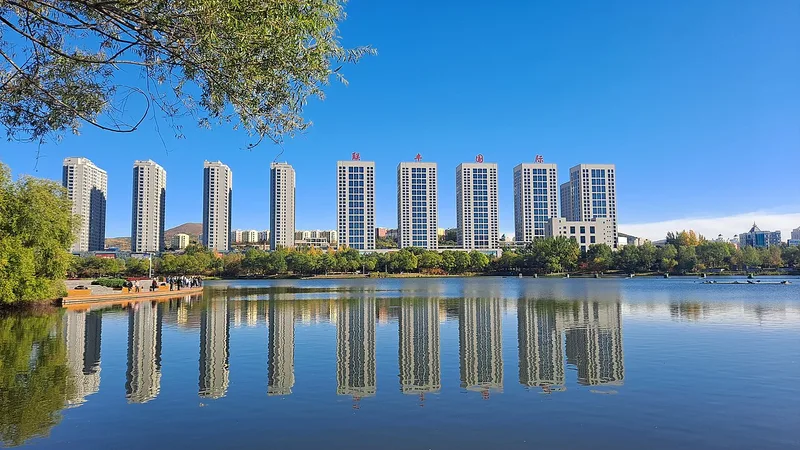
People's Park (人民公园, Rénmín GÅ?ngyuán) — South of the main train station, bordered by Dongsitiao Road, Huanhu Road and Dongping'an Street. A 49-hectare urban park that is the best place to feel the pulse of local life — morning tai chi, retirees ballroom-dancing and singing in the northern squares, paddle boats on Lianxin Lake, wetland birds and lilies on Yixin Lake in summer, and a small (frankly grim) free zoo. The southern half holds an amusement park with rides at ¥10–30 each. Park and zoo entry free.
Anti-Japanese War memorials — Several monuments around the city, including one in People's Park, commemorate the Northeast resistance against the Japanese occupation (1931–45), a key part of local identity.
Day-trip to Jingpo Lake with a stop at Diaoshuilou Waterfall and a boat across the lake — the single experience most visitors come for.
Walk the Mudan River embankment in the evening, particularly the stretch through Jiangbin Park; locals fly kites, fish, and dance in pop-up squares after dusk.
Cross-border curiosity trip to Suifenhe (2h30 by road, ~3h by train) — a treaty-port town heavy with Russian signage, onion-domed architecture, and Russian traders. Easy overnight or long day.
Winter snow trips to Hailin's Xuexiang (Snow Town) — strictly speaking in Mudanjiang Prefecture, famous for thick snow caps on log cabins from December through February.
Ice fishing and ice festivals on the Mudan River and Jingpo Lake in deep winter (January–February).
Hike Mudan Peak or Sandaoguan in summer and early autumn — well-marked trails, cool forest, good for half-day escapes.
Russian-themed evenings — several restaurants and bars in the city run Russian floor shows and folk dance, a hangover from heavy Soviet-era contact.
Planning Mudanjiang? Want these on a customised itinerary?
Ask on WhatsAppWhere to eat?
Mudanjiang cooking is Dongbei (Northeast Chinese) at its heartiest — heavy on potato, cabbage, freshwater fish, wild mushrooms, and pork — with strong Korean-Chinese and Russian influences from neighbouring populations. Signature dishes worth seeking out include guÅ?bÄ?oròu (锅包肉), sweet-and-sour fried pork; dìsÄ?nxiÄ?n (地三鲜), stewed potato, eggplant and pepper; xiÇŽojÄ« dùn mógu (å°?鸡炖蘑è?‡), chicken stewed with hand-picked forest mushrooms; suÄ?ncài bái ròu (é…¸è?œç™½è‚‰), pickled-cabbage and pork-belly stew; and Jingpo Lake whole fish at lakeside restaurants. The local Korean-Chinese minority means good cold noodles (冷é?¢/lÄ›ngmiàn) and Korean barbecue are easy to find.
- Budget — Korean cold-noodle joints around Dong'an District (¥15–25 a bowl): unpretentious, fast, and at their best in summer.
- Budget — Street-food rows near the train station: skewers (烤串), jianbing, baozi; ¥10–20 fills you up.
- Mid-range — local Dongbei stew houses (东北è?œé¦†) in Xi'an District, where ¥80–150 per person buys a big shared spread with stews, dumplings and beer.
- Mid-range — Korean BBQ restaurants clustered around Taiping Road; expect ¥100–180 per person.
- Splurge — hotel restaurants at the Golden Dome or Hawaii International, or Russian-themed dining rooms with floor shows; ¥200–350 per person.
Vegetarians can manage with the abundance of mushroom, eggplant, potato and tofu dishes, but make it clear you eat no meat, no broth (ä¸?è¦?肉,ä¸?è¦?肉汤). Halal (清真/qÄ«ngzhÄ“n) options exist via Hui-run noodle shops; strict gluten-free travel is difficult.
Where to drink?
Northeast China drinks hard. Harbin Beer (哈尔滨啤酒) is the default lager and absurdly cheap (¥4–8 a bottle in restaurants); Snow (雪花) is also everywhere. Baijiu turns up at every banquet — Beidacang is the regional sorghum brand. Russian-influenced bars near the rail station and along the river serve kvass (格瓦斯/gÄ“wÇŽsÄ«), a lightly fermented rye drink that's surprisingly good chilled in summer, and Russian vodka (sometimes genuine, sometimes not).
Café culture is modest but growing — chains like Luckin Coffee and Manner have outlets in the main commercial areas. Teahouses are quieter than in southern China, but most parks have informal tea pavilions where ¥20–40 buys a pot and a few hours of people-watching.
Tap water is not potable. Stick to bottled or boiled water; every hotel room has a kettle and most supply complimentary bottles. Ice in upscale venues is usually fine; treat street ice with caution.
Planning Mudanjiang? We’ll book the stays and dining for you.
Ask on WhatsAppWhere to stay?
Budget
- Hostels and inns around the railway station — basic doubles from ¥80–150; foreigner-registered rooms are limited, so call ahead or use a booking site that flags 外宾 (foreign-guest) capability.
Mid-range
- Golden Dome International Hotel (牡丹江金鼎国际大酒店), 99 Jingfu Street, Xi'an District — Listed doubles from ¥518, often discounted to around ¥350. Reliable mid-range pick in the commercial district.
- Hawaii International Hotel (牡丹江å¤?å¨?夷国际大酒店), 95 Qixing Street, Xi'an District — Check-in 16:00, check-out 12:00. Breakfast and airport transfers available; no pets. Listed doubles from ¥518, discounted to around ¥350.
What should you buy?
Mudanjiang's commercial heart runs along Taiping Road (太平路) and around the Wanda Plaza in Xi'an District for malls, brands and electronics. For something more local:
- Mudanjiang Beishan Market and the streets near the railway station — cheap clothes, dried mushrooms, ginseng (人å?‚), pine nuts, and black fungus (木耳) from the surrounding forests; these are genuine regional specialities and a worthwhile takeaway.
- Russian goods — chocolate, vodka, amber, matryoshka dolls, and military surplus filter back from Suifenhe; you'll see whole shops devoted to них near the rail station. Quality varies wildly — inspect amber under a UV light and treat "Russian" labels with skepticism.
- Tobacco, liquor and tea shops cluster near hotels; Beidacang (北大仓) sorghum baijiu is the local pour.
Bargaining is expected in markets and tourist-facing shops (aim for 50–70% of opening price) but not in malls or supermarkets.
Where to go next?
- Jingpo Lake & Bohai ruins — ~110 km / 2 hours by road. The reason most people come to Mudanjiang in the first place.
- Suifenhe (绥芬河) — ~200 km / 2h30 by road or ~3h by train. Russian-flavoured border town with onion domes, treaty-port architecture, and cross-border trade.
- Harbin (哈尔滨) — ~330 km / 2h by high-speed rail. Provincial capital, Russian colonial heritage, and the world-famous Ice and Snow Festival (January–February).
- Xuexiang "Snow Town" (雪乡) in Hailin — ~4h by road. Photogenic snow-bound village, December–February only.
- Changbaishan / Changbai Mountain — ~8–10h by road via Dunhua, in Jilin Province. Volcanic crater lake on the North Korean border; spectacular in summer and autumn.
- Vladivostok, Russia — overnight bus or train via Suifenhe and Pogranichny. A genuine cross-border adventure for travellers with the right visa.
Nearby in Heilongjiang Sheng
More places to explore around Mudanjiang.
Guide content as of May 2026. Portions adapted from Wikivoyage, CC BY-SA 4.0.

Contact Us
Get in touch with us.
Get in touch
Contact Us
Tell us where you'd like to go and how you like to travel. A real Tripcuro planner — not a bot — will craft an itinerary around you.
- Personalised, hassle-free planning end-to-end
- Transparent pricing, no hidden costs
- 24/7 support for complete peace of mind