
Jingpohu National Forest Park
Heilongjiang Sheng, China
Why visit Jingpohu National Forest Park?
Jingpohu National Forest Park (镜泊湖国家森林公园) protects China's largest alpine lake, a 230 km² sheet of water cradled in the volcanic plateau of southern Heilongjiang, about 110 km south of Mudanjiang. The lake itself was formed roughly 10,000 years ago when lava flows from the nearby Jingpo volcanic field dammed the Mudan River, leaving a long, ribbon-shaped basin at 350 m elevation lined with basalt cliffs, pine and birch forest, and lava-tube caves. The Manchu name Jingpo ("mirror") captures its character on a still morning, when the surface reflects the surrounding hills almost perfectly. Locals and tour brochures speak of "eight famous scenes" — Diaoshuilou Falls, the lake itself, Daoshi Mountain, Chengqiang Cliff, Zhenzhu Gate, the Hundred Birds Pavilion, Tiger Head Cliff, and Pearl Gate — all clustered along the northern and western shores.
The park is one of China's earliest designated national scenic resorts (1982) and a UNESCO Global Geopark, and it works as both a quick day trip from Mudanjiang and a 2–3 night nature stay. The northern shore around the falls and Beihu (North Lake) gate is the developed end — visitor centre, shuttle bus loop, hotels and restaurants — while the long southern shore is largely undeveloped forest. Spring (May–June) brings wildflowers and the lake thawing; summer (July–August) is peak season, when the falls run at full volume and divers leap from the cliffs above Diaoshuilou; autumn (mid-September to mid-October) is the most photogenic, with red and gold birch and maple; winter (December–March) is brutally cold (−20 °C is normal) but draws visitors for the frozen waterfall and ice fishing. Avoid the first week of October (Golden Week), when domestic crowds overwhelm the shuttle system.
Planning Jingpohu National Forest Park? Tell us your dates and we’ll tailor the trip.
Ask on WhatsAppHow do you get there?
By Plane
The nearest airport is Mudanjiang Hailang International Airport (MDG), about 120 km north of the park, with daily flights to Beijing, Shanghai, Guangzhou, Qingdao, and seasonal links to Seoul-Incheon. The airport is 9 km from central Mudanjiang; a taxi to the city costs around ¥30–40 (20 minutes), and Airport Bus Line 1 runs to the railway station for ¥10. From the airport itself there is no direct public bus to Jingpohu — transfer in Mudanjiang.
By Train
Mudanjiang Railway Station is the practical rail gateway, with high-speed G-trains from Harbin (about 2 hours, ¥80–130) on the Harbin–Mudanjiang HSR, and overnight sleepers from Beijing, Shenyang, and Dalian. A second high-speed station, Mudanjiang East, handles some HSR services. From either, continue by bus or chartered car. There is no rail station inside the park itself.
By Car / Road
Direct buses to Jingpohu (镜泊湖) leave Mudanjiang Long-distance Bus Station (next to the railway station) in the morning, typically 07:30–09:30, fare ¥25–35, journey 2–2½ hours via the G11 Hegang–Dalian Expressway and the S203 provincial road. Return buses run in the afternoon, last departure usually around 15:30 — miss it and you are committed to overnighting or hiring a car back (¥300–400). Driving yourself from Mudanjiang takes about 1¾ hours on good two-lane highway; from Harbin allow 5 hours (380 km). A popular alternative is to share a taxi or minivan from outside Mudanjiang station — ¥50–80 per seat when full.
Park entry is at the North Gate (Beimen); private cars are not permitted past the ticket office, so you transfer to the internal shuttle bus.
Inside the park, a network of green shuttle buses loops between the North Gate, Diaoshuilou Falls, the boat dock, Pearl Gate, and the hotel cluster. A one-day shuttle pass is ¥80 on top of the ¥100 entrance ticket (winter prices roughly half). Buses run every 15–20 minutes from about 08:00 to 17:30; you can hop off, walk a section of shoreline trail, and pick up the next one.
Boat tours of the lake (¥80–120, 80 minutes) leave from the main dock near the falls and reach the Hundred Birds Islet and Pearl Gate scenic clusters that are awkward to access by road. Small electric carts for hire at the falls plaza save the steep climb back up (¥20). Outside the park, ride-hailing via Didi Chuxing works in Mudanjiang but coverage thins out near the lake — book return transport before you head out. Taxis flagged in the village have no meter; agree the fare in advance, expect ¥10–20 for short hops.
The park is walkable in segments — the falls viewing loop, the cliff-top Diaoshuilou trail, and the lakeside promenade near the hotels — but the lake is 45 km long, so do not plan to circumnavigate on foot.
What are the things to do?
Diaoshuilou Waterfall (å?Šæ°´æ¥¼ç€‘布) — the park's signature sight, 20 m tall and 40 m wide, plunging over a curved basalt rim into a deep green plunge pool. Volume is dramatic in July–August after rains; in winter it freezes into a blue ice cone. Local cliff diver Di Huanran performs scheduled jumps from the rim in summer (typically 10:00, 11:00, 14:00, 15:30 — confirm at the gate). Included with park entry.
Jingpo Lake (镜泊湖) — the lake itself, best appreciated from the boat tour or the cliff path between the falls and Daoshi Mountain. Watch for basalt columnar jointing along the shore. Boat ticket ¥100.
Underground Forest / Dixia Senlin (地下森林) — about 50 km from the main park, a cluster of ten collapsed volcanic craters now choked with mature larch and birch growing from the crater floors up to the rim. A 2–3 hour boardwalk loop. Separate ticket ¥75; reachable by chartered car from the park hotels (¥250–300 round trip).
Volcanic Crater Forest National Geopark (ç?«å±±å?£å›½å®¶åœ°è´¨å…¬å›) — adjacent to the Underground Forest and often combined with it. Lava tubes, scoria cones, and the rim trail of Crater No. 3.
Hundred Birds Islet (百鸟岛) and Pearl Gate (ç??ç? é—¨) — small islands and rock arches reached only by boat, named for the migratory waterfowl that nest in summer.
Daoshi Mountain (é?“士山) — a forested promontory with a Qing-era story about a Daoist hermit; short climb, lake panorama at the top.
Cliff diving show at Diaoshuilou — Di Huanran has been jumping the falls daily in summer for over two decades; even sceptics tend to find it worth the wait.
Lake cruise from the main dock, ideally late afternoon for the light on the basalt cliffs.
Hiking the cliff trail above Diaoshuilou Falls and the lava-tube path near the Underground Forest. Both are well-marked but slippery in rain — proper shoes matter.
Fishing for the local Jingpo hua lian (a freshwater carp species), in season June through August. Boats and gear can be hired through the park hotels for around ¥200–300 per half day; permits sold at the dock.
Winter activities (December–March): ice fishing on the frozen lake, sledding, and a small ski area near Mudanjiang (Yabuli, China's biggest resort, is 200 km away — see Go Next).
Birdwatching in May and September migration windows — egrets, mandarin ducks, and occasional black storks.
Volcanic geology day combining the Underground Forest, the lava tubes, and the crater rim.
Planning Jingpohu National Forest Park? Want these on a customised itinerary?
Ask on WhatsAppWhere to eat?
Northeastern (Dongbei) cooking is hearty, garlic-forward, and built for cold winters: stewed pork and cabbage, cumin lamb skewers, cold potato-starch noodles, and freshwater fish straight from the lake. Around the park, the standout local dish is Jingpohu pickled-cabbage fish stew (镜泊湖酸è?œé±¼) — usually made with carp from the lake itself, simmered with sour fermented cabbage, glass noodles, and chili. Manchu and Korean influences run through the menus thanks to the region's ethnic mix.
- Hu Bin Restaurant (湖滨饭店), inside the Jingpohu Hotel complex — the safe choice for whole-fish dishes; expect ¥120–180 for fish for two, plus ¥30–60 per side dish.
- Nong Jia Yuan (农家院) — half a dozen family-run "farm restaurants" along the road approaching the park; point at what looks good in the kitchen, expect ¥60–100 a head with beer. Signature: stewed dapanji chicken with potato.
- Stalls at the falls plaza for cumin lamb skewers (¥3–5 each), grilled corn (¥5), and roast sweet potato — fine for a quick lunch between sights.
- In Mudanjiang, Lao Si Ji Chao Ji (è€?四季炒鸡) for Dongbei-style stir-fried chicken, and the Korean barbecue strip on Xi'an Lu for grilled beef and cold noodles.
Vegetarian options inside the park are limited — wild mushroom hotpot and cold cucumber/tofu dishes are reliable. Halal restaurants are scarce at the park itself but easy to find in Mudanjiang (look for 清真 signage).
Where to drink?
The drink to try is Beidagang blueberry wine (北大è?’è“?莓酒) from the Greater Khingan blueberry harvest — sweet, deeply coloured, around 12 % ABV, sold at every gift shop for ¥50–120 a bottle. Local lager is Harbin Beer (¥5–8 a bottle in restaurants) or its rougher cousin Snowflake; baijiu drinkers will find Beidacang and Laobaigan on every table.
There is no real bar scene inside the park — the hotel lobbies have tea lounges and the occasional KTV, and most evening drinking happens at restaurant tables. In Mudanjiang, Russian-influenced bars on Taiping Lu serve Baltika and kvass alongside Chinese beer.
Tap water is not safe to drink — stick to bottled water (¥2–3 for 550 ml) or boiled water from the thermos every hotel provides. Tea is the universal soft drink; jasmine and green tea are standard, and locals drink Da Hong Pao rock oolong with heavier meals.
Planning Jingpohu National Forest Park? We’ll book the stays and dining for you.
Ask on WhatsAppWhere to stay?
- Budget: Jingpohu Youth Hostel (镜泊湖é?’å¹´æ—…èˆ?) in the staff-village area near the North Gate — dorm beds around ¥60–90, twin rooms ¥180–250, shared bathrooms, basic but clean and friendly to non-Chinese-speaking guests. Various nongjia le (farm stays) in Beihu Cunzhuang ("North Lake village") offer twin rooms with kang beds for ¥150–250 including breakfast.
- Mid-range: Jingpohu Shanzhuang (镜泊湖山庄) — the long-standing park-run hotel cluster on the lakeshore, twin rooms ¥400–700 in summer, half that in winter; lake-view rooms worth the upgrade. Jingpohu Hubin Hotel (镜泊湖湖滨宾馆) is its sibling, similar prices, slightly older fittings but right at the boat dock.
- Upscale: Jingpohu Resort Hotel / Jingpo Villa (镜泊湖别墅区) — semi-detached lakeside villas in a wooded compound used historically for state guests, ¥900–1,800 a night for a two-bedroom villa in summer; book through the official park reservations line. The compound includes a small spa and private boat dock.
What should you buy?
This is a nature destination, not a shopping one. The visitor plaza near the North Gate has the usual cluster of stalls selling dried mushrooms (hou tou gu / lion's mane and yuan mo / black fungus from the surrounding forests), wild blueberries and blueberry wine, pine nuts, deer-antler products, and ginseng — all northeastern specialties, all marked up. Prices are negotiable; halve the first ask and work from there. For serious shopping, save it for Mudanjiang's Bei'an Lu pedestrian street or the Russian-goods markets reflecting the city's proximity to Vladivostok.
Where to go next?
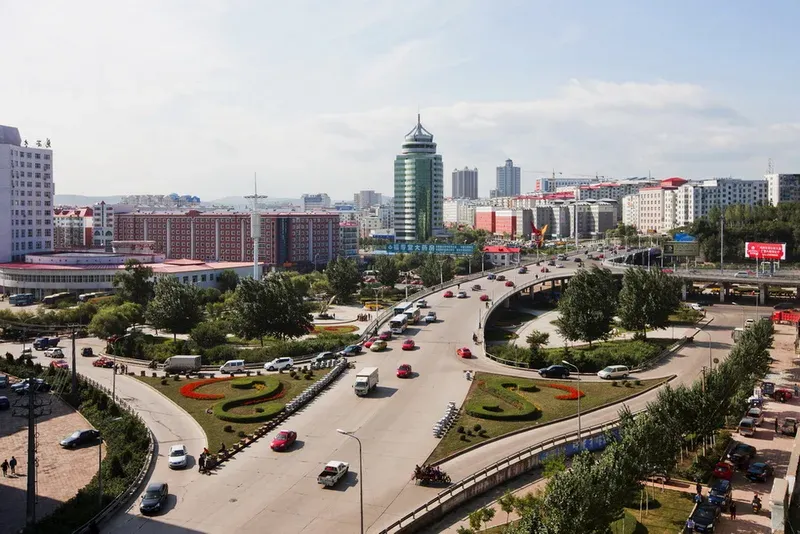
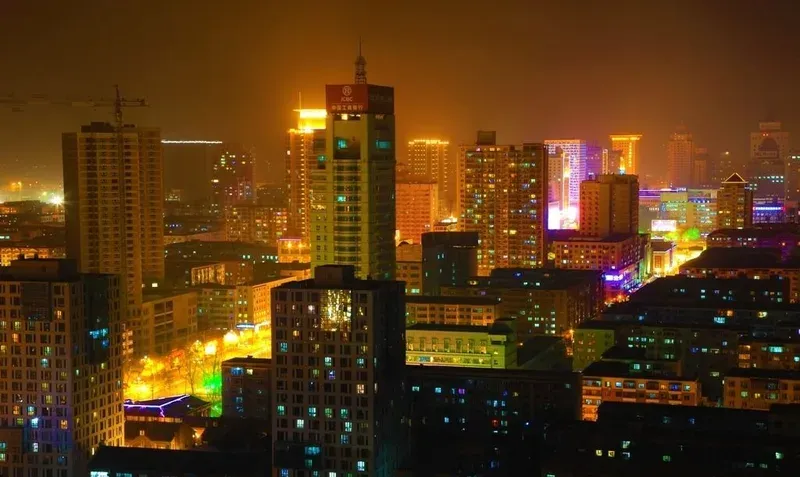
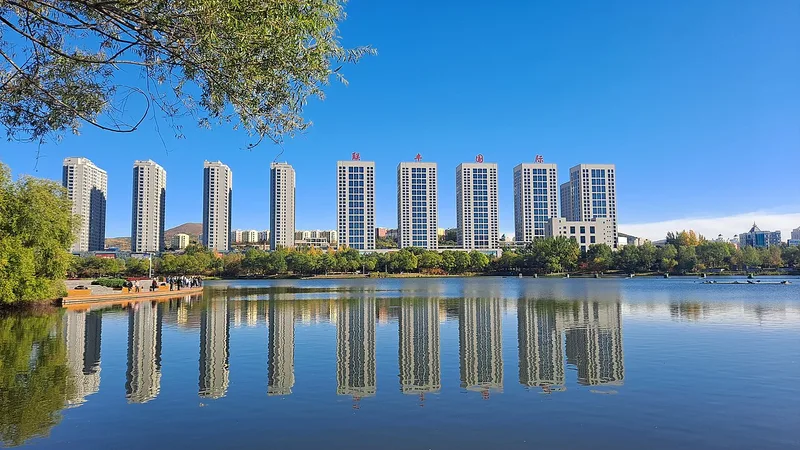
- Mudanjiang (牡丹江) — 110 km / 2 hours by bus. Regional capital, jumping-off point for the park, and home to the Sino-Russian friendship sites and the heart-shaped Jingpo-style lake at Beishan Park.
- Underground Forest / Dixia Senlin (地下森林) — 50 km / 1 hour. Volcanic-crater forest, easy half-day trip, often combined with the park itinerary.
- Suifenhe (绥芬河) — 220 km / 3½ hours by train. Border town with Russia, Cyrillic shop signs, vodka and amber markets; visa required to actually cross.
- Yabuli Ski Resort (亚布力) — 200 km / 3 hours. China's largest ski area, runs December–March, day-trip lift passes around ¥300.
- Harbin (哈尔滨) — 380 km / 2¼ hours by HSR. Russian-era architecture, the January Ice and Snow Festival, and Songhua River promenades.
- Changbaishan (长白山) / Heaven Lake — 600 km / a full day's travel south into Jilin. The bigger volcanic-crater lake on the North Korean border, worth pairing with Jingpohu on a Northeast geology trip.
Nearby in Heilongjiang Sheng
More places to explore around Jingpohu National Forest Park.

Guide content as of May 2026. Portions adapted from Wikivoyage, CC BY-SA 4.0.

Contact Us
Get in touch with us.
Get in touch
Contact Us
Tell us where you'd like to go and how you like to travel. A real Tripcuro planner — not a bot — will craft an itinerary around you.
- Personalised, hassle-free planning end-to-end
- Transparent pricing, no hidden costs
- 24/7 support for complete peace of mind