
Suifenhe
Heilongjiang Sheng, China
Why visit Suifenhe?
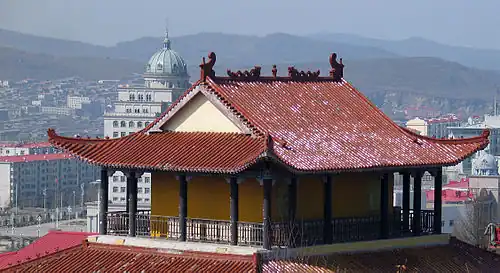
Suifenhe (绥芬河) is a small but bustling border city in the southeastern corner of Heilongjiang Province, pressed up against the Russian frontier and serving as China's principal land gateway to Vladivostok and the Russian Far East. Its character is unmistakably hybrid: Cyrillic shop signs sit beside Chinese characters, ruble-yuan exchange boards flicker in restaurant windows, and Russian shuttle traders haul bulging plaid bags of Chinese goods back across the border each afternoon. The town grew up around the Chinese Eastern Railway in the late 19th and early 20th centuries, and a handful of Russian-era wooden and brick buildings still survive on the hillsides above the modern centre, lending the place a faintly tsarist atmosphere unusual for inland China.
For most travellers Suifenhe is a transit point rather than a destination — the place you stop overnight before catching the bus or train onward to Pogranichny and Vladivostok — but it rewards a slow half-day of wandering. The compact centre climbs up from the railway station in a tangle of stepped streets lined with fur shops, samovar emporia, and Russian-Chinese restaurants, and the surrounding hills give long views over forested ridges that roll on into Primorsky Krai.
The climate is harshly continental: summers (June–August) are warm, humid and pleasant, with daytime highs in the mid-20s °C, while winters are bitterly cold, with January daytime maxima often around −15 °C and overnight lows much lower. Late May to early October is the comfortable window; midwinter is for the hardy and the well-padded only. Spring and autumn are short but beautiful, with the surrounding birch and larch forests turning gold in late September.
Planning Suifenhe? Tell us your dates and we’ll tailor the trip.
Ask on WhatsAppHow do you get there?
By Plane
The nearest airport is Mudanjiang Hailang International Airport (MDG), roughly 200 km west of Suifenhe, with domestic connections to Beijing, Shanghai, Guangzhou, Qingdao and several other Chinese cities. From the airport, take a taxi or shuttle into Mudanjiang city and continue to Suifenhe by bus or train (see below).
By Train
Suifenhe Railway Station sits at the centre of town and is the focal point for arrivals — the main square, hotels, restaurants and the domestic bus station all cluster around it.
- From Harbin: an overnight train (departs around 8:30 PM, arrives around 7 AM) is the classic approach. Hard sleeper fares start from around ¥88 on the older service; faster daytime services also run.
- From Mudanjiang: several trains a day, around 3–4 hours.
- To Russia (Pogranichny / Гродеково): an international train continues across the border to Pogranichny, departing in the morning and reaching the Russian side around midday (remember the 3-hour time change). At the Russian railhead the gauge changes, which adds time. Onward buses from Pogranichny to Vladivostok take roughly 4 hours including customs.
The cross-border service is often booked solid for weeks in advance, especially in summer — reserve as far ahead as possible, and bring your passport for ticket purchase.
By Car / Road
- From Mudanjiang: about 220 km via the G10 Suifenhe–Manzhouli Expressway, around 2.5–3 hours by car. Frequent minibuses run this route from Mudanjiang's long-distance bus station throughout the day.
- From Harbin: about 550 km by road, with daily long-distance coaches making the trip in roughly 8–9 hours. The expressway is good quality almost the whole way.
- To Russia by bus: buses to Vladivostok do not depart from the domestic bus station opposite the railway station. The international bus terminal is a short taxi ride away (about ¥10–20). The terminal often looks shut from outside — corrugated iron over the entrance is normal — but buses leave from inside. The last bus typically departs in the early afternoon, with the terminal closing around 4 PM; buy your ticket the same morning. Some services drop you on the Russian side for an onward transfer rather than running straight through to Vladivostok.
Suifenhe's centre is small and walkable, though steep — the streets climbing away from the railway station give the town a distinctly hilly feel and can be heavy going in winter ice or summer heat. Most of what a visitor needs (hotels, the main restaurant strip, the central square, ATMs, the domestic bus station) lies within a 15-minute walk of the train station.
Taxis are the default for anything further afield, including the international bus terminal. Flagfall is low; rides within town typically run ¥10–20. Few drivers speak English, but many handle basic Russian, so a written destination in Chinese characters is the safest approach. Ride-hailing via Didi (滴滴出行) works in Suifenhe as it does elsewhere in China and is the easiest option for non-Mandarin speakers, provided you have a Chinese-linked payment method.
City buses cover the residential outskirts but are rarely needed by visitors. Watch for the usual border-town frictions: confirm taxi fares before setting off, and be a touch sceptical of "official" prices quoted at the international bus terminal.
What are the things to do?
Suifenhe is light on conventional sights — its appeal is atmospheric rather than monumental — but a half-day wander turns up more than you might expect.
Russian-era architecture (è€?建筑) — A scatter of late-19th and early-20th-century wooden and brick buildings from the Chinese Eastern Railway era survive on the slopes above the centre, including the old Eastern Orthodox-influenced railway station building and several merchant houses. Best appreciated as a walking circuit on foot. Free; exteriors only.
Suifenhe Border Monument & National Gate (国门) — The official border crossing point, a few kilometres east of town, with a ceremonial gate marking the China–Russia frontier and viewpoints toward Pogranichny on the Russian side. A taxi from town and back, with waiting time, is the easiest way to visit.
Central Square & Pedestrian Street — The plaza in front of the railway station and the streets climbing away from it form the de facto heart of town: bilingual Chinese–Russian shopfronts, fur and leather stores, samovar and matryoshka stalls, and a steady flow of Russian shoppers with wheeled bags.
Hilltop viewpoints — Several of the streets behind the station climb steeply enough to give long views over Suifenhe's red roofs and the forested ridges rolling into Russia. Best at sunset.
Walk a Russian–Chinese border-town circuit — Spend a couple of hours on foot tracing the steep streets behind the station, photographing the hybrid shopfronts, listening to the mix of Mandarin and Russian on the pavements. It is the single most distinctive thing to do here.
Cross into Russia — For travellers with a Russian visa already in their passport, doing the land crossing to Pogranichny and on to Vladivostok is itself an experience: the gauge change on the train, the trader-heavy customs queues, the abrupt shift in alphabet, currency and time zone.
Day trip to the border markets — Suifenhe's commercial life revolves around cross-border trade, and watching the daily rhythm of Russian shoppers loading up on textiles, electronics and household goods before heading back across the frontier is a small spectacle in itself.
Forest and ridge walks — The hills around town are heavily wooded with birch, oak and pine, and turn spectacularly gold in late September.
Planning Suifenhe? Want these on a customised itinerary?
Ask on WhatsAppWhere to eat?
Suifenhe's food scene is a fun collision of dongbei (northeastern Chinese) home cooking and Russian-influenced border-town fare. Expect heavy, warming dishes built for the climate: wheat dumplings (饺å?), guo bao rou (锅包肉, sweet-and-sour battered pork), di san xian (地三鲜, potato-aubergine-pepper stew), suan cai (é…¸è?œ) sour-cabbage hotpot, and grilled river fish. On the Russian-influenced side, look for borscht (罗宋汤), Russian-style sausages, dark rye bread, smetana (sour cream), and red caviar in the more Russian-leaning restaurants near the centre.
The street running up from the railway station — turn left at the top of the steps past the (domestic) bus station — is lined with small restaurants and is the easiest place to eat well and cheaply.
- Breakfast Buffet (early morning, restaurant strip above the station) — A perennially packed local spot with a long table of self-serve breakfast dishes: dumplings, deep-fried snacks, soups, cold salads, egg dishes. Pile a tray, take it to your seat, and the waitress will tally the bill — a substantial breakfast runs around ¥4–10. Cash only. Budget.
- California Beef Noodle King (加州牛肉é?¢å¤§çŽ‹) — A branch (or look-alike) of the ubiquitous Chinese chain, useful for a reliable bowl of beef noodle soup near the station when you don't have the energy to negotiate menus. Budget, ¥15–30 a bowl.
- Russian restaurants near the central square — Several mid-range Sino-Russian places offer borscht, beef stroganoff, sausages with mash, and Baltika beer alongside Chinese standards. Menus are typically in Chinese and Russian; English is rare. Expect ¥60–120 per person.
Vegetarians can do well on dongbei vegetable dishes (di san xian, stir-fried greens, mushroom dishes, vegetable dumplings — though dumpling fillings often contain meat, so confirm with wÇ’ chÄ« sù 我å?ƒç´ ). Halal options exist in the form of Lanzhou-style noodle (兰州拉é?¢) shops scattered around town.
Where to drink?
The default local pours are Harbin Beer (哈尔滨啤酒) and Snow (雪花), both cheap and ubiquitous, alongside imported Baltika and other Russian lagers in the more Russian-oriented bars and restaurants. Baijiu (白酒) — northeastern China's fierce sorghum spirit — is poured at any serious meal, and Russian vodka is widely available and often cheaper than back across the border, which is part of why the shuttle traders come.
Tea culture is less elaborate here than in southern China; expect simple jasmine or green tea served by the pot in restaurants, and instant coffee or basic espresso drinks in cafés around the central square.
Tap water is not safe to drink anywhere in China, Suifenhe included. Stick to bottled water (¥2–3 for 500 ml from any convenience store) or boiled water, which most hotels provide free in rooms via a kettle and thermos.
Planning Suifenhe? We’ll book the stays and dining for you.
Ask on WhatsAppWhere to stay?
Suifenhe has a solid spread of accommodation aimed mostly at Russian shoppers and Chinese business travellers — generally clean and functional, occasionally quirky, rarely luxurious. Note that some smaller guesthouses still cannot legally accept foreign passports; if in doubt, call ahead or have your hotel booked through a major site that filters for foreigner-friendly properties.
Budget
- Guesthouses around the railway station square — Several small hostel-style places on the streets immediately uphill from the station offer basic private rooms with shared or en-suite bathrooms, often negotiable to under ¥100 in low season. Ask at reception; English is rare, Russian sometimes works. From around ¥80–150.
Mid-range
- Suifenhe International Hotel (绥芬河国际饭店) — A long-standing mid-range option used by both Chinese business guests and Russian visitors; central, walkable to the station, with a restaurant on site. Roughly ¥300–500 per room.
What should you buy?
Suifenhe is, above all, a shopping town — but a shopping town aimed at Russian visitors rather than Chinese tourists. The streets near the central square and around the railway station are wall-to-wall with shops selling fur coats and hats, leather jackets, down jackets, cashmere knitwear, mobile phones and electronics, sportswear, household goods and cheap luggage to haul it all home in. Quality is variable; bargaining is expected and prices typically start at 2–3× what you should actually pay, especially if the shopkeeper assumes you are Russian.
For souvenirs aimed at Chinese visitors, look for Russian imports: lacquer boxes, matryoshka dolls, samovars, Russian chocolate (Alyonka, Babaevsky), vodka, honey, and amber jewellery. Quality and authenticity vary — the better stalls cluster around the main square.
Both yuan and rubles are accepted in most shops near the centre, and many shopkeepers will quote prices in either on request. ATMs around the main square take VISA and MasterCard but are intermittently reliable; some require a six-digit PIN, in which case prefixing your four-digit PIN with 00 often works. Changing US dollars in cash is possible but slow and requires a passport photocopy.
Where to go next?
- Vladivostok, Russia — ~230 km east; roughly 9 hours total via the Pogranichny crossing by train + bus. The whole point of coming to Suifenhe for many travellers — Russia's Pacific port, with its stunning bay, naval history, and surprisingly lively café and restaurant scene.
- Mudanjiang — ~220 km west; 2.5–3 hours by road or train. Gateway to Jingpo Lake (镜泊湖), a long, scenic volcanic lake with a waterfall and good summer hiking.
- Jingpo Lake (镜泊湖) — ~280 km west; reachable via Mudanjiang. One of northeast China's most striking natural sights, especially in late summer and early autumn.
- Harbin — ~550 km west; 8–9 hours by road or overnight by train. Heilongjiang's capital, famous for its surviving Russian architecture along Zhongyang Dajie, the summer Songhua River promenade, and the legendary January–February Ice and Snow Festival.
- Hunchun (Jilin Province) — ~400 km south; the other major Chinese border town in the Far East, sitting at the tri-border of China, Russia and North Korea, with onward access to the Tumen River area.
- Pogranichny (Погранничный), Russia — Just across the border; not a destination in its own right but an unavoidable transit stop with a small market and bus terminal where most cross-border travellers spend an hour or two waiting for onward transport.
Nearby in Heilongjiang Sheng
More places to explore around Suifenhe.
Guide content as of May 2026. Portions adapted from Wikivoyage, CC BY-SA 4.0.

Contact Us
Get in touch with us.
Get in touch
Contact Us
Tell us where you'd like to go and how you like to travel. A real Tripcuro planner — not a bot — will craft an itinerary around you.
- Personalised, hassle-free planning end-to-end
- Transparent pricing, no hidden costs
- 24/7 support for complete peace of mind