
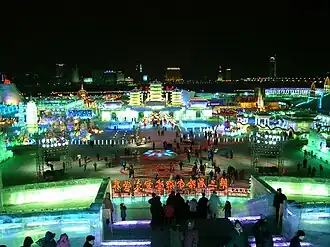
Acheng
Heilongjiang Sheng, China
Why visit Acheng?
Acheng (阿城) is a district of Harbin in southern Heilongjiang Province, lying roughly 30 km southeast of central Harbin along the Ashi River. Once a separate county-level city, it was absorbed into Harbin municipality in 2006, but it retains a strong identity of its own — and a far older one than the Russian-flavoured provincial capital to the northwest. This is the site of Shangjing Huining Prefecture (上京会å®?府), the first capital of the Jurchen-founded Jin dynasty (1115–1234), proclaimed here by Wanyan Aguda after his revolt against the Liao. For roughly four decades in the 12th century, the walled city on the outskirts of present-day Acheng was the political heart of a north Asian empire that ruled much of what is now northern China. Today the ruins, the dynastic tombs, and the excellent on-site museum are the reason most travellers come.
Beyond the Jin sites, Acheng functions as Harbin's nearest rural escape: the surrounding hills carry forest, ski runs, and the Yuquan (玉泉) hunting ground and ski resort, while the district town itself is a quiet, low-rise Northeast Chinese county seat with cheap food, brewery heritage (Hapi/Harbin Beer has long-standing production ties to the region), and far thinner tourist crowds than central Harbin. It is most rewarding as a day trip or overnight from Harbin, especially if you are already in town for the Ice and Snow Festival and want a half-day of history.
Climate tracks Harbin's: brutally cold from December through February (daytime highs routinely –12 °C, nights down to –24 °C or lower), mild and pleasant from June through August (highs in the upper 20s °C, occasional rain), and short, crisp shoulder seasons. Visit the Jin ruins in late May through early October if you want to walk the site comfortably; come in winter only if you are pairing it with Harbin's ice festival and are prepared for the cold.
Planning Acheng? Tell us your dates and we’ll tailor the trip.
Ask on WhatsAppHow do you get there?
By Plane
The nearest airport is Harbin Taiping International Airport (HRB), around 60–70 km west of Acheng. From the airport, the simplest route is to take a taxi or an airport shuttle into central Harbin (roughly ¥100–130 by metered taxi to the city centre) and continue from there by train, bus, or car to Acheng. There is no direct airport bus to Acheng District.
By Train
Acheng is on the Binsui Railway (Harbin–Suifenhe line) and is a stop on the Harbin–Mudanjiang high-speed line, which makes the journey from Harbin extremely easy.
- Acheng Railway Station (阿城站) — conventional services from Harbin Railway Station; journey around 40–50 minutes.
- Acheng North Railway Station (阿城北站) — high-speed (G/D) trains from Harbin West (哈尔滨西), journey around 20–25 minutes. This is the fastest option from central Harbin.
Tickets are cheap (typically ¥15–30 second class) and can be booked via the China Railway 12306 app or at any station counter. Buy a day or two ahead for weekend travel in peak summer or during the ice festival.
By Car / Road
Acheng sits on the G10 Suifenhe–Manzhouli Expressway and the older G301 national highway, both linking it directly to Harbin.
- From Harbin city centre: ~30–40 km, 40–60 minutes by car depending on traffic; road quality is good (expressway most of the way).
- From Mudanjiang: ~290 km west on the G10, around 3 hours.
- From Changchun: ~280 km north via the G1 and G10, around 3 hours.
Long-distance and intercity coaches run from Harbin'så?—å²— (Nangang) and 公路大桥 (Gonglu Daqiao) bus stations to Acheng throughout the day for around ¥15–20; they take 60–90 minutes depending on traffic.
Acheng's town centre is compact and walkable. The major sites — particularly the Jin Shangjing ruins and museum — sit a few kilometres outside the town, so you will need wheels for those.
- Taxis are plentiful and metered; flagfall is low (a short cross-town ride is typically ¥8–15, and a one-way out to the Jin ruins from Acheng station is usually ¥20–30). Confirm the meter is running.
- Didi (滴滴出行) works in Acheng and is the easiest option if you do not speak Chinese — you can pin the destination in the app. A foreign payment card may not work; use Alipay or WeChat Pay linked to a Chinese bank or, increasingly, an international card via the apps' tourist modes.
- Local buses cover the district town and run out to nearby townships; fares are ¥1–2 in cash, but signage and announcements are Chinese-only.
- Walking is fine in the town centre in summer; in winter, layer heavily and limit outdoor stretches to 20–30 minutes between warm-ups.
- Scams: Acheng is low-risk. The usual sensible precautions apply — agree on a fare before getting into an unmetered car, and watch for the standard "tea house" overcharge scam if approached by overly friendly English-speaking strangers (more a Harbin phenomenon than an Acheng one).
What are the things to do?
Jin Dynasty heritage (the main reason to come)
- Jin Shangjing History Museum (金上京历å?²å?šç‰©é¦†) — the standout sight. A well-presented museum on the edge of the Jin capital ruins, covering Jurchen origins, the founding of the Jin dynasty by Wanyan Aguda, daily life, military equipment, and the dynasty's eventual fall to the Mongols. English signage is limited but the artefacts are excellent. Located in the northern outskirts of Acheng town.
- Shangjing Huining Prefecture Ruins (金上京会å®?府é?—å?€) — the earthen ramparts of the Jin capital's south city and north city, including a moat outline and the foundations of the imperial palace area. Best appreciated alongside the museum; allow 1–2 hours to walk the perimeter. Free to enter the grounds.
- Tomb of Wanyan Aguda (完颜阿骨打陵, also known as Jin Taizu Ling) — the burial site of the dynasty's founder, with a memorial hall. Adjacent to the museum complex.
Outdoors and around the district
Yuquan Ski Resort (玉泉滑雪场) — one of the older ski areas serving Harbin, in the hills southeast of Acheng. Beginner and intermediate runs, equipment rental on site. Open roughly mid-November through March.
Yuquan International Hunting Ground (玉泉国际狩猎场) — a forested reserve historically used for managed hunting; now primarily a nature and recreation area. Worth combining with the ski resort in a single day.
Songfeng Mountain Scenic Area (æ?¾å³°å±±é£Žæ™¯åŒº) — a forested Daoist mountain south of Acheng, with old temple remains and good hiking in summer and autumn.
Half-day Jin dynasty history walk — pair the Shangjing museum with a slow walk along the surviving rammed-earth walls of the old capital. This is the single best thing to do in Acheng and the reason most domestic visitors come.
Ski day from Harbin — Yuquan is an accessible, lower-key alternative to Yabuli for a one-day ski outing; many Harbin-based travellers come out for the morning and return the same evening.
Summer forest hike at Songfeng Shan or in the Yuquan area — Northeast Chinese mixed broadleaf-conifer forest, very quiet on weekdays.
Brewery and local food crawl in central Acheng — the district has long-standing ties to Harbin Beer production and is a good place to drink it on tap with grilled skewers in summer.
Day-trip base for the Harbin Ice and Snow Festival — if Harbin hotels are full or overpriced in January, basing in Acheng and commuting in by high-speed train is a workable strategy.
Planning Acheng? Want these on a customised itinerary?
Ask on WhatsAppWhere to eat?
Acheng's food is Dongbei (Northeast Chinese) cuisine — heavy, generous portions, lots of stewed and braised dishes, wheat and millet staples alongside rice, and a strong barbecue/skewer culture in the warm months. Signature regional dishes worth ordering:
- Guo bao rou (锅包肉) — crispy sweet-and-sour pork, a Northeast classic.
- Di san xian (地三鲜) — stir-fried potato, eggplant, and green pepper.
- Xiao ji dun mogu (å°?鸡炖蘑è?‡) — chicken stewed with local forest mushrooms; especially good here.
- Suan cai bai rou (é…¸è?œç™½è‚‰) — pickled cabbage with sliced pork belly, often in a hotpot.
- Chuan'r (串儿) — grilled lamb/beef/chicken skewers, eaten outdoors with beer in summer.
Specific recommendations are best confirmed on the ground — Acheng's restaurant scene turns over quickly and few places have a national reputation.
- Budget (¥20–40 per person): any of the lamb-skewer (烤串) joints along the main commercial streets in central Acheng — look for crowds of locals around 7–9pm in summer. Order skewers, a cold cucumber dish, and Harbin Beer on draft.
- Mid-range (¥60–120 per person): a Dongbei jia chang cai (家常è?œ, "home-style") sit-down restaurant — ask your hotel for a current local favourite; turnover is high.
- Special: try a mushroom-and-chicken stew at any country-style restaurant near Yuquan or Songfeng Shan — the forest mushrooms are local and excellent.
Dietary notes: Vegetarian options are limited but possible — di san xian, stir-fried greens, tofu dishes, and cold vegetable plates are widely available, though stock and lard are common in cooking. Halal (清真) restaurants exist (look for the Arabic script or 清真 sign) but are not numerous outside Harbin proper. Gluten-free is very difficult; soy sauce, dumplings, noodles, and wheat-flour pancakes are everywhere.
Where to drink?
- Harbin Beer (哈尔滨啤酒, "Hapi") — China's oldest beer brand, founded in Harbin in 1900, and a near-mandatory pairing with skewers and Dongbei food. Widely available on draft and in bottles for a few yuan a glass.
- Baijiu — local Northeast distilleries produce sorghum-based grain spirits; sampled cautiously with food, not standalone.
- Kvass (格瓦斯) — a mildly fermented bread drink, a Russian-influenced Northeast specialty. Sold in supermarkets and at street stalls in summer.
- Tea and coffee — Acheng has the usual mix of Chinese chain coffee shops (Luckin, Cotti) and small teahouses; nothing destination-worthy.
Water safety: do not drink tap water. Bottled water is cheap (¥2–3 for 500 ml) and ubiquitous. Boiled water — hot water dispensers (热水) are standard in hotels and on trains — is safe.
Planning Acheng? We’ll book the stays and dining for you.
Ask on WhatsAppWhere to stay?
Most travellers stay in Harbin and visit Acheng on a day trip, but staying overnight is straightforward and cheap.
- Budget (¥80–180/night): chain budget hotels in central Acheng such as 7 Days Inn (7天连é”?酒店) and Home Inn (如家) branches — clean, predictable, reliable Wi-Fi, English-language booking via Trip.com or Booking.com.
- Mid-range (¥250–450/night): Hanting Hotel (汉庭酒店) and Atour Light / Ji Hotel (季酒店) branches in Acheng town offer a noticeable step up in room quality and breakfast.
- Upscale / resort: the closest higher-end stays are at the Yuquan ski resort in season, with on-mountain hotels and lodges; outside of ski season, real upscale accommodation is back in central Harbin (the Shangri-La, Sofitel, and the heritage Modern Hotel on Central Avenue are the standard picks).
What should you buy?
Acheng is not a shopping destination. What you can sensibly pick up:
- Northeast Chinese forest products: dried mushrooms (especially yuan mo 元蘑 and hua gu 花è?‡), pine nuts, and wild fungi sold in the local markets — much better value than in central Harbin.
- Russian-style biscuits and chocolate (大列巴, 红肠) — the famous Harbin da lieba (Russian-style bread) and hong chang (red sausage) are easily found in Acheng supermarkets at lower prices than tourist areas in Harbin.
- Jin dynasty themed souvenirs at the Shangjing museum shop (replica artefacts, books).
Prices in shops and supermarkets are fixed. Bargaining is appropriate only at open-air markets and with street vendors — expect to negotiate around 10–20% off an opening price, not the half-off that applies in tourist bazaars further south.
Where to go next?
- Harbin city centre (~30–40 km / 25 min by high-speed train) — Central Avenue, Saint Sophia Cathedral, the Ice and Snow World in winter, and the Songhua River waterfront. The natural pairing with any Acheng visit.
- Yabuli Ski Resort (~190 km southeast / ~2 hours by high-speed train) — China's largest ski resort, dramatically bigger than Yuquan.
- Mudanjiang and Jingpo Lake (镜泊湖) (~290 km east / ~3 hours by train) — volcanic lake and waterfall, excellent in summer and autumn.
- Wudalianchi (五大连池) (~330 km north / ~5 hours by car or train+bus) — volcanic geopark with mineral springs and lava fields.
- Changchun (~280 km south / ~2 hours by high-speed train) — Jilin's provincial capital, with the Puppet Emperor's Palace and Manchukuo-era architecture.
- Jilin City (~370 km south / ~3 hours by train) — famous for winter rime ice along the Songhua River, an unmissable photogenic phenomenon from late December to February.
Nearby in Heilongjiang Sheng
More places to explore around Acheng.


Guide content as of May 2026. Portions adapted from Wikivoyage, CC BY-SA 4.0.

Contact Us
Get in touch with us.
Get in touch
Contact Us
Tell us where you'd like to go and how you like to travel. A real Tripcuro planner — not a bot — will craft an itinerary around you.
- Personalised, hassle-free planning end-to-end
- Transparent pricing, no hidden costs
- 24/7 support for complete peace of mind