
Gilbert Islands
Kiribati · Group of islands (20 inhabited islands) · 23 destinations with guides
Photography coming soonWhy visit?
The Gilbert Islands are the cultural and political heartland of Kiribati — a chain of 16 low-lying coral atolls and reef islands straddling the Equator in the central Pacific, with 20 inhabited islands in total. None rises more than a few metres above sea level, and most are little more than thin ribbons of sand and coconut palm encircling vast turquoise lagoons. The group hosts roughly three-quarters of Kiribati's population, almost all of it concentrated on South Tarawa, where the capital Bairiki and the dense urban strip of Betio sit on a narrow string of islets connected by causeways.
Geographically the chain runs north-south for about 800 km, named after the 18th-century British mariner Thomas Gilbert. The islands lie either side of the Equator, all within the UTC+12 time zone, and feel utterly remote even by Pacific standards: cargo ships call irregularly, internet is patchy, and on most outer atolls electricity runs only a few hours a day. What you come for is the opposite of polish — empty beaches, traditional maneaba (meeting houses) at the heart of every village, World War II wreckage half-swallowed by the reef, and an i-Kiribati culture that has changed remarkably little despite a century of contact.
For travellers, the Gilberts split cleanly into two experiences: Tarawa, where you'll arrive, sleep in a guesthouse, and confront a frank picture of frontline climate change; and the Outer Islands, reached by Air Kiribati's small fleet, where you stay with families, sleep on woven mats, and may not see another foreigner for weeks.
When is the best time to visit?
The dry season runs roughly May to October, when the southeast trades blow steadily and rainfall is lowest — this is the best window for inter-island flights, lagoon crossings, and outer-island stays. December to March is the wet season, hotter and stickier, with heavier downpours though rarely the cyclones that batter islands further south (Kiribati sits close enough to the Equator to escape most tropical storms).
The biggest fixed date is Independence Day on 12 July, marked across the Gilberts with week-long celebrations of canoe races, traditional dancing (te buki, te kaimatoa), and feasts in the maneaba — Tarawa is the centre of the action but every inhabited island holds something. Te Bo ni Kiribati cultural performances run intermittently through the dry season. Avoid travelling around major holidays if you need an Air Kiribati seat: locals book up the planes weeks in advance.
A practical quirk: because the islands straddle the Equator, the sun is overhead with brutal intensity year-round. Bring far more sun protection than you think you need.
Tell us your dates and we'll shape a Gilbert Islands route around them.
WhatsAppHow do you get around?
There is no rail anywhere in Kiribati, and roads exist only on the larger atolls. Inter-island travel is by plane or boat, and you should plan around limited capacity rather than fixed schedules.
- Air Kiribati is the only carrier, operating four small aircraft (Twin Otters and similar) out of Bonriki International Airport on Tarawa. It serves all Outer Islands on a rotating weekly schedule — typically one or two flights per island per week. Fares run roughly A$150–350 one-way depending on distance. Flights are frequently delayed or cancelled for weather or maintenance; build slack into your itinerary.
- Inter-island cargo ships sail from Betio to most outer atolls, but schedules are irregular (every few weeks), conditions are basic (deck passage), and journeys take 1–4 days each way. Useful only for travellers with a lot of time.
- On Tarawa itself, shared minibuses run the length of South Tarawa from Betio to Bonriki for about A$1–2 — flag them down anywhere on the main road. Taxis exist but are negotiated rather than metered.
- On Outer Islands, transport is by motorbike, bicycle, or on foot. Most atolls are 10–25 km long and a few kilometres across; nearly everything is walkable or a short ride.
Distances are deceptive on a map — Tarawa to Butaritari is only ~250 km but a full flight day, and reaching the southernmost islands like Arorae or Tamana can take a week of waiting for the right plane.
Where should you go?
- Tarawa — the capital atoll; gateway, urban hub, and site of the WWII Battle of Tarawa relics on Betio.
- Abaiang — closest outer atoll to Tarawa; has at least one small hotel and a couple of guest houses, easiest "real" outer-island taste.
- Butaritari — lush, green, and the wettest of the Gilberts; Robert Louis Stevenson stayed here in 1889.
- Abemama — Stevenson's "Equator Town"; classic atoll lagoon and royal-family heritage.
- Marakei — known for its four sacred shrines that visitors traditionally circle on arrival.
- Maiana — quiet atoll with strong traditional dance traditions.
- Aranuka — small, central, with a long shallow lagoon ideal for wading and fishing.
- Kuria — tiny twin-islet atoll; deeply traditional village life.
- Nonouti — long atoll with one of the finest lagoons in the chain.
- Tabiteuea (North & South) — the longest atoll in the group; the name means "kings are forbidden", a proud egalitarian tradition.
- Beru — historic seat of the London Missionary Society in Kiribati; Protestant heartland.
- Nikunau — southern atoll famous for skilled fishermen and outrigger canoe builders.
- Onotoa — remote, sparsely visited southern island with an extensive lagoon system.
- Arorae — southernmost Gilbert; site of the mysterious "navigation stones" thought to have guided ancient Pacific voyagers.
- Tamana — smallest of the Gilberts at just 5 km², too small for an airstrip; reached only by boat.
Want the scenic legs and stays booked for you? Just ask.
WhatsAppWhat should you eat?
I-Kiribati food revolves around what the reef, lagoon, and coconut palm provide. Expect reef fish (often grilled whole or eaten raw as ika mata — cubed in coconut cream and lime), te bua toro ni baukin (octopus in coconut sauce), and palu sami equivalents made by baking taro leaves with coconut cream. The breadfruit (te mai) and pandanus (te kaina) are staples; pandanus is dried, pounded, and eaten as a chewy sweet called te tuae. Coconut toddy (te karewe), tapped from the spathe of the coconut palm, is drunk fresh and sweet in the morning or fermented to mild alcohol by evening.
On Tarawa, the small restaurant scene is concentrated in Bairiki and Betio. The Mary's Motel restaurant, Utirerei Hotel dining room, and a handful of Chinese-run eateries near the Betio causeway serve reliable mixed plates of fish, rice, and stir-fries for around A$10–18. Fresh fish from the morning market in Betio is excellent and cheap. On Outer Islands there are no restaurants at all — you eat what your host family cooks, typically fish, rice, breadfruit, and coconut, and a small daily contribution (A$30–50) is the norm.
Vegetarians will struggle: the diet is fish-heavy, and "vegetable" often means rice with a little tinned corned beef. Bring supplements if travelling long on outer atolls.
What is the culture like?
I-Kiribati culture centres on the maneaba, the large open-sided meeting house found in every village, where decisions are made, dances are performed, and visitors are formally welcomed. Each clan (kaainga) has its own seating place (boti), and the etiquette around entering a maneaba is taken seriously — remove your hat, sit cross-legged, and wait to be acknowledged.
Independence Day (12 July) is the calendar's centrepiece, with a full week of inter-village dance competitions, canoe sailing races, and traditional sports. Youth Day (early August) and Gospel Day (commemorating the 1857 arrival of Christianity, observed in July) also draw island-wide gatherings. The Catholic and Kiribati Uniting Church calendars structure village life on most atolls — Sundays are quiet, and travel or loud activity on Sunday is poorly received, particularly in Protestant strongholds like Beru.
Traditional dance (te mwaie) is alive and constantly practised: the standing dance te kaimatoa, the seated te bino, and the dramatic te buki with its sharp head movements are performed at every significant gathering. Crafts to look for include pandanus mats and hats, shark-tooth weapons (historically), and intricate shell jewellery.
Travelling during a festival? We'll plan around the crowds.
WhatsAppWhat are the standout experiences?
- Walk the WWII battlefields of Betio. The November 1943 Battle of Tarawa was one of the bloodiest amphibious assaults of the Pacific War; Japanese pillboxes, rusting Sherman tanks, the wreck of the Saida Maru, and coastal guns still sit where they fell, scattered across a working urban island.
- Stay with a family on an Outer Island. Arrange through the Ministry of Tourism office in Bairiki before you fly — a few nights on Abaiang, Abemama, or Butaritari, sleeping in a thatched kiakia, eating with your hosts, and watching village life pass at canoe-pace, is the defining Gilberts experience.
- Snorkel or dive a Tarawa lagoon wreck. The lagoon holds dozens of WWII aircraft and ship wrecks in clear, warm, shallow water — many accessible from shore, though guided trips are safer given currents.
- Visit the navigation stones of Arorae. A line of carefully aligned standing stones on the southern tip of the island, traditionally said to have been used by ancient Micronesian navigators to set courses for distant atolls — one of the Pacific's most enigmatic archaeological sites.
- Trace Robert Louis Stevenson's 1889 voyage. Stevenson spent months on Butaritari and Abemama and wrote about both in In the South Seas; the royal compound on Abemama and the village landscapes he described are still recognisable, and reaching them by Air Kiribati Twin Otter is half the romance.
Top Destinations
Every destination in Gilbert Islands with a guide — tap a place for the full guide.

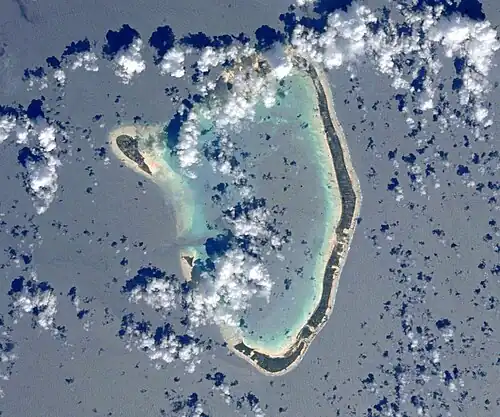
Abaiang
Abaiang is a quiet coral atoll in the Gilbert Islands chain of…
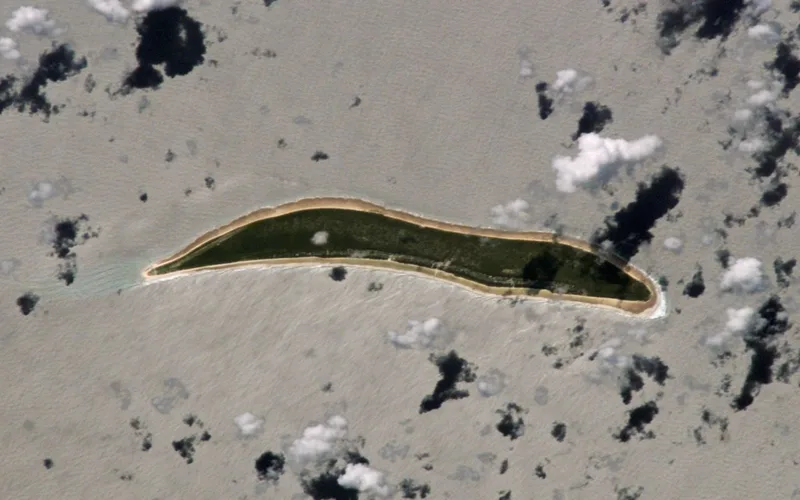
Abemama
Abemama is a 16-square-kilometre atoll with a population of roughly…
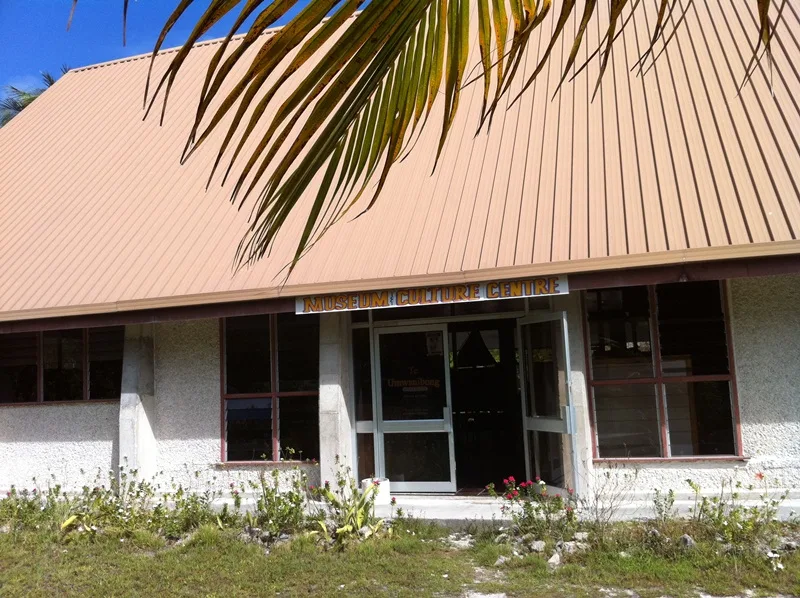
Arorae
Arorae is the southernmost inhabited island of the Gilbert Islands…
Bikenibeu
Bikenibeu is one of the easternmost villages strung along South…
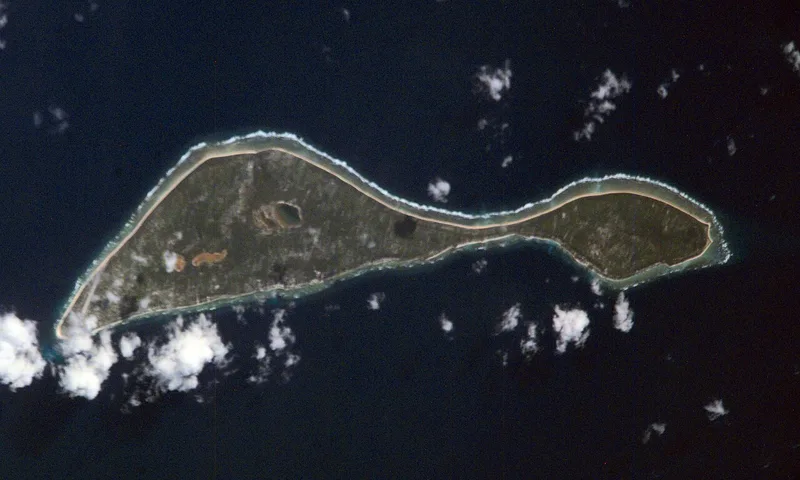
Nikunau
Nikunau is a small reef island in the southern Gilbert Islands of…
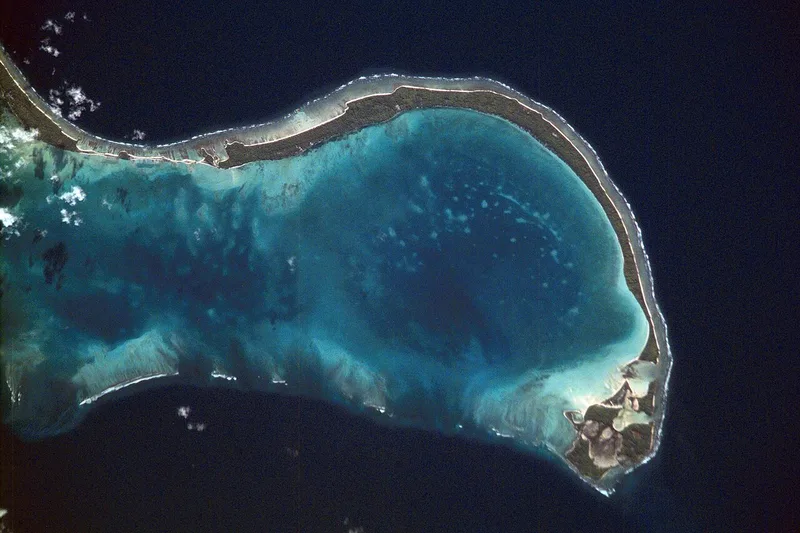
Onotoa
Onotoa is a small, low-lying coral atoll in the southern Gilbert…
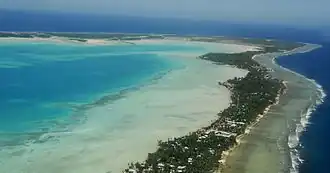
South Tarawa
South Tarawa is the densely populated southern arm of Tarawa Atoll…
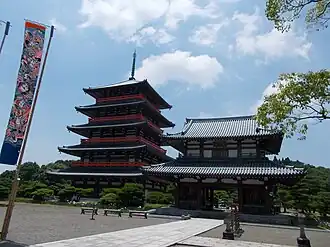
Tamana
Tamana is one of the smallest and most remote inhabited islands of…
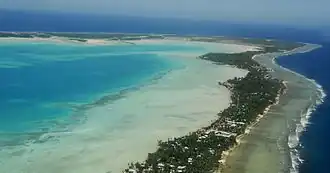
Tarawa
Tarawa is a coral atoll in the central Pacific and the political and…
Aranuka
Aranuka is a small triangular atoll in the central Gilbert Islands of…
Bairiki
Bairiki is a small but politically significant islet on the western…
Banaba
Banaba (formerly Ocean Island) is a solitary raised coral island west…
Beru
Beru is a small, low-lying atoll in the southern Gilbert Islands of…
Betio
Betio is the densest, busiest, and most historically charged township…
Bonriki
Bonriki is a settlement on the southeastern side of Tarawa Atoll…
Butaritari
Butaritari (pronounced Pu-tari-tari) is a lush, low-lying atoll in…
Kuria
Kuria sits in the central Gilberts, just northwest of Aranuka and…
Maiana
Maiana is a low-lying coral atoll in the southern Gilbert Islands…
Makin
Makin is the northernmost inhabited island of the Gilbert Islands…
Marakei
Marakei is a small ring-shaped atoll in the northern Gilbert Islands…
Nonouti
Nonouti is a coral atoll in the southern Gilbert Islands of Kiribati…
Tabiteuea
Tabiteuea (formerly Drummond's Island) is the second-largest and most…
Tabiteuea (Tabiteuea North
Tabiteuea North (Tabiteuea Meang in Gilbertese) is the northern half…
Pair the highlights of Gilbert Islands into one easy trip — we'll plan the route.
WhatsApp
Contact Us
Get in touch with us.
Get in touch
Contact Us
Tell us where you'd like to go and how you like to travel. A real Tripcuro planner — not a bot — will craft an itinerary around you.
- Personalised, hassle-free planning end-to-end
- Transparent pricing, no hidden costs
- 24/7 support for complete peace of mind