
Butaritari
Gilbert Islands, Kiribati
Why visit Butaritari?
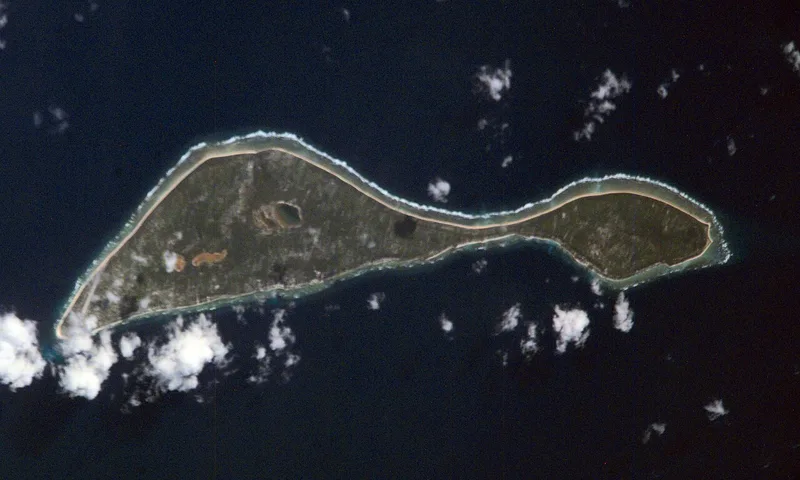
Butaritari (pronounced Pu-tari-tari) is a lush, low-lying atoll in the northern Gilbert Islands of Kiribati, sitting just north of the equator and immediately south of its sister atoll, Makin. With a land area of about 13.6 km² stretched across an east–west span of roughly 30 km and a population of around 3,200, it is one of the larger and greener atolls in the country — notably wetter than the drier central and southern Gilberts, which is why bananas, pumpkin and other produce are grown here for shipment down to Tarawa. The deep, open lagoon exchanges freely with the ocean, keeping the water cool by atoll standards and providing one of the best natural harbours in Kiribati.
The island's character is shaped by two stories. The first is wartime: Butaritari (then known to Allied forces as Makin South) was occupied by Japanese troops on 9 December 1941 and retaken by American forces in the invasion that began on 20 November 1943, leaving behind bunkers, pontoons, aircraft wrecks and memorials, particularly around Ukiangang village. The second is cultural: Butaritari was traditionally seat of the high chief who ruled both Butaritari and Makin, briefly hosted Robert Louis Stevenson and his party aboard the Equator in 1889, and is still known across Kiribati for its old esoteric traditions — the calling of whales (Te Binekua) at Kuma village, the Kaobunang shrines, and a long-standing reputation for powerful "spiritual weapons" (black magic), though active practitioners are fewer each generation.
Life remains rural and subsistence-based; people depend on the sea and the land, and the maneaba (traditional meeting house) is still the centre of village life. The climate is tropical and consistently warm (around 28–31°C year-round); the drier, slightly less humid months from roughly May to October are the most comfortable for travel, while the wetter months from November to April bring heavier rain and the risk of disruption to the already infrequent flights. Dress modestly — women in particular should avoid mini-skirts and short shorts; sulus (wrap-around skirts) or knee-length skirts/shorts with a T-shirt are the norm.
Planning Butaritari? Tell us your dates and we’ll tailor the trip.
Ask on WhatsAppHow do you get there?
By Plane
The atoll is served by Butaritari Atoll Airport (IATA: BBG), a small coral-strip airfield a short drive from the main villages. Air Kiribati operates the only scheduled service, with flights from Bonriki International Airport (TRW) on South Tarawa, usually routed via Makin. Flights are infrequent (typically a couple of times per week) and small (Twin Otter / Harbin Y-12 class aircraft), so build slack into any itinerary and reconfirm locally — weather and operational delays are common.
There are no taxis or airport buses. Pre-arrange a pickup with your guesthouse or host; most lodgings will collect guests by truck or motorbike for a small contribution toward fuel.
A single rough coral road runs the length of the atoll, linking the villages by causeway and channel crossings. There are no metered taxis, no ride-hailing apps, and no scheduled local buses. In practice you get around by:
- Truck and motorbike lifts arranged through your guesthouse or with locals — agree a fuel contribution in advance (typically a few Australian dollars per trip; AUD is the local currency).
- Walking and cycling — distances within and between neighbouring villages are very manageable; a borrowed bicycle is often the most useful thing on the island.
- Small boats for crossing to islets in the lagoon — hire is informal, by negotiation with boat owners at the village.
There is little to scam: prices are low, but it is polite to ask before photographing people and to make a small offering (tobacco is the traditional one) when visiting shrines or being shown sacred sites.
What are the things to do?
Ukiangang village WWII sites — the most concentrated cluster of war relics on the atoll, including the American-built airstrip, Japanese pillboxes and bunkers, beached pontoons, and remains of aircraft wrecks and memorials marking the November 1943 US landings. Free; access on foot with a local guide is strongly recommended both for context and to navigate village protocol.
Kuma village shrines — at the far north-eastern end of the atoll, the traditional home of the Te Binekua (whale-calling) ritual and the Kaobunang shrines. Visiting requires a local escort, and visitors are expected to leave an offering (sticks of tobacco are customary).
Other ancestral shrines scattered along the atoll — your guide can point them out as you travel south from Kuma; each has its own family custodian and its own etiquette.
Temwanokunuea — the administrative centre, with the main government office, a clinic and the island council; not a "sight" in itself, but the practical hub if you need officialdom, cash (limited) or to make a phone call.
The lagoon reefs and channels — easily accessible from most villages; some of the clearest, coolest atoll water in Kiribati thanks to the open exchange with the ocean.
Stevenson trace — there is no museum or marked site on Butaritari itself, but the atoll's connection to Robert Louis Stevenson's 1889 stay is part of the island's identity; the surviving photographs of the Equator and the Wightman Brothers' trading store on Butaritari are held at the Writers' Museum in Edinburgh, not here.
WWII history walk around Ukiangang — half- or full-day with a local guide, combining bunkers, the old American strip and beach landing sites.
Cultural tour from Kuma south — the classic Butaritari itinerary, starting in Kuma at the whale-calling shrine and working down the atoll through other shrines and villages; arrange through your guesthouse.
Lagoon boat trips to uninhabited islets — hire a small boat for a picnic day on one of the lagoon islets; bring your own water and shade.
Reef, beach and island walking — at low tide you can walk significant stretches of reef and from islet to islet across causeways.
Moonlight walking — a genuine local pastime on clear nights, particularly along the lagoon-side beaches.
Maneaba evenings and traditional dancing — if your visit coincides with a village event (church opening, school feast, council gathering), guests are usually welcomed; it is custom to dab perfume onto the dancers as a sign of appreciation, so bring a bottle.
Fishing and reef snorkelling — informal, arranged with whichever village family you are staying with; bring your own mask and fins as rental gear is not reliably available.
Planning Butaritari? Want these on a customised itinerary?
Ask on WhatsAppWhere to eat?
Food on Butaritari is what the reef, the lagoon and the gardens provide: reef fish (grilled or in coconut cream), octopus, shellfish, breadfruit, pandanus, pumpkin, bananas and the ubiquitous coconut in every form — drinking nuts, grated flesh, and the sweet sap toddy (kaokioki). The signature local dish is te bua toro ni baukin and other coconut-cream preparations of reef fish; rice and tinned corned beef round out most meals.
There are essentially no restaurants in the Western sense. You will eat:
- At your guesthouse — almost all lodging on the atoll includes full board, and this is where you will get the freshest fish and the most reliable meals; expect to pay for board as part of your nightly rate rather than per-meal.
- At village feasts — if invited to a botaki (gathering) at a maneaba, accept; this is the best food on the island and the heart of the social culture.
- From village stores — for snacks, tinned goods, biscuits and bottled water between meals.
Vegetarians can be accommodated with breadfruit, pumpkin, rice and coconut-based dishes, but say so explicitly in advance; halal and strictly gluten-free diets will be very difficult to maintain — bring supplementary supplies.
Where to drink?
- Coconut — the everyday drink, both green drinking nuts and the fermented/unfermented toddy tapped from the spathe.
- Tea and instant coffee — universally available at guesthouses.
- Bottled water — bring as much as you can carry from Tarawa; tap and well water on the atoll should not be drunk untreated. Boil, filter or chemically treat anything you cannot buy bottled, and budget at least 3 litres per person per day in the heat.
- Alcohol — sold in limited quantities at a few village stores (typically cans of Australian-brand beer); consumption is restricted by village by-laws and by church influence, and public drunkenness is taken very poorly. If you drink, do so discreetly at your accommodation.
There are no bars, cafés or teahouses in the urban sense; sociable drinking happens at the maneaba or around someone's house.
Planning Butaritari? We’ll book the stays and dining for you.
Ask on WhatsAppWhere to stay?
Accommodation on Butaritari is genuinely basic across the board — expect simple thatched or concrete rooms, shared bathrooms, intermittent electricity (often generator-only, a few hours each evening), bucket showers, and mosquito nets. There is no "upscale" tier on the atoll in any meaningful sense, so the categories below reflect what local options exist rather than a true price ladder.
- Budget
- Council / island rest house — most outer islands in Kiribati operate a basic government rest house bookable through the Island Council; rates are modest (typically in the low tens of Australian dollars per night) and meals are usually arranged separately.
- Mid-range (by Outer Island standards)
- Village guesthouses / homestays — a handful of families take paying guests on a full-board basis; your best route is to ask the Kiribati National Tourism Office in Tarawa to put you in touch before you fly, as informal places change hands and names frequently.
- Upscale / heritage
Whatever you book, confirm in writing before you fly, bring cash for the full stay in small AUD notes, and assume that any payment by card or transfer will not be possible on the island.
What should you buy?
There is no tourist shopping to speak of. A handful of small village stores (notably in Temwanokunuea and Ukiangang) stock tinned fish, rice, biscuits, soap, batteries and — crucially for visitors — sticks of tobacco and cigarettes, which are the standard offering at shrines and a polite gift for hosts and guides. Bring Australian dollars in small denominations; there are no ATMs and no card facilities on the atoll, and the bank presence (if any) is minimal.
Local crafts — pandanus mats, woven fans, shell ornaments, and te bino string handicrafts — are made for household use rather than sale, but villagers will often part with pieces if asked respectfully; offer a fair price in cash. Bargaining is not a feature of the culture; pay what is asked or what feels reasonable, and err on the generous side.
Where to go next?
- Makin (immediately north, ~5 km across the channel; short Air Kiribati hop or boat) — Butaritari's twin atoll, historically ruled by the same chief; quieter, with its own WWII story (the August 1942 Carlson's Raiders raid landed here) and excellent reefs.
- Tarawa (about 250 km / 1.5–2 hours by Air Kiribati turboprop) — the capital atoll; Betio's WWII battlefield (Tarawa, November 1943) is the necessary companion piece to Butaritari's war sites, plus the country's only real urban amenities, hotels and onward flights.
- Abaiang (north of Tarawa; short flight or boat from Tarawa) — a classic, more accessible Gilberts outer-island experience with strong traditional culture and good lagoon scenery.
- Marakei (north of Tarawa; Air Kiribati from Tarawa) — small ring-shaped atoll famous for its four spirit shrines that visitors traditionally circle on arrival; a natural cultural follow-up to Butaritari's shrines.
- Banaba (Ocean Island) (far west; infrequent flights/boats from Tarawa) — the country's raised phosphate island, geologically and historically unlike anywhere else in Kiribati; for serious outer-island travellers only.
- Kiritimati (Christmas Island) (in the Line Islands, Fiji-side of the country; weekly Air Kiribati from Tarawa or via Fiji) — world-class bonefishing and seabird colonies; a long onward leg but the most rewarding non-Gilbert destination in Kiribati.
Nearby in Gilbert Islands
More places to explore around Butaritari.
Guide content as of May 2026. Portions adapted from Wikivoyage, CC BY-SA 4.0.

Contact Us
Get in touch with us.
Get in touch
Contact Us
Tell us where you'd like to go and how you like to travel. A real Tripcuro planner — not a bot — will craft an itinerary around you.
- Personalised, hassle-free planning end-to-end
- Transparent pricing, no hidden costs
- 24/7 support for complete peace of mind