
Nikunau
Gilbert Islands, Kiribati
Why visit Nikunau?
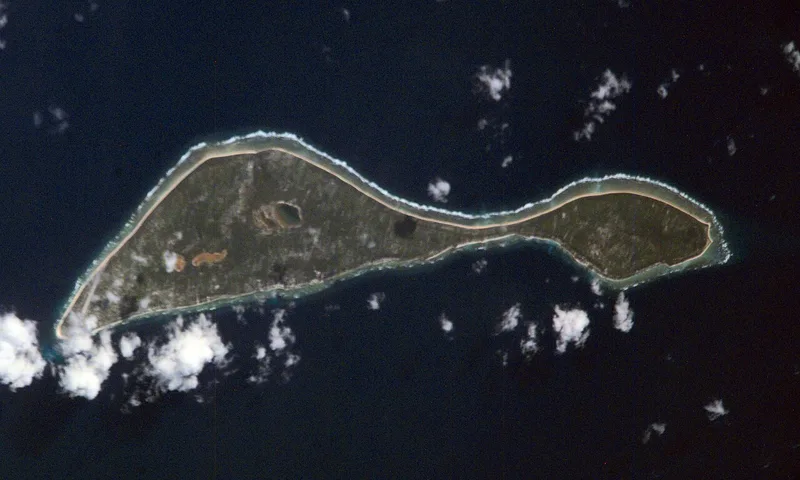
Nikunau is a small reef island in the southern Gilbert Islands of Kiribati, lying just south of the equator in the central Pacific. Unlike most of Kiribati's classic ring-shaped atolls, Nikunau is a single elongated landmass without a true central lagoon — a few brackish ponds and saltwater pools punctuate the interior, but the island reads as one continuous strip of coconut palm, pandanus and breadfruit fringed by coral reef. Roughly 19 km² of land supports around 1,900–2,000 I-Kiribati people spread across a chain of small villages, with subsistence fishing, copra cutting and toddy (sweet coconut sap) production still anchoring daily life much as they have for centuries.
Travellers come to Nikunau for one reason: to experience an outer-island Kiribati that almost no one visits. There are no resorts, no tour operators, no ATMs and no restaurants in the western sense. Visits are arranged through the village system, and a stay here is essentially an invitation into a community — sleeping in a thatched buia (raised sleeping platform), eating reef fish and rice with a host family, attending church on Sunday and dancing at the maneaba (community meeting house) when the village holds a function. The reward is genuine immersion in one of the most remote inhabited places on earth.
Climate is equatorial maritime: hot (27–32 °C year-round), humid, and broadly two-seasoned. The drier, slightly cooler trade-wind months from roughly May to October are the most comfortable for visiting, with steadier easterlies and calmer reef conditions. November to April is the wetter "westerly" season, when squalls and heavier rain are more frequent and inter-island flights are more prone to cancellation. Cyclones are very rare this close to the equator, but king tides and storm surges do affect low-lying villages. The island has no neighbourhoods in the urban sense — orient yourself instead by village names along the single main track: Rungata, Tabutoa, Muribenua, Manriki and Nikumanu are the principal settlements.
Planning Nikunau? Tell us your dates and we’ll tailor the trip.
Ask on WhatsAppHow do you get there?
By Plane
The only practical way in is Nikunau Airport (IATA: NIG), a grass/coral airstrip near the centre of the island. Air Kiribati operates the route from Bonriki International Airport (TRW) on Tarawa using small turboprops (Twin Otter / Y-12 class aircraft), typically once or twice a week and often combined with a stop at neighbouring Beru or Onotoa. Schedules change frequently and overbooking is common — book in person at the Air Kiribati office in Betio/Bairiki on Tarawa or through their Tarawa headquarters as far ahead as possible, reconfirm 48 hours before departure, and build slack into onward international connections.
There is no terminal building of note and no taxi rank. Your host family or the island council (te botaki ni mwakuri) will normally meet the flight; a lift to your village is usually arranged informally with a motorbike or pickup, and a small fuel contribution (a few Australian dollars) is the polite norm.
A single coral-and-sand track runs roughly the length of the island, linking the villages. Distances are short — end to end is on the order of 12–15 km — and most travel is done on foot, by bicycle, or on the back of a small motorbike. A few households and the island council own pickup trucks that double as informal transport; a lift across the island in exchange for a small fuel contribution (typically a couple of Australian dollars) is the usual arrangement. There are no taxis, no ride-hailing apps, no buses and no rental agencies. Walking is genuinely pleasant in the cooler hours after sunrise and before sunset; midday heat and glare off the coral are punishing, so carry water and a hat.
Mobile coverage is patchy — ATH (Amalgamated Telecom Holdings, BwebwerikiNet) has gradually extended service to the outer islands, but data is slow and outages are routine. Buy a local SIM on Tarawa before flying out. Cash is essential: bring enough Australian dollars (AUD) in small denominations to cover your entire stay plus a margin, as there is no bank, no ATM, and card payment is not accepted anywhere on the island. "Scams" are not a meaningful issue; the more relevant etiquette risk is appearing stingy — small gifts (tea, sugar, rice, school supplies) for host families and contributions to the maneaba are expected and warmly received.
What are the things to do?
Sights on Nikunau are not ticketed attractions — they are landscape, community and quiet observation. There are no museums, no entrance fees and no opening hours in the conventional sense.
The maneaba network. Each village has its own maneaba, the large open-sided thatched meeting house that is the social, political and ceremonial heart of community life. Visiting one is by invitation; if your host family takes you to a function, observe seating customs (men and elders toward the centre posts, shoes off, no standing taller than seated elders) and you'll be welcomed warmly.
Brackish interior ponds. Several shallow inland pools, used historically for te bwaa (milkfish) cultivation, dot the centre of the island. They are best seen on a morning walk with a local guide who can point out bird life and explain traditional fish-trap construction.
The reef flats and ocean-side cliffs. At low tide the windward (eastern) reef exposes vast platforms of coral rubble and tidal pools rich with octopus, small reef fish and shells; the lagoonless western shore drops more steeply. Walk the reef in reef shoes, never barefoot.
Village churches. Nikunau is strongly Christian (predominantly Catholic and Kiribati Protestant Church). The whitewashed coral-block churches in the larger villages are simple but beautiful, and Sunday services — full of unaccompanied four-part harmony — are an extraordinary thing to witness if you are respectfully dressed and behaved.
Copra-drying yards and toddy palms. Not a "sight" so much as the texture of the island: split coconuts drying on platforms, men climbing palms at dawn and dusk to cut karewe (sweet toddy), women weaving pandanus mats in the shade. Ask before photographing people.
Stay with a host family through the island council's home-stay arrangement — this is itself the main "activity" and the only realistic way to experience the island.
Reef fishing and hand-line fishing from outrigger canoes with village fishermen. Going out at dawn for ikari (skipjack) or evening reef fishing for parrotfish and snapper is easily arranged through your host; expect to share the catch with the household.
Learn to cut toddy. Climbing the palm is not for visitors, but watching the morning and evening cut, tasting fresh sweet karewe, and trying the fermented sour version (kamaimai when boiled down to syrup) is a genuine highlight.
Attend a botaki (community gathering) at the maneaba. Dancing (te mwaie), feasting and speech-making can run for hours; bring a small contribution of rice, sugar or tobacco for the hosts.
Reef walking and snorkelling at low tide along the eastern reef. Bring your own mask and snorkel — none are available for hire — and never go alone or on a rising tide.
Birdwatching. Frigatebirds, noddies, white terns and migratory shorebirds are easy to spot; bristle-thighed curlew and Pacific golden plover overwinter on the reef flats.
Sunday church. Dress modestly (long skirts/trousers, covered shoulders) and prepare for two-hour services rich with hymn-singing.
Planning Nikunau? Want these on a customised itinerary?
Ask on WhatsAppWhere to eat?
Food on Nikunau is what the island and the reef provide, supplemented by imported staples. Expect a daily rotation of reef fish (grilled, boiled in coconut milk, or raw in lime as te ika raw), rice, breadfruit (te mai) roasted or boiled, pandanus (te kaina) eaten fresh or pounded into a sweet paste, pumpkin and pawpaw from village gardens, and the ubiquitous coconut in every form — flesh, milk, cream, toddy. Pork and chicken appear at feasts; beef is rare and almost always tinned ("corned beef" is a status food). Vegetarians will find rice, breadfruit, pumpkin, pawpaw, pandanus and coconut entirely workable; strict vegans, gluten-free and halal travellers should brief their host in advance and accept that compromises will be needed.
There are no restaurants, cafés or food stalls on Nikunau in any conventional sense. Eating means eating with your host family, and the contribution you pay for your stay covers food. Village trade stores sell basic packaged snacks if you want to supplement.
Specific recommendations therefore aren't restaurants but dishes to ask your host to prepare:
- Te ika ni marawa — fresh reef fish grilled over coconut husks, the everyday classic.
- Te bua toro ni baukin — fish or chicken simmered slowly in young coconut cream.
- Palu sami / te bua — taro or fish parcels baked in coconut cream and pandanus leaf (more common at feasts).
- Te mai ni karewe — breadfruit cooked in toddy syrup, a sweet, sticky comfort dish.
- Te buatoro — boiled or fermented breadfruit, an acquired but authentic taste.
- Te roro / te kabubu — pandanus paste and dried-pandanus-flour porridge, traditional energy foods for travellers and fishermen.
Where to drink?
The defining drink of Nikunau is karewe — fresh, unfermented coconut toddy cut from the spathe of the coconut palm twice daily, drunk cold and sweet within hours of cutting. Boiled down, it becomes kamaimai, a thick dark syrup. Left to ferment, it becomes sour toddy (te karewe ae kang), mildly to strongly alcoholic depending on age — an acquired taste and traditionally a male, communal drink. Green coconut water straight from a freshly machete-opened nut is the everyday thirst-quencher and is essentially free.
Imported beer (typically Victoria Bitter or similar Australian lagers) and the occasional bottle of spirits do reach the island via cargo boats but availability is unreliable and prices are high; Kiribati periodically restricts alcohol sales on outer islands, so do not assume you can buy. Coffee and tea are available — instant Nescafé and black tea with plenty of sugar and powdered milk are the norm at any household visit.
Water safety is critical. Do not drink untreated rainwater catchment, well water or pond water. Boil, filter, or use water-purification tablets, and bring a refillable bottle. Bottled water is sold in some trade stores but at premium prices and with significant plastic-waste implications on a small island; a filter bottle or SteriPen is far better.
Planning Nikunau? We’ll book the stays and dining for you.
Ask on WhatsAppWhere to stay?
There are no hotels, guesthouses or formal lodges on Nikunau. All visitors stay either with a host family arranged through the island council (te botaki ni mwakuri) or, very occasionally, in a basic government rest-house if one is available and not in official use. Arrangements are made on arrival, or in advance via the island council office on Tarawa or through Kiribati's tourism office (Tourism Authority of Kiribati / Kiribati National Tourism Office in Bairiki).
Conditions are simple: a thatched-roof buia or a room in a family house, a sleeping mat or thin mattress, a mosquito net, a bucket-and-pour bathing area, and pit or compost toilets. Power is limited to evening generator hours or solar; bring a head torch and a power bank.
- Budget — host family stay via the island council. Expect to pay roughly AUD 30–60 per night including all meals, paid in cash directly to the family or via the council. Rates and arrangements vary; agree the all-in figure clearly on arrival.
- **Mid-range / Upscale.
What should you buy?
There is no shopping district. A handful of small village trade stores (te titoa) sell basics — rice, flour, sugar, tinned fish, soap, batteries, kerosene — at higher prices than Tarawa due to shipping costs. Bring anything specific you need (medication, sunscreen, mosquito repellent, reef shoes, a torch, spare camera batteries) from Tarawa or before.
What's worth acquiring is craft, not consumer goods:
- Pandanus mats and baskets woven by village women, often with intricate dyed patterns.
- Coconut-fibre sennit rope (te kora), still hand-rolled and used in canoe and house construction.
- Shell necklaces and small carved items in coconut wood or shark-tooth (be aware of CITES rules on what you can legally export and import).
- Bottled kamaimai (toddy syrup) — a dark, molasses-like coconut sweetener, delicious on pancakes and a very portable souvenir.
Bargaining is not a feature of Kiribati village trade — prices are what they are, and haggling reads as rude. Pay what is asked, and round up if you can afford to.
Where to go next?
- Beru (~70 km north-west, ~25 min by Air Kiribati Twin Otter) — historically the spiritual and educational centre of the southern Gilberts, home of the London Missionary Society's old training college. A natural pairing with Nikunau on the same flight rotation.
- Onotoa (~120 km south, ~35 min by air) — long, narrow southern atoll with a beautiful lagoon, traditional villages and excellent reef walking. Often on the same Air Kiribati routing.
- Tabiteuea (Meang & Maiana, ~150–200 km north, ~45–60 min by air) — the longest atoll in Kiribati, fierce reputation in pre-colonial history, vast lagoon and strong traditional culture.
- Arorae (~140 km south-east, ~40 min by air) — southernmost inhabited island in the Gilberts, famous for its mysterious "navigator stones" said to point toward other Pacific islands.
- Tarawa (~600 km north, ~2 hours by air) — the capital atoll and your unavoidable hub, with the WWII Battle of Tarawa sites on Betio, the parliament and museum at Bairiki, and Kiribati's only proper hotels and restaurants.
- Banaba / Ocean Island (remote, irregular flights/ships) — a raised limestone island far to the west, scarred by a century of phosphate mining, offering one of the Pacific's most unusual landscapes for the determined traveller.
Nearby in Gilbert Islands
More places to explore around Nikunau.

Guide content as of May 2026. Portions adapted from Wikivoyage, CC BY-SA 4.0.

Contact Us
Get in touch with us.
Get in touch
Contact Us
Tell us where you'd like to go and how you like to travel. A real Tripcuro planner — not a bot — will craft an itinerary around you.
- Personalised, hassle-free planning end-to-end
- Transparent pricing, no hidden costs
- 24/7 support for complete peace of mind