
Tarawa
Gilbert Islands, Kiribati
Why visit Tarawa?
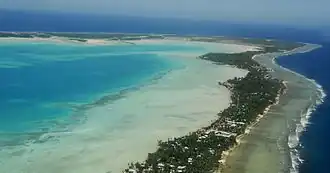
Tarawa is a coral atoll in the central Pacific and the political and demographic heart of Kiribati. Roughly half the country's population — about 70,000 people at the 2020 census — lives here, concentrated almost entirely on the chain of small islets that make up South Tarawa, linked by causeways into a single thin ribbon of road, reef, and lagoon. It is a place of striking contrasts: turquoise lagoon water and white-sand beaches on one side; densely packed villages, tin-roof houses and overstretched infrastructure on the other. Visitors come for the rawness of it — there is very little tourism polish — and for the staggering Pacific history embedded in the land, particularly the 1943 Battle of Tarawa, one of the bloodiest amphibious assaults of World War II, fought across the islet of Betio.
The atoll splits administratively into South Tarawa (Betio, Bairiki, Bikenibeu, Bonriki and the string of villages between them — where government, the airport, hotels, and almost all services are) and North Tarawa, a far quieter scatter of islets north of the airport with fewer than 7,000 people, traditional villages, and a much more "outer-island" feel reachable only by boat or wading at low tide. For a feel of daily life on the atoll before you arrive, J. Maarten Troost's The Sex Lives of Cannibals — despite the lurid title — is the standard primer.
Tarawa sits almost on the equator and is hot and humid year-round, with daytime temperatures consistently in the high 20s to low 30s °C. The drier, slightly more comfortable months are roughly April to October; November to March is the wetter westerly season with heavier rain and occasional rough seas. There is no real "cold" or off-season — pack for tropics, sun, and salt.
Planning Tarawa? Tell us your dates and we’ll tailor the trip.
Ask on WhatsAppHow do you get there?
By Plane
Bonriki International Airport (TRW) is the only entry point by air, located on the eastern end of South Tarawa, roughly 20–25 km along the single coastal road from Betio at the western end. There is no airport bus or metro; arriving guests are typically met by their guesthouse or hotel (arrange this in advance — it is the easiest option), or share a minibus/taxi along the main road. Scheduled service is limited:
- Fiji Airways operates flights between Nadi/Suva and Tarawa, typically on Tuesdays and Thursdays.
- Nauru Airlines runs a weekly Brisbane–Honiara–Nauru–Tarawa rotation, departing Brisbane on a Saturday and interlining onward, with the return on a Monday.
- Air Kiribati handles domestic connections from Tarawa to the outer islands.
Schedules change often and flights are routinely delayed or rearranged — confirm directly with the airline a few days before travel and again on the day.
By Boat
Supply boats and inter-island vessels run irregularly from Fiji (Suva, Nadi/Lautoka) and occasionally from neighbouring Pacific nations. There are no published schedules; ask in person at harbours and yacht clubs in Suva or Lautoka. Captains will sometimes take passengers for a modest fee — expect basic conditions, plain food, and trip lengths measured in days, not hours. Cruising yachts crossing the Pacific also occasionally take on crew or passengers; the yacht-club noticeboard is the way in.
South Tarawa is essentially one long road running the length of the atoll from Betio in the west to Bonriki in the east, so getting around is simple in theory and slow in practice.
- Minibuses are the workhorse of local transport — privately operated vans that run up and down the main road, stopping anywhere on a wave. Fares are very cheap (a flat fare of roughly A$1 is typical for short hops, slightly more end-to-end). They run frequently during the day, less so after dark.
- Taxis exist but are informal; agree the fare before you get in.
- Walking is fine within a single islet (Betio, Bairiki, Bikenibeu) but the heat, traffic and distances make end-to-end walking impractical.
- Bicycle or scooter hire is occasionally arranged through guesthouses — ask.
- To North Tarawa, you cross from Abatao by small boat or, at low tide, wade/walk across the channel; from there local boats and trucks link the northern islets.
There are no ride-hailing apps. Watch for fast-moving minibus traffic on the narrow road, and for fares being quoted to obvious foreigners at a small premium.
What are the things to do?
Battle of Tarawa sites, Betio. The western islet of Betio is essentially an open-air WWII battlefield. Rusting Japanese coastal guns, pillboxes, the remains of bunkers, and US amphibious tractors lie scattered along the beaches and inland. The Red Beach landing areas, the Japanese command bunker, and several large 8-inch Vickers naval guns at the western and eastern tips of Betio are the headline sights. Free, accessible at any time; a local guide adds enormous context.
Memorials, Betio. Several memorials commemorate the US Marines and Japanese defenders who died in the November 1943 battle. Quiet, moving, and easy to combine with a half-day walking loop of Betio.
Parliament (Maneaba ni Maungatabu), Ambo/Bairiki. The national parliament building, designed in the form of a traditional maneaba (meeting house), is worth a look from the outside; sittings are occasionally open to visitors — ask at the gate.
Te Umwanibong (Cultural Centre and Museum), Bikenibeu. Small national museum with displays on I-Kiribati culture, traditional navigation, dance and the colonial period. Hours can be irregular — call ahead via your guesthouse.
Tarawa Lagoon. The vast inner lagoon is the defining feature of the atoll — flat, shallow, and a luminous pale blue at low tide. Best viewed from the causeways linking islets, and from the lagoon-side beaches at Ambo, Eita and Abatao.
North Tarawa villages (Buariki, Tabiteuea, Abaokoro). A day trip up the northern islets gives a glimpse of village life largely unchanged for generations: thatched kia-kia houses, palm groves, kids paddling outrigger canoes. Arrange with a local guide or guesthouse.
Snorkelling and reef walks. The ocean-side reef flats and lagoon edges have decent coral and reef fish, especially toward less-populated North Tarawa and around Abatao. Bring your own mask and fins — rentals are limited.
WWII history walk on Betio. A self-guided or guided half-day along Betio's beaches, hitting the Japanese guns, bunkers and memorials, is the single most memorable thing to do on the atoll.
Watch traditional dance (te mwaie) at a maneaba. I-Kiribati dance is famous across the Pacific for its sharp, bird-like arm and head movements. Performances are organised around feast days, school events and church gatherings — ask your guesthouse what's on while you're there.
Fishing trips. Local boatmen run lagoon and offshore fishing trips for tuna, trevally, and bonefish; the lagoon flats around North Tarawa are particularly good for fly-fishing. Arrange through hotels or directly at the lagoon shore.
Day trip to North Tarawa. Cross from Abatao at low tide, walk between villages, swim, and return — the easiest way to escape the bustle of South Tarawa.
Sunday church. I-Kiribati church singing — Catholic, KUC and Latter-day Saints congregations are all strong here — is extraordinary, and visitors are welcomed; dress modestly.
Planning Tarawa? Want these on a customised itinerary?
Ask on WhatsAppWhere to eat?
I-Kiribati food is built around fish, rice, breadfruit, taro (babai), pandanus, and coconut. Expect plenty of grilled or raw reef fish, palu sami (taro leaves baked in coconut cream), coconut crab when in season, and te bua toro ni baukin (fermented coconut sap). Eating out options are limited — most meals are at hotels, guesthouses, or a small handful of cafés and Chinese-run restaurants. Vegetarians can manage on rice, taro, breadfruit and salads but will find dedicated veg menus rare; halal is not specifically catered for but plain grilled-fish-and-rice meals are easy.
- Otintaai Hotel restaurant, Bikenibeu. The most reliable sit-down dining on the atoll: fish, curry, simple Western dishes. Mid-range prices.
- Mary's Motel restaurant, Bairiki. Casual on-site restaurant attached to the motel; useful for a meal mid-atoll.
- Chinese restaurants, Bairiki and Bikenibeu. A few small Chinese-run places along the main road serve stir-fries, fried rice and noodles at modest prices — the de facto "going out to dinner" option for many residents.
- Betio market food stalls. Cheap fish, rice, and snacks; eat where it's busy.
- Guesthouse dinners (Dreamers Kiribati, etc.). Arranged in advance, these often beat the restaurants — fresh-caught fish, coconut, local vegetables.
Where to drink?
- Coconut water and te kareve (fresh toddy) — sap tapped from coconut palms in the morning, sweet and lightly fizzy. Fermented through the day it becomes kaokioki / sour toddy, mildly alcoholic.
- Beer. Imported Australian and Fijian beers (Victoria Bitter, Fiji Bitter, Fiji Gold) are available at hotels and licensed bars; expect to pay roughly A$5–8 a bottle.
- Bars. Drinking venues are concentrated at the larger hotels — Otintaai Hotel has a bar, as do a few of the Bairiki and Betio guesthouses. Standalone nightlife is limited.
- Sunday drinking. Kiribati is strongly Christian; many places do not serve alcohol on Sundays, and public behaviour expectations are conservative.
- Water safety. Tap water on Tarawa is not safe to drink. Stick to bottled water (widely available) or boil/treat. Be cautious with ice and salads washed in tap water at small establishments.
Planning Tarawa? We’ll book the stays and dining for you.
Ask on WhatsAppWhere to stay?
Budget
- Dreamers Kiribati, Banraeaba (a few hundred metres before the parliament building). Family-run eco guesthouse with three self-contained rooms, beachfront, lagoon views, and links to a local NGO. From around A$60/night. ☎ +686 22606, [email protected].
- Mary's Motel, Bairiki, next to the Betio causeway. Small, clean, hot water, on-site restaurant and Wi-Fi. ☎ +686 22227.
Mid-range
- Otintaai Hotel, Bikenibeu. The largest and best-known hotel on the atoll, government-run, lagoon-side, with restaurant, bar and conference facilities. Generally regarded as a two- to three-star property; the de facto choice for visiting officials and business travellers. ☎ +686 28084.
Upscale / heritage
What should you buy?
Tarawa is not a shopping destination; commerce is functional, not boutique. Expect small village shops, a handful of larger supermarkets in Bairiki and Bikenibeu, and a few craft outlets.
- Handicrafts. Pandanus mats, woven hats, shell jewellery, model outrigger canoes and te mauri (traditional weapons made of shark teeth and coconut wood) are the classic souvenirs. The Catholic Women's Association and the Cultural Centre at Bikenibeu often have a small selection.
- Markets. Betio market and the smaller markets along the main road sell fish, breadfruit, taro, pandanus, and imported staples — good for atmosphere more than for souvenirs.
- ATMs / cash. The Bank of Kiribati runs a handful of international ATMs in South Tarawa (Betio, Bairiki, Bikenibeu); they are not always reliable. Bring Australian dollars in cash as backup — A$ is the local currency.
Bargaining is not the norm; prices in shops are fixed, and haggling over handicrafts is generally considered impolite. Taxi and boat fares, on the other hand, should always be agreed up front.
Where to go next?
- North Tarawa (immediately north of Bonriki, ~30 min by boat or wade-across at low tide from Abatao). Quiet villages, traditional maneaba, swimming, fishing — a complete change of pace from South Tarawa.
- Abaiang (~10 min flight or several hours by boat from Tarawa). The neighbouring atoll, less developed and well known for its village life, weaving, and historical mission sites.
- Butaritari (~1 hr 15 min by Air Kiribati from Tarawa). Wetter, greener, and more fertile than most of Kiribati; site of significant WWII action and a much more rural experience.
- Marakei (short Air Kiribati hop from Tarawa). A smaller atoll famous for its four shrines to spirits guarding the island — a circuit traditionally completed by visitors.
- Kiritimati / Christmas Island (long flight via Tarawa, in the Line Islands group). World-class bonefishing and birdlife; a major detour, but for many travellers the real reason they come to Kiribati.
- Nauru (~1 hr 30 min by Nauru Airlines). The world's smallest island nation by some measures — a curious onward stop given the limited regional flight network.
Nearby in Gilbert Islands
More places to explore around Tarawa.

Guide content as of May 2026. Portions adapted from Wikivoyage, CC BY-SA 4.0.

Contact Us
Get in touch with us.
Get in touch
Contact Us
Tell us where you'd like to go and how you like to travel. A real Tripcuro planner — not a bot — will craft an itinerary around you.
- Personalised, hassle-free planning end-to-end
- Transparent pricing, no hidden costs
- 24/7 support for complete peace of mind