
Marakei
Gilbert Islands, Kiribati
Why visit Marakei?
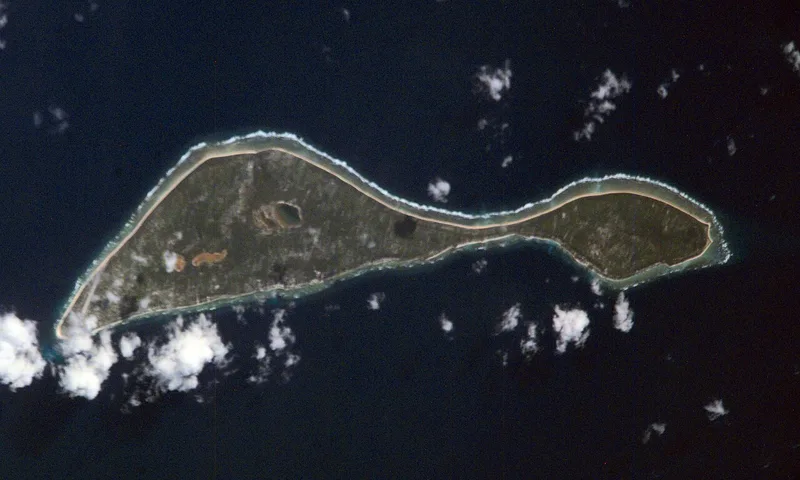
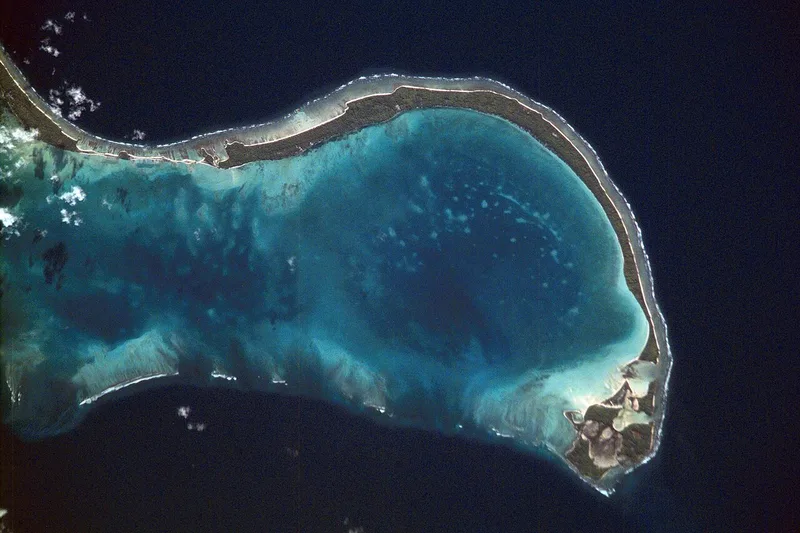
Marakei is a small ring-shaped atoll in the northern Gilbert Islands, 80 km north of Kiribati's capital Tarawa and just north of Abaiang. Covering 13.5 square kilometres with a population of about 2,800 (2015), the island is unique in the Gilbert Group for cradling a deep blue lagoon at its centre, with two causeways stitching the rim into a continuous loop that motorbikes, trucks and bicycles can circle in a single morning. Because the island saw far less disruption during World War II than many of its neighbours, the traditional pace of life — subsistence fishing, copra, the maneaba meeting house, evenings spent under the stars — has carried through largely intact.
Marakei is known across Kiribati as the "land of women" for its four female spiritual guardians: Nei Reei, Nei Rotebenua, Nei Tangangau and Nei Nantekimam, whose shrines are visited in a strict anti-clockwise circuit. It is also the only island in the country that still performs Te Katabwanin, a formal welcome required of every first-time visitor. The custom dates to King Kirata, who came to Marakei searching for a sister who had married away; the bodyguard he sent clockwise around the island died, while the one he sent anti-clockwise returned safely, fixing the direction of the circuit ever since. Hernando de Grijalva's San Juan is recorded as the first European vessel to sight the island (1857); white traders, labour recruiters bound for Guatemala, then Japanese occupation (1941) and US liberation (1943) followed. The Roman Catholic and Protestant churches are the dominant faiths today, alongside smaller LDS, Church of God and Seventh-Day Adventist communities.
The administrative centre is Rawannawi, home to the police post, clinic, schools and the only government Junior Secondary School on the island. Visitors should plan for a remote, low-infrastructure stay: facilities are basic, transport schedules slip, mobile signal is patchy (most villages have a public phone), and the only medical care is a village nurse and clinic with no pharmacy. Bring your own medications, drinking water or a filter, mosquito nets if staying with a family, and tobacco sticks as offerings for the shrines. Dress modestly — knee-length skirts or shorts, T-shirts, or a wrapped sulu; bikinis, mini-skirts and short shorts are not appropriate on the island.
Planning Marakei? Tell us your dates and we’ll tailor the trip.
Ask on WhatsAppHow do you get there?
By Plane
Marakei is reached by light aircraft from Tarawa; the flight takes roughly 15 minutes. The island's airstrip serves as the only practical entry point for visitors. On arrival you can usually flag a lift in a local truck into the village and on to the Council or Catholic Church accommodation; arrange the pickup through your guesthouse in advance where possible.
The island is small enough to ring in a single day, and two causeways mean the loop is unbroken. Options:
- Truck lifts — informal; locals will usually pick you up between the airstrip, Rawannawi and the guesthouses.
- Motorbike hire — about A$20 per day. Fill up before you set out: stop at the local shop in town for at least 2 litres of fuel, which is enough to circle the island once.
- Bicycle hire — about A$5 per day, a pleasant way to do the Te Katabwanin circuit if you have the time and shade plan for it.
- On foot — easy walking south through Rawannawi town once you've arrived.
Hire is arranged through your accommodation (the Council Guest House can also organise a truck if you book ahead). Remember the cultural rule: any circuit of the island for first-time visitors must be done anti-clockwise, with offerings (typically sticks of tobacco) left at each of the four shrines.
What are the things to do?
Shrines of the four spiritual guardians — the heart of any visit. Done as a single anti-clockwise loop during Te Katabwanin, with a tobacco stick left at each shrine to ensure good health and good fortune during your stay:
- Nei Reei — one of the four female guardians of Marakei.
- Nei Rotebenua — second of the guardians on the circuit.
- Nei Tangangau — third shrine on the anti-clockwise route.
- Nei Nantekimam — fourth and final shrine.
Other sights
The central lagoon — Marakei's defining feature and the only deep blue inland lagoon in the Gilbert Group. Best appreciated from viewpoints around the rim road.
Rawannawi — administrative centre and largest village; the maneaba (community meeting house), schools and clinic cluster here.
The Marakei surf break — fronting the Catholic Church guesthouse on the ocean side.
Te Katabwanin — the formal anti-clockwise welcome circuit introducing first-time visitors to the four guardians. Arrange through your guesthouse on arrival; it should be performed on your first day on the island.
Traditional canoeing — outrigger canoeing in the lagoon or along the reef.
Snorkelling — clear, sheltered water inside the reef; bring your own mask, snorkel and fins as no rental gear is available on the island.
Lagoon sports and games — pickup volleyball, swimming and lagoon games organised informally with the village.
Local dancing — traditional dance performances can be arranged through the village; ask your host or arrange before travelling.
Star gazing — with no light pollution, the night sky over Marakei is exceptional.
Nature walking — through coconut groves, pandanus stands and along the rim of the inner lagoon.
Island tour — a leisurely full lap by motorbike or bicycle, doubling as the Te Katabwanin circuit.
Picnics — at recommended spots around the island; arrange food and transport with your guesthouse in advance.
Surfing — at the break in front of the Catholic guesthouse (BYO board).
If you'd like to take part in any cultural activity, organise it before you travel where possible, or ask the locals — they are usually very happy to oblige.
Planning Marakei? Want these on a customised itinerary?
Ask on WhatsAppWhere to eat?
Food on Marakei is whatever the lagoon, reef and village gardens have produced that day. Both guesthouses provide three meals as part of the A$30 per person rate, and the quality is consistently described as kangkang (delicious) when fresh supplies have come in. Give your host at least a few days' notice before arrival so they can source food; show up unannounced and you may be eating tinned goods.
Expect to eat:
- Fresh reef fish — grilled, in coconut milk, or in light curries.
- Te koikoi — local shellfish, gathered from the lagoon.
- Crayfish — typically on request rather than as a default.
- Pandanus-fruit curries — a Kiribati staple, sweet and starchy.
- Rice and breadfruit — the carbohydrate base of most meals.
- Coconuts — including fresh moimotos (drinking coconuts), which the Council Guest House host Matang provides throughout your stay.
There are no restaurants, cafés or food stalls in the Western sense — meals are taken at your guesthouse or with a host family. Vegetarians can usually be accommodated with rice, breadfruit, pandanus and coconut, but flag dietary needs when booking.
Where to drink?
Marakei is a dry island: alcohol is not sold anywhere on Marakei. If you want a beer or a bottle of wine you must BYO from Tarawa, and even then, with very few refrigerators on the island, expect it warm.
For everything else:
- Moimotos (fresh young coconuts) — the everyday drink, and the host at the Council Guest House provides them throughout your stay.
- Hot water and tea — boiled at the guesthouses on request.
- Bottled water — turns up in the village shops in small, unreliable quantities; do not count on it.
- Tap and rainwater — should not be drunk without filtering or boiling. Bring a filter or sterilising tablets, or ask your guesthouse to boil water for you.
There are no bars, cafés or teahouses on the island.
Planning Marakei? We’ll book the stays and dining for you.
Ask on WhatsAppWhere to stay?
There are two formal places to stay on Marakei and the option of a homestay. Book at least several days ahead in every case — hosts need notice to source food and prepare buias.
Budget
- Council Guest House — four traditional buias (open-sided thatched huts) along the ocean-side waterfront, each with mattresses and mosquito nets. A$30 per person including meals, which are generally excellent. The host, Matang, supplies fresh moimotos and boiled water throughout your stay and can arrange motorbike and truck hire if you book in advance.
- Catholic Church Guesthouse — right on the Marakei surf break. Choice of buias and rooms, including a VIP room with ensuite and double bed. A$30 per person including meals; food is kangkang when there's been time to organise it. Contact: [email protected], and give plenty of warning so fresh supplies can be brought in — otherwise expect tinned food.
- Homestay with a local family — possible on most parts of the island; offer a fair contribution for room and board, and come prepared with your own mosquito net and a water filter or purification tablets.
What should you buy?
Shopping on Marakei is functional rather than recreational. The village shops carry only staples — rice, flour, sugar and lollies — plus a small (and unreliable) supply of bottled water and tinned goods. There is no organised craft market, no ATM, and very limited refrigeration island-wide. Bring Australian dollars in small denominations for guesthouse fees, motorbike and bicycle hire, and incidentals; bargaining is not a feature of island life.
The single item every visitor should buy on arrival is sticks of tobacco, which serve as the traditional offering left at each of the four shrines during Te Katabwanin. Pick these up at the local shop before starting your circuit.
Where to go next?
- Tarawa (≈80 km south, ~15 min by light aircraft) — Kiribati's capital and main transport hub; almost every Marakei trip begins and ends here.
- Abaiang (immediately south of Marakei) — neighbouring atoll in the northern Gilberts, with mission history and gentle lagoon villages, and a natural pairing with Marakei on a northern Gilberts itinerary.
Nearby in Gilbert Islands
More places to explore around Marakei.
Guide content as of May 2026. Portions adapted from Wikivoyage, CC BY-SA 4.0.

Contact Us
Get in touch with us.
Get in touch
Contact Us
Tell us where you'd like to go and how you like to travel. A real Tripcuro planner — not a bot — will craft an itinerary around you.
- Personalised, hassle-free planning end-to-end
- Transparent pricing, no hidden costs
- 24/7 support for complete peace of mind