
Aranuka
Gilbert Islands, Kiribati
Why visit Aranuka?
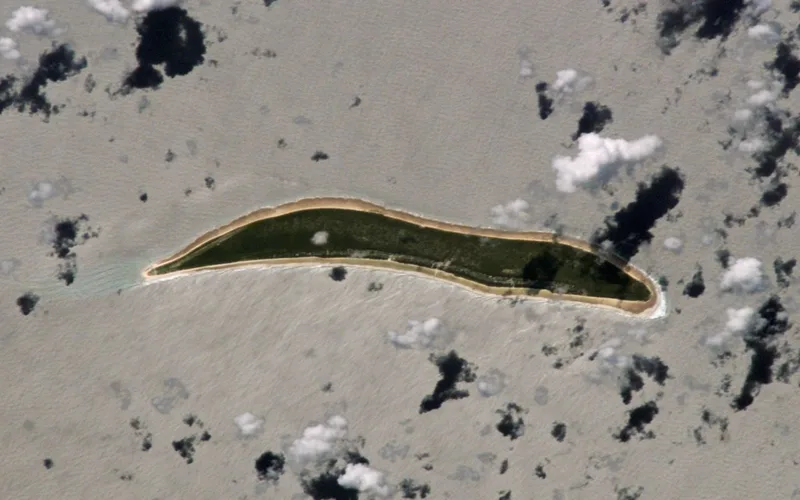
Aranuka is a small triangular atoll in the central Gilbert Islands of Kiribati, lying just north of the equator with a land area of roughly 15.5 km² and a population of about 1,125 (2015 census). Its name — formerly Ananuka, "the middle of it" — refers to its place in Kiribati cosmology: this is the island where, according to the I-Kiribati creation story, the god Nareau began the formation and separation of all the islands of the chain. That mythic centrality, combined with a documented dynastic history under Karotu and his nephew Binoka — the famed paramount chief of Abemama, Kuria and Aranuka in the late 19th century — gives Aranuka a cultural weight out of proportion to its size. Customary authority still shapes daily life: while the elected Mayor (formerly Chief Councilor) and council of elders make formal decisions, the hegemony of high-chief lineages remains a real force in island politics.
Geographically, the atoll is formed by three main islets — Buariki and Baurua (the two largest, forming the base of the triangle) and Takaeang (the smallest, at the northern apex) — linked by sandbacks on the northern side and an underwater reef crest on the south, with a wide pass into the central lagoon. There are four villages: Buariki (administrative centre, about 500 people), Takaeang (~250), Baurua (~210) and Kauake (~90). The administrative centre, Junior Secondary School and the main clinic are at Buariki; subsidiary clinics serve Takaeang and Baurua. What makes Aranuka unusual even by Pacific standards is its mangrove forest at Maungan Te Tongo, with trees reportedly exceeding 15 metres — an unusual height for the species and possibly the tallest in the region. Add uninhabited offshore islets ringed by white sand and clear lagoon water, and the appeal is straightforward: an authentic, unspoiled, very-rarely-visited Gilbert Islands atoll.
Climate is equatorial maritime: hot and humid year-round with daytime temperatures around 30 °C and warm nights. Kiribati's drier, slightly more reliable travel window is generally May to October; the wetter months from November to April bring heavier showers and more variable winds. Whatever season you come, plan for flexibility — flights to outer islands are weather- and load-dependent, and there is no second chance the same day if a service is cancelled.
A note on dress and conduct. Aranuka is conservative. Women should not walk around the villages in bikinis, short shorts or mini-skirts; a wrap (sulu) or skirt covering the legs to the knees, with a t-shirt, is appropriate. Swimming and beachwear are reserved for the uninhabited islets.
Planning Aranuka? Tell us your dates and we’ll tailor the trip.
Ask on WhatsAppHow do you get there?
By Plane
Aranuka Airport (IATA: AAK) sits near the northern tip of Buariki islet and is the only practical way in. Air Kiribati operates roughly two flights a week from Bonriki International Airport (TRW) on South Tarawa, and approximately one a week routing via Kuria (KUC). Aircraft are small turboprops (Twin Otter / Harbin Y-12 class), so baggage allowances are tight and schedule changes are common — book through Air Kiribati directly and reconfirm in Tarawa before travel.
There is no airport bus or taxi rank. The strip is a short walk from Buariki village; if you've arranged accommodation through the Island Council, someone will usually meet the flight. Distances on the island are short enough to walk or be driven on a council vehicle or motorbike.
The island is small and largely flat, and most visitors get around on foot or by bicycle. There is no taxi service, no ride-hailing, and no public bus. The Island Council can sometimes arrange a vehicle or motorbike for longer trips between villages, and locals are generally happy to give lifts. For travel between islets — to Takaeang, Baurua, or the uninhabited islets used for swimming and snorkelling — you will need a small boat charter, which must be arranged in advance through the Island Council; expect to pay extra and to be flexible about timing, as trips are weather-dependent.
Practical etiquette: when you enter a village or visit a sacred site, you are expected to leave a small offering (mweaka) at a kainga (clan house), traditionally at Ababoou or Atin Tabuariki. Tobacco or cigarettes are the customary gift. After mweaka has been offered, your hosts will arrange an escort for any tour around the island.
There are no scams to speak of — Aranuka sees a handful of foreign visitors a year and the dominant social risk is causing accidental offence rather than being cheated. Carry small denominations of Australian dollars (Kiribati's currency) for incidental purchases; there is no ATM.
What are the things to do?
Maungan Te Tongo (mangrove forest) — the headline natural sight, a stand of tall mangroves reportedly exceeding 15 m, unusual for the species and not seen elsewhere in Kiribati. Walk or be escorted in from Buariki. Free; offering of mweaka expected.
Riiki's well, bathing place and toilet, Kauake — remains traditionally associated with Riiki (the eel-spirit of I-Kiribati cosmology) and his sons. A culturally significant site rather than a visually dramatic one; bring a guide who can explain the stories. Kauake village.
The uninhabited islets — strung along the northern sandbacks between Buariki and Takaeang, these are the postcard-white-sand-and-turquoise-lagoon Kiribati of the imagination. Reachable only by boat charter (arrange via Island Council). Swimming, snorkelling and any beach play are done here, not in front of the inhabited villages.
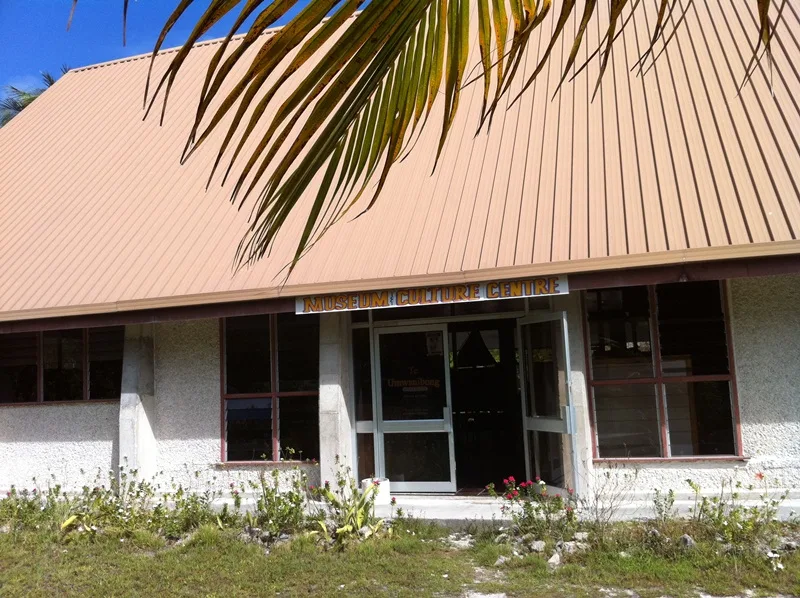
Buariki village — the administrative centre; a low-key wander past the school, clinic, council buildings and the maneaba (meeting house). Free.
Takaeang and Baurua villages — quieter than Buariki and worth the trip across the sandbacks at low tide (or by boat). Each has its own clinic and small maneaba.
Take an island tour. After leaving mweaka at Ababoou or Atin Tabuariki, ask your hosts (or the Island Council) to escort you. Tours are flexible — you set the pace and the route — and are the standard way visitors experience Aranuka.
Snorkel the islet reefs. The coral around the uninhabited islets and along the southern reef crest is excellent. Bring your own mask, snorkel and fins — there is no rental shop. Reef shoes are useful.
Swim and play beach games on the islets. As above, swimming is reserved for the uninhabited islets, not the village foreshores.
Boat trip across the lagoon. The wide central pass and the sand spits between islets make for a memorable half-day on the water. Arrange in advance with the Island Council and budget for fuel.
Nature walks. The mangrove walk at Maungan Te Tongo is the obvious one; the rest of the island is easily explored on foot, with scrub forest, coconut groves, and the lagoon shoreline never far apart.
Cultural performance — traditional dance or skills demonstration. Possible by prior arrangement with the Island Council, never on the spot. If you are seriously interested, request it weeks in advance through Air Kiribati or your contact in Tarawa.
Birdwatching and quiet time. Aranuka is one of the most peaceful places you'll ever visit — a few days of slow walking, reading and lagoon swimming is, frankly, the trip.
Planning Aranuka? Want these on a customised itinerary?
Ask on WhatsAppWhere to eat?
Food on Aranuka is whatever the lagoon, reef and gardens produce, plus a thin layer of imported staples. Expect reef fish (often grilled or boiled in coconut cream), te ika ni marawa (deep-water fish when available), lobster and crab in season, breadfruit (mai), pandanus (te kaina), pumpkin, rice, and lots of fresh coconut in every form — drinking nuts, grated flesh, and te karewe (fresh palm toddy). Pork and chicken appear at feasts; vegetables beyond pumpkin and a few greens are scarce.
There are no restaurants in the Tarawa or international sense. Visitors eat with their hosts or at the Island Council guesthouse, where meals are prepared by a cook to a fixed daily menu. If you are vegetarian, vegan, halal, gluten-free or have allergies, flag this clearly when you book, and bring backup supplies — substitutions are limited by what the boat brought in last.
A few practical notes:
- A typical day's eating is rice + fish + coconut at the guesthouse, perhaps with breadfruit or pumpkin.
- Bring snacks and treats from Tarawa (chocolate, nuts, instant coffee) — they are appreciated as gifts and will brighten your own meals.
- Tipping is not customary; a small gift to the cook at the end of a stay is a kinder thank-you.
Where to drink?
The local drink of note is te karewe, the fresh sap of the coconut palm tapped at dawn and dusk; sweet when fresh and mildly fermented (and stronger) within a day. If your host offers you some, accept — it's part of daily life. Coconut water straight from the husk is the everyday thirst-quencher and is safer than untreated well water.
Alcohol is not a feature of Aranuka life and there are no bars. Imported beer occasionally surfaces in the village stores but cannot be relied on. Drinking in public is inappropriate; if you bring your own, keep it discreet and to your accommodation.
Water safety: do not drink tap or well water without treatment. Bring or boil/filter all drinking water, and bring substantially more than you think you need — supply on the island is unreliable and a single missed boat can cause shortages. Coconuts are an excellent backup.
Planning Aranuka? We’ll book the stays and dining for you.
Ask on WhatsAppWhere to stay?
Options are extremely limited and almost everyone stays at the same place.
- Budget / Mid-range:
- Aranuka Island Council Guesthouse, Buariki — the standard and effectively the only formal accommodation. Basic rooms, shared facilities, simple meals provided. Book in advance through the Island Council (typically arranged by message via Air Kiribati or contacts in Tarawa).
- Homestays: with permission and prior arrangement, some travellers stay with local families. This is a courtesy, not a commercial arrangement; offer a generous gift of supplies (rice, sugar, tea, fuel) rather than haggling a "rate."
In all cases, expect cold-water bucket bathing, intermittent electricity (often generator hours only), no air-conditioning, and limited or no internet. Bring a torch, a power bank, and a mosquito net or repellent.
What should you buy?
There are no shops aimed at tourists on Aranuka. A few small village stores stock basics — rice, tinned fish, soap, biscuits, kerosene — at prices noticeably higher than in Tarawa because everything is shipped in. There is no market for handicrafts in the urban sense, but if you ask through your host or the council, families sometimes sell pandanus mats, woven fans, shell necklaces and te buti (traditional skirts) — these are made for use rather than for sale, so quality is good and prices are fair. Bargaining is not the norm; pay the asked price.
Bring Australian dollars in small notes, since change is hard to come by. There is no ATM, no card payment and no money changer on the island. Stock up on anything you genuinely need — sunscreen, mosquito repellent, batteries, medications, reef-safe toiletries — in Tarawa or before you fly to Kiribati at all.
Where to go next?
- Kuria — the neighbouring atoll to the north-west, served by the same Air Kiribati routing (~weekly). Quieter still than Aranuka, with strong cultural links: both islands fell under the rule of Binoka of Abemama in the 19th century. Approximately 30 minutes by air.
- Abemama — the seat of Binoka's old kingdom and famously visited by Robert Louis Stevenson in 1889; ruins, lagoon scenery and a richer historical layer. About 30–45 minutes by air from Tarawa, regularly served by Air Kiribati.
- South Tarawa (Bonriki / Betio) — the national capital and your transit hub: WWII relics on Betio (including the Battle of Tarawa sites), the Parliament at Ambo, and the only place in the country with restaurants and hotels of any size. Roughly 1 hour by air.
- North Tarawa — a string of quieter islets reachable by causeway and boat from South Tarawa, offering a softer landing back into "city" life. ~1–2 hours from Bonriki including the boat hop.
- Maiana — a low, narrow atoll just south of Tarawa, reachable in well under an hour by Air Kiribati. Good lagoon, very few visitors.
- Banaba (Ocean Island) — for the ambitious: Kiribati's only raised limestone island, with a haunting phosphate-mining history. Service is infrequent and unreliable, so plan with serious slack in your schedule.
Nearby in Gilbert Islands
More places to explore around Aranuka.
Guide content as of May 2026. Portions adapted from Wikivoyage, CC BY-SA 4.0.

Contact Us
Get in touch with us.
Get in touch
Contact Us
Tell us where you'd like to go and how you like to travel. A real Tripcuro planner — not a bot — will craft an itinerary around you.
- Personalised, hassle-free planning end-to-end
- Transparent pricing, no hidden costs
- 24/7 support for complete peace of mind