
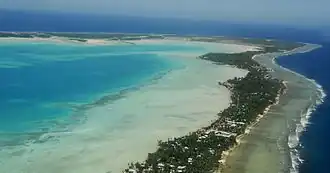
South Tarawa
Gilbert Islands, Kiribati
Why visit South Tarawa?
South Tarawa is the densely populated southern arm of Tarawa Atoll and the de facto capital of Kiribati, home to more than half the country's roughly 130,000 people. A chain of narrow islets stitched together by causeways runs west from Bonriki — past Bikenibeu, Eita, Banraeaba and Bairiki — and ends at Betio, the old wartime port. The result is one of the most crowded strips of land in the Pacific: a ribbon of coral rubble, breadfruit trees, tin-roofed maneabas (community meeting houses) and lagoon-facing villages where ocean and lagoon are never more than a few hundred metres apart.
Most travellers come for the history. In November 1943 Betio was the site of the Battle of Tarawa, a 76-hour American assault on Japanese fortifications that killed more than 6,000 combatants on a coral flat smaller than New York's Central Park. Rusting Japanese coastal guns, pillboxes and Sherman tank wrecks still sit on the beaches and in the lagoon shallows. Beyond the battlefield, South Tarawa is a window into i-Kiribati daily life — a frontline of climate vulnerability where the highest point is barely three metres above the sea, and where village life, church singing and lagoon fishing continue largely as they have for generations. J. Maarten Troost's The Sex Lives of Cannibals (despite the title) is the best primer.
Climate is equatorial — hot, humid and consistent year-round, with daytime highs around 30-32°C. The drier, slightly cooler period from April to October is the most comfortable time to visit; November to March brings heavier westerly squalls and king tides that regularly flood causeways. Kiribati sits on the equator so there are no cyclones, but el Niño years can bring prolonged drought and water shortages. Layout-wise, think of South Tarawa as a single 35 km road: Betio (port, war sites, busiest market) at the far west, Bairiki (government offices, parliament, banks) in the middle-west, Bikenibeu (hospital, university campus, shops) further east, and Bonriki (airport, lagoon beaches) at the eastern tip.
Planning South Tarawa? Tell us your dates and we’ll tailor the trip.
Ask on WhatsAppHow do you get there?
By Plane
Bonriki International Airport (TRW) sits at the eastern end of South Tarawa, roughly 25 km by road from Betio and about 10 km from Bairiki. It is the only realistic way in.
- Fiji Airways flies from Nadi via Suva, typically Tuesdays and Thursdays.
- Nauru Airlines runs a weekly Brisbane–Honiara–Nauru–Tarawa rotation, departing Brisbane on Saturdays and returning Mondays; it codeshares with Air Kiribati onward to Nadi.
- Air Kiribati handles domestic services to the Outer Islands from the same terminal.
There is no airport bus. Most guesthouses will collect you for a small fee (A$10–20) if arranged in advance — strongly recommended, as taxis are informal. Shared minibuses ("bwitis") run along the main road right past the airport gate and will take you to Bairiki or Betio for around A$1–2, but with luggage it's tight.
By Car / Road
Supply boats and the occasional cruising yacht do reach Betio from Fiji (Suva, Lautoka) and sometimes Tuvalu or the Marshall Islands. There are no published schedules — ask around at Suva harbour or the yacht clubs in Nadi/Lautoka. Captains may take passengers for a modest fee; expect basic conditions, long voyages (5–10 days from Fiji) and no comforts.
The spine of South Tarawa is one road running the length of the atoll, and almost everything happens along it.
- Minibuses ("bwitis"): privately run vans that ply the main road continuously from dawn until around 9 pm. Flag one down, squeeze in, and pay the driver on exit. Standard fare is A$1–2 depending on distance. They are the cheapest and most authentic way to get around, but cramped.
- Taxis: unmetered and informal — usually a private car with a sign. Agree the fare before getting in. Betio to Bonriki is around A$25–35; shorter hops A$5–15.
- Rental cars / scooters: a handful of guesthouses and the Otintaai Hotel can arrange car rental at roughly A$80–120/day. Roads are paved but potholed, speed limits low, and pedestrians and dogs are everywhere — drive slowly.
- Walking: each individual village is walkable, but distances between Betio and Bonriki are too far on foot in the heat.
There are no ride-hailing apps (no Uber, no Grab), no metro, no traffic lights. Scams are rare; the bigger annoyances are heat exhaustion and stray dogs. Carry small Australian dollar notes — Kiribati uses the Australian dollar as its currency.
What are the things to do?
War history (Betio)
- Red Beach memorials and Japanese coastal guns: the original 8-inch British-made Vickers naval guns the Japanese installed are still in their concrete emplacements at the corners of Betio. Free, always accessible, signposted along the coast road.
- US Marine Corps Memorial: a simple granite monument near the old wharf commemorating the 1,000+ Marines killed in the battle. Free.
- Japanese command bunker: a low concrete blockhouse near the Betio causeway, still bearing shell scars. Free; ask locals for "the bunker" to find it.
- Wreck of the Saida Maru and tank hulks: at low tide, several Japanese transport wrecks and a Sherman tank are visible in the lagoon off Betio's north shore. Best at spring low tide.
Culture and everyday life
- Te Umanibong (Kiribati Cultural Centre / National Museum), Bikenibeu — small but worthwhile collection of traditional shark-tooth weapons, canoes, fishing tools and battle artefacts. Hours and entry are informal; ask at the door. Donation appreciated.
- House of Assembly (Maneaba ni Maungatabu), Ambo — the modern parliament building, fronted by a striking traditional-style maneaba roof. Visitors can usually peek in when parliament isn't sitting.
- Catholic Cathedral of the Sacred Heart, Teaoraereke — the main Catholic cathedral, worth timing for a Sunday morning service to hear i-Kiribati choral singing, which is extraordinary.
Lagoon and nature
Bikeman Islet: a sandbar that emerges from the lagoon at low tide between Betio and Bairiki, with clear water and good snorkelling. Hire a boat from Betio harbour (A$50–80 return).
Bonriki lagoon flats: at low tide the lagoon retreats hundreds of metres, exposing reef flats good for walking, shell-collecting and spotting reef fish.
Snorkel the wartime wrecks in the Betio lagoon — a sobering, quiet experience. Bring your own mask; rentals are limited.
Take a guided Battle of Tarawa tour. Local guides — often arranged through Dreamers Kiribati or the Otintaai Hotel — walk you through Red Beaches 1, 2 and 3 in sequence, contextualising the fortifications. Allow half a day; rates around A$50–100 per group.
Game fishing: the deep water just off the reef holds tuna, wahoo and giant trevally. A small fleet of local skippers runs day charters from Betio for around A$400–600 per boat.
Sunday church singing: attending a service at any of the larger Protestant (KPC) or Catholic churches is unforgettable; the harmonised hymns are a highlight of any visit. Dress modestly.
Watch a botaki (community feast) at a maneaba. If you're invited — and travellers often are — accept. Bring a small contribution.
Day trip to North Tarawa: cross the Buota causeway (or take a small boat from Tabiteuea) to the quieter, traditional villages of Abatao, Tabiteuea and Buariki. A different, slower Kiribati.
Lagoon kayaking at low tide, especially around Bonriki and Eita.
Planning South Tarawa? Want these on a customised itinerary?
Ask on WhatsAppWhere to eat?
Kiribati cuisine is built around fish, coconut, breadfruit, pandanus and rice. Signature dishes include te ika (raw fish in coconut milk and lime, similar to Fijian kokoda), palu sami (taro leaves baked in coconut cream), grilled reef fish, and te bua toro ni baukin (fermented breadfruit). Imported tinned goods, instant noodles and white bread fill in the rest. Vegetarian options exist but are limited to rice, breadfruit, taro and the occasional cabbage dish; halal and gluten-free aren't really catered for, though plain fish-and-rice meals are universal.
- Mary's Motel restaurant, Bairiki — reliable I-Kiribati and Chinese-style plates (fried fish, chow mein, curry rice) for around A$10–15.
- Otintaai Hotel restaurant, Bikenibeu — the most "international" menu on the atoll: grilled tuna, club sandwiches, curries. Mains A$18–28.
- Captain's Bar & Restaurant, Betio — popular with port workers and expats, decent grilled fish and cold beer. Mains around A$15–20.
- Chinese restaurants in Bairiki and Bikenibeu — there are several, generally cheap (A$8–12), generous, and a good option when other places close early.
- Roadside BBQ stalls in Betio and Bairiki in the evenings — grilled chicken, fish skewers, breadfruit chips for A$3–6.
- Dreamers Kiribati (Banraeaba) — guesthouse meals open to non-guests by arrangement; home-cooked i-Kiribati food and a beach view.
Where to drink?
- Te karewe (toddy): the unfermented sweet sap of the coconut palm, tapped fresh at dawn and dusk. Sold by the bottle at roadsides; ask for karewe mainaina (sweet) as opposed to the fermented sour version.
- Sour toddy / kaokioki: lightly fermented toddy, mildly alcoholic and very much an acquired taste.
- Fresh coconut (te ben): A$1–2 a nut at any village stall.
- Beer: Australian and Fijian imports (Victoria Bitter, Fiji Bitter, Fiji Gold) are widely available at hotel bars and small shops, generally A$5–8 a can.
- The Otintaai Hotel bar is the standard expat gathering point at sundown, with a small terrace overlooking the lagoon.
- Captain's Bar in Betio is louder and busier, especially on Friday nights.
Water safety: do not drink the tap water on South Tarawa. The freshwater lens under the atoll is contaminated in most areas. Stick to bottled water (A$2–3 per 1.5 L) or boiled/filtered water from your guesthouse. Ice in mid-range and upscale hotels is generally safe; be more cautious at small stalls.
Planning South Tarawa? We’ll book the stays and dining for you.
Ask on WhatsAppWhere to stay?
Budget
- Dreamers Kiribati, Banraeaba (a few hundred metres before the parliament building), tel. +686 22606, [email protected]. Family-run eco-guesthouse with three self-contained rooms with kitchens, right on the lagoon beach — arguably the best view on the atoll. The family also runs a local NGO. From around A$60 per night.
- Tarawa backpacker-style guesthouses: a small number of family homestays operate informally in Bikenibeu and Eita for A$30–50 per night including meals. Ask at Dreamers for current recommendations.
Mid-range
- Mary's Motel, Bairiki (next to the Betio causeway), tel. +686 22227, fax +686 21362, [email protected]. A small private motel with clean rooms, hot water, on-site restaurant and Wi-Fi. Around A$100–150 per night. Convenient for government-business travellers and central for buses.
Upscale
- Otintaai Hotel, Bikenibeu, tel. +686 28084. The government-run flagship and Kiribati's most expensive hotel — though realistically a two- to three-star property by international standards. Lagoon-view rooms, a restaurant, bar, and the most reliable Wi-Fi on the atoll. Rooms typically A$180–260 per night.
What should you buy?
South Tarawa is not a shopping destination, but a few things are worth picking up:
- Handicrafts — pandanus mats, woven fans, shell necklaces and small model canoes — are sold at the Te Umanibong Cultural Centre shop in Bikenibeu and at occasional handicraft stalls near the parliament in Ambo.
- Local markets: the Betio market and Bairiki market sell fresh fish, breadfruit, pandanus, papaya and coconuts in the mornings. Go before 9 am.
- Stamps and coins: Kiribati issues attractive stamp sets; the post office in Bairiki sells current and recent issues to collectors.
- Toddy (te karewe) bottles: bottled fresh coconut sap from roadside vendors — best drunk the same day.
Bargaining is not the norm. Prices at markets are fixed and modest; offering less is considered rude. ATMs from Bank of Kiribati in Bairiki, Bikenibeu and Betio accept international Visa cards, but they run out of cash regularly — bring Australian dollars in cash as backup.
Where to go next?
- North Tarawa (across the Buota causeway, 30–60 min by minibus from Bonriki, then small boat) — quieter traditional villages, swimmable lagoons, basic homestays. The contrast with South Tarawa is striking.
- Abaiang Atoll (~20 min by Air Kiribati from Bonriki, or a few hours by boat) — the "Garden Island," considered the most picturesque of the Gilberts; lagoon snorkelling, traditional maneabas.
- Butaritari (~1 hr by Air Kiribati) — lush, wetter, breadfruit-rich northern atoll with its own WWII history.
- Christmas Island / Kiritimati (Line Islands, several hours by air via charter or scheduled service) — the world's largest atoll by land area; world-class bonefishing and bird colonies.
- Funafuti, Tuvalu (via Fiji connections) — fellow low-lying Polynesian atoll capital, easily combined as part of a wider Pacific itinerary.
- Nadi / Suva, Fiji (~3 hr direct on Fiji Airways) — the standard gateway in and out, worth a few days of decompression on the way home.
Nearby in Gilbert Islands
More places to explore around South Tarawa.
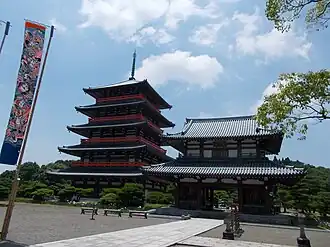
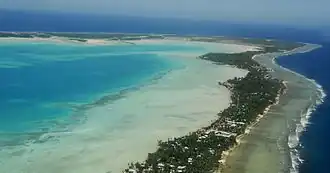

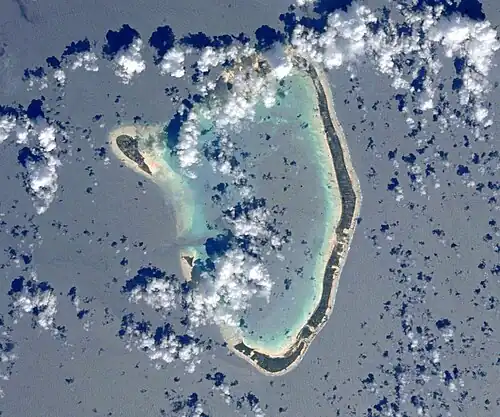
Guide content as of May 2026. Portions adapted from Wikivoyage, CC BY-SA 4.0.

Contact Us
Get in touch with us.
Get in touch
Contact Us
Tell us where you'd like to go and how you like to travel. A real Tripcuro planner — not a bot — will craft an itinerary around you.
- Personalised, hassle-free planning end-to-end
- Transparent pricing, no hidden costs
- 24/7 support for complete peace of mind