

Abaiang
Gilbert Islands, Kiribati
Why visit Abaiang?
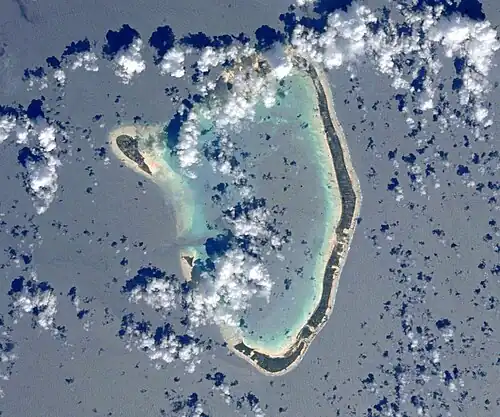
Abaiang is a quiet coral atoll in the Gilbert Islands chain of Kiribati, lying just north of the capital atoll of Tarawa across a narrow stretch of ocean. With a land area of only about 16 square kilometres but stretching roughly 37 km (23 miles) from north to south, it is a classic low-lying string of islets enclosing a sparkling blue lagoon. The population was 5,568 at the 2015 census, with the administrative centre at Taburao village. Abaiang's appeal is its combination of pristine white-sand beaches, a calm lagoon ideal for snorkelling, and a remarkably dense layer of cultural and religious history for such a small island.
Abaiang occupies a special place in Kiribati history as the cradle of Christianity in the country. Reverend Dr Hiram Bingham and his American mission party arrived from the United States via the 1856 expedition, eventually establishing the first church in Kiribati on Abaiang in 1859 — landing in the middle of a war between the chiefs Ten Temaua and Ten Teiwaki. The island is also home to Kiribati's most striking colonial-era church: the Gothic "Our Lady of the Rosary" at Koinawa village, known locally as Brossam ("Belgium"), built in 1907 by the Belgian engineer-missionary Father Jean-Marie Joseph Lebeau (1870–1943), whose grave stands beside it. Shrines, the well of Abaiang's traditional high chief, and sites associated with the cannibal Maatere and the chief Mouaa lie scattered between the villages, and the maneaba (traditional meeting house) is still the heart of social life.
The climate is equatorial: hot and humid year-round, with daytime temperatures consistently in the high 20s to low 30s°C. The drier, slightly cooler months from roughly May to October are the most comfortable for travel; November to April brings heavier showers and higher humidity. Abaiang sits on the equator and is largely outside the typhoon belt, but is highly vulnerable to king tides and sea-level rise. There are no "neighbourhoods" in any urban sense — the atoll is a chain of villages strung along a single coast road, with Taburao (government centre), Tuarabu, Tebwanga, Tebero, Ribono, Tekarano and Koinawa among the names you will hear most.
Planning Abaiang? Tell us your dates and we’ll tailor the trip.
Ask on WhatsAppHow do you get there?
By Plane
Abaiang Atoll Airport (ABF), near Taburao, is the only way in for most visitors. Air Kiribati operates light aircraft services from Bonriki International Airport (TRW) on Tarawa, with some flights routed via Marakei. Schedules are sparse (typically a few times per week) and subject to weather and last-minute changes — book well ahead through Air Kiribati and plan a buffer day on either side. The airstrip is a few minutes from Taburao village; arriving guests are usually picked up by their guesthouse on a motorbike or pickup truck.
By Car / Road
An alternative arrival is by small boat from Tarawa: local vessels occasionally make the crossing from Betio or North Tarawa, but services are informal, weather-dependent and not recommended for first-time visitors without a local contact to arrange the trip.
Abaiang has no taxis, no buses and no ride-hailing apps. The standard ways to move around are:
- Motorbike — the workhorse of the island. Your guesthouse will usually arrange a driver, or you can hire a bike with a local rider for a half- or full-day island tour. Negotiate the price up front in Australian dollars (the local currency).
- Pickup truck — useful for groups or for the long run up to Koinawa in the north; again, arranged through your accommodation.
- Walking — villages are linear and very walkable; between-village walks are pleasant in the cooler hours but punishing in midday heat.
- Boat / canoe trips — the only way to reach outer islets such as Rianaba and other lagoon spots; arrange in advance through your host.
There are no formal scams to speak of, but agree on prices and timing clearly before setting out, and assume that "scheduled" departures (boats, flights, trucks) are advisory rather than guaranteed.
What are the things to do?
Churches and mission history
- Our Lady of the Rosary ("Brossam"), Koinawa village — the tallest church in Kiribati, a Gothic "cathedral" built in 1907 by the Belgian engineer-priest Father Jean-Marie Joseph Lebeau, who burned his own lime and made the bricks on site. The basement runs 6 metres deep. Father Lebeau's grave stands beside the church. A must-see and the single most striking building on the atoll. No fixed entry fee; a small donation is appreciated.
- Site of the first church in Kiribati (1859), founded by Rev. Dr Hiram Bingham — the historic mission landing point that makes Abaiang the birthplace of Christianity in Kiribati.
Shrines, wells and traditional sites (best visited as part of the Te Karaaun welcome circuit — see Do)
- Tekabwarinuea maneaba, Ribono village — the starting and ending point of the traditional welcome circuit.
- Beiamatekaai shrine.
- Rianaba islet — a small lagoon islet associated with traditional history and a popular boat-trip destination.
- Kaiea's well — the well of one of the early high chiefs of Abaiang.
- Maatere site — associated with the legendary cannibal Maatere, said to have landed on Abaiang in the early days.
- Naikamawa site and Naibunaki site — chiefly and ancestral sites.
- Mouaa's Kautae (fishing scoop net) and Mouaa's tangana (traditional babai/taro pudding) sites — associated with the chief Mouaa.
- The King's hook — a traditional shrine.
Beaches and lagoon
The western lagoon beaches — the long, white-sand strands facing the lagoon are the headline natural attraction; calm, shallow water ideal for swimming and snorkelling.
View from North Tarawa — even before arriving, the southern tip of Abaiang's beaches is famously visible from the northern tip of South Tarawa.
Te Karaaun (traditional welcome) — Abaiang's signature cultural experience and the proper way to begin any visit. Designated villagers escort first-time guests around Ribono village in an anticlockwise direction (Ribono is the only village on the atoll to use the anticlockwise escort), starting from Tekabwarinuea maneaba, taking in shrines and ancestral sites — Beiamatekaai, Rianaba islet, Kaiea's well, Maatere, Naikamawa, Mouaa's Kautae and tangana, the King's hook, and the Naibunaki site — then back to Tekabwarinuea. You are then escorted to Tekarano village (where garlanding with Ten Tanini is done if it was not done at Ribono), and onward through the other villages. Done on day one or, at the latest, the morning of day two. Bring sticks of tobacco as offerings for each shrine.
Island tours by motorbike or truck — the classic way to take in the full length of the atoll, from Taburao north to Koinawa and the Brossam church.
Snorkelling in the lagoon — clear, sheltered water and healthy reef patches; bring your own mask and snorkel as rentals are not reliably available.
Boat trips to outer islets — Rianaba and other small islets within the lagoon; arrange in advance with your guesthouse or local boatmen.
Beach walks and beach games — long, almost empty stretches of sand make for excellent slow days.
Picnics at recommended spots — arrange in advance through your host; a packed meal of local fare on an isolated beach is a highlight for many visitors.
Visits to cultural and historical sites — best done with a local guide who can explain the stories behind each shrine.
Planning Abaiang? Want these on a customised itinerary?
Ask on WhatsAppWhere to eat?
Food on Abaiang is simple, local and based on what comes off the reef, out of the lagoon, and out of the village garden. Expect lots of fish (reef fish, tuna, occasional crayfish), rice, breadfruit, coconut in every form, te bwabwai (giant swamp taro / babai), and tangana — a traditional pudding made from babai or taro that is one of the dishes associated locally with the chief Mouaa. Pork and chicken appear at feasts. There are no restaurants in the Western sense; meals are taken at your guesthouse or by arrangement with families.
- Beach Front Resort (Beero's place) — meals on request, freshly cooked, focusing on fish and local staples. The most reliable place to eat for visitors. Budget to mid-range; arrange in advance.
- Village feasts at the maneaba — if invited to a community gathering, you will encounter the full local repertoire: fish, rice, breadfruit, coconut puddings and tangana. Bring a small gift (tobacco, store goods) to contribute.
- Village stores — for snacks, tinned fish, crackers and instant noodles to supplement guesthouse meals.
Vegetarians can usually be accommodated (rice, breadfruit, taro, coconut, papaya, bananas) with notice, but a strict vegan or gluten-free diet will be difficult — bring supplements. Halal options are not formally available.
Where to drink?
The standard daytime drinks are fresh young coconut (te ben) straight from the husk and bottled water. Locally fermented toddy (te karewe) — the sap of the coconut palm — is the iconic Kiribati drink, served either fresh and sweet in the morning or fermented into a mildly alcoholic sour version later in the day. Beer (typically imported Australian brands) is sometimes available at guesthouses but supply is unreliable; if you want a cold beer, bring a small stash from Tarawa.
There are no bars, no cafés and no nightlife on Abaiang in any conventional sense; evenings are spent around the maneaba, on the beach, or under the stars.
Water safety: do not drink untreated tap or well water. Stick to bottled water or water that has been boiled or filtered. Bring more drinking water than you think you need — the island is remote, supplies can be tight, and dehydration is the most common visitor health complaint.
Planning Abaiang? We’ll book the stays and dining for you.
Ask on WhatsAppWhere to stay?
Accommodation on Abaiang is limited to a handful of small guesthouses and family-run lodges; there is no mid-range chain hotel and no luxury resort in the international sense. Always book in advance — turning up unannounced is not advisable.
Budget
- Village guesthouses / homestays — basic rooms with shared facilities in a handful of villages, arranged through local contacts or the island council at Taburao. Expect very simple conditions and modest nightly rates including meals.
Mid-range
- Beach Front Resort (owner Beero Atanrika; +686 73026540; [email protected]; Facebook/Instagram b.atanrika) — clean, new cabins (opened October 2024) right on the beach, with clean bathrooms and meals available on request. Beero is widely praised by recent visitors and is the most reliable booking on the island. Recommended.
Upscale / heritage
- Ouba Islet Resort and Teirio Beach Resort are the two best-known resort names historically associated with Abaiang and are referenced as Kiribati's most famous lagoon resorts.
What should you buy?
Abaiang is not a shopping destination. There are small village stores (te stoa) at Taburao and in several other villages selling basic groceries, tinned goods, drinks and household items, generally at higher prices than on Tarawa due to freight. There are no craft markets, ATMs, or souvenir shops.
If you want to take something home, look for handwoven pandanus mats, fans, and baskets, shell necklaces, and te bino / Ten Tanini-style garlands — usually bought informally from villagers rather than from any shopfront. Ask your host to introduce you. Bargaining is not the norm; prices are typically modest and fixed, and rounding up is appreciated.
Bring Australian dollars in small denominations in cash from Tarawa — there are no banks or ATMs on Abaiang, and card payments are not accepted.
Where to go next?
- Tarawa (South Tarawa / Betio) — ~30 min by Air Kiribati flight, or a short boat crossing in good weather. The capital atoll, with the WWII Battle of Tarawa sites at Betio, the national maneaba, and onward connections to Fiji and Brisbane.
- North Tarawa — the rural, lagoon-side northern arm of Tarawa, reached by boat or causeway from South Tarawa; quiet villages and beaches very similar in feel to Abaiang.
- Marakei — ~15–20 min by Air Kiribati flight from Abaiang; a small almost-circular atoll famous for its four guardian spirits (te anti), traditionally circumnavigated clockwise by visitors.
- Butaritari — further north in the Gilberts, the "green island" of Kiribati, with lusher vegetation, WWII history (it was the "Makin" of the 1942 raid), and a different cultural flavour.
- Maiana — small atoll south of Tarawa, served by short Air Kiribati hops; quiet beaches and a low-key village atmosphere.
- Abemama — a historic atoll south of Tarawa where Robert Louis Stevenson stayed in 1889; reachable by Air Kiribati and worth combining with Abaiang for a fuller Gilbert Islands itinerary.
Nearby in Gilbert Islands
More places to explore around Abaiang.
Guide content as of May 2026. Portions adapted from Wikivoyage, CC BY-SA 4.0.

Contact Us
Get in touch with us.
Get in touch
Contact Us
Tell us where you'd like to go and how you like to travel. A real Tripcuro planner — not a bot — will craft an itinerary around you.
- Personalised, hassle-free planning end-to-end
- Transparent pricing, no hidden costs
- 24/7 support for complete peace of mind