
Kuria
Gilbert Islands, Kiribati
Why visit Kuria?
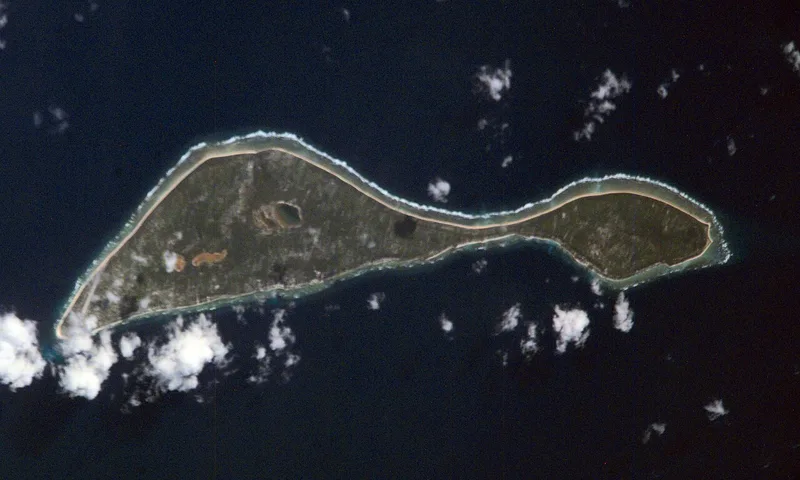
Kuria sits in the central Gilberts, just northwest of Aranuka and roughly halfway up the Kiribati chain. The atoll covers about 12.3 km² and is home to around 1,046 people (2015 Census), spread between the two islets of Buariki and Oneeke, which are separated by a shallow channel now bridged by the Itintoa Causeway. Buariki is the administrative centre — airport, police post, Junior Secondary School and the island's main guest house are all here. Historically, Kuria was first sighted by European navigators Thomas Gilbert and John Marshall in 1788 after their departure from Port Jackson, and in the late 1800s it fell under the rule of King Karotu of Abemama and later his nephew Binoka, unifying Kuria, Aranuka and Abemama under a single Abemama-based dynasty. Kuria was also home to George Mac Ghie Murdoch, the first Resident Commissioner for the Central and Southern Gilbert Islands, whose grave, residence and office still stand as colonial-era landmarks.
The character of Kuria is overwhelmingly traditional. Authority on the island runs through the mayor and council of elderly men, and decisions affecting the community are still made collectively. The sense of bwai n aomata — sharing as duty — is strong: islanders know every plot, every tree, and every hereditary land right, and visitors are expected to slot respectfully into that order. Dress is conservative: bikinis, short shorts and mini skirts are not acceptable in the villages; wraparound sulus or skirts/shorts covering the knees with a T-shirt are the norm for both visiting men and women. Cultural activities, including any shrine visits, are best arranged in advance through the guest house or with the village.
Climate is equatorial — hot, humid and consistent year-round, with daytime temperatures in the high 20s to low 30s°C and refreshingly cooler nights thanks to the island's width. The drier, more reliable travel window is broadly April to October; November to March brings heavier rains and the risk of stronger westerly squalls. Kuria has no "neighbourhoods" in any conventional sense — just the two islets, Buariki (south, administrative) and Oneeke (north, quieter, with its own King's Pond) — linked by the Itintoa Causeway across the lagoon channel.
Planning Kuria? Tell us your dates and we’ll tailor the trip.
Ask on WhatsAppHow do you get there?
By Plane
The island is served by Kuria Airport (IATA: KUC) at Buariki, with infrequent domestic flights from Bonriki International Airport (TRW) in Tarawa operated by Air Kiribati on small turboprop aircraft (typically ATR or Harbin Y-12 equipment). Schedules are limited to a few flights per week and are frequently rearranged at short notice — always reconfirm locally, and build slack into onward plans. The airstrip is essentially in the village; the guest house is a short walk or a lift on the back of someone's truck or motorbike. There are no taxis or airport buses.
Kuria is small and walkable end-to-end. Most visitors get around on foot, by motorbike (often arranged through the guest house or by asking a local family) or by truck lift when one happens to be heading your way. There are no taxis, no ride-hailing apps, no buses and no rental-car agencies. The single most useful piece of infrastructure for moving around is the Itintoa Causeway linking Buariki and Oneeke, which can be crossed on foot at any tide. Bring sturdy sandals — coral tracks are rough on bare feet — sun protection, and cash in small denominations (Australian dollars, the local currency) to offer for fuel or fares; there are no ATMs.
What are the things to do?
Grave of George Mac Ghie Murdoch — The cemetery of the first Resident Commissioner for the Central and Southern Gilbert Islands; a quiet, evocative colonial-era memorial. Buariki. Free; visit with a local escort.
Residence and Office of George Mac Ghie Murdoch — The surviving site associated with Murdoch's administration on Kuria, near the cemetery. Buariki. Free; ask the guest house or council to arrange access.
Copra Sheds — Working trading sheds that have served the island's copra economy for more than a century; most atmospheric (and most accessible) during the trading periods when copra is being weighed and bought. Various sites around Buariki. Free.
Kantoa Shrine — Traditional shrine in the bush south of Buariki, visited with an escort; leave a mweaka (offering — traditionally tobacco/cigarettes) on arrival.
Nei Tea Shrine, Teaki's site — A second important shrine, also approached with offerings of mweaka. South of Buariki.
King's Pond (Aia Nei Ueea), Buariki — Inland freshwater pond associated with the old royal line; ask locally for guidance, as it has cultural significance.
King's Pond, Oneeke — A second King's Pond on the northern islet, reached by crossing the Itintoa Causeway.
Itintoa Causeway — Not just transport but a destination in its own right: the best swimming spot on the island and a fine sunset perch over the shallow channel between the two islets.
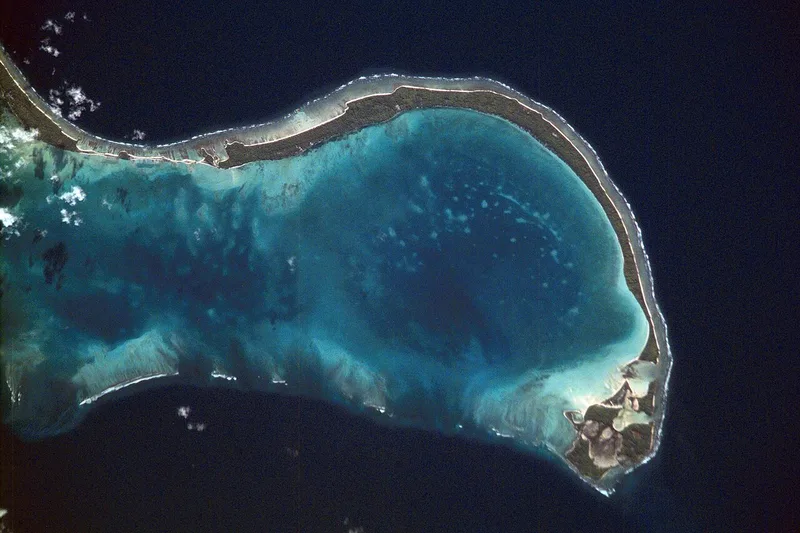
Fringing reefs and lagoon, eastern Kuria — The largest of the island's fringing reefs lie on the eastern side, with brilliant blue water and white sand stretches that are essentially deserted.
Island escort tour on arrival. Tradition (and good manners) dictates a first-day walking tour from the guest house south of Buariki, led by an elder or council member. This is your introduction to the island, its rules and its sites.
Swim and wade at Itintoa Causeway. The single best, safest swim on the island — calm, shallow, and family-friendly.
Snorkel the eastern fringing reef. Healthy coral and reef fish in clear water. Bring your own mask, snorkel and fins — there is no dive shop or rental on Kuria.
Picnic at Teaki's site or other escort-approved spots. Pack lunch from the guest house; leave a mweaka if visiting a shrine adjacent to your picnic spot.
Island circuit by motorbike or truck to see colonial-era relics — Murdoch's grave, residence and office, and the copra sheds (especially during the trading season).
Village walking. Slow strolls through Buariki and Oneeke are the easiest way to feel the island's strong sense of community; greet people you pass (Mauri!) and accept invitations to sit when offered.
Cultural performances and botaki. Traditional dancing and gatherings can sometimes be arranged for visitors — request in advance through the guest house or council, not on the day.
Planning Kuria? Want these on a customised itinerary?
Ask on WhatsAppWhere to eat?
Food on Kuria is whatever the island, lagoon and reef have provided that week. Expect a rotation of reef fish (grilled, boiled in coconut cream, or raw as ika raw with lime), rice, breadfruit (mai), pandanus (te kaina), pumpkin tops and coconut in every form — fresh, cream, toddy and oil. Te bua toro ni baukin (fermented coconut sap) and te buatoro (cooked breadfruit) are local staples. Tinned corned beef and instant noodles round out most meals. Vegetarian visitors can usually be accommodated with rice, breadfruit, pumpkin tops and coconut-based dishes, but tell your hosts in advance; strict gluten-free or halal diets will be very hard to maintain — bring supplements.
- Buariki Guest House dining (Buariki) — In practice the main place visitors eat. Set meals built around fresh reef fish, rice and coconut, prepared by the guesthouse family. Pay per meal in cash; rates are modest but vary with what's available.
- Village home meals — Visitors are sometimes invited to share bootaki (community feasts) for weddings, funerals or holidays. Accept graciously, bring a small contribution (rice, sugar, tea) and follow your hosts' lead on protocol.
- Self-catering from village trade stores — Stock up in Tarawa before you fly; on Kuria, supplement with locally bought coconuts, fish and breadfruit. Drinking water in particular should be planned for — bring extra.
Where to drink?
The signature drink of Kuria, as across Kiribati, is te karewe — sweet, fresh coconut toddy tapped from the spathe of the coconut palm at dawn and dusk. Drunk fresh it is non-alcoholic and refreshing; left to ferment for a day it becomes te kaokioki, mildly alcoholic and an acquired taste. Both are usually offered rather than sold; reciprocate with a small gift. Imported beer (Victoria Bitter, Fiji Bitter) and soft drinks turn up in trade stores intermittently when the supply boat has been in. There is no bar, no café and no nightlife scene in any conventional sense; evenings are for sitting under the stars with your hosts.
Water safety. Tap and well water on Kuria should be regarded as not safe to drink without treatment. Bring bottled water from Tarawa, supplement with a filter or purification tablets, and budget more than you think you need — dehydration is a real risk in the heat, and resupply on-island is unreliable.
Planning Kuria? We’ll book the stays and dining for you.
Ask on WhatsAppWhere to stay?
Budget — Buariki Guest House (Buariki, near the airstrip): the island's main visitor accommodation, basic rooms with shared facilities, meals included or available on request. Bring your own towel, mosquito repellent, torch and reading material. Expect rates roughly in line with other outer-island guest houses in Kiribati.
Mid-range / Upscale / Heritage
What should you buy?
Kuria is not a shopping destination. There are no markets, craft shops or souvenir stalls in the modern sense. A small number of village trade stores in Buariki sell basics — rice, tinned fish, biscuits, soap, batteries — and stock turns over with the inter-island boats, so don't count on anything specific being available. If you want a souvenir, ask around for handwoven pandanus mats, fans or baskets, or shell and coconut-fibre handicrafts made by local women; payment is by quiet negotiation, in cash (Australian dollars), at fair rather than bargained-down prices. The most useful "purchase" you can make on Kuria is a supply of tobacco/cigarettes from a Tarawa shop before you fly in, to use as mweaka offerings at the shrines you visit.
Where to go next?
- Aranuka (KI-G) — The atoll immediately southeast of Kuria, about 30 km away with a short Air Kiribati hop or boat connection in good weather; another quiet central-Gilberts atoll and a natural pairing with Kuria.
- Abemama (KI-G) — ~80 km south, also reached by Air Kiribati; the historic seat of the Karotu/Binoka dynasty that once ruled Kuria, with strong Robert Louis Stevenson associations.
- Maiana (KI-G) — Northwest of Kuria in the central Gilberts; the island to which the former ruler Ten Temea retreated after handing Kuria and Aranuka to Abemama, with quiet villages and good reef.
- Tarawa (KI-G) — The capital atoll and your inevitable transit point, about a 1–1.5 hour flight north of Kuria; combine WWII Battle of Tarawa sites at Betio with the urban bustle of South Tarawa.
- Butaritari (KI-G) — "The Green Island," the lushest of the northern Gilberts, reached via Tarawa; a striking contrast to dry Kuria, with rich gardens and WWII history.
- Banaba (Ocean Island) (KI-G) — Far more remote, reached only by occasional charter or cargo boat from Tarawa, but a once-in-a-lifetime stop if scheduling allows — a raised phosphate island unlike anywhere else in Kiribati.
Nearby in Gilbert Islands
More places to explore around Kuria.
Guide content as of May 2026. Portions adapted from Wikivoyage, CC BY-SA 4.0.

Contact Us
Get in touch with us.
Get in touch
Contact Us
Tell us where you'd like to go and how you like to travel. A real Tripcuro planner — not a bot — will craft an itinerary around you.
- Personalised, hassle-free planning end-to-end
- Transparent pricing, no hidden costs
- 24/7 support for complete peace of mind