
Abemama
Gilbert Islands, Kiribati
Why visit Abemama?
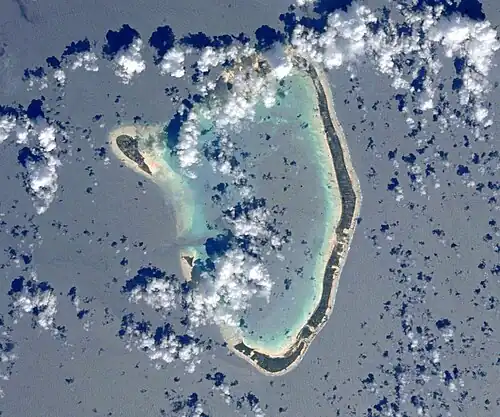
Abemama is a 16-square-kilometre atoll with a population of roughly 3,300 (2016 census), made up of three main islets — the main eastern islet (linked by causeways and home to 11 villages), plus Abatiku and Biike on the southwestern side of the lagoon. The village of Kariatebike is the administrative centre, housing the government offices, police station, and hospital; Chevalier College sits just to its east. The atoll's deep, well-sheltered lagoon makes it a favourite anchorage for cruising yachts and a popular weekend escape for expatriates based in Tarawa.
Historically, Abemama is where Captain Davis of HMS Royalist declared the British Protectorate over the Gilbert Islands on 27 May 1892. Robert Louis Stevenson lived here in 1889 as a guest of Tem Binoka, whose tomb still stands near Tabontebike. During WWII, the American submarine USS Nautilus landed 78 Marine Amphibious Reconnaissance Scouts on 21 November 1943 to seize the island from a small Japanese garrison; by the morning of 25 November the remaining Japanese had taken their own lives. Physical traces of all three eras — chiefly shrines, Stevenson-era sites, and rusting wartime relics — are scattered across the atoll, and the chiefly family of Abemama–Kuria–Aranuka still commands deep respect in community life.
Climate is equatorial: hot and humid year-round, with temperatures typically in the high 20s to low 30s Celsius. The drier, more settled months from roughly May to October are the easiest time to visit; the wetter period from November to April can bring heavier rain and more disrupted inter-island flights. Visitors should plan for a remote, low-infrastructure environment and build flexibility into travel dates.
Planning Abemama? Tell us your dates and we’ll tailor the trip.
Ask on WhatsAppHow do you get there?
By Plane
Abemama is reached by domestic flight from Bonriki International Airport (TRW) on South Tarawa, which is Kiribati's only international gateway. Air Kiribati and Coral Sun Airways operate inter-island services to Abemama, typically with weekly frequency on small turboprops; schedules shift often, so book through a local agent in Tarawa and confirm a day or two before departure. Flights land at Abemama's airstrip on the main islet; arrange a pickup with your guesthouse in advance, as there is no organised taxi service waiting at the field.
By Car / Road
The other practical way in is by sea: Abemama's sheltered lagoon is a regular stop for cruising yachts working through the Gilberts, and inter-island cargo/passenger boats from Betio (South Tarawa) call here on irregular schedules. Sailings are weather-dependent and crossings can take a full day or more — only worth considering if you have time and a flexible itinerary.
The eastern islets of the atoll are joined by causeways, so it is possible to drive or ride the full length of the main island. There is no formal public transport, no taxi rank, and no ride-hailing app. In practice you get around by:
- Lifts arranged through your guesthouse — the standard way for visitors. Expect to negotiate a flat fee for a half-day or full-day vehicle hire with driver.
- Motorbike or bicycle hire, occasionally available informally through hosts; ask around in Kariatebike.
- Small boat to reach Abatiku and Biike on the southwestern side of the lagoon, which are not linked by causeway. Charter is arranged village-to-village.
- Walking, which is fine within a single village.
Drive slowly when passing through any village, and especially past a maneaba (community meeting house) when elders are meeting inside — this is a strong local courtesy. There are no scams to speak of; the bigger risks are mechanical breakdowns and fuel shortages, so always agree the price and the return time before setting off.
What are the things to do?
Tomb of Tem Binoka, near Tabontebike — the resting place of the tyrant-chief of Abemama, Kuria, and Aranuka, made famous by Robert Louis Stevenson's In the South Seas (1889). A short, atmospheric stop and the single most evocative historical site on the atoll. Free; daylight hours.
Traditional shrines and cultural sites scattered across the main islet — physical evidence of the pre-European chiefly system, where heads of kainga (kin groups) deferred to the paramount chief. Bring three sticks of tobacco per shrine as the customary offering. Arrange a local guide through your guesthouse; do not visit unaccompanied.
WWII relics — rusting Japanese and American hardware survives at several points on the main islet, dating from the November 1943 USS Nautilus landing. Sites are unsigned; a local guide is essential to find them.
Kariatebike — the administrative village, with the government office, police station, and hospital. Worth a slow walk-through to see the rhythm of atoll civic life. Stop in at the nearby maneaba if a meeting is not in session.
Kabangaki village — by tradition, the starting point of any first-time visitor's tour of the atoll. Begin here and let the welcome unfold.
Abemama lagoon — a deep, exceptionally clear lagoon and the centrepiece of the atoll. Best seen from the water; charter a small boat from any village on the lagoon side.
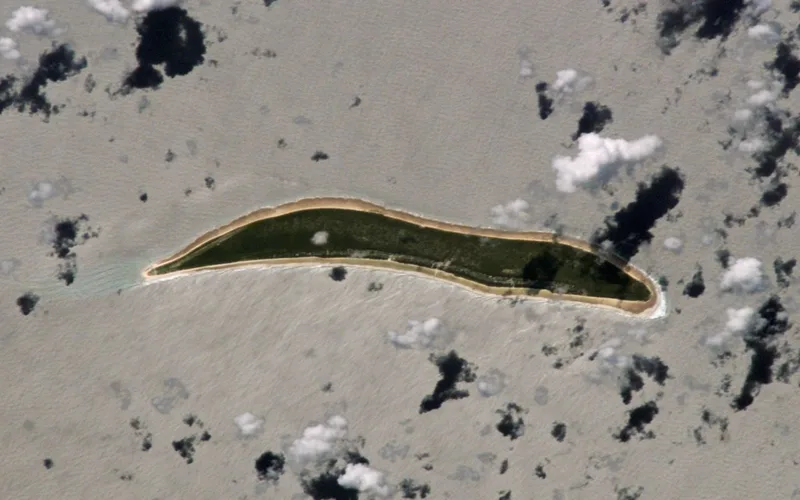
Abatiku and Biike islets — the two outlying islets on the southwestern rim of the atoll, quieter than the main islet and reached by short boat charter. Good for a half-day escape.
Bonefishing the lagoon flats — Abemama's sheltered, food-rich lagoon holds abundant bonefish and is one of the genuinely world-class flats-fishing destinations in the central Pacific, though largely undeveloped for sport fishing. Bring your own gear; ask your guesthouse to arrange a guide with a skiff.
Snorkelling the lagoon edges and passes — coral, reef fish, and crystal-clear water. Best at slack tide.
Kayaking inside the lagoon — calm, sheltered water makes for easy paddling between islets.
Learn te Kamei dancing — Abemama is one of only a handful of places in Kiribati where this dance tradition is still actively taught. Arrange in advance through your host.
Weaving with pandanus leaves — sit in on a session of mat- and basket-making with village women; a quiet, hands-on afternoon and the best way to take home something genuinely Abemaman.
Play local games with village kids and young men — informal volleyball, football, and traditional games happen most late afternoons on open ground near the maneaba.
Sit in a maneaba when invited — community meetings, dances, and feasts in the big thatched meeting houses are the centre of social life. Fold your legs properly when sitting; stretching them out toward others is a serious insult.
Cruising yacht stopover — if you are sailing the Gilberts, Abemama's lagoon is one of the best-protected anchorages in the chain.
Planning Abemama? Want these on a customised itinerary?
Ask on WhatsAppWhere to eat?
Food on Abemama is straightforward atoll cooking — reef fish, lagoon shellfish, rice, breadfruit, babai (giant swamp taro), coconut in every conceivable form, and pandanus and pawpaw for sweetness. Most visitors eat where they sleep: guesthouses include meals in the nightly rate or charge a small set fee per meal. There are no standalone restaurants in the western sense, and dietary options (vegetarian, halal, gluten-free) need to be flagged in advance to your host — they can usually accommodate vegetarian easily with rice, breadfruit, and reef fish swapped for taro and greens.
Signature things to try:
- Te ika ni marawa — fresh reef fish, often eaten raw with lime and coconut cream, or grilled whole over coconut husks.
- Te bua toro ni baukin — fermented coconut toddy used in cooking and drinks (see Drink).
- Te babai — giant swamp taro, slow-cooked; a prestige food served at feasts in the maneaba.
- Te bero — pandanus fruit, eaten fresh or pressed into a dense sweet paste.
- Coconut crab — occasionally available; ask your host, as they are seasonal and increasingly regulated for conservation.
Recommendations by tier:
- Budget — village home meals. Eaten with your guesthouse family; typically rice + fish + coconut + greens, often included in the room rate.
- Mid-range — guesthouse set dinners. A more structured meal with a few dishes, including a reef-fish main; pay a per-meal supplement to your host.
- Special occasion — a community feast in the maneaba. If your visit coincides with a celebration, ask your host whether it is appropriate to attend and contribute. This is the best food you will eat in Kiribati.
Where to drink?
The signature local drink is te karewe — sweet, freshly-tapped coconut toddy, drawn from the cut spathe of a coconut palm at dawn and dusk. Drunk fresh, it is mild and refreshing; left to ferment for a day, it becomes te kaokioki, a tangy, mildly alcoholic toddy. Both are part of daily village life and are usually offered freely if you spend any time with a family.
Beyond toddy, expect: instant coffee, black tea with sugar, and green coconuts (te ben) cut fresh for the juice — the safest cold drink on the atoll. Imported beer (Victoria Bitter and similar Australian brands) and a small selection of spirits filter across from Tarawa and turn up in guesthouses, but supply is patchy; do not count on it.
There are no bars or cafés. Drinking happens on the buia (raised thatched platform) at your guesthouse or in the maneaba on community occasions. Be aware that some villages on outer islands in Kiribati declare themselves dry by community decision — ask your host before bringing alcohol into a village.
Water safety: do not drink tap or well water on Abemama without treating it. Bring or buy bottled water in Tarawa before flying over, and pack purification tablets or a filter as backup — atoll groundwater is brackish and easily contaminated, and the Wikivoyage source explicitly recommends carrying additional drinking water.
Planning Abemama? We’ll book the stays and dining for you.
Ask on WhatsAppWhere to stay?
Accommodation on Abemama is limited to a small number of village guesthouses and one historically significant lodge. Book in advance from Tarawa; turning up unannounced is not advisable.
Budget
- Village homestays, arranged informally through contacts in Tarawa or on arrival in Kariatebike. Simple thatched-roof rooms or a mattress in a family compound, shared bucket bathing, meals included.
Mid-range
- Government / Council guesthouse, Kariatebike — basic ensuite rooms used by visiting officials and the occasional traveller; book through the Island Council office on arrival or via contacts in Tarawa.
Upscale / heritage
Whichever tier you book, confirm in writing what is included (meals, airport transfer, bottled water, vehicle hire) before you fly across — it is hard to fix misunderstandings once you are on the atoll.
What should you buy?
There is no shopping district in any urban sense — Abemama has small village trade stores selling rice, tinned fish, instant noodles, soap, kerosene, and basic dry goods, and that is essentially it. Stock up on anything you genuinely need (sunscreen, batteries, toiletries, snacks) in Betio or Bairiki on South Tarawa before you fly across.
What is worth buying, if you can find it, is handicraft: pandanus mats, baskets, fans, and shell jewellery made by village women. There is no fixed market; ask your guesthouse host to introduce you to weavers in the village. Prices are modest and usually quoted firm — light, friendly negotiation is fine, hard bargaining is not the local style. Carry small-denomination Australian dollars in cash; Kiribati uses the AUD and there are no ATMs you can rely on, no card machines, and no reliable mobile money.
Also useful to carry: sticks of tobacco (sold in village stores), which are the customary offering at shrines and a thoughtful small gift to elders.
Where to go next?
- Tarawa (≈ 152 km west; ~45-minute flight) — the capital atoll, with the WWII Battle of Tarawa sites at Betio, the main markets, and your onward international flight.
- Kuria (≈ 30 km south; short flight or boat charter) — small, quiet neighbour of Abemama; historically part of the same chiefly dynasty under Tem Binoka.
- Aranuka (≈ 60 km south; short flight) — third atoll of the Abemama–Kuria–Aranuka chiefly grouping; even less visited, with a striking lagoon.
- Maiana (≈ 90 km northwest of Abemama; short flight from Tarawa) — easy add-on atoll close to Tarawa, with good lagoon snorkelling.
- Butaritari (≈ 300 km north; flight via Tarawa) — the "Green Island," wetter and more lushly vegetated than the rest of the Gilberts; also a WWII site.
- Christmas Island / Kiritimati (Line Islands; flight via Tarawa or Honolulu) — Kiribati's other famous destination, world-renowned for saltwater fly fishing and seabird colonies; a major journey from Abemama but the natural pairing for serious anglers.
Nearby in Gilbert Islands
More places to explore around Abemama.
Guide content as of May 2026. Portions adapted from Wikivoyage, CC BY-SA 4.0.

Contact Us
Get in touch with us.
Get in touch
Contact Us
Tell us where you'd like to go and how you like to travel. A real Tripcuro planner — not a bot — will craft an itinerary around you.
- Personalised, hassle-free planning end-to-end
- Transparent pricing, no hidden costs
- 24/7 support for complete peace of mind