
Maiana
Gilbert Islands, Kiribati
Why visit Maiana?
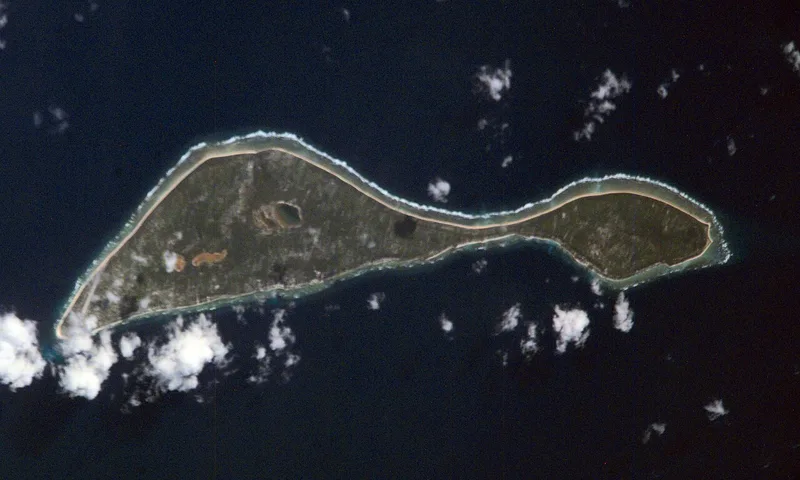
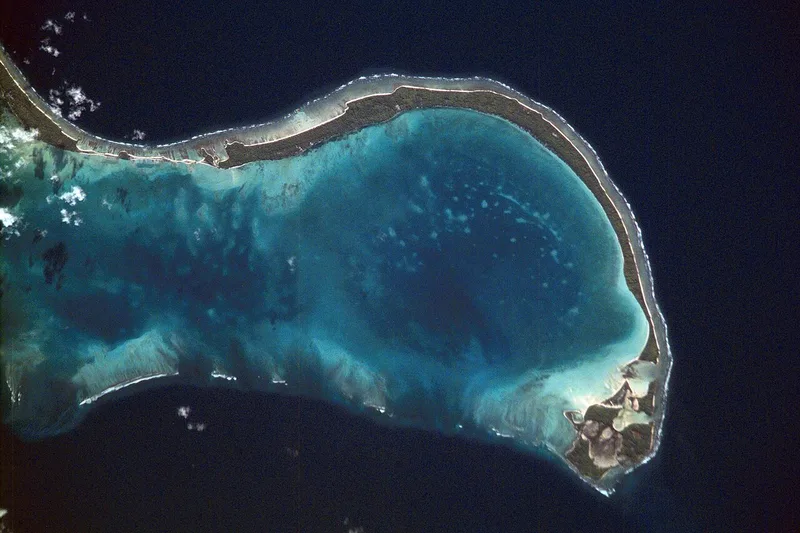
Maiana is a low-lying coral atoll in the southern Gilbert Islands group of Kiribati, lying roughly 30 km south of South Tarawa across a stretch of open ocean. The atoll is shaped as a long, narrow string of islets curving down the eastern rim of a wide, shallow lagoon, with reef passages on the leeward side. Population is small — somewhere around two thousand people spread across a chain of villages connected by a single coastal track — and the rhythm of life is overwhelmingly traditional: subsistence reef and lagoon fishing, copra cutting, pandanus and coconut-frond weaving, and the social life of the maneaba (the open-sided thatched meeting house that anchors every Kiribati village).
Maiana sees very few outside visitors in a typical year, and that is precisely the reason to come. There are no resorts, no tour desks and no taxis waiting at the airstrip; what you get instead is an atoll where the lagoon is empty of boats, the night sky is unspoiled by light, and almost any interaction starts with being welcomed into someone's maneaba. Travellers who make the short hop from Tarawa are usually here for the unfiltered version of Gilbertese island life rather than for ticked-off attractions.
The climate is equatorial: hot and humid all year, with daytime temperatures around 28–32 °C and warm nights. The drier, slightly breezier season runs roughly May to October (the best window for a visit, with steadier easterly trades and calmer lagoon water). November to April is the wetter, more humid season, with heavier rain squalls and occasional westerly weather. Kiribati straddles the equator, so there is no real cyclone risk, but king tides during the wet season can flood low parts of the islets.
Planning Maiana? Tell us your dates and we’ll tailor the trip.
Ask on WhatsAppHow do you get there?
By Plane
The local airstrip is Maiana Airport (IATA: MNK), a short coral/grass strip on the atoll. Air Kiribati operates the only scheduled service, hopping across from Bonriki International Airport (TRW) on Tarawa. Flight time is around 15–20 minutes on a small turboprop. Schedules are sparse (typically a couple of services per week) and cancellations for weather, loads or aircraft availability are routine — build slack into your itinerary, and confirm with Air Kiribati locally rather than relying on online schedules.
There is no terminal building of any substance and no taxi rank. Arrange a pickup in advance through your host or village contact; expect a ride in a pickup truck or on the back of a motorbike along the coastal track.
By Car / Road
As an alternative to flying, small inter-island passenger and copra boats occasionally run between Betio (the port at the western end of South Tarawa) and Maiana. Crossings are weather-dependent, can take several hours in an open boat, and are not on a fixed timetable — ask at the Betio waterfront a day or two ahead. This is a local rather than a tourist option.
A single coastal track runs the length of the inhabited eastern reef rim, linking the villages. Most people walk or cycle; a handful of pickup trucks and motorbikes serve as informal shared transport between villages, and you can usually flag one down or arrange a lift through your host for a few Australian dollars (Kiribati uses AUD as legal tender). There are no metered taxis, no buses on a schedule, and no ride-hailing apps — Uber, Bolt and the like do not operate anywhere in Kiribati.
The atoll is small enough that walking from one village to the next is realistic in cool hours; carry water, sun cover and reef-safe footwear for crossing coral. The lagoon side is generally calm and wadeable at low tide; the ocean side has stronger currents and should be approached with local advice.
Scams are essentially a non-issue on Maiana — petty crime is rare and the social fabric is tight — but the usual outer-island etiquette applies: ask before photographing people or maneaba interiors, dress modestly (shoulders and knees covered, especially for women, and especially on Sundays), and accept that Sunday is observed strictly as a day of rest in most villages.
What are the things to do?
Maiana's "sights" are landscape and culture rather than monuments. Don't come expecting ticketed attractions; come expecting to be shown things.
The village maneaba — every village has one, and they are the architectural and social heart of the atoll: huge thatched roofs on coral-stone or timber posts, open on all sides. Visiting one is by invitation; bring a small gift (tobacco, tea, sugar or biscuits from a Tarawa supermarket are appreciated) and remove your hat and shoes before entering. Hours and "ticket": none — protocol is the price of admission.
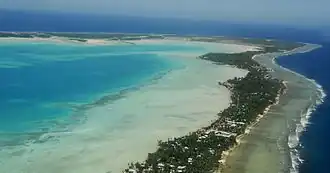
The lagoon and reef flats — the western (lagoon) side of the atoll is a vast, shallow, pale-turquoise basin studded with coral patches; the ocean side drops off quickly into deep blue. Both are excellent for snorkelling, with reef fish, the occasional reef shark and good visibility on calm days.
Coconut and pandanus groves — the interior of the islets is a working agricultural landscape of coconut palms (for copra and toddy), pandanus and breadfruit; walking through is an education in subsistence atoll life.
Village churches — Catholic and Protestant (Kiribati Uniting Church) congregations are strong; Sunday services with hymn-singing are extraordinary, and visitors who dress respectfully are welcome.
Snorkelling and swimming in the lagoon — the easiest activity on the atoll; bring your own mask and snorkel as rentals are not available.
Fishing with locals — handline, net, or going out in a small outrigger to the reef pass. Arrange informally through your host; expect to share or hand over the catch.
Watch (or join) te buki and te kaimatoa — traditional Kiribati dance and song, performed in the maneaba on feast days, church gatherings and welcomes. If your visit coincides with one, do not miss it.
Learn pandanus weaving — mats, fans, hats and baskets are still made daily by women in most households; sitting in is usually welcomed.
Stargazing — there is essentially zero light pollution; the equatorial sky shows both hemispheres' constellations.
Walking the atoll — pick a stretch of the coastal track between two villages and walk it in the cool of early morning or late afternoon.
Planning Maiana? Want these on a customised itinerary?
Ask on WhatsAppWhere to eat?
Maiana eats what the lagoon, reef and gardens provide, supplemented by imported staples (rice, flour, tinned meat) from Tarawa. Expect generous portions, very fresh fish, and an emphasis on coconut in everything.
Signature things to try:
- Reef fish, simply cooked — grilled over coconut husks, boiled, or eaten raw as ika raw (sashimi-style with lime and coconut).
- Te bwabwai — giant swamp taro, slow-cooked; a prestige food served at feasts.
- Breadfruit (te mai) — roasted in the embers, sliced and eaten with coconut cream.
- Coconut everything — fresh young coconut (te ben) for drinking, grated mature flesh for cooking, te kamaimai (boiled-down toddy syrup) as a sweetener.
- Palu sami / coconut-cream-cooked fish parcels — fish with grated coconut wrapped in young taro or breadfruit leaves and baked.
Vegetarians can eat reasonably well (rice, breadfruit, taro, coconut, papaya, bananas) but should flag this clearly with hosts in advance, as fish is the default protein. Halal and gluten-free diets are not specifically catered for and should be self-managed.
Where to drink?
- Te karewe (sweet toddy) — fresh sap tapped from the cut spathe of a coconut palm at dawn; sweet, lightly fizzy, drunk the same morning. The everyday drink of the Gilberts and a must-try.
- Te kaokioki (sour toddy) — karewe left to ferment naturally for a day or two; mildly alcoholic, sharp, an acquired taste. Stronger fermented and distilled versions exist informally.
- Te ben — the water of green drinking coconuts.
- Tea and instant coffee — universal in households, usually heavily sweetened.
- Beer (Victoria Bitter, Fosters and similar Australian brands) and basic spirits — available in limited quantities at village stores when stock has come in from Tarawa; alcohol consumption is restrained on outer islands and some villages observe local prohibitions, especially around church events.
Water safety: do not drink untreated tap, well or rainwater-catchment water. Boil, filter or use purification tablets, or drink bottled water carried in from Tarawa. Bottled water is not always available in village stores.
Planning Maiana? We’ll book the stays and dining for you.
Ask on WhatsAppWhere to stay?
There are no hotels on Maiana in any conventional sense. Almost all visitors stay in homestays arranged through the island council (te aobitin n te tautaeka n abamwakoro), a church contact, or a personal introduction made on Tarawa before flying out. You sleep on a mat in a thatched sleeping house, share meals with the family, and contribute cash and/or goods (rice, flour, sugar, tea, kerosene, fishing line) at the end of the stay.
- Budget — Homestay via the island council: the standard arrangement; rates are negotiated case by case and typically run in the order of AUD 30–60 per person per night including meals.
If you need hotel-style comfort, base yourself on South Tarawa (where there are several mid-range hotels) and treat Maiana as a day or overnight trip.
What should you buy?
There is no shopping in any tourist sense. What you can buy:
- Pandanus weavings — fans (te iri), mats, hats, baskets, often dyed in local patterns. Buy direct from the weaver in the village; this is the single most worthwhile souvenir.
- Shell and coconut-fibre handicrafts — necklaces, te bwau (dancing skirts), sennit cordage.
- Village kaibuke (small general stores) — stock the basics: rice, flour, sugar, tinned fish and corned beef, soap, kerosene, sometimes a freezer of soft drinks. Useful for gifts to hosts.
Bargaining is not the norm; pay the asked price (usually modest) and round up rather than negotiate down. Cash only, and bring small Australian dollar notes from Tarawa — there are no ATMs, no card terminals, and changing large notes on the atoll is difficult.
Where to go next?
- Tarawa (Bonriki / Bairiki / Betio) — the capital atoll, ~30 km / 15–20 min by air to the north. Kiribati's only urban centre, WWII Battle of Tarawa sites at Betio, and the gateway for every onward connection.
- Abemama — historic atoll ~150 km south, ~45 min flight; spent on by Robert Louis Stevenson in 1889 and still atmospheric.
- Abaiang — atoll just north of Tarawa, accessible by flight or boat; quieter than Tarawa with strong traditional culture and good lagoon snorkelling.
- Marakei — small ring-shaped atoll north of Abaiang, famous in Kiribati lore for its four guardian spirits and the ritual circuit visitors traditionally make on arrival.
- Kuria & Aranuka — pair of small atolls south of Maiana toward Abemama, served by occasional Air Kiribati flights; deeply traditional and very rarely visited.
- Banaba (Ocean Island) — far-flung raised-coral island in the west of Kiribati, only reached by infrequent ship from Tarawa; for serious outer-island travellers only.
Nearby in Gilbert Islands
More places to explore around Maiana.
Guide content as of May 2026. Portions adapted from Wikivoyage, CC BY-SA 4.0.

Contact Us
Get in touch with us.
Get in touch
Contact Us
Tell us where you'd like to go and how you like to travel. A real Tripcuro planner — not a bot — will craft an itinerary around you.
- Personalised, hassle-free planning end-to-end
- Transparent pricing, no hidden costs
- 24/7 support for complete peace of mind