
Nonouti
Gilbert Islands, Kiribati
Why visit Nonouti?
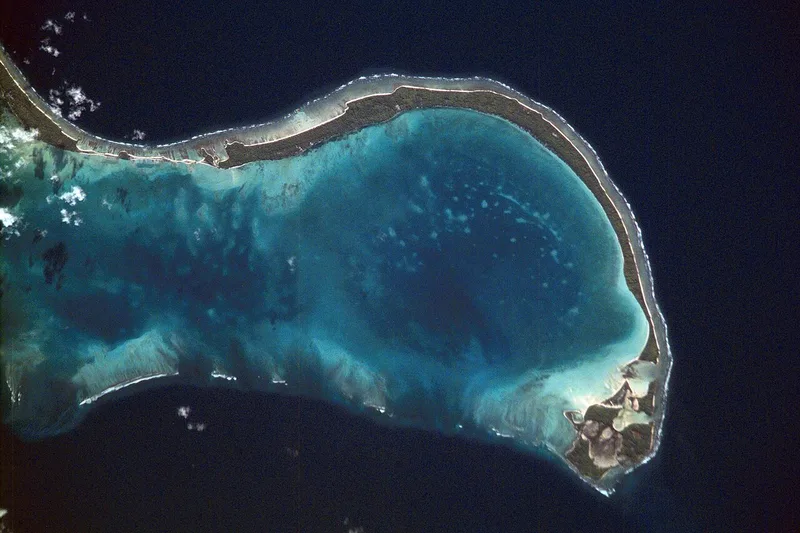
Nonouti is a coral atoll in the southern Gilbert Islands of Kiribati, located roughly 250 km (135 nautical miles) southeast of the capital atoll, South Tarawa. Covering a land area of 29.2 square kilometers, it ranks as the third-largest island in the Gilbert chain. The atoll forms an elongated loop measuring roughly 35 km long, enclosing a shallow lagoon bordered by a continuous eastern strip of land and an archipelago of northern islets separated by tidal flats. The atoll's administrative center is the village of Matang, while Taboiaki in the south serves as the most populous settlement.
The island holds major historical significance in Kiribati. In 1888, French Missionaries of the Sacred Heart landed on Nonouti to establish the first Roman Catholic mission in the archipelago. Taboiaki houses the mission memorial monument and Te Aake Maneaba, the largest traditional open-sided meeting house in the country, built specifically for the Catholic community. Local governance operates through a balance of the elected Island Council and the traditional unimwane (council of male village elders). The local economy relies on subsistence lagoon fishing, copra harvesting, and babai (swamp taro) cultivation.
Nonouti has an equatorial oceanic climate characterized by high temperatures and humidity throughout the year. Daytime temperatures consistently stay between 27°C and 32°C (81°F to 90°F). Because the northern flats experience minimal disturbance, the atoll supports exceptional populations of bonefish (Albula glossodonta), making Nonouti one of only two officially designated recreational bonefishing atolls in Kiribati alongside Kiritimati.
Planning Nonouti? Tell us your dates and we’ll tailor the trip.
Ask on WhatsAppHow do you get there?
By Plane
Air Kiribati operates domestic scheduled passenger flights connecting Bonriki International Airport (IATA: TRW) in South Tarawa with Nonouti Airport (IATA: NON).
- Route & Frequency: Direct flights run 1 to 2 times weekly aboard 17-seat Harbin Y-12 twin-turboprop aircraft.
- Flight Time: Approximately 1 hour to 1 hour 15 minutes.
- Fares: One-way tickets cost around AUD 105–150 ($70–$100 USD).
- Booking: Tickets must be booked through the Air Kiribati sales office or the Kiribati Travel Agency in Bairiki, Tarawa. Advance reservation is essential because seats are limited and priority is often given to local residents and medical travelers. Weight restrictions strictly limit baggage to 15 kg per passenger.
By Boat
The Kiribati National Shipping Line (KNSL) and private inter-island cargo vessels operate passenger-and-freight services from the deepwater port at Betio (Tarawa) to Nonouti's lagoon anchorage.
- Duration: The sea voyage takes 24 to 48 hours depending on weather and intermediate island calls.
- Frequency: Sailings occur irregularly every 2 to 4 weeks.
- Fares: Deck passage costs approximately AUD 40–80 ($27–$54 USD) one way.
- Booking: Inquire and purchase tickets in person at the KNSL office in Betio wharf. Passengers must bring their own food, drinking water, and sleeping mats.
By Bus
No bus service. Nonouti has no public transit system or scheduled minibuses.
By Train
No train service. Kiribati has no railway system.
By Car
No car rental companies exist on Nonouti. The island has no paved highways, relying entirely on packed unpaved coral sand tracks running parallel to the lagoon.
The atoll spans 35 km from north to south, making motorized transport necessary for long-distance transit.
- Flatbed Trucks & Motorbikes: The primary motorized vehicles on the island are council-owned or privately owned flatbed trucks and small motorbikes. Visitors can arrange rides through the Island Council office in Matang or their guesthouse host. A flatbed truck ride between villages generally costs AUD 5–15 ($3.50–$10 USD), or AUD 40–70 ($27–$47 USD) to hire a truck and driver for a half-day island tour.
- Walking & Cycling: Inter-village travel between adjacent settlements such as Matang and Taboiaki is manageable by bicycle or on foot along level sand paths.
- Outboard Skiffs & Traditional Canoes: Accessing the uninhabited northern motu (islets) across the lagoon requires hiring an outboard-powered boat from local fishers or the Island Council. Fares range from AUD 30 to AUD 60 ($20–$40 USD) per round trip depending on distance and fuel consumption. At low tide, certain northern islets can be reached on foot across exposed tidal flats, though travelers must monitor tides carefully to avoid getting stranded.
What are the things to do?
Te Aake Maneaba (Taboiaki): The largest traditional maneaba in Kiribati, constructed with massive wooden posts and an expansive thatch roof. Built for the Roman Catholic community, it remains an active communal hall for ceremonies and civic discussions. Free to view from the outside; ask permission before entering.
Catholic Mission Monument and Missionary Graves (Taboiaki): Located in Taboiaki village, this stone monument commemorates the landing of the first French Catholic missionaries in Kiribati in 1888. Behind the church apse lie the tombs of six early French priests and brothers. Free entry.
Shrine of Te Unimwane (Temotu): A sacred cultural shrine located in the southern village of Temotu. Visitors traditionally present a small customary gift of tobacco (mweaka) to the village elders to request safe passage and good health on the atoll. Free; customary offering of tobacco (AUD 3–5 / $2–$3.50 USD) recommended.
Shrine of Kaitu and Uakeia (Aubeangai): A historical stone landmark commemorating legendary warriors Kaitu and Uakeia from Beru who unified parts of the southern Gilberts during the 17th century. Free entry; visit with a local guide.
Shrine of Temwanoku (Temwanoku): A revered ancestral shrine where local customs require visitors to pay respect before traveling across the central islets. Free entry.
Te Nei ni Man (Autukia): A brackish inland lake near the village of Autukia traditionally used by islanders for raising milkfish (baneawa). Free entry.
Northern Islets and Coral Flats: A chain of uninhabited sandy islets in the northern sector of the atoll, featuring clear lagoon waters, wading birds, and undisturbed sandbanks. Accessible by skiff or during low tide. Free entry.
Bonefishing on the Flats: Nonouti's expansive northern sand flats offer premier fly-fishing for wild bonefish. Anglers must hire a local skiff and fishing guide through the Island Council or guesthouse (AUD 60–120 / $40–$80 USD per day plus fuel). Anglers must bring all their own fly-fishing rods, reels, lines, and flies.
Island Tour on a Flatbed Truck: Ride along the entire length of the atoll on the open bed of a truck, stopping at historical shrines, village maneabas, and schools while drinking fresh moimoto (young coconut water).
Lagoon Snorkeling: Explore coral formations and marine life inside the protected lagoon and along the ship passage. Visitors must bring their own mask, snorkel, and fins, as no rental equipment is available.
Observe Traditional Ruoia Dancing: Coordinate through your guesthouse host or the village elder council to attend an authentic ruoia dance performance inside a village maneaba during community events.
Canoe Outing across the Lagoon: Experience traditional Gilbertese outrigger sailing or paddling across the lagoon with a local fisherman.
Planning Nonouti? Want these on a customised itinerary?
Ask on WhatsAppWhere to eat?
Nonouti has no commercial restaurants, cafes, or street food vendors. All dining is provided through your guesthouse or host family on an inclusive meal plan arranged upon arrival.
- Nonouti Island Council Guesthouse Dining (Budget): Serves home-style meals for guests staying at the council rest house in Matang. Dishes feature freshly caught lagoon fish, grilled skipjack tuna, rice, boiled swamp taro (babai), and breadfruit (AUD 10–15 / $7–$10 USD per meal).
- Family Homestay Meals (Budget): Host families prepare traditional Gilbertese meals consisting of poached reef fish in coconut cream, octopus, sweet breadfruit, pandanus fruit paste (te tuae), and steamed rice (AUD 8–12 / $5.50–$8 USD per meal).
- Village Shop Self-Catering (Budget): Independent travelers can purchase canned mackerel, corned beef, dry biscuits, and instant noodles from village trade stores in Matang or Taboiaki (AUD 2–5 / $1.30–$3.50 USD per item).
Where to drink?
- Water Safety: Ground well water on the atoll is brackish and vulnerable to contamination. Rainwater stored in domestic concrete catchment tanks is the main drinking source, but travelers should boil or chemically treat all water before consumption. It is strongly advised to carry several liters of bottled water from Tarawa.
- Moimoto: Fresh green drinking coconuts are offered widely across the island, providing a safe and refreshing source of hydration.
- Karewe & Kaokioki: Karewe is fresh, sweet coconut palm sap collected twice daily by local toddy cutters. Left to ferment, it turns into kaokioki (sour toddy), an alcoholic beverage.
- Alcohol Etiquette: Commercial alcohol is scarce on Nonouti. The island community is socially conservative and deeply religious; drinking in public spaces, near churches, or in maneabas is strictly taboo.
Planning Nonouti? We’ll book the stays and dining for you.
Ask on WhatsAppWhere to stay?
All lodging on Nonouti must be arranged before departure by contacting the Nonouti Island Council in Matang or the Tourism Authority of Kiribati in South Tarawa. Online reservations are unavailable.
- Nonouti Island Council Guesthouse, Matang (Budget): The main lodging on the atoll, situated in the administrative village of Matang. Offers simple twin-bedded rooms with mosquito nets, basic communal bathrooms with cold bucket showers, and limited evening electricity powered by a municipal diesel generator or solar setup. Nightly rates range from AUD 25 to AUD 50 ($17–$34 USD). Meals can be provided on request for an additional fee.
- Village Homestays (Budget): Arranged via local church groups or the unimwane (elders) in Taboiaki, Rotuma, or Matang. Guests stay in traditional open-sided thatched cottages (kia-kia) or family homes with mattress pads, mosquito nets, and shared basic facilities. Nightly rates range from AUD 20 to AUD 35 ($13–$24 USD), typically including family meals.
- Mid-Range / Upscale: No hotels, luxury resorts, or private mid-range chalets exist on Nonouti. Travelers seeking private air-conditioned hotels or full-service resort amenities must stay on South Tarawa (e.g., The George Hotel or Utirerei Motel, AUD 120–200 / $80–$135 USD per night).
What should you buy?
Nonouti operates entirely on a cash economy using the Australian Dollar (AUD). There are no banks, ATMs, or electronic payment terminals on the atoll; travelers must withdraw all required currency in South Tarawa before flying out.
- Village Trade Stores (Matang and Taboiaki): Small community shops sell basic imported goods, including rice, tinned corned beef, tinned tuna, cabin crackers, tea, sugar, matches, and batteries. Prices run 20–40% higher than in Tarawa due to freight transport costs.
- Traditional Woven Handicrafts: Island women weave pandanus leaf sleeping mats (inaki), hand fans, storage baskets, and shell ornaments. Items can be bought directly from artisans through your guesthouse or host family (AUD 15–50 / $10–$34 USD).
- Mweaka Supplies: Tobacco sticks or packets purchased at village trade stores for AUD 3–6 ($2–$4 USD) serve as formal customary offerings when visiting village shrines and meeting island elders.
Where to go next?
- Tabiteuea (40 km south, 15 minutes by air or 3–5 hours by boat): The second-largest atoll in Kiribati, split into North and South Tabiteuea, known for traditional sailing canoes, sprawling coral reefs, and strong customary clan traditions.
- Beru (70 km east-southeast, 5–7 hours by boat or connecting flight via Tarawa): A southern Gilbert atoll notable as the historic 19th-century headquarters of the London Missionary Society in Kiribati.
- Abemama (110 km north-northwest, 30 minutes by air or 8–10 hours by cargo ship): A central Gilbert atoll featuring a wide lagoon where author Robert Louis Stevenson resided in 1889.
- South Tarawa (250 km northwest, 1 hour 15 minutes by air on Air Kiribati): The capital of Kiribati, offering the national museum, World War II coastal artillery guns and bunkers on Betio, and international flight connections to Fiji and Nauru.
- Kiritimati (Christmas Island) (Over 3,000 km east in the Line Islands, reached via flight connection through Fiji): Kiribati's premier bonefishing destination and the world's largest coral atoll by land area.
Nearby in Gilbert Islands
More places to explore around Nonouti.
Guide content as of May 2026. Portions adapted from Wikivoyage, CC BY-SA 4.0.

Contact Us
Get in touch with us.
Get in touch
Contact Us
Tell us where you'd like to go and how you like to travel. A real Tripcuro planner — not a bot — will craft an itinerary around you.
- Personalised, hassle-free planning end-to-end
- Transparent pricing, no hidden costs
- 24/7 support for complete peace of mind