
Shandong Sheng
China · Province · 28 destinations with guides
Photography coming soonWhy visit?
Shandong (山东, "east of the mountains") is a coastal province on China's eastern seaboard, jutting into the Yellow Sea between Beijing and Shanghai. With roughly 100 million residents and a 3,000-kilometre coastline, it pairs the agricultural heartland of the North China Plain with rugged peninsular headlands, German-flavoured port cities, and some of the most consequential sites in Chinese civilisation. The Yellow River reaches the sea here, depositing the silt that built the province's flat, fertile west.
For travellers, Shandong is the rare Chinese province where culture, coast, and mountain itineraries genuinely co-exist within a few hours by high-speed rail. It is the birthplace of Confucius (Qufu) and Mencius (Zoucheng), home to Mount Tai — the most sacred of China's five Daoist peaks — and to Qingdao, whose red-roofed villas, beer hall culture, and ocean promenades are an artefact of its turn-of-the-century German concession.
The character of the place is forthright and slightly underrated: less polished than Jiangsu, less hyped than Yunnan, but unusually rewarding for travellers who want temples, hikes, seafood, and beaches in a single loop. Locals are known across China for being tall, direct, and generous with baijiu.
When is the best time to visit?
Late April to early June and September to October are the sweet spots. Spring brings the Weifang International Kite Festival (mid-April) and clear skies on Mount Tai; autumn delivers crisp coastal weather in Qingdao and Yantai with sea temperatures still swimmable into early October.
Summer (July–August) is hot, humid, and crowded, but it is also peak beach season on the Shandong Peninsula and the time of the Qingdao International Beer Festival (usually late July to mid-August at Jinsha Tan / Golden Sand Beach). Expect hotel rates in Qingdao to double.
Winter is cold, dry, and often grey inland (Jinan can drop well below freezing), but the peninsula stays milder thanks to the sea. Snow on Mount Tai's summit between December and February is genuinely spectacular if you're prepared for the cable car closing in high winds. Avoid the Chinese New Year and October National Day weeks unless you enjoy queueing.
Tell us your dates and we'll shape a Shandong Sheng route around them.
WhatsAppHow do you get around?
High-speed rail is the spine. The Beijing–Shanghai HSR runs through Jinan and Tai'an, and the Jinan–Qingdao HSR crosses the province end-to-end in about 100 minutes. Useful trip times from Jinan: Tai'an 20 min, Qufu 40 min, Weifang 1 hr, Qingdao 1.5 hr, Yantai 3 hr, Weihai 3.5 hr.
For places off the HSR grid — Penglai, the inner reaches of Mount Tai, smaller coastal towns — long-distance buses from city bus terminals (汽车站) are frequent and cheap, typically ¥30–¥120. Didi (the Chinese ride-hail app) works in every city of any size; metered taxis flag-fall at ¥9–¥12. Jinan, Qingdao, and Qufu all have functional metro systems; Qingdao's Line 3 connects the airport-adjacent rail station to the old town.
Driving yourself requires a Chinese licence (an IDP is not valid in mainland China), so most foreign visitors stick to rail plus Didi. A hire car with driver for a full day runs ¥600–¥1,000 and is the most efficient way to combine, say, Qufu and Tai'an in a single day.
Where should you go?
- Jinan — provincial capital, "City of Springs", base for Mount Tai and Qufu day trips.
- Qingdao — German colonial old town, beaches, and Tsingtao Brewery; the headline coastal city.
- Tai'an — gateway town at the foot of sacred Mount Tai.
- Qufu — Confucius's hometown; the Temple, Cemetery, and Kong Family Mansion are a UNESCO ensemble.
- Yantai — wine country (Changyu) and laid-back beach city on the north peninsula coast.
- Weihai — clean, quiet coastal city; jumping-off point for Liugong Island.
- Weifang — kite-making capital; worth a stop in April for the festival.
- Penglai — coastal town wrapped around the Penglai Pavilion, one of China's Four Great Towers and the legendary home of the Eight Immortals.
- Zibo — recently famous nationwide for its open-air barbecue (烧烤) culture.
Want the scenic legs and stays booked for you? Just ask.
WhatsAppWhat should you eat?
Shandong cuisine — Lu cai (鲁菜) — is the oldest of China's Eight Great Culinary Traditions and the historical backbone of northern Chinese cooking, including much of what is served in Beijing's old imperial kitchens. It favours clear, savoury broths; vinegar; scallions; and a heavy hand with seafood on the coast.
Signature dishes:
- Sweet and sour Yellow River carp (糖醋黄河鲤鱼) — the canonical Jinan dish, scored and deep-fried so the flesh fans out.
- Dezhou braised chicken (德州扒鸡) — a railway-station classic from Dezhou.
- Jiaozi (dumplings) and jianbing — the savoury crepe-like jianbing originated here.
- Qingdao seafood — clams stir-fried with chilli (辣炒蛤蜊), grilled squid skewers, and oysters by the dozen, washed down with fresh Tsingtao from a plastic bag (打啤酒).
- Zibo BBQ — small skewers grilled at the table on a personal brazier, wrapped in a thin pancake with scallion and sweet bean paste.
- Penglai small noodles (蓬莱小面) — thin noodles in clear seafood broth.
Pijiu Jie (Beer Street) in Qingdao's old town is the obvious stop for atmosphere; for a more local experience, the Taidong Night Market in Qingdao and Furong Jie in Jinan are dense with stalls. Vegetarians will find the going easier in Jinan and Qingdao than in smaller towns; Buddhist 素食 restaurants cluster near major temples.
What is the culture like?
- Weifang International Kite Festival — mid- to late April. The world's largest kite event, in the city that effectively invented competitive kite-flying.
- International Confucius Cultural Festival — late September, Qufu. Coincides with Confucius's traditional birthday (28 September); features a dawn ceremony at the Temple of Confucius.
- Qingdao International Beer Festival — roughly 16 days from late July, centred on Jinsha Tan. Tsingtao plus dozens of international brewers, with concerts and fairground rides.
- Mount Tai Sunrise Pilgrimage — not a fixed festival but a millennia-old tradition, busiest around Chinese New Year and the summer solstice.
- Penglai Mazu Festival — coastal communities honour the sea-goddess Mazu in spring; smaller and more local than the better-known Fujian celebrations.
Crafts to look for: Weifang kites and woodblock New Year prints (from Yangjiabu village), Zibo ceramics and internal-painted snuff bottles, Laoshan green tea, and Shandong-style shadow puppets. Lu-style operatic forms (Lüju 吕剧) are still performed in regional theatres, though tourist-friendly subtitled performances are rare.
Travelling during a festival? We'll plan around the crowds.
WhatsAppWhat are the standout experiences?
Climb Mount Tai overnight for sunrise — the classic pilgrim route ascends 6,660 stone steps from Tai'an's Dai Temple to the Jade Emperor Peak (1,545 m). Most travellers start in the late evening, climb through the night with a head torch, and reach the summit gate by 4–5 am to watch the sunrise from the cliff edge. Cable cars and minibuses are available for those who don't fancy the full pilgrimage.
The Confucius Triple in Qufu — the Temple (孔庙), Cemetery (孔林), and Kong Family Mansion (孔府), collectively a UNESCO World Heritage site. The cemetery alone holds more than 100,000 of Confucius's descendants across 70-plus generations and is one of the most atmospheric places in China.
Old Qingdao on foot — walk from Zhanqiao Pier through Badaguan ("Eight Passes") district, where eight winding streets are each lined with a different European architectural style (German, French, Russian, Spanish, etc.), then end at the original 1903 Tsingtao Brewery, now a working brewery and museum.
The Penglai Pavilion and the "mirage coast" — a Song-dynasty tower complex on a sea-cliff, mythologised for centuries as the gateway to the islands of the immortals. On rare humid days the coast genuinely produces atmospheric mirages — the last well-documented one was filmed in 2005.
Laoshan day trip from Qingdao — China's highest coastal mountain (1,132 m), a Daoist holy site with Taiqing Palace at the base, hikeable peaks, mineral-spring water (the source of Laoshan beer), and good seafood villages along the way back to the city.
Top Destinations
Every destination in Shandong Sheng with a guide — tap a place for the full guide.

Caoxian
Caoxian (曹县), also known as Cao County, sits in southwestern Shandong…
Dezhou
Dezhou is a prefecture-level city of several million people in the…
Dongying
Dongying is a low-rise prefecture-level city on the northern coast of…
Heze
Heze sits in southwestern Shandong Province on the flat alluvial…
Jinan
Jinan, the provincial capital of Shandong, sits between the hills of…
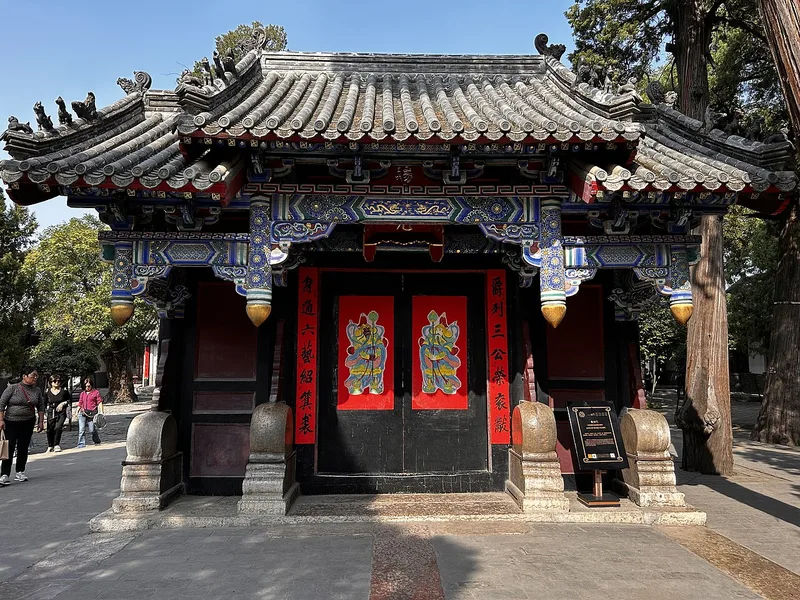
Jining
Jining is a prefecture-level city in southwestern Shandong province…

Laiwu
Laiwu (莱芜 Láiwú) is a district of Jinan in central Shandong Province…

Laixi
Laixi is a county-level city in eastern Shandong Province…
Laiyang
Laiyang is a county-level city sitting in the middle of the Shandong…
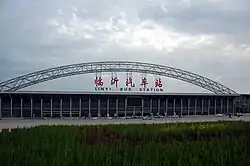
Linyi
Linyi is a sprawling prefecture-level city in southeastern Shandong…
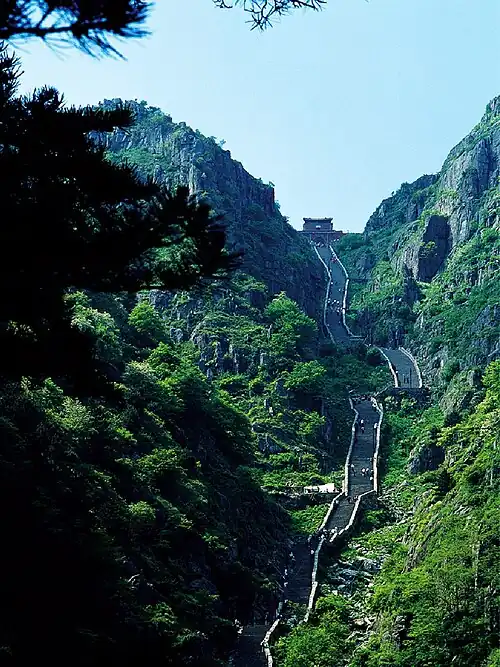
Mount Tai
Mount Tai (Tài Shān), rising over 1,500 m above the plains of central…

Qingdao
Qingdao (青岛, Qīngdǎo; also romanised as Tsingtao) is a coastal city…
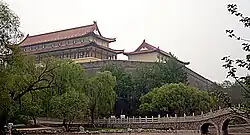
Qingzhou
Qingzhou is a small but historically heavyweight city in central…
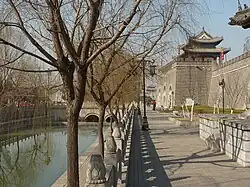
Qufu
Qufu (曲阜 Qūfù) is a small but profoundly significant city in…
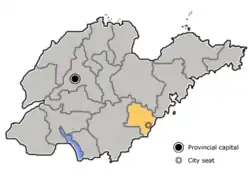
Rizhao
Rizhao ("sunshine") is a coastal prefecture-level city in the…

Tai'an
Tai'an's identity is inseparable from Mount Tai: the city's name…

Taierzhuang
Taierzhuang's old town was largely destroyed in the fighting of 1938…

Weifang
The kite tradition here runs deep: craft villages on the city's…
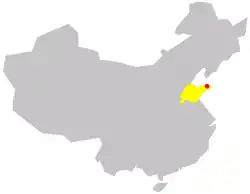
Weihai
Today Weihai is a coastal prefecture-level city known in China for…
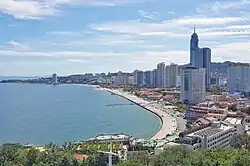
Yantai
Designated one of China's first coastal cities opened to foreign…
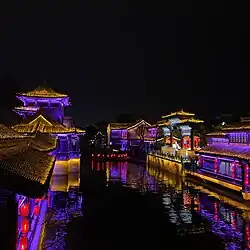
Zaozhuang
Zaozhuang (枣庄 Zǎozhuāng) is a prefecture-level city in southern…
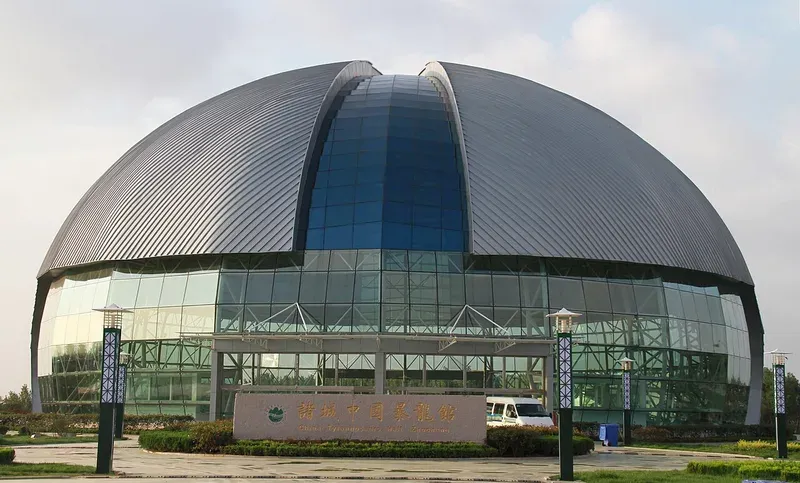
Zhucheng
The city has a temperate monsoon climate: hot, humid, and wet…
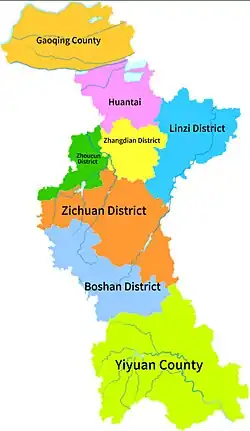
Zibo
In 2023, Zibo became briefly one of the most talked-about…
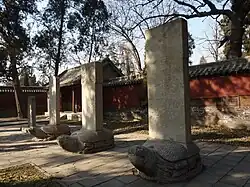
Zoucheng
Geographically Zoucheng sits where the southern edge of the North…
Binzhou
Binzhou (滨州; Bīnzhōu) is a prefecture-level city in northern Shandong…
Liaocheng
Liaocheng (聊城; Liáochéng) is a prefecture-level city in western…
Penglai
Penglai is a coastal city on the northern tip of the Shandong…
Shanxian
Shanxian's identity is built on a long agricultural history and a…
Pair the highlights of Shandong Sheng into one easy trip — we'll plan the route.
WhatsApp
Contact Us
Get in touch with us.
Get in touch
Contact Us
Tell us where you'd like to go and how you like to travel. A real Tripcuro planner — not a bot — will craft an itinerary around you.
- Personalised, hassle-free planning end-to-end
- Transparent pricing, no hidden costs
- 24/7 support for complete peace of mind