
Rizhao
Shandong Sheng, China
Why visit Rizhao?
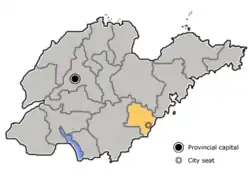
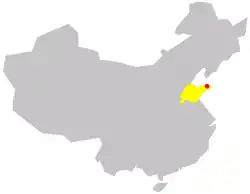
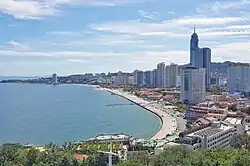
Rizhao ("sunshine") is a coastal prefecture-level city in the southeast of Shandong province, sitting on the Yellow Sea roughly halfway between Qingdao and the Jiangsu border. Named for "the first light of the sunrise," it grew from a quiet fishing settlement into a major deep-water port handling petrochemicals, coal and iron ore, with natural harbours and working port facilities. Despite the heavy industry, Rizhao has cultivated a reputation as Shandong's beach city — Chinese visitors come for the long sandy coastline, the seafood, and a "Water Sports Capital" branding earned from hosting national sailing and windsurfing events. The seaside districts are notably greener and cleaner than most industrial Chinese ports.
The area was settled deep in prehistory: it lay within the Dongyi cultural sphere during the Xia and Shang dynasties and is considered one of the cradles of the Longshan culture, the late-Neolithic black-pottery civilisation that flourished here. That heritage shows up in local museums and in a heavily themed cultural precinct built around the Dongyi legacy. For travellers, the city splits naturally into two halves: the seaside urban core, Donggang District, where almost all the beaches, the lighthouse, the parks and the main hotels are clustered; and the inland counties, where you'll find the mountains and a scenic area marketed as a coastal echo of Sichuan's Jiuzhaigou.
Rizhao has a temperate monsoon climate with four distinct seasons and, unusually for the coast, no recorded typhoon landfalls. Rainfall is heavily concentrated in July and August. The sweet spot for a visit is late May through early July and September, when the sea is warm enough to swim, humidity is manageable, and the domestic tourist crush of late July–August has eased. Avoid the Chinese national holidays in early May and early October unless you enjoy beaches at theme-park density.
Planning Rizhao? Tell us your dates and we’ll tailor the trip.
Ask on WhatsAppHow do you get there?
By Plane
The nearest international gateway is Qingdao Jiaodong International Airport (TAO), north of Rizhao. Airport coaches run between TAO and Rizhao.
Rizhao itself has a small domestic airport, Rizhao Shanzihe Airport (RIZ), with flights to a wide range of Chinese cities including Beijing, Shanghai, Guangzhou, Shenzhen, Chengdu and others. Airport shuttles and a public bus connect the terminal with the city.
By Train
Rizhao has two stations, and which one you want depends on the train class.
- Rizhao Railway Station, the older, more central station, served by conventional trains.
- Rizhao West Railway Station, handling high-speed trains, including services on the coastal high-speed line.
For high-speed services from Beijing, Shanghai, Qingdao or Jinan, book through the official 12306 platform or a travel platform a few days ahead — coastal trains fill up fast on summer weekends.
By Car / Road
Rizhao is well connected by China's expressway network, with corridors linking to Qingdao, Jinan and northern Shandong. Long-distance buses arrive at the Rizhao Bus Terminal, conveniently next to Rizhao West Railway Station.
City buses are the cheapest option, with a dense network covering the urban area, the development zone and the seaside resort district at a flat, low fare. For sightseeing, a tourist express line links the Lighthouse, the sailing base and the main beach areas — essentially the day-tripper's greatest-hits route.
Taxis are metered with a modest flagfall and per-kilometre rate. DiDi (滴滴) works in Rizhao and is the easiest option for non-Chinese speakers once the app is set up with a working Chinese payment method.
A public bicycle-share system covers the urban area; the coastal road along the beachfront is flat and well-paved — ideal for cycling. Scams are rare but the usual rules apply: insist on the meter, avoid unmarked "black" cabs at the railway stations, and confirm your destination on a map app before setting off.
What are the things to do?
Beaches and seaside parks
- Rizhao Wanpingkou Seaside Scenic Area — the city's flagship beach, several kilometres of coastline with a sailing lagoon, broad sand and the densest cluster of restaurants and hotels. Free, open around the clock.
- Binhai Park — coastal walking and hiking paths, much quieter than the main beach.
- Rizhao Lighthouse Scenic Area — the signature symbol of the city, set on a rocky headland with a small park around it — best at sunrise (the literal "Rizhao") or after dark, when the lighthouse is illuminated.
Mountain and nature areas
- A bamboo park west of the city holds over a hundred varieties of bamboo across a modest admission fee.
- Yellow Sea Jiuzhaigou Scenic Area — a large mountain area south of the city marketed as a coastal echo of Sichuan's famous Jiuzhaigou, with numerous named peaks, ravines and springs.
- A mountain scenic spot in Ju County, west of Rizhao, is known for an ancient ginkgo tree said to be thousands of years old, next to an on-site temple.
- A licensed hunting reserve in Wulian County breeds sika deer and other game for a premium hunting-tourism experience — niche, expensive, and not for everyone.
Cultural attractions
- Dongyi Town — a large, ancient-architecture-themed precinct of restaurants, shops, museums and waterways, best visited in the evening when it's lit up.
- Rizhao Ocean Park — a rated aquarium with an oceanarium and a bird garden, a solid pick for families.
Museums
Rizhao Museum — the strongest collections cover Dawenkou culture, Longshan culture and Han-dynasty material, exactly the prehistoric layers this region is known for. Free entry.
A city planning exhibition hall offers useful context on the city's layout and recent history.
A culture and art expo centre is the city's largest cultural exhibition venue.
A science and technology museum operates on advance reservation.
A small print museum inside the Dongyi Town precinct focuses on Chinese seal-engraving and printing, though hours can be erratic.
A folk culture museum inside the Dongyi Town precinct focuses on the prehistoric Dongyi people and local folk traditions.
Sail or windsurf at Wanpingkou. The lagoon is the city's water-sports hub and host to national sailing events. Rentals for dinghies, paddleboards, kayaks and jet-skis are available from operators along the lagoon in season.
Watch the sunrise from the Lighthouse. The whole city is named for it — get to the Lighthouse Scenic Area before dawn and walk out to the rocks.
Cycle the coastal road. Pick up a shared bike near Wanpingkou and ride the flat seafront path.
Evening at Dongyi Town. The themed canals are lit up after sundown, with a rotation of street performances and reasonable seafood restaurants inside the precinct.
Day trip to the Ju County mountain. A half-day from town gets you the ancient ginkgo, the temple and a moderate climb up the main peak.
Beach day at a quieter beach away from the main Wanpingkou strip, particularly on weekdays.
Green-tea tasting. Rizhao is the northernmost commercial tea region in China and local green tea has a distinct roasted character; many cafés in town offer tastings.
Planning Rizhao? Want these on a customised itinerary?
Ask on WhatsAppWhere to eat?
Rizhao's food culture is fundamentally Shandong (Lu) cuisine with a strong seaside emphasis: clear-flavoured seafood, light braises, scallion-and-ginger aromatics and fresh dough — and, because this is a working port, an extraordinary range of shellfish at reasonable prices. Signature local dishes to look for include steamed local prawns, garlic razor clams, scallops with vermicelli, kelp soup, and clam-stuffed dumplings.
- Wanpingkou seafood street — the obvious tourist option but genuinely good if you pick a busy place and order what's swimming in the tanks.
- Dongyi Town restaurants — a dozen sit-down options inside the themed precinct, better for atmosphere than value.
- Haiqu Lu food alleys — the streets running off the main coastal road have the highest concentration of mid-range Shandong restaurants used by locals.
- Hot-pot and BBQ chains cluster around the main shopping malls in central Donggang.
- Street food and breakfast — savoury crepes, sesame flatbread with sliced meat, and freshly fried dough with soy milk at any morning market.
Vegetarians can eat reasonably well in Rizhao — Shandong cooking includes plenty of cold vegetable dishes, tofu preparations and noodles — but you'll need to specify clearly, since seafood is treated as the default. Halal options exist but are concentrated around the railway station; there is no significant gluten-free dining scene.
Where to drink?
Rizhao's drink culture starts with tea: the city is China's northernmost large-scale green-tea producer, and locals take their local green tea seriously. Sit down in any tea house along the main coastal road for a tasting flight — high-roast notes are what to look for. Coffee chains are widespread in central Donggang and at the malls near Wanpingkou.
For alcohol, the regional standard is Tsingtao beer brewed in nearby Qingdao, available everywhere on tap and in bottles. Local baijiu brands include Lu-region distillates; ask for something light if you're new to it. The bar scene clusters around Wanpingkou and inside Dongyi Town — expect Chinese-style "music bars" with bottle service rather than Western-style pubs. Seafood restaurants will happily set you up with cold beer and a tray of clams for the classic Shandong-coast evening.
Water safety: tap water in Rizhao is not safe to drink unboiled. Stick to bottled water, boiled tea/water (universal in restaurants and hotels), or use a filter bottle.
Planning Rizhao? We’ll book the stays and dining for you.
Ask on WhatsAppWhere to stay?
- Budget — reliable Chinese chain hotels have multiple Rizhao branches, cheap and predictable, clustered in central Donggang and a short walk from the railway station.
- Mid-range — modern mid-range chain hotels near Wanpingkou beach and central Donggang offer comfortable rooms.
- Upscale — five-star hotels on the seafront near Wanpingkou offer full leisure facilities and sea-view rooms.
Summer weekends and the May/October Chinese national holidays see rates rise sharply and rooms sell out weeks ahead — book early or shift your dates.
What should you buy?
Rizhao isn't a heavyweight shopping destination, but a few things are genuinely worth taking home.
- Rizhao green tea — the signature local product, sold loose in tea shops throughout the city and at tourist stalls. Spring pickings command the highest prices.
- Seafood and dried seafood — dried shrimp, kelp, sea cucumber and salted fish are local specialities. Tourist-precinct stalls are pricier than the wet markets in central Donggang.
- Black pottery, a heritage craft tied to the Longshan culture, sold at the museum gift shop and in craft lanes at Dongyi Town.
- Peanuts and peanut oil, Shandong's signature agricultural product.
Bargaining is expected at open markets and tourist craft stalls; prices in malls, supermarkets and chain tea shops are fixed. Mobile payment via WeChat Pay or Alipay is universal.
Where to go next?
- Qingdao — around 1.5 hours by high-speed train. Shandong's signature coastal city: Tsingtao Brewery, German colonial architecture, better-developed beaches.
- Lianyungang, just across the Jiangsu border — a second coastal city with a mountain associated with the Journey to the West legend, worth comparing with Rizhao.
- Linyi — Shandong's commercial hub inland, with the Yimeng Mountains nearby for hiking.
- Mount Tai (Tai Shan) — a few hours by high-speed train via Jinan. One of China's Five Sacred Mountains and the country's most-climbed peak.
- Qufu — birthplace of Confucius; the temple, mansion and forest complex is a UNESCO World Heritage site.
- Jinan — Shandong's provincial capital, famous for its artesian springs and Daming Lake.
Nearby in Shandong Sheng
More places to explore around Rizhao.


Guide content as of July 2026. Portions adapted from Wikivoyage, CC BY-SA 4.0.

Contact Us
Get in touch with us.
Get in touch
Contact Us
Tell us where you'd like to go and how you like to travel. A real Tripcuro planner — not a bot — will craft an itinerary around you.
- Personalised, hassle-free planning end-to-end
- Transparent pricing, no hidden costs
- 24/7 support for complete peace of mind