
Zibo
Shandong Sheng, China
Why visit Zibo?
In 2023, Zibo became briefly one of the most talked-about destinations in China after a wave of social-media attention around its distinctive tabletop barbecue style, in which diners grill small skewers themselves over a charcoal brazier and wrap the meat in a thin pancake with scallions and sauce. The crowds that followed have eased since, but the barbecue scene remains a genuine and distinctive part of the city's food culture. Layer that over the Qi-era archaeological sites, the ceramics tradition, and the surrounding hills, and Zibo rewards an unhurried couple of days rather than a rushed day trip.
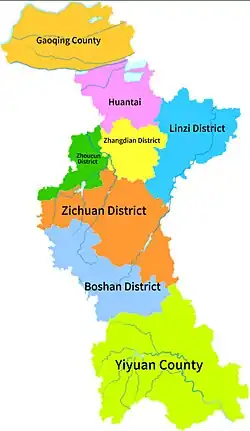
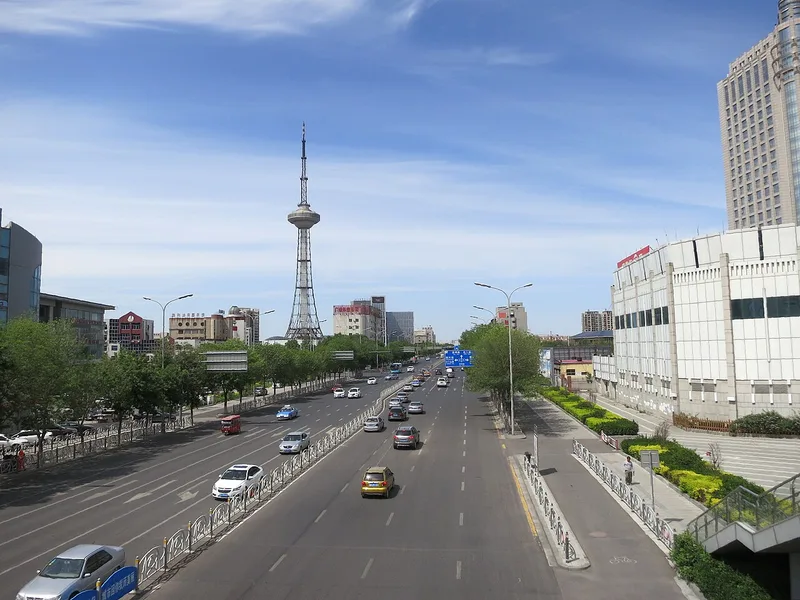
The city is polycentric rather than built around one old town: distinct districts hold the modern commercial centre, a preserved Ming–Qing merchant street, the Qi-era archaeological sites, and the ceramics and kiln country to the south, with real distances — tens of kilometres — between them. The climate is northern Chinese continental: cold, dry winters, hot and humid summers with most of the year's rain falling in July and August, and two short, pleasant shoulder seasons. April–May and September–October are the best windows; avoid the worst of the July rains and the January cold if you can.
Spring and autumn bring mild temperatures and manageable crowds, and are the best times to explore the Qi-era ruins and the kiln villages without summer's heat and haze. Summer is peak season for domestic tourism, with heat, humidity and monsoon rain, and the barbecue terraces at their busiest. Winter is genuinely cold with occasional snow and few visitors, making it a quiet, if chilly, time for museum-focused travel. Avoid the Golden Week national holidays if you'd rather not compete for space at popular sights.
Planning Zibo? Tell us your dates and we’ll tailor the trip.
Ask on WhatsAppHow do you get there?
By Plane
Zibo has no commercial airport of its own. The main gateway is Jinan Yaoqiang International Airport, in the provincial capital roughly an hour's drive away, with broad domestic coverage and some regional international routes. Qingdao Jiaodong International Airport, further east, is the better option for long-haul international flights, reachable from Zibo by high-speed train via Jinan or Weifang.
By Train
Zibo sits on both the historic Jinan–Qingdao rail line and the parallel high-speed corridor, making it one of the easier mid-tier Shandong cities to reach by rail. The city has a conventional station and a separate high-speed station; high-speed trains connect Zibo with Jinan in well under half an hour and with Qingdao and Beijing in a few hours each. Book through the official 12306 app or a booking platform.
By Car / Road
Zibo sits on the expressway network roughly midway between Jinan and Qingdao, with good road connections to Tai'an, Weifang and Qufu as well. A long-distance bus station serves smaller towns the railway doesn't reach directly, though the high-speed train is faster and more comfortable for most routes.
Zibo is spread out, and treating it as a cluster of districts rather than one walkable place is the single most important practical fact for visiting. City buses are extensive and cheap, signed in both Chinese and pinyin. Intercity and inter-district bus routes, including dedicated-lane rapid services, connect the main districts in under an hour or so. Ride-hailing apps such as Didi work well and are the easiest way to cover longer, cross-district distances. Taxis are metered and generally honest; insist on the meter and avoid unmarked cars touting for business near the station. Walkability is good within each district centre but poor between them — plan your day around one district at a time. Carry your hotel address in Chinese characters, as English is patchy outside the larger hotels.
What are the things to do?
Qi-era history (Linzi District)
- A museum built around an excavated sacrificial burial pit, with full-size war chariots and the skeletons of the horses sacrificed alongside them — one of the more striking ancient-China sights in Shandong.
- A modern museum devoted to Qi-state history, covering statecraft, bronzework, coinage and ceramics across the eight centuries of Qi rule.
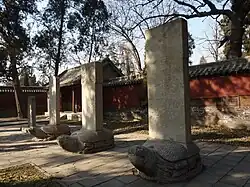
- The rammed-earth ruins of the ancient Qi capital, more atmospheric than visually spectacular; best paired with the Qi history museum.
- Linzi is also recognised as an early home of a kicking game considered by some historians an ancestor of football, commemorated in a small dedicated museum.
Ceramics and old commerce (Boshan and Zhoucun)
- A major ceramics museum, covering the sweep of Chinese pottery from the Neolithic period through the historic Boshan kilns to contemporary studio work.
- Repurposed mid-20th-century kiln complexes in Boshan now house working studios and showrooms — worth browsing slowly.
- A preserved Ming–Qing merchant street in Zhoucun, historically an important inland trading town, today lined with shops and small courtyard exhibits; free to enter the street itself.
Mountains
- Forested hills and national forest parks in Zichuan and Boshan districts offer hiking, gorge scenery and, in places, cable-car access — a good change of pace from the museum districts.
Curiosities
The restored home of the 17th-century author of a celebrated collection of classical Chinese ghost and strange-tale fiction, in Zichuan District — small, atmospheric, and a genuine literary landmark.
Eat Zibo-style barbecue at a tabletop grill. This is the city's signature experience and worth planning an evening around: grill your own skewers, then wrap the meat in a thin pancake with scallion and sauce.
Try your hand at pottery in Boshan. Several working studios in the old kiln district offer drop-in sessions; ask at the ceramics museum's visitor desk for current options.
Walk the old merchant street in Zhoucun at dusk, once the day-trippers thin out.
Hike one of the forest parks for a half-day escape from the city.
Day trip to Mount Tai, roughly two hours west by high-speed train, a doable long day if you start early.
Planning Zibo? Want these on a customised itinerary?
Ask on WhatsAppWhere to eat?
Zibo cooking sits within the Lu (Shandong) tradition — wheat-based, strong on scallion, garlic, vinegar and braised meats — with two specialties that have made the city notable in their own right: tabletop barbecue, and a sub-tradition of elaborate Boshan banquet cooking built around slow-stewed casseroles and showcase tofu dishes. Thin wheat pancakes are the standard wrapper for barbecue and other dishes; sesame wafer cakes from Zhoucun are a well-known regional snack.
Vegetarians do reasonably well: Boshan banquet menus include several tofu and vegetable dishes, and barbecue can be ordered without meat, wrapped simply in pancake and scallion. Halal options are more available here than in some other Shandong cities, thanks to a Hui Muslim community; look for the green 清真 sign. Strict gluten-free eating is difficult given how central wheat is to nearly every local specialty.
Where to drink?
Tsingtao, brewed on the coast, is on draught nearly everywhere, alongside other Shandong lagers. Baijiu remains the spirit for formal occasions. Green tea from the coastal hills further south is the most common quality tea on local menus, and teahouses in Zhoucun and Boshan serve it properly. International coffee chains have arrived in the main commercial district over the past several years. Bars cluster in the newer commercial areas of the city; Boshan and Linzi are noticeably quieter after dark.
As everywhere in mainland China, tap water is not drinkable; stick to bottled or boiled water, which every hotel room provides via kettle.
Planning Zibo? We’ll book the stays and dining for you.
Ask on WhatsAppWhere to stay?
Zibo has a full spread of Chinese accommodation: domestic budget chains and a hostel or two near the railway station, mid-range design-led and standard chains in the main commercial district, and a couple of international-brand upscale hotels.
What should you buy?
Zibo's two great shopping themes are ceramics and silk. A large ceramics wholesale market in the city centre sells everything from everyday teacups to high-end studio vases, with bargaining expected; for one-of-a-kind contemporary work, buying directly from the workshops in Boshan's old kiln district is a better bet, at fixed but higher prices, and some makers can arrange shipping. Zhoucun has a long-standing silk tradition, and buying from the established shops along its old street rather than souvenir stalls is the more reliable route to genuine quality. Regional sesame cakes and other packaged snacks travel well as gifts.
Where to go next?
- Jinan — under half an hour by high-speed train. Shandong's provincial capital, known for its springs and lakes.
- Qingdao — a little over an hour by high-speed train. Beaches, German colonial-era architecture and Tsingtao's home brewery.
- Tai'an and Mount Tai — around an hour by high-speed train. The most sacred of China's Five Great Mountains.
- Qufu — reachable via Jinan. The hometown of Confucius, with the Temple, Mansion and Forest forming a UNESCO World Heritage Site.
- Weifang — a short high-speed train ride away. The "Kite Capital" of China, worth visiting in April for its international kite festival.
- Penglai — several hours by train and bus. A coastal town associated with Daoist immortal legend, with a striking historic fortress above the Bohai Sea.
Nearby in Shandong Sheng
More places to explore around Zibo.


Guide content as of July 2026. Portions adapted from Wikivoyage, CC BY-SA 4.0.

Contact Us
Get in touch with us.
Get in touch
Contact Us
Tell us where you'd like to go and how you like to travel. A real Tripcuro planner — not a bot — will craft an itinerary around you.
- Personalised, hassle-free planning end-to-end
- Transparent pricing, no hidden costs
- 24/7 support for complete peace of mind