
Zhucheng
Shandong Sheng, China
Why visit Zhucheng?
The city has a temperate monsoon climate: hot, humid, and wet summers, with the bulk of the year's rainfall concentrated in July and August, and cold, dry winters. The most comfortable windows for a visit are late April to early June and mid-September to October, when daytime temperatures are mild and the surrounding countryside is at its greenest. Avoid the height of summer if you dislike sticky heat and sudden downpours.
Zhucheng is compact and easy to get around. The railway and main bus stations sit together in the city centre, close to most hotels and the city museum. The dinosaur museums are a short ride away in the Mizhou area, while more rural sites — remaining sections of an ancient state wall, temples and a forested peak — lie in the surrounding countryside and are best reached by taxi or private car.
Spring and autumn are the best times to visit, both for comfortable temperatures and for the best conditions to explore the fossil sites and surrounding countryside. Summer brings heavy monsoon rain and high humidity; winter is cold, dry and quiet. If your dates are flexible, aim for May or October.
Planning Zhucheng? Tell us your dates and we’ll tailor the trip.
Ask on WhatsAppHow do you get there?
By Plane
The nearest major airport is Qingdao Jiaodong International Airport, to the east; road transfers or shuttle buses connect the airport to central Zhucheng. Two smaller regional airports — at Weifang and at Rizhao — are also within an hour or so by road, though with far fewer connections than Qingdao.
By Train
Zhucheng's railway station is served by conventional-speed trains only; there is no high-speed line into the city itself. The nearest high-speed rail hubs are in Qingdao, from which a conventional train or bus covers the final stretch. For destinations further afield, the standard pattern is a high-speed train to Qingdao followed by a transfer. Book through the official 12306 app or a booking platform.
By Car / Road
Zhucheng sits on a well-connected expressway, with Qingdao, Weifang and Rizhao all reachable within roughly an hour and a half by road, and Jinan a few hours further. A city bus station opposite the railway station runs frequent intercity coaches to these and other regional cities. Note that an international driving permit alone does not authorise driving in mainland China; most foreign visitors hire a car with a driver rather than self-driving.
City buses cover most of Zhucheng at a low flat fare, paid by mobile QR code or cash. Taxis and ride-hailing apps such as Didi are inexpensive and easy to use for most in-town trips; confirm the meter is on or that the app shows the fare before setting off. Shared e-bikes are widespread and a pleasant way to cover the flat city centre. The downtown core is walkable, though crossings can be busy — cross with the flow of pedestrian traffic as locals do. There are no significant tourist scams to watch for here, though the standard caution around unmetered cars applies everywhere in China.
What are the things to do?
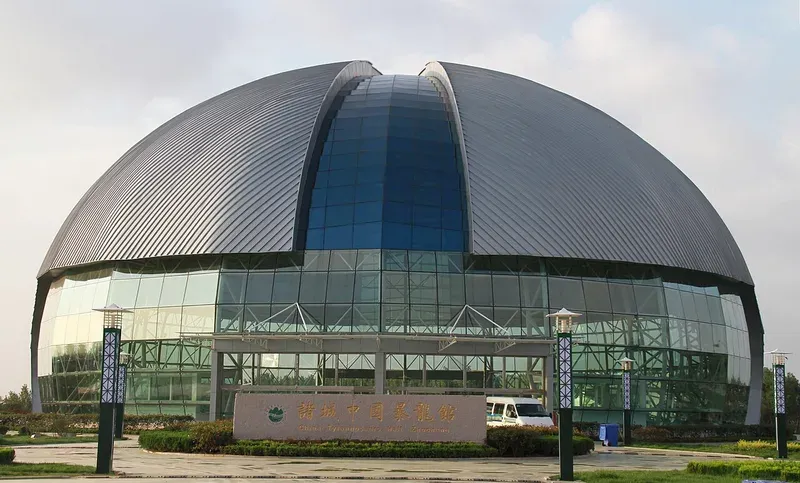
Zhucheng's dinosaur museum — one of the larger dinosaur museums in northern China, built around fossil discoveries from the surrounding county, including a very large duck-billed dinosaur skeleton among its headline exhibits. A genuinely significant, well-documented state institution.
Zhucheng's tyrannosaur museum, built on an actual fossil discovery site, with original fossils on display — the pilgrimage stop for serious dinosaur enthusiasts, and a rare thing to find outside the handful of Chinese cities recognised internationally for tyrannosaur finds.
Zhucheng's municipal museum — the city's general history museum.
Chaorantai — a terrace with roots in the city's ancient city wall, later expanded during the tenure of the Song-dynasty poet-official Su Shi, who served as governor here and wrote some of his well-known work during this period; destroyed and later rebuilt at its original site. A genuinely atmospheric stop with real literary associations.
Remaining sections of the ancient Qi-state wall — earthen ramparts from the Warring States period survive in the countryside outside the city; access is limited and best arranged by taxi or private car.
A Ming-era temple compound in the surrounding countryside, with a notably old ginkgo tree said to have survived a period of demolition; reached by taxi or car, as there is no convenient public transport.
Hike the low hills outside town for an easy half-day walk with views over the surrounding plain — best in spring and autumn.
Walk in Su Shi's footsteps, combining a visit to Chaorantai with a slow wander through the older lanes of the city centre.
Pair the two dinosaur museums in a single day — together they make Zhucheng one of the more rewarding palaeontology stops in northern China.
Check locally for the God of Wealth Festival, a distinctive local folk celebration held on a date in the lunar calendar, worth timing a visit around if your dates are flexible.
Planning Zhucheng? Want these on a customised itinerary?
Ask on WhatsAppWhere to eat?
Zhucheng cooking sits within the broader Lu cuisine tradition — savoury, salty, stock-driven, with heavy use of scallion, garlic, soy and vinegar, and strong wheat-based staples. Local specialties to look out for include smoked pork, eaten cold or in steamed buns, and the shredded mustard pickle eaten at breakfast with congee. Roasted local chestnuts are a seasonal autumn treat.
Vegetarian options are limited but available; most restaurants will prepare stir-fried seasonal greens, mapo tofu or cold noodles on request. Halal eaters should look for restaurants with the green 清真 (qīngzhēn) sign, including Lanzhou-style hand-pulled noodle shops, which are common across Chinese cities of this size. For a reliable spread of options, the food courts and basement floors of the city's larger malls are a good bet, and the streets immediately around the railway station have small noodle, dumpling and barbecue places that stay open late.
Where to drink?
Shandong is one of China's great beer provinces, and cold local lager is the default with most meals. Baijiu is the spirit of choice for formal occasions, and the region produces several strong sorghum-based varieties. Green tea is the everyday non-alcoholic drink, often refilled free with meals. Chain coffee outlets are found around the city's malls. Nightlife is low-key, centred on karaoke lounges and hotel bars rather than a dedicated bar district.
As everywhere in mainland China, tap water is not drinkable; stick to bottled water or the boiled water provided free in every hotel room and most restaurants.
Planning Zhucheng? We’ll book the stays and dining for you.
Ask on WhatsAppWhere to stay?
Zhucheng has a small number of domestic mid-range chain hotels and at least one larger business hotel serving travellers arriving from Qingdao, plus more limited budget options. There is no notable upscale or heritage accommodation.
What should you buy?
Zhucheng's signature buys are edible: smoked pork, local chestnuts, a pungent shredded pickled mustard tuber eaten with congee and noodles, and regional baijiu. All are sold in supermarkets and food halls of the larger malls and travel well as gifts. Bargaining is not standard practice in malls or chain shops, where prices are fixed; small independent shops and street stalls are more open to polite haggling.
Where to go next?
- Qingdao — roughly an hour and a half by road, or about two hours by conventional train. A coastal former German concession city with beaches and colonial-era architecture — the natural pairing with Zhucheng.
- Rizhao — roughly an hour and a quarter by road, a quieter Yellow Sea beach city popular in summer.
- Weifang — roughly an hour and a half by road, Zhucheng's prefectural capital and the "Kite Capital" of China, with a well-known international kite festival each April.
- Lianyungang, Jiangsu — a couple of hours south, a coastal city associated in Chinese legend with the Monkey King.
- Linyi — a couple of hours southwest, a major regional commercial centre and gateway to the Yimeng Mountains.
- Tai'an and Mount Tai — several hours west, the most sacred of China's Five Great Mountains.
Nearby in Shandong Sheng
More places to explore around Zhucheng.

Guide content as of July 2026. Portions adapted from Wikivoyage, CC BY-SA 4.0.

Contact Us
Get in touch with us.
Get in touch
Contact Us
Tell us where you'd like to go and how you like to travel. A real Tripcuro planner — not a bot — will craft an itinerary around you.
- Personalised, hassle-free planning end-to-end
- Transparent pricing, no hidden costs
- 24/7 support for complete peace of mind