
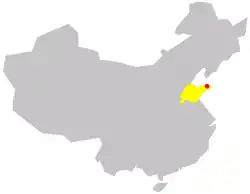
Weihai
Shandong Sheng, China
Why visit Weihai?
Today Weihai is a coastal prefecture-level city known in China for being notably clean and pleasant to live in — it appears repeatedly near the top of domestic liveability rankings. Visitors come for beaches, seafood, naval history, and the surrounding coastal hills rather than for big-city sightseeing. The climate is maritime: warm-but-not-scorching summers, cold-but-not-brutal winters, and a distinctly humid, rainy stretch through mid-summer. Late spring through early summer, and again in September, are generally the most pleasant windows — the sea is swimmable, skies are clearer, and crowds are more manageable than during the peak summer holiday period.
Summer (roughly June to September) is peak season, with warm weather good for the beaches but also the year's heaviest rain and the biggest domestic tourist crowds, especially in July and August. Late spring (May–June) and early autumn (September) are the more comfortable shoulder windows, with warm-enough weather and noticeably lighter crowds and better rates. Winter is genuinely cold with strong winds off the Yellow Sea, and most beach-related infrastructure shuts down, though the naval-history and colonial-era sites remain open and the city is quiet and pleasant to wander. Avoid the Chinese New Year holiday period if you'd rather not compete with the nationwide travel surge.
Planning Weihai? Tell us your dates and we’ll tailor the trip.
Ask on WhatsAppHow do you get there?
By Plane
Weihai has an international airport with domestic connections to major Chinese hubs and — unusually for a secondary Chinese city — a short flight to Incheon in South Korea, making Weihai a genuinely easy mainland entry point from Korea. A taxi or airport bus connects the airport to the city centre. Yantai's airport, roughly ninety minutes away by road, is a backup option with wider connectivity.
By Train
Weihai is served by the Qingdao–Rongcheng intercity high-speed line, with the main high-speed station on the edge of the urban core and an older conventional station closer to the centre. High-speed trains connect Weihai to Qingdao in a couple of hours, with a change required for Jinan and points further west. Book through the official 12306 app or a booking platform.
By Car / Road
Weihai sits at the eastern end of a major expressway corridor running the length of the Shandong Peninsula. Road distances to Yantai are relatively short (a little over an hour), while Qingdao and Jinan are considerably further. Long-distance buses connect Weihai to nearby cities from several stations across the prefecture.
By Boat
Weihai has ferry connections to Dalian across the Bohai Strait, and historically a more limited service to Incheon, South Korea — check current schedules and frequency locally, as international ferry routes in this region change over time.
City buses are the easiest way to cover distance within Weihai, running at a low flat fare paid in cash or by mobile QR code. A seasonal sightseeing bus typically runs along the coastal road in the warmer months, useful for a single scenic run of the seafront rather than everyday transport. Taxis are inexpensive and easy to flag; ride-hailing apps such as Didi work well. The coastal road is flat and well suited to cycling — shared bikes and e-scooters are widely available. Walking the seafront promenade is one of the city's defining, and free, experiences.
Scams are uncommon by the standards of bigger Chinese cities, but the usual precautions — agree the fare or confirm the meter before a ride, be wary of unsolicited "tea ceremony" approaches — still apply.
What are the things to do?
Historic sites and museums
- Liugong Island — the defining sight of Weihai, a compact island in the bay that was home to the Beiyang Fleet and the site of its 1895 defeat. Reached by ferry, the island holds a museum on the First Sino-Japanese War, the remains of a Qing-era naval academy, and walking trails; plan for the better part of a day.
- A memorial to Chinese labourers of the First World War, commemorating the tens of thousands of workers recruited from Shandong, many through Weihai, to support Allied forces on the Western Front — a lesser-known but historically significant site.
- Weihai's municipal museum, covering the city's history more broadly.
Coast and mountains
Chengshantou, Shandong's easternmost cape, out in Rongcheng county — cliffs, lighthouses, and a spot popularly described as where the sun first touches China.
Mount Kunyu, a forested national park inland, historically associated with a major school of Daoism, with hiking trails and temples.
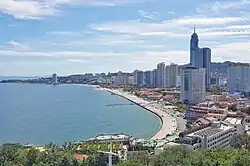
Weihai's own public bathing beaches along the city seafront, busiest in July and August.
Cycle the seafront — flat, breezy and scenic; a genuine local rite of passage in the warmer months.
Spend a slow day on Liugong Island, combining the naval-history museum with walking trails and harbour views.
Watch the sunrise at Chengshantou, the peninsula's easternmost point — a popular dawn excursion in summer.
Take a boat out with a local fishing crew from one of the smaller harbour towns further along the coast, where this kind of outing is a genuine part of the local economy — arrangements vary by season and operator.
Swim at one of the city's public beaches from June through early September.
Planning Weihai? Want these on a customised itinerary?
Ask on WhatsAppWhere to eat?
Weihai's cuisine sits within the Jiaodong branch of Lu (Shandong) cooking — a coastal, seafood-forward style built around cold-water Yellow Sea catch: scallops, abalone, sea cucumber, crab and small white fish, generally prepared with restraint (steaming, light braising) to showcase freshness rather than heavy sauces. A local dumpling filled with mackerel is a well-known regional specialty. Korean influence is unmistakable in the city, with barbecue restaurants and Korean-style dishes widely available thanks to the long-standing Korean community here.
Vegetarian travellers will find the going easier than the seafood emphasis suggests — cold vegetable dishes and mushroom plates are common, and Korean-style rice-and-vegetable dishes are easy to order without meat. Halal options exist in a small cluster of restaurants; gluten-free is difficult given the prevalence of soy sauce and wheat noodles.
Where to drink?
Coastal Shandong is serious beer country: Tsingtao, brewed further down the peninsula, is everywhere, and locally brewed beer is also common and inexpensive. Shandong is one of China's main wine-producing regions, and Yantai-area brands are widely stocked in restaurants and shops. A local green tea is grown in the hills south of the city. The bar scene is modest but real, concentrated along the seafront and in the area with a strong Korean community. As everywhere in mainland China, do not drink tap water; bottled water is cheap and hotels supply boiled water.
Planning Weihai? We’ll book the stays and dining for you.
Ask on WhatsAppWhere to stay?
Weihai has the full range of Chinese accommodation, from budget hostels and domestic chain hotels to a small number of international-brand upscale hotels on the bay, some with beach access. Rates rise in the peak summer season, particularly around Liugong Island and the main bathing beaches.
What should you buy?
Dried seafood — kelp, dried squid, scallops and sea cucumber — is Weihai's signature purchase; the region is a major sea-cucumber farming area, and prices for graded dried product can be substantial, so buy from an established shop rather than a street stall if quality matters to you. Locally grown peanuts and peanut oil, and seasonal cherries and apples, are also worth seeking out. Weihai's port and its Korean community mean genuine Korean cosmetics and food products are often easier to find here than elsewhere in mainland China. Bargaining is normal at independent stalls and dried-seafood shops; not at malls or branded stores.
Where to go next?
- Yantai — a little over an hour away, a sister coastal city known for its wine industry and Penglai Pavilion.
- Rongcheng and Chengshantou — Shandong's easternmost cape, with cliff scenery and, in winter, a wintering ground for swans.
- Qingdao — a few hours away by road or a couple of hours by high-speed rail. The other great Shandong port city, with German colonial-era architecture and a strong beer-and-seafood scene.
- Incheon, South Korea — a short flight or a ferry crossing away, among the easiest mainland-China-to-Korea routes.
- Mount Tai, near Tai'an — several hours away by high-speed rail with a change, China's most revered sacred mountain.
Nearby in Shandong Sheng
More places to explore around Weihai.
Guide content as of July 2026. Portions adapted from Wikivoyage, CC BY-SA 4.0.

Contact Us
Get in touch with us.
Get in touch
Contact Us
Tell us where you'd like to go and how you like to travel. A real Tripcuro planner — not a bot — will craft an itinerary around you.
- Personalised, hassle-free planning end-to-end
- Transparent pricing, no hidden costs
- 24/7 support for complete peace of mind