
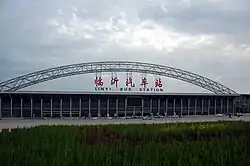
Linyi
Shandong Sheng, China
Why visit Linyi?
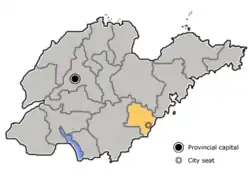
Linyi is a sprawling prefecture-level city in southeastern Shandong Province, sitting on the Yi River with the Yimeng Mountains rising to its north and west. With a resident population in the millions, it ranks among Shandong's largest cities and serves as a major regional hub for trade, logistics and commerce — the city's wholesale markets are some of the largest in northern China. Despite its modern industrial character, Linyi is one of the cradles of Chinese civilisation, with settlement in the area recorded back to the Shang Dynasty, and the city claims an extraordinary roll-call of historical figures, including a celebrated Warring States-era philosopher, a Han-dynasty sage, the Three Kingdoms-era strategist Zhuge Liang, and the great calligrapher Wang Xizhi, all associated with the area. Bamboo-slip manuscripts of two classic military treatises were unearthed here in the 1970s, sealing Linyi's place in the cultural geography of China.
For travellers, Linyi offers a less-touristed alternative to Shandong's headliners — Qingdao, Jinan, Tai'an. The real draw is the surrounding Yimeng Mountain landscape, a designated scenic region of forested peaks, karst caves and ancient stretches of an early Great Wall predating the more famous Ming-era wall, combined with the city's calligraphy heritage and a relaxed waterfront built around a large rubber dam claimed as one of the largest of its kind.
The climate is temperate monsoon: spring warms quickly and is dry and breezy; summer is hot, humid and wet, with concentrated rainfall in July and August; autumn is the most pleasant window — sunny, cool and dry; winter is cold but not severe, with occasional light snow. Aim for late April–early June or September–October.
Layout: the city core sits on the west bank of the Yi River, where most hotels, shopping malls and the Linyi Museum cluster. A newer district lies across the river to the east and contains the airport and a hot-spring area. Outlying counties host the major mountain and cave attractions.
Planning Linyi? Tell us your dates and we’ll tailor the trip.
Ask on WhatsAppHow do you get there?
By Plane
Linyi Qiyang Airport, in the eastern district, is a short taxi ride from the city centre. The airport handles daily domestic flights to Beijing, Shanghai, Guangzhou, Shenzhen, Chengdu, Kunming and several other provincial capitals; there is currently no scheduled international service.
A metered taxi into central Linyi should be inexpensive; insist on the meter rather than a negotiated flat fare. Airport shuttle buses connect to several downtown points. Didi, the dominant Chinese ride-hailing app, works well here and is usually the cheapest option.
By Train
Linyi has three main stations:
- Linyi North Station — the high-speed rail station in the western district. This is the one most travellers want, with connections to Beijing, Jinan, the Qingdao corridor and Shanghai.
- Linyi Station — the older conventional station, useful for overnight sleepers.
- Linyi East Station — primarily a freight terminal; not generally relevant for passengers.
Book through the 12306 app or website; foreign passports work, but you may need assistance collecting a paper ticket or validating at a kiosk. Buy a few days ahead for major holidays.
By Car / Road
Linyi sits at the crossroads of major national expressways, making it well-connected by road. Approximate drive times run from around three hours to Jinan up to six-plus hours to Beijing. Long-distance buses arrive at several terminals across the city; most locals just turn up rather than pre-booking, so arrive with some buffer time.
The city is large and spread out, so walking only works within a single district. The public bus network is extensive and cheap, with routes serving the main museums and cultural sites.
Didi (滴滴出行) ride-hailing is the most convenient option for non-Chinese-speaking travellers. Taxis are metered. Alipay and WeChat Pay are essentially universal — set these up before arrival, as cash and foreign cards are awkward in many places.
Linyi does not have an operating metro. Bicycles and shared e-bikes are scattered around the city centre and are handy for short hops along the riverfront.
What are the things to do?
Cultural & Historical
- Linyi Museum — a well-curated overview of Linyi's deep history, including bronzes, Han-era tomb finds and exhibits on the local sages.
- Wang Xizhi's Former Residence — a garden complex dedicated to China's most revered calligrapher, who was born in Linyi. Pavilions, an ink-washing pond, and stone steles.
- Yinqueshan Han Tombs Bamboo Slips Museum — built over the tomb site where bamboo-slip manuscripts of two classic military treatises were unearthed in the 1970s, resolving a long-running historical debate over whether the texts were separate works. A pilgrimage site for anyone interested in Chinese military history.
Mountains, Caves & Nature
- Yimeng Mountain Tourism Area — a large designated scenic area combining several sub-areas of forested peaks, including a section of an early Great Wall predating the Ming-era wall by centuries, a national forest park and a national geopark. Allow a full day per sub-area.
- Shandong Underground Grand Canyon — a large karst cavern formed over tens of millions of years, developed with a lit passenger boat ride through its chambers — billed as one of the region's premier subterranean river-rafting caves.
- A restored ancient village among bamboo groves and spring pools in one of the outlying counties is known for its folk-craft workshops and a much-photographed waterwheel.
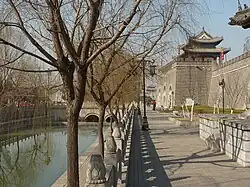
- The rubber dam on the Yi River, reputed to be among the largest of its kind in the world, creates a long lake-like stretch of the river through central Linyi. The riverside parks are excellent at sunset.
Family & Modern Attractions
A large natural history museum in one of the outlying counties houses an extensive privately assembled fossil and mineral collection and is reckoned among the larger dinosaur-themed museums anywhere.
An animal and botanical garden in the city functions as a wildlife rescue station as well as a public park.
An aquarium and entertainment complex operates in one of the newer cultural districts.
Hot-spring bathing — a large hot-spring resort on the east bank of the Yi River bills its open-air pools as among the largest in northern China, with multiple outdoor pools and traditional spa rituals.
Hike the Yimeng Mountains — trails through the sub-areas combine forest, ridge views and stretches of the early Great Wall; cable cars run on the busier ridges. Best in late spring and autumn.
River-rafting in the Underground Grand Canyon — a lit boat ride through the karst chambers, one of the more genuinely unusual experiences in Shandong.
Calligraphy pilgrimage — combine Wang Xizhi's Former Residence with the "Calligraphy Sage City" cultural district for ink shops, brush ateliers and occasional live demonstrations.
A large mixed-scenery area in the city's northern fringe combines a natural Buddha-shaped landform, a lake, a temple and geopark designation.
Evening promenade along the Yi River — the riverbanks above the dam are landscaped for kilometres; locals come out in force after dinner for fan-dancing, kite-flying and night markets.
Planning Linyi? Want these on a customised itinerary?
Ask on WhatsAppWhere to eat?
Linyi cuisine sits within the Lu (Shandong) culinary tradition — one of China's "Eight Great Cuisines" — but with its own southern-Shandong character: more wheat-based staples than rice, generous use of garlic and scallion, and a fondness for braised and stewed meats. The Yimeng mountain villages have given the city a strong rustic, farmhouse-cooking sub-tradition.
Signature dishes
- Linyi fried chicken — free-range local "grass chicken" braised then wok-fried with chillies, ginger, garlic and a house-blend of spices.
- Junan donkey meat — a regional delicacy from Junan County, served braised, sliced cold or in a flatbread sandwich.
- Shandong wraps — tough wheat flatbread filled with a mix-and-match of stir-fried potato, scrambled egg, pickles and meat.
- A traditional cold pea-starch jelly dish from one of the eastern county towns, served chilled with vinegar, sesame, garlic and chilli oil.
- Yimeng pancake — thin, slightly chewy rolled-up pancakes, usually eaten wrapped around scallion and bean paste.
Where to eat
- Budget — jianbing (pancake) and Shandong-wrap stalls near the train stations and university areas make a filling cheap meal.
- Mid-range — farmhouse-style restaurant chains specialising in chicken stews and mountain vegetables are common across the city.
- Upscale — hotel restaurants and high-end Lu cuisine restaurants around the main shopping districts offer refined banquet-style menus.
Vegetarian and halal options exist but are uneven — Linyi has a visible Hui Muslim community and several halal noodle houses cluster in the older parts of the western district. Dedicated vegetarian restaurants are rare; ordering vegetable dishes à la carte at any Lu restaurant works well.
Where to drink?
A regional rice wine produced in Lanling County has been made in the area for over two thousand years, fermented from millet with local well water and aged in porcelain jars; it's mentioned in classical Chinese poetry and is available everywhere in town.
A locally grown "semi-wild" green tea from the Yishui hills in the Mengshan range is notably aromatic and sold loose at teashops and tea markets around the city.
Local beers include Tsingtao and other Shandong brands; baijiu drinkers will find Lanling alongside national brands at every supermarket. Teahouses cluster around the calligraphy cultural district and the riverfront parks. Cafés and bars are concentrated around the main shopping malls; Linyi has a noticeable presence of national coffee chains and a growing crop of independent cafés.
Water safety: tap water is not drinkable without boiling. Bottled water is sold everywhere; hotels provide kettles and free bottled water.
Planning Linyi? We’ll book the stays and dining for you.
Ask on WhatsAppWhere to stay?
- Budget — reliable mid-market Chinese chain hotels have branches near the main commercial roads and downtown malls, offering clean rooms and English-friendly check-in.
- Mid-range — design-led Chinese business hotel chains offer tasteful rooms and good breakfast, popular with Chinese business travellers.
- Upscale — international hotel chains on the Yi River with views over the rubber dam offer full-service facilities and are the city's reference international hotels.
What should you buy?
Linyi is one of northern China's great wholesale trade hubs, and shopping is taken seriously. Several large downtown malls cover everything from international brands to Chinese fashion and food courts.
For something more distinctive, head to the city's wholesale market complex — one of China's largest by trade volume, with entire streets dedicated to hardware, textiles, stationery or auto parts. It's an experience more than a shopping trip for casual visitors.
Local specialties to take home: a regional rice wine associated with a nearby historic town, green tea from the Yishui hills, Mengshan honey, and traditional willow-weaving crafts from Junan County. Calligraphy supplies — ink stones, brushes and rice paper — are sold in shops around Wang Xizhi's former residence. Bargaining is expected in wholesale markets and small craft stalls; malls and supermarkets are fixed-price.
Where to go next?
- Qufu — hometown of Confucius; the Confucius Temple, Cemetery and Kong Family Mansion form a UNESCO World Heritage trio. An essential pairing with Linyi's "sage country" theme.
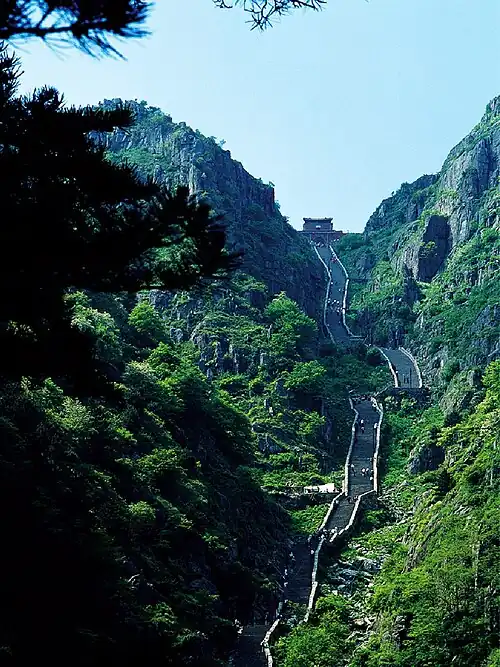
- Tai'an / Mount Tai — the holiest of China's Five Great Mountains, reachable by high-speed rail via Jinan; climb at dawn for the sunrise.
- Qingdao — Tsingtao brewery, German colonial architecture, beaches and seafood — the classic Shandong coastal counterpoint to inland Linyi.
- Jinan — Shandong's provincial capital, famous for its artesian springs and Daming Lake.
- Rizhao — the nearest beach city, with long Yellow Sea sands and fresh seafood, an easy weekend escape.
- Xuzhou, in Jiangsu — Han Dynasty tomb figures and the tombs of the Chu kings, a worthwhile detour.
- Junan County — donkey-meat country and traditional willow-weaving villages, covered as a separate destination.
Nearby in Shandong Sheng
More places to explore around Linyi.
Guide content as of July 2026. Portions adapted from Wikivoyage, CC BY-SA 4.0.

Contact Us
Get in touch with us.
Get in touch
Contact Us
Tell us where you'd like to go and how you like to travel. A real Tripcuro planner — not a bot — will craft an itinerary around you.
- Personalised, hassle-free planning end-to-end
- Transparent pricing, no hidden costs
- 24/7 support for complete peace of mind