

Laixi
Shandong Sheng, China
Why visit Laixi?
Laixi is a county-level city in eastern Shandong Province, administratively under Qingdao. Set in the heart of the Jiaodong Peninsula, it sits roughly equidistant from Qingdao, Yantai, Weihai and Weifang — a quiet inland counterpoint to the coastal cities that surround it. The area has a documented history reaching back to the Spring and Autumn Period, when it lay on the fringe of the ancient state of Qi; the name itself is traditionally explained as meaning "west of" an older regional name. That deep historical layering is matched by an unhurried present-day character — orchards and vineyards on the outskirts, a tidy modern downtown threaded by rivers, and a string of green spaces along reshaped waterways.
Laixi is best known agriculturally for its apples and grapes, and the surrounding countryside is dotted with orchards and small vineyards open for picking. The city's industrial sector has grown alongside, but visitors come mainly for the scenery — Laixi Lake, a large reservoir on the Jiaodong Peninsula — cultural curiosities including a local puppetry tradition and a Neolithic ruins site, and a hot-spring resort area, or as a calmer base for exploring the Qingdao region.
The climate is humid continental with a strong monsoon influence: warm, very wet summers with the bulk of the year's rain in July and August, and cold, dry winters. The sweet spot for visiting is late April through early June, or mid-September through October, when temperatures are comfortable, rainfall is light, and the grape and apple harvests animate the countryside. Avoid mid-summer downpours and the bitter, wind-exposed weeks of deep winter.
Planning Laixi? Tell us your dates and we’ll tailor the trip.
Ask on WhatsAppHow do you get there?
By Plane
Laixi has no civilian airport. The two practical gateways are:
- Qingdao Jiaodong International Airport (TAO), southwest of Laixi — the primary option, with extensive domestic service and international links to Japan, Korea and Southeast Asia. Long-distance buses connect toward Laixi; a taxi or pre-booked car is the alternative.
- Yantai Penglai International Airport (YNT), northeast of Laixi — useful if your itinerary continues up the peninsula.
By Train
Laixi Railway Station is the main rail hub, serving both high-speed and conventional services with frequent connections to Qingdao and Yantai. Booking via the 12306 app a few days ahead is advisable around national holidays. Foreign passport holders can collect tickets at the station window or use the e-ticket gate by scanning their passport.
By Car / Road
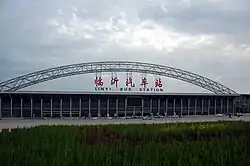
Laixi sits at the junction of two regional expressways, which makes road access straightforward — roughly an hour to an hour and a half by expressway from Qingdao, Yantai or Weifang, and a bit longer from Weihai. Road quality on the expressways is good; tolls apply. A central long-distance bus station runs regular coaches to all neighbouring cities.
The city is compact enough that most central sights are within a short ride of one another. Local public buses cover the urban area cheaply. Taxis are inexpensive for hopping between downtown sights. Didi (滴滴出行) works in Laixi and is usually the easiest option for non-Chinese-speaking visitors, since the destination is entered in-app.
For outlying attractions like Laixi Lake or the surrounding hills, a taxi, a Didi with a return-trip booking, or a rental car is the way to go — public bus coverage thins out fast once you leave the urban core. The centre, around the main park and cultural street, is comfortably walkable.
What are the things to do?
Parks and lakes
- A crescent-shaped riverside park formed by a reshaped watercourse sits right in the centre of town — clean, popular for evening strolls, and a good orientation point.
- Laixi Lake — a large reservoir on the edge of town, one of the biggest bodies of fresh water on the Jiaodong Peninsula, with quiet rural surroundings.
- A lakeside ecological park northeast of the centre is marketed as one of the largest of its kind on the peninsula, sitting at the geographic centre of Qingdao, Weifang, Yantai and Weihai.
Mountains and historic sites
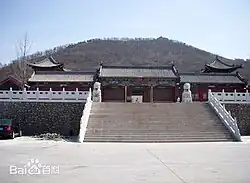
- A local scenic hill northwest of the city combines natural scenery with Taoist legend, a temple (the only one in Laixi), and orchards on its slopes open for seasonal picking.
- A late-Neolithic archaeological site south of the city preserves pottery, stone tools and architectural remains — modest in presentation but historically significant.
- A memorial cemetery and exhibition hall in the city commemorate local revolutionary history.
Museums
- A local museum focused on traditional Laiyi-region culture and music includes live performances and hands-on instrument displays.
- A puppet-art museum is the best place to encounter Laixi's intangible heritage of puppetry — carved figures, demonstrations, and often a chance to operate a puppet yourself.
- A local-history museum in the older part of town has a shop selling traditional crafts.
Resorts
A hot-spring resort on the edge of town is the flagship leisure destination in the area, with therapy pools, indoor and outdoor bathing, and lakeside trails.
Grape picking and small winery visits. Laixi is celebrated for high-quality grape cultivation, and the autumn harvest (roughly mid-August through October) is a centrepiece of local life; several family-run vineyards on the outskirts welcome visitors for tastings and picking.
Puppetry demonstrations. At the local puppet museum, hands-on sessions operating rod-and-string figures are a memorable experience for both kids and adults.
Family farm days. A handful of family-run farms outside the city are set up for outings — vegetable planting, fruit picking, and farm-animal interactions.
Hot spring soaking. A long afternoon at the outskirts hot-spring resort, ideally on a cold-weather day, is the local way to unwind.
Festival timing. If you can align a visit with Spring Festival, the Dragon Boat Festival, or the Mid-Autumn Festival, you'll see Laixi at its most animated, with lantern displays and gatherings in the central park.
Cycling the riverside greenway. The riverside path is flat, scenic, and links several parks — a pleasant half-day outing on a rented or shared bike.
Planning Laixi? Want these on a customised itinerary?
Ask on WhatsAppWhere to eat?
Laixi's food is firmly in the Lu (Shandong) cuisine tradition — seafood-leaning given the proximity to the coast, with strong use of scallions, vinegar and braising. Wheat dominates the staple grains, so expect steamed buns, dumplings and hand-pulled noodles rather than rice as the default. Local specialities to look out for include Jiaodong-style seafood dumplings, braised pork, scallion-braised sea cucumber, oversized steamed buns that are a point of local pride, and seasonal grape and apple desserts.
Vegetarian options exist but are limited compared to larger Chinese cities — Buddhist-influenced vegetable dishes, cold platters, and noodle dishes "without meat" are the easiest path. Halal restaurants serving lamb noodles and skewers can be found near the bus station.
Where to drink?
Locally, grape wine from the Laixi countryside is the signature drink — small-producer tastings are the most accessible introduction. Tsingtao beer, brewed just down the road in Qingdao, is the default lager and is served everywhere. Shandong baijiu brands appear at more formal tables.
For non-alcoholic options, green tea grown locally on the outskirts hills is available, and national chain teahouses and bubble-tea shops are well represented around the central park. Coffee culture is modest but growing.
Water safety: as everywhere in mainland China, do not drink tap water. Bottled water is cheap and ubiquitous, and hotels provide kettles for boiling.
Planning Laixi? We’ll book the stays and dining for you.
Ask on WhatsAppWhere to stay?
- Budget — reliable Chinese chain hotels near the bus station and in central Laixi offer clean, basic rooms.
- Mid-range — comfortable mid-tier chain hotels near the central park are popular with business travellers.
- Upscale — the outskirts hot-spring resort is the most distinctive stay in the area, combining lakeside scenery with on-site hot springs; a handful of vineyard estates in the surrounding countryside also offer limited accommodation bundling tastings and meals.
What should you buy?
Laixi is not a shopping destination on the scale of Qingdao, but it has a few specialties worth seeking:
- Laixi grapes and wine. Boxes of fresh table grapes from the surrounding orchards in late summer and autumn, and bottles from small regional producers.
- Apples. The Jiaodong Peninsula is one of China's premier apple-growing regions; Laixi-grown fruit is sold in markets across the city.
- Puppets and folk crafts. The shop at the local puppet museum stocks miniature puppets and related crafts.
- Porcelain and stone carvings sold at local museum gift shops.
For everyday shopping, the central commercial streets have the main department stores and supermarkets. Bargaining is uncommon in fixed-price shops but expected at outdoor markets and roadside fruit stalls. Cash is rarely needed; WeChat Pay and Alipay are near-universal.
Where to go next?
- Qingdao — an hour or so by car or under an hour by high-speed train. Tsingtao Brewery, German colonial architecture, beaches, and Laoshan Mountain.
- Yantai — coastal city with the old foreign-concession district on Yantai Hill, the Penglai Pavilion further north, and excellent seafood.
- Weihai — clean, pleasant port city facing the Korean Peninsula, with Liugong Island and its naval-history museum.
- Weifang — the "kite capital of the world," home to the International Kite Festival each spring.
- Laoshan — a Taoist mountain on Qingdao's eastern fringe, with temples, hiking and sea views.
- Penglai — the legendary "land of the immortals" on the north Shandong coast, with wineries that pair naturally with Laixi's own grape country.
Nearby in Shandong Sheng
More places to explore around Laixi.


Guide content as of July 2026. Portions adapted from Wikivoyage, CC BY-SA 4.0.

Contact Us
Get in touch with us.
Get in touch
Contact Us
Tell us where you'd like to go and how you like to travel. A real Tripcuro planner — not a bot — will craft an itinerary around you.
- Personalised, hassle-free planning end-to-end
- Transparent pricing, no hidden costs
- 24/7 support for complete peace of mind