
Japan
Eastern Asia · 765 destinations across 47 regions
Photography coming soonOverview
Japan is a country of vivid contrasts where neon-lit megacities sit alongside thousand-year-old temples, where bullet trains glide past rice paddies, and where the same week can take you from a Michelin-starred sushi counter in Tokyo to a futon in a remote mountain ryokan. Few destinations reward the curious traveller as completely: world-class food at every price point, an obsessively maintained transport system, exceptional safety, and a depth of cultural tradition — tea ceremony, kabuki, sumo, Shinto matsuri — that remains living rather than performative.
The country suits a remarkably wide range of travellers. First-timers can ride the Shinkansen between Tokyo, Kyoto and Osaka with near-zero friction; design and food enthusiasts will find Tokyo, Kanazawa and Naoshima endlessly rewarding; outdoor travellers can ski powder in Hokkaido, hike the Kumano Kodo, or dive coral reefs in Okinawa. Japan rewards planning — peak seasons book out months ahead — but it also forgives improvisation, because almost everything works.
What makes Japan distinctive is the texture of daily life: the politeness of a convenience-store clerk, the precision of a 12-second train transfer, the seasonal menu in a tiny izakaya, the silence of a moss garden in Kyoto. It is a country best experienced slowly, and one most visitors leave already planning to return.
Geography & Climate
Japan is an archipelago of nearly 14,000 islands stretching roughly 3,000 km from northeast to southwest. The four main islands are Hokkaido (north), Honshu (the main island, where Tokyo, Kyoto and Osaka sit), Shikoku (smallest of the four), and Kyushu (south), with the subtropical Okinawa chain extending toward Taiwan. Roughly 73% of the country is mountainous and forested; the iconic Japan Alps run through central Honshu, and the country has more than 100 active volcanoes, including Mount Fuji (3,776 m).
Climate varies dramatically with latitude and elevation. Hokkaido has cold, snowy winters (Sapporo regularly drops below −5°C) and mild summers. Honshu's Pacific coast — Tokyo, Nagoya, Osaka — has hot, humid summers (30–35°C with high humidity) and cool, dry winters. The Sea of Japan side (Kanazawa, Niigata) gets some of the heaviest snowfall on Earth. Kyushu and Okinawa are warmer year-round, with Okinawa effectively subtropical.
The seasons are sharply defined and culturally important. Tsuyu, the rainy season, runs roughly early June to mid-July across most of the country (Okinawa earlier, Hokkaido largely skips it). Typhoon season peaks August–October and primarily affects Okinawa, Kyushu and the Pacific coast.
Tell us your dates and we'll tailor your Japan trip around them.
WhatsAppWhen to Visit
Spring (late March–May) is peak season for cherry blossom (sakura) — typically late March to early April in Tokyo and Kyoto, early May in Hokkaido. Expect crowds and premium prices. Autumn (late October–early December) brings spectacular koyo (autumn foliage) and arguably the best overall weather: cool, dry, clear. These are the two prime windows.
Summer (June–August) is hot and humid on the main islands, but it's festival season — Gion Matsuri in Kyoto (July), Aomori Nebuta (early August), Awa Odori in Tokushima (mid-August). It's also the only time to climb Mount Fuji (official season early July to early September) and the best time for Hokkaido and the Japan Alps. Winter (December–February) is excellent for skiing in Hokkaido and Nagano (Niseko, Hakuba), onsen towns, and the Sapporo Snow Festival (early February); Tokyo and Kyoto are cold but dry and uncrowded outside New Year.
Avoid travelling during Golden Week (29 April – 5 May), Obon (mid-August), and New Year (29 December – 3 January) unless planned far in advance — domestic travel surges and prices spike.
Visa & Entry
Japan offers visa-free short-stay entry (typically 90 days) to passport holders from around 70 countries and territories, including the US, Canada, UK, Australia, New Zealand, most of the EU, Singapore, South Korea, and Taiwan. Some nationalities (e.g. UK, Germany, Mexico, Switzerland) can extend to 180 days at an immigration office.
A JAPAN eVISA is available for several nationalities (including India and South Africa) for tourism, applied for online before travel. Other nationalities must apply for a visa at a Japanese embassy or consulate before arrival; visas on arrival are not issued.
All travellers should pre-register through Visit Japan Web to streamline immigration and customs. Travellers must hold a passport valid for the duration of stay, an onward/return ticket, and proof of sufficient funds. Working, including remote work for foreign employers on a tourist entry, falls into a grey area — confirm requirements with your nearest Japanese embassy before travel.
Want us to time your trip around a festival? We'll handle it.
WhatsAppMoney & Costs
The currency is the Japanese yen (JPY, ¥). Approximate daily budgets per person:
- Budget: ¥8,000–¥13,000 (≈ US$55–90) — hostel/capsule hotel, conbini and ramen meals, local transit, free temples.
- Mid-range: ¥18,000–¥35,000 (≈ US$120–235) — business hotel or modest ryokan, sit-down restaurants, occasional Shinkansen segment.
- Luxury: ¥60,000+ (≈ US$400+) — high-end ryokan with kaiseki dinner, premium hotels, fine dining, private guides.
Japan is less cash-dependent than it used to be but cash is still essential: many small restaurants, shrines, ryokan, and rural businesses accept only cash or local IC cards. Visa and Mastercard work at most hotels, department stores, and chain restaurants; Amex acceptance is patchier. 7-Eleven, Japan Post, and Lawson ATMs reliably accept foreign cards 24/7. IC cards (Suica, Pasmo, ICOCA) are essential for transit and accepted at most convenience stores and vending machines; mobile Suica via Apple Pay is the simplest option for most visitors.
Tipping is not practised and can cause confusion or be politely refused. Service is included; exceptional service is acknowledged with a sincere "arigatou gozaimasu". Tax-free shopping is available to tourists at participating stores on purchases over ¥5,000 — bring your passport.
Getting In
The main international gateways are:
- Tokyo Narita (NRT) — the largest international hub, ~60 km east of central Tokyo; Narita Express or Keisei Skyliner into the city.
- Tokyo Haneda (HND) — closer to central Tokyo (~20 min by monorail), increasingly used for international flights.
- Osaka Kansai (KIX) — the main gateway for the Kansai region (Kyoto, Osaka, Nara), built on an artificial island in Osaka Bay.
- Nagoya Chubu Centrair (NGO) — central Honshu gateway.
- Fukuoka (FUK) — main entry for Kyushu, well-connected to other Asian cities.
- Sapporo New Chitose (CTS) — main entry for Hokkaido.
- Naha (OKA) — Okinawa.
There are no land borders. International ferries connect Japan with South Korea (Busan to Fukuoka, Shimonoseki, Osaka) and with Russia and China on more limited services. Cruise ships call at Yokohama, Kobe, Nagasaki, Hakodate and Naha among others.
We handle the bookings and budgeting — you just travel.
WhatsAppGetting Around
The Shinkansen (bullet train) is the spine of long-distance travel: Tokyo–Kyoto in ~2h15, Tokyo–Hiroshima in ~4h, Tokyo–Hakata (Fukuoka) in ~5h. The Japan Rail Pass is no longer the obvious bargain it once was after the 2023 price increase — run the numbers for your specific itinerary; for many trips, individual tickets or regional passes (JR East, JR West Kansai-Hiroshima, JR Kyushu) work out cheaper. Reserve Shinkansen seats in peak seasons.
Local trains and metros in major cities are world-class — tap in and out with an IC card. Domestic flights on ANA, JAL, and LCCs (Peach, Jetstar Japan, Skymark) are useful for Hokkaido, Okinawa, and Kyushu; book early for the best fares. Highway buses (Willer Express, JR Bus) are a budget alternative on long routes, including overnight services.
Taxis are clean, metered, and honest but expensive (flagfall around ¥500). Apps GO and Uber (Tokyo) work for hailing; ridesharing in the foreign sense is limited. Renting a car makes sense for Hokkaido, Okinawa, rural Kyushu, and the Japan Alps — you'll need an International Driving Permit (the IDP must be the 1949 Geneva convention version; some countries including Belgium, France, Germany, Italy, Switzerland, and Taiwan need an officially translated licence instead).
Scams are rare. The main pitfalls are touts in nightlife districts (Kabukicho in Shinjuku, Roppongi) leading to bars with extortionate cover charges — never follow a tout into an unmarked venue. Always check that taxis use the meter.
Culture & Etiquette
Bowing is the standard greeting; a small nod is fine for travellers, and handshakes are increasingly common in business. Use both hands when giving or receiving cards, money or gifts. Remove your shoes when entering homes, traditional inns, temples (where indicated), tatami rooms, and many restaurants and changing rooms — look for a step up in the floor or arranged slippers.
For temples and shrines, modest dress is appreciated but rarely strictly enforced; remove hats, speak quietly, and follow purification rituals at the chozuya (water pavilion). Photography is fine in most outdoor temple precincts but often prohibited inside main halls — look for signs.
Tipping is not practised anywhere. Don't eat or drink while walking in crowded areas, don't talk on the phone on trains (silent or "manner mode" is expected), and don't stick chopsticks upright in rice or pass food chopstick-to-chopstick — both evoke funeral rites. Tattoos can bar entry to many onsen, public baths and gyms; cover with skin-tone tape or seek out tattoo-friendly facilities. At onsen, you bathe naked, after thoroughly washing at the shower stations — the towel does not enter the water.
Queues are sacred. So is punctuality.
Prefer to talk it through? We're a WhatsApp message away.
WhatsAppSafety
Japan is one of the safest countries in the world for travellers. Violent crime is rare and street theft is uncommon; lost items are routinely returned via koban (police boxes). The main risks are natural hazards: Japan sits on the Pacific Ring of Fire and experiences frequent earthquakes, occasional tsunami, typhoons (August–October), and volcanic activity. Download the NHK World or Safety Tips app for English alerts. In any earthquake, drop-cover-hold; in a tsunami warning, move to high ground immediately and follow signed evacuation routes.
Summer heat and humidity on the main islands are genuinely dangerous — heatstroke hospitalisations spike every July and August. Hydrate, use shade, and don't underestimate Tokyo or Kyoto in midsummer. Winter brings black ice and heavy snowfall in northern and Sea of Japan regions.
Tap water is safe to drink nationwide. No vaccinations are required for entry from most countries; routine vaccinations should be up to date, and Japanese encephalitis vaccination may be considered for long rural stays in summer. Healthcare is excellent but expensive without insurance — travel insurance with medical cover is strongly recommended. Bring prescription medications in original packaging with documentation; some common Western medications (including certain ADHD stimulants and codeine-containing painkillers) are prohibited or require advance permits — check the Ministry of Health (MHLW) Yakkan Shoumei guidance before travel.
Top Regions
- Kanto — the Tokyo metropolitan region: capital city, Yokohama, Mt Fuji's eastern approaches, Nikko's shrines.
- Kansai — Japan's cultural heartland: Kyoto, Nara, Osaka, Kobe, and Mount Koya.
- Chubu — central Honshu: the Japan Alps, historic Takayama and Shirakawa-go, Nagoya, Kanazawa.
- Hokkaido — northern frontier of national parks, world-class powder skiing, seafood, and Ainu heritage.
- Kyushu — volcanic landscapes, onsen towns (Beppu, Yufuin), Nagasaki's blended history, and Fukuoka's food scene.
- Tohoku — northern Honshu's rural hot springs, samurai towns, and dramatic coastlines, far less touristed than the south.
- Chugoku — Hiroshima, Miyajima's floating torii, and the Sanin coast's old castle towns.
- Okinawa — subtropical island chain with Ryukyuan culture, coral reefs, and beach resorts.
Tell us your dates and we'll tailor your Japan trip around them.
WhatsAppTop Destinations
- Tokyo — the capital: an endlessly layered metropolis from imperial gardens and Asakusa temples to Shibuya nightlife and three-Michelin sushi.
- Kyoto — the cultural heart of Japan, with 17 UNESCO sites, hundreds of temples and shrines, geisha districts, and exquisite seasonal landscapes.
- Osaka — Kansai's brash, food-obsessed second city, famed for street food, Dotonbori neon, and a friendlier, looser feel than Tokyo.
- Nara — Japan's first permanent capital, home to the Great Buddha at Todai-ji and a deer-filled park.
- Hiroshima — the Peace Memorial Park and Atomic Bomb Dome, paired with Miyajima's iconic floating torii.
- Kanazawa — a beautifully preserved former castle town with Kenroku-en (one of Japan's three great gardens), samurai and geisha districts, and superb seafood.
- Hakone & Mount Fuji — easy escape from Tokyo for onsen, lake views, and the country's most iconic mountain.
- Nikko — UNESCO-listed shrine complex set among cedar forests and waterfalls north of Tokyo.
- Takayama & Shirakawa-go — preserved Edo-era streets and gassho-zukuri thatched-roof villages in the Japan Alps.
- Sapporo & Niseko — Hokkaido's largest city plus the powder-snow capital of Asia.
- Naoshima — the "art island" in the Seto Inland Sea, with Tadao Ando-designed museums and the Yayoi Kusama pumpkin.
- Okinawa (Naha & the Yaeyama Islands) — tropical beaches, distinct Ryukyuan culture, and some of Asia's best diving.
Regions & States
Japan has 47 regions with guides — pick one to drill into its destinations.

Aichi
16 destinations

Akita
16 destinations
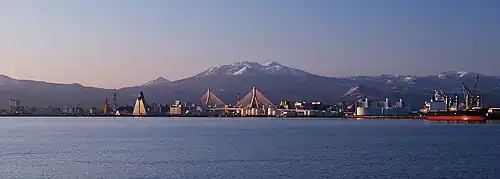
Aomori
17 destinations

Chiba
16 destinations

Ehime
15 destinations

Fukui
13 destinations
Fukuoka
11 destinations

Fukushima
17 destinations

Gifu
20 destinations
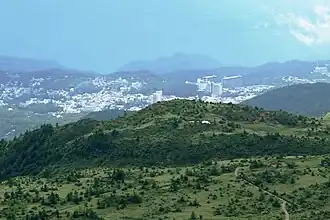
Gunma
18 destinations

Hiroshima
15 destinations
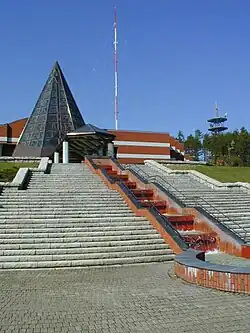
Hokkaido
23 destinations

Hyogo
18 destinations

Ibaraki
16 destinations
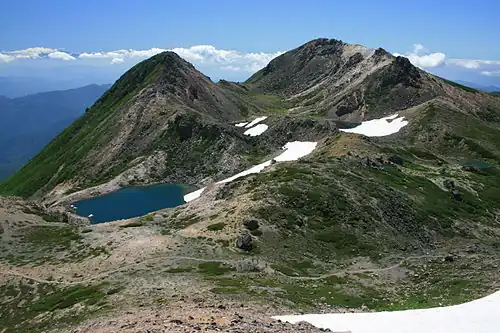
Ishikawa
16 destinations

Iwate
20 destinations

Kagawa
14 destinations

Kagoshima
16 destinations

Kanagawa
15 destinations

Kochi
17 destinations

Kumamoto
15 destinations

Kyoto
21 destinations

Mie
20 destinations

Miyagi
15 destinations

Miyazaki
15 destinations
Nagano
23 destinations

Nagasaki
13 destinations
Nara
13 destinations

Niigata
15 destinations

Oita
15 destinations

Okayama
15 destinations

Okinawa
18 destinations

Osaka
17 destinations
Saga
12 destinations

Saitama
13 destinations

Shiga
17 destinations

Shimane
17 destinations

Shizuoka
16 destinations

Tochigi
16 destinations

Tokushima
14 destinations

Tokyo
26 destinations

Tottori
14 destinations

Toyama
15 destinations
Wakayama
12 destinations
Yamagata
17 destinations

Yamaguchi
15 destinations

Yamanashi
17 destinations
Not sure where to start in Japan? Tell us how you like to travel and we'll shape the route.
WhatsAppTop Destinations
The places first-time and returning travellers ask for most.
Abashiri
Abashiri (網走) is a small city on the northern coast of Hokkaido, faci…
Adachi Museum of Art
The Adachi Museum of Art (足立美術館, Adachi Bijutsukan) is a celebrated a…
Aizu-Wakamatsu
Aizu-Wakamatsu (会津若松) is the main city of the Aizu region, the mounta…
Akihabara
Akihabara (秋葉原), known in slang as Akiba, is Tokyo's "Electric Town",…
Akita
Akita (秋田) is the capital and largest city of Akita Prefecture, in th…
Amakusa
Amakusa (天草) is a city and a chain of around ten islands off the west…
Amami Oshima
Amami Oshima (奄美大島), literally "Big Amami Island", is the largest of…
Amanohashidate
Amanohashidate (天橋立) is a long, pine-covered sand bar that stretches…
Anan
Anan (阿南市) is a coastal city in southern Tokushima Prefecture, on the…
Aomori
Aomori (青森) is the capital of Aomori Prefecture, set on Mutsu Bay at…
Aoshima
Aoshima (青島) is a small, palm-fringed island and the resort district…

Arashiyama
Arashiyama (嵐山, "Storm Mountain") is the scenic district of western K…

Contact Us
Get in touch with us.
Get in touch
Contact Us
Tell us where you'd like to go and how you like to travel. A real Tripcuro planner — not a bot — will craft an itinerary around you.
- Personalised, hassle-free planning end-to-end
- Transparent pricing, no hidden costs
- 24/7 support for complete peace of mind