
Yamanashi
Japan · Prefecture · 17 destinations with guides
Photography coming soonOverview
Yamanashi (JP-19) is a landlocked prefecture in Japan's Chubu region, wedged between Tokyo to the east and the Southern Japanese Alps to the west. Its defining feature is geological theatre: the northern face of Mount Fuji rises from its southern border, the Fuji Five Lakes pool at the volcano's foot, and the broad Kofu Basin — ringed by mountains on every side — dominates the prefecture's interior. Roughly 80 percent of the land is forested mountain, which has shaped both the climate (hot, humid summers; cold, dry winters with little snow at lower elevations) and the way the prefecture lives — concentrated along river valleys and rail corridors.
For travellers, Yamanashi is Japan's most accessible mountain prefecture and arguably its most photographed: the classic reflected-Fuji shots from Lake Kawaguchi and the Chureito Pagoda were taken here. But beyond the volcano, it's also the country's premier wine and fruit region. The Kofu Basin's volcanic soils and long sunshine hours produce Japan's signature Koshu grape, peaches, plums, and cherries, and the Katsunuma area around Koshu City has been making wine since the 1870s. Add hot springs (Isawa, Yumura, Shimobe), a thick layer of Sengoku-era history tied to the warlord Takeda Shingen, and the kind of homecooked mountain food — hōtō noodles, horse-meat sashimi, river fish — that doesn't travel well, and Yamanashi rewards visitors who slow down past the Fuji photo stops.
When to Visit
April is short, intense, and crowded: the Fuji-Kawaguchiko cherry blossom festival (around 10–25 April, later than Tokyo) and the Shiba-zakura (pink moss phlox) festival at Lake Motosu (mid-April to late May) are the headline events. Late June through mid-July is rainy season — humid, but cheaper and quieter, and the wisteria and hydrangea bloom. July and August are the only months Mount Fuji is officially open for climbing (roughly 1 July to 10 September on the Yoshida Trail); the Kofu Basin gets very hot, often above 35 °C, so most travellers head to the lakes or higher elevations. Late August brings the Yoshida Fire Festival (26–27 August) at the foot of Fuji.
Autumn is the best all-rounder: grape and wine harvest from late August through October, peak colour in the Fuji Five Lakes and Shosenkyo Gorge in early-to-mid November, and clear, dry weather that gives the sharpest Fuji views of the year. Winter (December–February) is cold but largely snow-free in the basin, with the year's clearest Fuji visibility, ice-fringed lakes (the "Diamond Fuji" alignment is best visible from Lake Tanuki and Lake Yamanaka in mid-winter), and quieter onsen towns.
Tell us your dates and we'll shape a Yamanashi route around them.
WhatsAppGetting Around
The prefecture has two natural travel axes that don't connect cleanly to each other, and choosing the wrong one costs hours.
The JR Chuo Line runs east–west across the north of the prefecture from Tokyo (Shinjuku) through Otsuki, Enzan, Yamanashi-shi, Kofu, and on toward Matsumoto. The Limited Express Azusa and Kaiji trains cover Shinjuku–Kofu in about 90 minutes (around ¥4,000 reserved). Local trains take about 2.5 hours and cost around ¥2,500. Use this line for Kofu, the wine country (Enzan/Katsunuma-Budokyo), Shosenkyo Gorge, and Yamanashi City.
The Fujikyu Railway branches off the Chuo Line at Otsuki and runs south to Fujisan, Fujikyu Highland, and Kawaguchiko stations — the gateway to the Fuji Five Lakes. The direct Fuji Excursion limited express runs Shinjuku–Kawaguchiko in about 1 hour 50 minutes (around ¥4,100). Highway buses from Shinjuku's Busta terminal to Kawaguchiko (~1h 45m, ¥2,200) are often faster and cheaper than rail.
Within the Fuji Five Lakes, the Fujikko-go retro buses (1-day pass ¥1,700, 2-day ¥2,300) loop between Kawaguchiko, Saiko, and the Motosuko/Shojiko area. Kofu and the wine country rely on local Yamanashi Kotsu buses and taxis; renting a car at Kofu Station (around ¥7,000–9,000/day) is the practical option for vineyard hopping in Katsunuma — distances are short (Kofu to Katsunuma is about 20 km / 25 minutes) but bus service is sparse. To cross between the Chuo Line corridor and the Fuji lakes you'll generally backtrack via Otsuki; there is no through rail line.
Top Destinations
- Kofu — the prefectural capital and historical seat of the Takeda clan; base for Shosenkyo Gorge and Yumura Onsen.
- Fujikawaguchiko / Lake Kawaguchi — the most accessible of the Fuji Five Lakes and the iconic reflected-Fuji viewpoint.
- Fujiyoshida — climbing base for Mount Fuji's Yoshida Trail, home to the Chureito Pagoda and Yoshida no Udon.
- Katsunuma (Koshu City) — Japan's oldest wine region, with 30+ wineries clustered within walking and cycling distance.
- Yamanashi City — fruit-park country, Seihakuji temple, and a quieter base on the Chuo Line.
- Minobu — mountain-temple town built around Kuon-ji, head temple of Nichiren Buddhism.
- Hokuto — high-altitude resort country (Kiyosato, Kobuchizawa) with whisky distilleries and Yatsugatake views.
- Lake Yamanaka & Lake Motosu — quieter Fuji lakes; Motosu is the lake on the ¥1,000 note.
Want the scenic legs and stays booked for you? Just ask.
WhatsAppCuisine
The signature dish is hōtō — flat, hand-cut wheat noodles simmered in a miso-based broth thick with kabocha squash, mushrooms, and root vegetables. It's a winter farmhouse dish that became prefectural identity; Kosaku and Houtou Fudou (multiple branches around Kawaguchiko, the Itchiku Kubota Art Museum branch is the most photogenic) are the easiest places to try it, typically ¥1,200–1,800.
Yoshida no Udon, found almost exclusively in Fujiyoshida, is the polar opposite — extremely thick, chewy udon in a cabbage-and-horse-meat broth, eaten at lunch in unassuming family shops that close by 14:00. Torimotsu-ni (chicken offal simmered in sweet soy) is Kofu's B-grade gourmet specialty, born in postwar soba shops. Basashi (horse-meat sashimi) is widely served and not a tourist novelty here. River fish — particularly ayu (sweetfish) grilled on skewers with salt — appear on most ryokan dinner menus in summer.
On the sweet side, shingen mochi (kinako-dusted mochi with black-sugar syrup) is the prefecture's signature confection, and the prefecture grows roughly 40 percent of Japan's grapes and a quarter of its peaches — fruit parlours and pick-your-own orchards are a legitimate destination, not a sideline. Koshu wine (dry, light, food-friendly whites from the indigenous Koshu grape) is best tasted at the source in Katsunuma; expect ¥500–1,500 for tasting flights at most wineries. Vegetarian and vegan options are limited outside Kawaguchiko's tourist corridor; Minobu's temple lodgings serve shojin ryori (Buddhist vegetarian cuisine) by reservation.
Culture & Festivals
Yamanashi's cultural identity is built around two figures: the 16th-century warlord Takeda Shingen, whose Kai Province occupied roughly the modern prefecture, and Mount Fuji itself, an object of pilgrimage worship for centuries.
- Shingen-ko Festival (first weekend of April, Kofu) — Japan's largest samurai gathering, with around 1,500 armoured participants re-enacting Takeda Shingen's troop deployments. Recognised by Guinness for the scale of the muster.
- Fuji Shibazakura Festival (mid-April to late May, near Lake Motosu) — 800,000 pink moss phlox planted to bloom against the south face of Fuji.
- Kawaguchiko Herb Festival (late June to mid-July) — lavender bloom around the lake.
- Yoshida Fire Festival / Yoshida no Himatsuri (26–27 August, Fujiyoshida) — one of Japan's three great strange festivals; 70+ three-metre torches are lit along the main street to mark the close of Fuji's climbing season.
- Katsunuma Wine Festival (early October) — open tastings across Katsunuma's wineries, with a ¥1,500–2,000 tasting cup that grants entry to participating cellars.
- Otsukimi (moon-viewing) at Lake Kawaguchi (mid-September) — culturally low-key but visually unbeatable, with Fuji silhouetted against the harvest moon.
Local crafts include Koshu inden (deer leather lacquered with patterned designs, originally for samurai armour fittings; now used for wallets and small purses, with workshops in Kofu), Koshu crystal carving (Yamanashi was Japan's main rock-crystal source until the 1970s, and the carving tradition continues even with imported stone), and Nishijima washi paper from the southern town of Minobu.
Travelling during a festival? We'll plan around the crowds.
WhatsAppNotable Experiences
- Climb Mount Fuji from the Yoshida Trail (July–early September). Most climbers start mid-afternoon from the 5th Station (2,305 m), sleep in a mountain hut, and summit before dawn for goraikō (sunrise from the crater rim). Hut reservations book out months ahead; the trail has a ¥2,000 conservation fee plus a separate ¥4,000 entry fee on the Yamanashi side as of the 2025 climbing season.
- Wine-country cycling in Katsunuma. Rent a bike at Katsunuma-Budokyo Station and ride a 10–15 km loop through 20+ wineries — Chateau Mercian, Lumiere, Grace Wine, and Marquis Winery all offer cellar visits. Roads are flat through the vineyards but climb sharply into the hills for the better tasting rooms.
- Sunrise at Chureito Pagoda (Arakurayama Sengen Park, Fujiyoshida). The five-storey pagoda with cherry blossoms (April) or autumn maples (November) framing Fuji is the single most reproduced Yamanashi image; arrive 45 minutes before sunrise to claim a spot at the upper viewing platform on peak weekends.
- Shosenkyo Gorge in autumn (early-to-mid November). A 5 km walking trail along the Arakawa River past Sengataki waterfall and Kakuenpo rock, finishing at a ropeway with Fuji and Yatsugatake views; bus from Kofu Station, around 30 minutes.
- Onsen at Hottarakashi (above Yamanashi City). Two open-air baths perched on a hillside with the Kofu Basin and Mount Fuji laid out below; the acchi-no-yu bath is positioned for sunrise and Fuji views (open from before dawn), entry ¥800. The name translates roughly as "leave it alone" — the original idea was an unattended hot spring.
Top Destinations
Every destination in Yamanashi with a guide — tap a place for the full guide.

Fuji Five Lakes
The Fuji Five Lakes (富士五湖 Fuji-goko) are a group of five lakes strung…
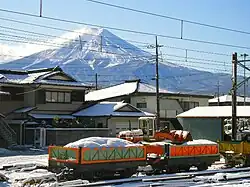
Fujiyoshida
Fujiyoshida (富士吉田) is a small city spread across the lower northern s…
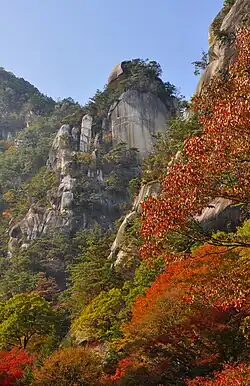
Kofu
Kofu (甲府市 Kofu-shi) is the capital of Yamanashi Prefecture, set in th…
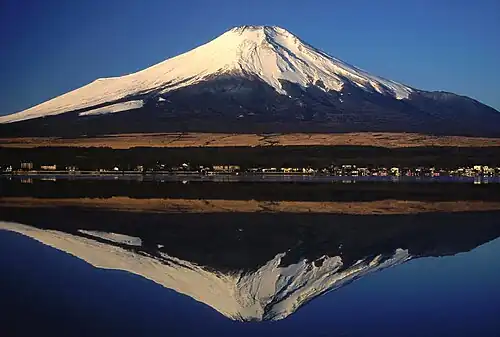
Mount Fuji
Mount Fuji (富士山 Fuji-san, 3,776 m) is Japan's highest mountain and th…
Fuji-Hakone-Izu National Park
Fuji-Hakone-Izu National Park (富士箱根伊豆国立公園) is one of Japan's most ico…
Fujikawaguchiko
Fujikawaguchiko (富士河口湖) is a resort town on the northern side of Moun…
Hokuto
Hokuto (北杜) is a city in northwestern Yamanashi Prefecture, located o…
Isawa Onsen
Isawa Onsen (石和温泉) is the largest hot-spring resort in Yamanashi Pref…
Koshu
Koshu (甲州) is a city in Yamanashi Prefecture, located in the Koshu Va…
Lake Kawaguchiko
Lake Kawaguchiko (河口湖) is the most popular and accessible of the Fuji…
Lake Yamanakako
Lake Yamanakako (山中湖) is the easternmost and largest of the Fuji Five…
Minobu
Minobu (身延) is a town in southern Yamanashi Prefecture, located in th…
Nirasaki
Nirasaki (韮崎) is a city in central Yamanashi Prefecture, located at t…
Otsuki
Otsuki (大月) is a city in eastern Yamanashi Prefecture, situated at th…
Shosenkyo Gorge
Shosenkyo Gorge (昇仙峡) is the most celebrated scenic landscape in Yama…
Tsuru
Tsuru (都留) is a city in southeastern Yamanashi Prefecture, located al…
Yamanashi
Yamanashi (山梨) is a city in central Yamanashi Prefecture, located in…
Sample itinerary
See how a trip to Yamanashi comes together — a real Tripcuro plan, day by day.
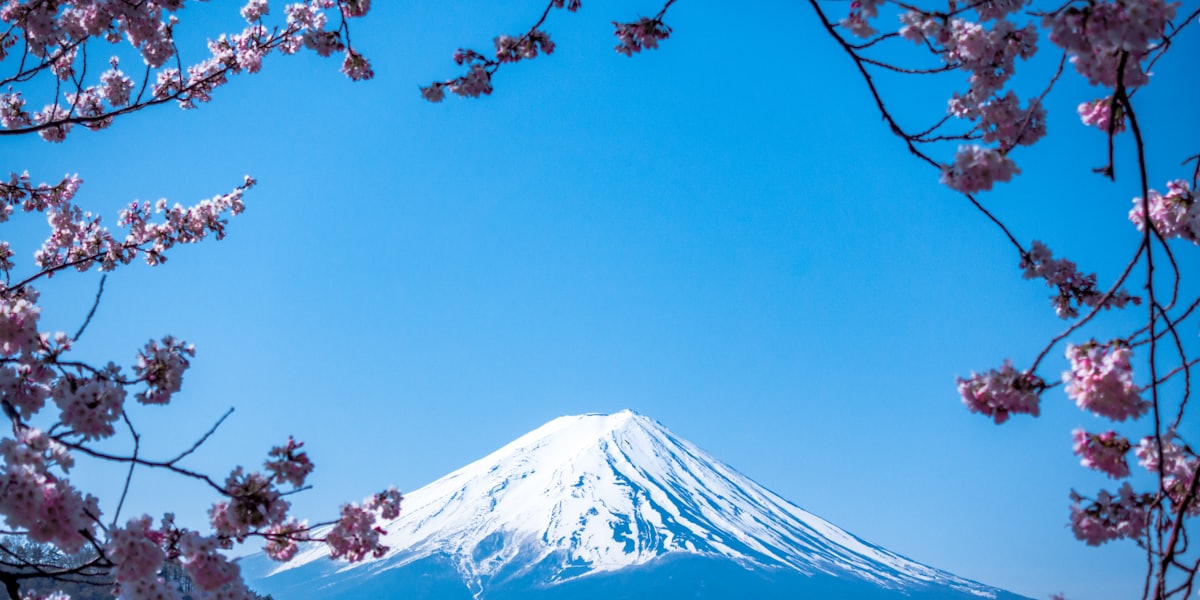
Pair the highlights of Yamanashi into one easy trip — we'll plan the route.
WhatsApp
Contact Us
Get in touch with us.
Get in touch
Contact Us
Tell us where you'd like to go and how you like to travel. A real Tripcuro planner — not a bot — will craft an itinerary around you.
- Personalised, hassle-free planning end-to-end
- Transparent pricing, no hidden costs
- 24/7 support for complete peace of mind