
Shiga
Japan · Prefecture · 17 destinations with guides
Photography coming soonOverview
Shiga Prefecture wraps almost entirely around Lake Biwa, Japan's largest freshwater lake, which fills roughly a sixth of the prefecture's land area and shapes nearly every aspect of life here. Once known as Ōmi Province, Shiga sits in the Kansai region just east of Kyoto, hemmed in by the Hira and Suzuka mountain ranges, with Mount Ibuki rising to 1,377 m on its eastern flank. The lake-and-mountain geography makes for short drives between very different landscapes — castle towns, cedar-shaded temple roads, fishing villages, ninja country, and ski-able peaks all sit within a 90-minute radius of Ōtsu.
For travellers, Shiga is the quieter, more historical companion to Kyoto: the prefecture preserves one of Japan's twelve original castles (Hikone), the World Heritage Enryaku-ji monastic complex on Mount Hiei, the Koga ninja heartland in Kōka, the Vories-designed merchant streets of Omihachiman, and Ishiyama-dera, where Murasaki Shikibu is said to have begun writing The Tale of Genji. Because most overseas tourists treat the prefecture as a day trip from Kyoto, even marquee sights stay markedly less crowded than their Kyoto equivalents.
The character is rural and unpretentious — terraced rice fields, lakefront cycle paths, fermented carp sushi older than Tokyo, and beef that locals will quietly tell you outclasses Kobe. It rewards a slow itinerary built around the lake's perimeter rather than a checklist sprint.
When to Visit
Late March to mid-April is the prefecture's peak window: the cherry blossoms along the Hikone Castle moat and the 4 km tunnel of sakura at Kaizu-Ōsaki on the lake's northwest shore are among the best in Kansai, and they peak roughly a week after Kyoto. Mid-October to late November brings koyō (autumn colour) to Mount Hiei, the Koto Sanzan temples, and the Metasequoia avenue in Makino — generally a week or two later than Kyoto due to the lake-moderated climate.
Summer (July–August) is hot, humid, and prone to afternoon thunderstorms, but it's also the season for Lake Biwa swimming beaches (Omi-Maiko, Omatsu) and the spectacular Lake Biwa Great Fireworks Festival in Ōtsu in early August (~10,000 shells over the lake). Winter is colder than coastal Kansai — the Ibuki–Kohoku corridor north of Maibara gets serious snowfall, with ski resorts at Okuibuki and Hakodateyama operating roughly mid-December to early March. Note that the lake-effect "Hira oroshi" wind funnels down from the western mountains in winter and can briefly halt the Kosei Line trains.
Tell us your dates and we'll shape a Shiga route around them.
WhatsAppGetting Around
The JR network forms a near-complete loop around Lake Biwa, which makes train travel unusually convenient. The Biwako Line (JR Tokaido/Hokuriku) handles the eastern shore — Ōtsu, Kusatsu, Omihachiman, Hikone, Maibara, Nagahama — with Special Rapid (Shinkaisoku) trains every 15–30 minutes; Kyoto to Hikone runs about 50 minutes for ¥1,170. The Kosei Line covers the western shore from Kyoto via Katata, Ōmi-Maiko, and Ōmi-Imazu up to Ōmi-Shiotsu. The Tokaido Shinkansen stops at Maibara, the prefecture's main long-distance hub (Tokyo–Maibara ~2h15m).
Inland, the private Ohmi Railway ("Gachakon") runs from Maibara through Hikone, Taga, Kibukawa, and Kōka — slow, single-car, and useful for the Kōka ninja sites and Taga-taisha shrine. The Shigaraki Kōgen Railway branches off at Kibukawa for the pottery town of Shigaraki. Ryūō is the prefecture's only town with no station, served by community buses from Yasu or Ōmihachiman.
Buses from JR Ishiyama or Hama-Ōtsu reach Miho Museum, Mount Hiei, and Hikone's Genkyū-en/Castle precinct; check timetables in advance as some routes run only 4–6 services daily. For Lake Biwa itself, the Biwako Shuko-no-Michi is a ~200 km signed cycle route circling the lake, with rental stations at Maibara, Hikone, Ōmi-Imazu, and Ōtsu (¥1,500–3,000/day, e-bikes ¥3,500+, one-way drop-off accepted at most chains). The Biwako Free Kippu and JR's Kansai Wide Area Pass both cover the prefecture's main lines if you're combining with Kyoto/Osaka.
Top Destinations
- Ōtsu — prefectural capital; gateway to Mount Hiei's Enryaku-ji and Ishiyama-dera, with Lake Biwa cruises from Hama-Ōtsu pier.
- Hikone — home to Hikone Castle, one of only twelve original Edo-era keeps, plus Genkyū-en garden and the lakeside Yume Kyōbashi castle town.
- Nagahama — Sengoku-era castle town, glassware district, and base for the Odani Castle ruins and Lake Yogo.
- Omihachiman — Vories Western architecture, Hachimanbori canal boat rides, and the Azuchi Castle ruins of Oda Nobunaga.
- Kōka — heartland of the Koga ninja clan; the prefecture's only authentic ninja house and the Miho Museum (I.M. Pei).
- Maibara — Shinkansen junction and trailhead for Mount Ibuki (1,377 m).
- Takashima — quiet northwest shore; Shirahige Shrine's lake torii and the Metasequoia avenue.
- Kusatsu — Lake Biwa Museum and the historic Tōkaidō/Nakasendō post-town junction.
- Ryūō / Hino — Ōmi beef country and the rural samurai-merchant town of Hino.
Want the scenic legs and stays booked for you? Just ask.
WhatsAppCuisine
Ōmi beef (近江牛) is the headline product — one of Japan's three historic wagyu lineages, raised mainly around Ryūō, Hino, and Taga. Mid-range teppanyaki sets run ¥6,000–12,000 at established Hikone and Ōmihachiman houses (Senmonten Mōri, Ōmi-gyū Okaki); the budget move is the Ōmi-gyū ekiben sold at Maibara station for ~¥1,600.
Funazushi (鮒寿司) is the prefecture's signature oddity — Lake Biwa nigorobuna carp salt-cured then fermented in rice for one to four years. It is the historical ancestor of all sushi, pungent (think aged blue cheese), and very much an acquired taste. Try a single slice at a Hikone or Ōmihachiman izakaya before committing to a full plate; expect ¥1,500–3,000 per portion.
Other regional staples: akakonnyaku (red devil's-tongue jelly, dyed with iron oxide; an Omihachiman speciality served simmered), Hino-na pickles, Ōmi rice (the lake basin is one of Kansai's main paddy regions), Iga-buta pork from the southern uplands, and fresh-water fish from the lake — biwa-masu trout sashimi, simmered ayu, and isaza whitebait tsukudani. Kibimochi mochi is a Taga-taisha pilgrim sweet, and Shigaraki tea (Asamiya) is one of Japan's oldest tea-growing areas.
Vegetarians and vegans will find the going easier than in much of rural Japan thanks to shōjin-ryōri (Buddhist temple cuisine) at the Mount Hiei monasteries and at Eigen-ji — book ahead for the multi-course set, typically ¥3,500–6,000.
Culture & Festivals
- Hikiyama Matsuri (Nagahama, 13–16 April) — designated UNESCO Intangible Cultural Heritage; ornate floats carry child kabuki performers through the old town.
- Hi-matsuri / Sannō Matsuri (Hiyoshi Taisha, Ōtsu, 12–15 April) — torch-lit night procession and the dramatic launching of mikoshi into Lake Biwa.
- Ōtsu Matsuri (early October) — 13 mechanical-doll floats wind through central Ōtsu; one of Kansai's three great float festivals.
- Lake Biwa Great Fireworks (Ōtsu, ~8 August) — roughly 10,000 shells launched directly over the water; ticketed lakeside seating sells out by June.
- Sagicho Matsuri (Ōmihachiman, mid-March) — zodiac-themed straw floats are paraded then ritually burned at Himure Hachiman-gū.
- Hina-matsuri Streets (Hikone & Nagahama, late February–March) — antique doll displays in machiya-lined shopping streets.
The prefecture's most distinctive crafts are Shigaraki-yaki pottery (one of the Six Ancient Kilns; the kiln town in Kōka is a working ceramic district with hundreds of studios and the Miho Museum nearby) and Hikone Butsudan Buddhist altar woodwork. Ōmi shōnin — the merchant culture of Hino, Ōmihachiman, and Gokashō — underpins the prefecture's preserved townscapes and the sanpō yoshi ("good for seller, buyer, and society") business ethos still cited in Japanese commerce.
Travelling during a festival? We'll plan around the crowds.
WhatsAppNotable Experiences
- Cycle the Biwa-ichi. The full 200 km lake circuit takes 2–3 days at touring pace; e-bike rental from Maibara or Ōtsu, hotels along the way will hold luggage. The northern Okubiwako section between Ōmi-Imazu and Mt Shizugatake is the prized stretch — terraced rice paddies, sleepy fishing harbours, and almost no traffic.
- Sleep on Mount Hiei. Stay in shukubō lodging at Enryaku-ji (booked through Eizan Cable / temple office; ~¥10,000–15,000 with two meals), join the 5 a.m. gongyō sutra chanting, and walk the Tōdō, Saitō, and Yokawa precincts before the Kyoto day-trippers arrive on the cable car.
- Train under a sakura tunnel at Kaizu-Ōsaki. From Maibara, ride JR Hokuriku to Nagahara then catch the seasonal pleasure boat across the lake's northern arm under ~800 cherry trees in early April — far less crowded than Kyoto's Philosopher's Path.
- Tour a working ninja house in Kōka. The Kōka Ninja House (Kōka-ryū Ninjutsu Yashiki) is the only authentic surviving residence of a Koga clan, with operational trapdoors, hidden stairs, and a rotating wall — combine with the nearby Miho Museum and the Shigaraki kiln town for a full day in southeastern Shiga.
- Watch the sunrise from Hikone Castle's keep. Early-morning entry (open 08:30) lets you climb the original tenshu before the tour groups arrive; cross to Genkyū-en garden for matcha overlooking the moat, then board the Ohmi-Marine cruise to Chikubu-shima, the lake's sacred shrine island.
Top Destinations
Every destination in Shiga with a guide — tap a place for the full guide.

Enryaku-ji
Enryaku-ji (延暦寺) is the great Tendai Buddhist monastery spread across…
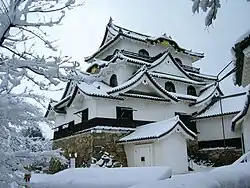
Hikone
Hikone (彦根) is a city of around 113,000 people on the eastern shore o…
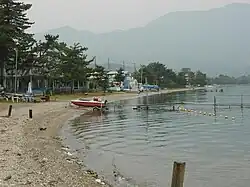
Lake Biwa
Lake Biwa (琵琶湖 Biwa-ko) is Japan's largest freshwater lake and the de…
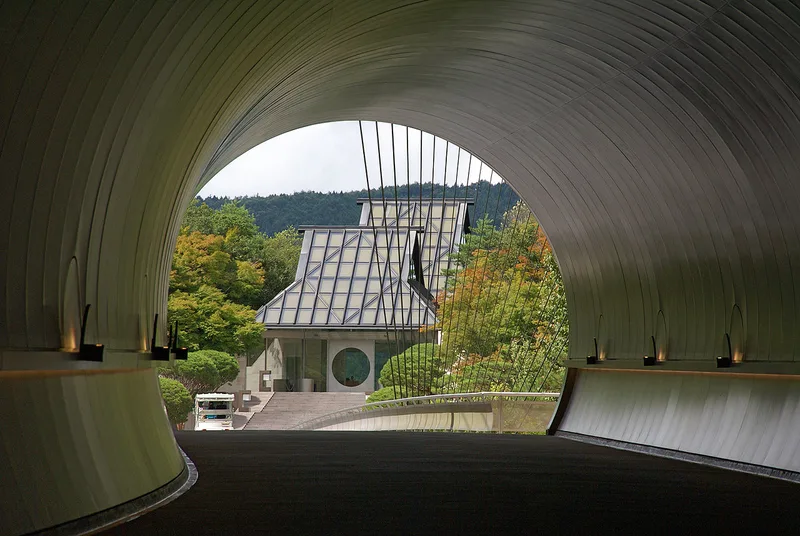
Miho Museum
The Miho Museum (ミホミュージアム) is a private art museum set deep in the fo…
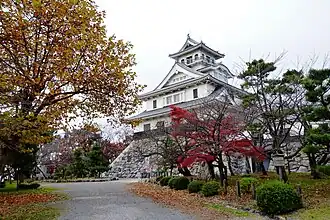
Nagahama
Nagahama (長浜市) is a historic castle town on the northeastern shore of…
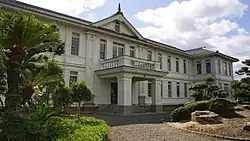
Omihachiman
Ōmihachiman (近江八幡市) is a beautifully preserved merchant city on the e…
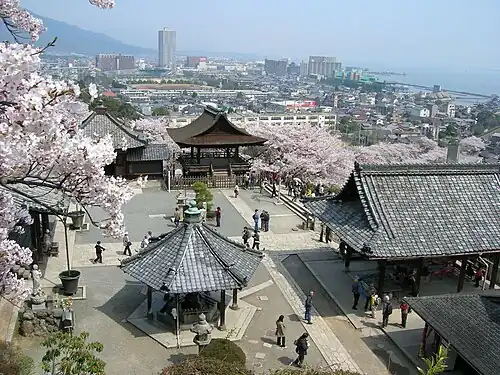
Otsu
Ōtsu (大津) is the capital of Shiga Prefecture, a city strung along the…
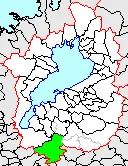
Shigaraki
Shigaraki (信楽) is a hill town in the southern part of Shiga prefectur…
Hieizan
Hieizan (比叡山, Mount Hiei) is the wooded mountain that rises on the bo…
Higashiomi
Higashiomi is a city in eastern Shiga Prefecture, occupying the plain…
Hikone Castle
Hikone Castle (彦根城, Hikone-jō) is a Japanese castle in the city of Hi…
Koka
Koka (also written Kōka) is a city in southern Shiga Prefecture, hist…
Kusatsu
Kusatsu is a city in southern Shiga Prefecture, adjacent to Otsu, the…
Maibara
Maibara is a city in northern Shiga Prefecture, at the northern tip o…
Moriyama
Moriyama is a city in southern Shiga Prefecture, on the eastern shore…
Ryuo
Ryuo is a town in central Shiga Prefecture, located in the rolling hi…
Takashima
Takashima is a city in western Shiga Prefecture, on the western shore…
Pair the highlights of Shiga into one easy trip — we'll plan the route.
WhatsApp
Contact Us
Get in touch with us.
Get in touch
Contact Us
Tell us where you'd like to go and how you like to travel. A real Tripcuro planner — not a bot — will craft an itinerary around you.
- Personalised, hassle-free planning end-to-end
- Transparent pricing, no hidden costs
- 24/7 support for complete peace of mind