
Akita
Japan · Prefecture · 16 destinations with guides
Photography coming soonOverview
Akita Prefecture occupies the northwestern shoulder of Japan's Tohoku region, fronting the Sea of Japan with the Ōu Mountains forming its eastern spine. It is a long, narrow prefecture of rice paddies, beech forests, deep volcanic lakes and small castle towns, anchored by Akita City on the coastal plain and stitched together by the Akita Shinkansen line. The landscape ranges from the cobalt depths of Lake Tazawa — Japan's deepest lake — to the rugged Oga Peninsula, where the namahage demons of folklore still descend on village houses each New Year's Eve.
For travellers, Akita offers a quieter, more rural counterpoint to the well-trodden Tohoku circuits of Sendai and Aomori. This is the homeland of Akita-ken dogs, kiritanpo rice skewers, Akita bijin (the prefecture's famously fair-skinned women), and some of the country's most atmospheric samurai streetscapes in Kakunodate. Winters are long and snow-heavy — the prefecture sits squarely in Japan's snow country — while summers bring the thunderous Kantō festival to the capital and hiking weather to the Hachimantai plateau.
When to Visit
Late April to mid-May is the classic window: cherry blossoms peak in Kakunodate's samurai district and along the Hinokinai River roughly 7-14 days later than in Tokyo, and the weeping cherries (shidarezakura) are arguably the most photogenic in Japan. Early August is the other headline season, built around the Kantō Matsuri (Aug 3-6) in Akita City — book accommodation months ahead.
The rainy season runs from late June into late July but is markedly lighter than on the Pacific side. Autumn foliage peaks late October to early November around Lake Tazawa, Dakigaeri Gorge and Nyūtō Onsen. Winter (December-March) is heavy snow country: ideal for onsen-hopping at Nyūtō or experiencing the namahage sedo festival on the Oga Peninsula in mid-February, but coastal areas around Akita City also see roughly 580 mm of combined precipitation/snow in December alone. November typically delivers the hatahata (sandfish) season, marked locally by cold-weather thunder.
Tell us your dates and we'll shape a Akita route around them.
WhatsAppGetting Around
The Akita Shinkansen (Komachi service) is the spine of intra-prefecture travel, running from Tazawako through Kakunodate and Ōmagari to Akita City. Akita to Kakunodate takes about 45 minutes; Akita to Tazawako about 70 minutes, making a day-trip loop from the capital straightforward.
Conventional JR lines branch out from Akita Station: the JR Ōu Main Line runs north to Ōdate and south to Yuzawa, while the JR Gono Line hugs the Sea of Japan coast north towards Aomori — its Resort Shirakami sightseeing trains are an attraction in their own right. The JR Oga Line connects Akita City to Oga (about 55 minutes) for the peninsula. For Lake Tazawa and Nyūtō Onsen, take the Komachi to Tazawako Station and transfer to Ugo Kōtsū local buses (roughly ¥850 to the lake, ¥850-1,000 onward to Nyūtō).
Driving is the most flexible option for the Hachimantai plateau and rural Oga. Rental cars are available at Akita Airport and Akita Station from around ¥7,000-9,000/day. Snow tyres are mandatory and standard on winter rentals; allow generous buffers December through March.
Approximate distances from Akita City: Kakunodate ~50 km, Lake Tazawa ~75 km, Oga ~50 km, Ōdate ~110 km, Yuzawa ~75 km.
Cuisine
Akita's signature dish is kiritanpo — pounded rice moulded around cedar skewers, grilled over charcoal, then simmered in a chicken-based hinai-jidori hotpot. Hinai-jidori, one of Japan's three premier heritage chickens, is itself a regional point of pride and worth seeking out grilled or in oyakodon. Inaniwa udon, hand-stretched flat noodles from the Yuzawa area, are served chilled with a soy-sesame dip and rank among Japan's three great udon styles.
From the Sea of Japan come hatahata (sandfish), eaten grilled, in hot pot, or fermented into the local fish sauce shottsuru; the November sandfish run is a regional event in itself. Iburigakko — daikon radish smoked over cherry or oak wood, then pickled in rice bran — is the bar snack of choice with local sake. Akita is one of Japan's foremost sake producing prefectures, with notable breweries including Aramasa, Hinomaru Jōzō (Manabito) and Saiya (Yuki no Bōsha), many concentrated around Yuzawa and Senboku.
In Akita City, the Kawabata entertainment district and stalls around Akita Station are reliable for kiritanpo and izakaya fare. Sato Yōsuke in Inakawa (Yuzawa) is the historic name in inaniwa udon. Vegetarian and vegan travellers should expect challenges: dashi (bonito stock) is near-ubiquitous, but Buddhist shōjin-ryōri options exist around larger temples and at some onsen ryokan if requested in advance.
Want the scenic legs and stays booked for you? Just ask.
WhatsAppCulture & Festivals
The Kantō Matsuri (Akita City, Aug 3-6) is the prefecture's signature event and one of Tohoku's three great summer festivals: roughly 200 performers balance bamboo poles up to 12 m tall and 50 kg in weight — strung with 46 paper lanterns each — on their hands, hips, foreheads and shoulders, evoking sheaves of rice for a bountiful harvest. Reserved paid seating is sold along the main route on Kantō-Ōdōri.
Other anchors of the calendar include the Namahage Sedo Matsuri (Shinzan Shrine, Oga, second Friday-Sunday of February), where straw-clad demons descend a snowy mountainside at night; the Kakunodate Cherry Blossom Festival (mid- to late April); the Daimyō Gyōretsu samurai procession at Kakunodate (Sept 7); and the Ōmagari National Fireworks Competition (Daisen, last Saturday of August), the most prestigious pyrotechnics contest in Japan.
The prefecture's craft traditions are strong: kabazaiku cherry-bark woodwork (Kakunodate), Ōdate magewappa bent cedar boxes, and Akita-ori silk weaving. Folk performing arts include the Nishimonai Bon Odori (Ugo, Aug 16-18), a UNESCO-listed dance with sedge-hat-veiled, kimono-clad dancers.
Notable Experiences
- Soak at Nyūtō Onsen — A cluster of seven historic yu deep in the beech forests above Lake Tazawa, including the 350-year-old Tsurunoyu with its milky sulphur baths and thatched lodgings. A yumeguri-chō pass (¥2,500) lets you bath-hop between all seven.
- Walk Kakunodate's samurai street in cherry-blossom season — Some 400 weeping cherries arch over the black plank fences of the Bukeyashiki district; the Aoyagi and Ishiguro residences open their interiors and storehouses to visitors.
- Cycle or cruise Lake Tazawa — Japan's deepest lake (423 m) is ringed by a 20 km road ideal for half-day cycling, with the gilded Tatsuko statue on the western shore as the photographic anchor.
- Ride the Akita Nairiku Line — A scenic local railway running roughly 94 km between Kakunodate and Takanosu through rice terraces, gorges and snow tunnels; the Smile Rail sightseeing service is the most comfortable way to experience it.
- Witness a Kantō Matsuri rehearsal year-round — At the Neburi-Nagashi-kan (Kantō Museum) in Akita City, performers demonstrate the pole-balancing several times daily, and visitors can try a (much lighter) practice pole themselves.
Top Destinations
Every destination in Akita with a guide — tap a place for the full guide.

Akita
Akita (秋田) is the capital and largest city of Akita Prefecture, in th…
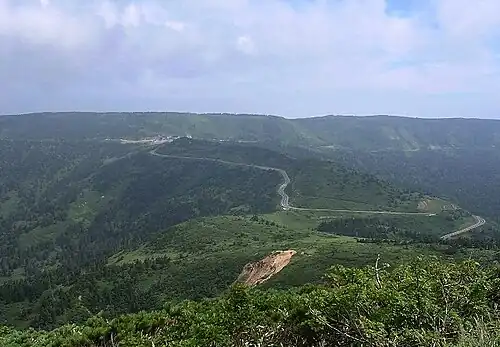
Hachimantai
Hachimantai in Akita refers to the Akita-side mountain and hot-spring…
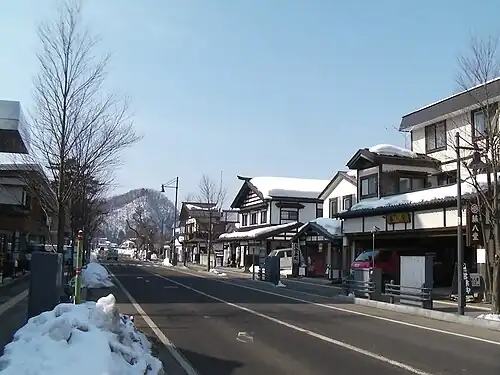
Kakunodate
Kakunodate (角館) is a former castle town in the city of Semboku, in Ak…
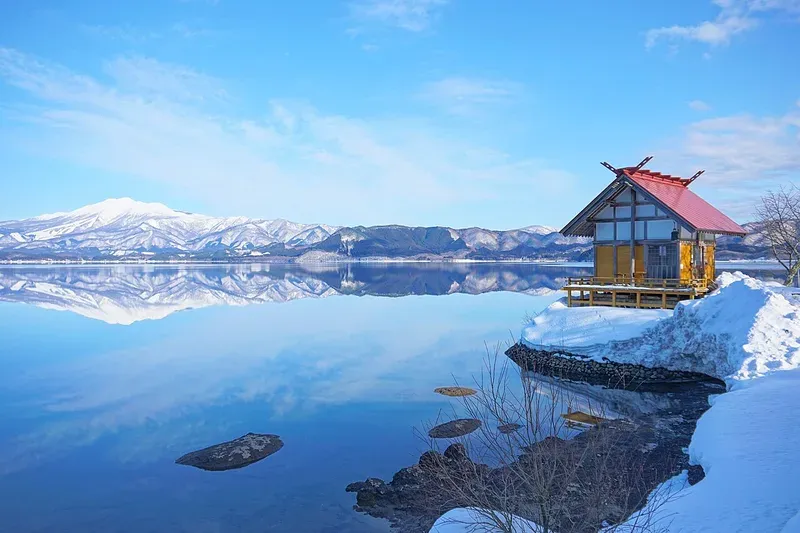
Lake Tazawa
Lake Tazawa (田沢湖, Tazawako) is a near-circular caldera lake in the ci…
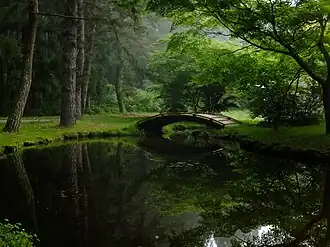
Noshiro
Noshiro (能代市) is a city on the Sea of Japan coast in the northwest of…
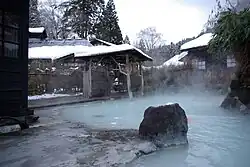
Nyuto Onsen
Nyuto Onsen (乳頭温泉) is one of the most beloved hot spring areas in Toh…
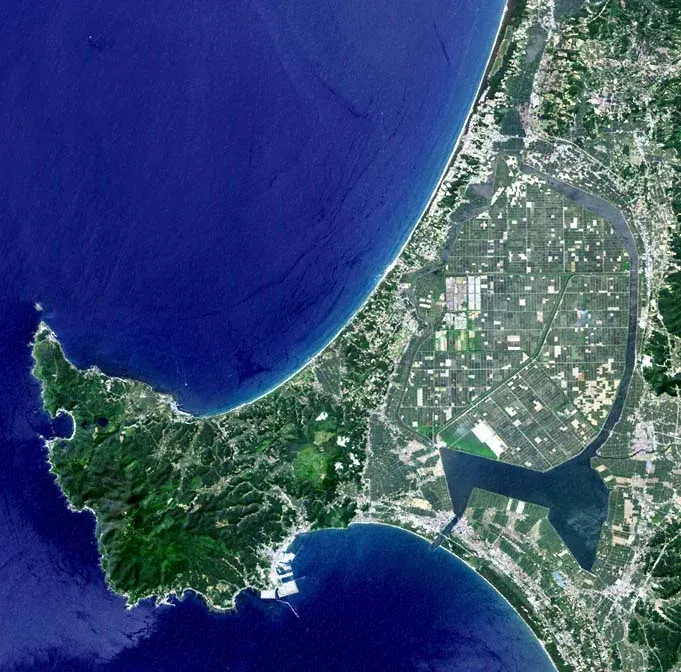
Oga Peninsula
The Oga Peninsula (男鹿半島, Oga-hanto) is a hammer-shaped headland jutti…
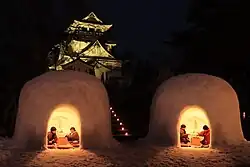
Yokote
Yokote (横手市) is a city in the inland Yokote Basin of southern Akita P…
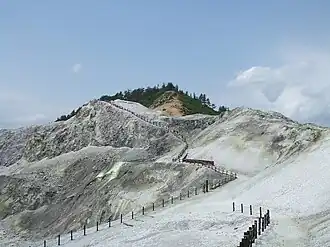
Yuzawa
Yuzawa (湯沢市) is a city in the far southeastern corner of Akita Prefec…
Daisen
Daisen (大仙) is a city in central Akita Prefecture, formed in 2005 thr…
Kazuno
Kazuno (鹿角) is a city in northern Akita Prefecture, nestled in the mo…
Nikaho
Nikaho (にかほ) is a coastal city in southwestern Akita Prefecture, loca…
Odate
Odate (大館) is a city in northern Akita Prefecture, famous worldwide a…
Oga
Oga (男鹿) is a city and peninsula on the western coast of Akita Prefec…
Semboku
Semboku (仙北) is a city in central Akita Prefecture, formed in 2005 th…
Yurihonjo
Yurihonjo (由利本荘) is a city in southwestern Akita Prefecture, stretchi…
Pair the highlights of Akita into one easy trip — we'll plan the route.
WhatsApp
Contact Us
Get in touch with us.
Get in touch
Contact Us
Tell us where you'd like to go and how you like to travel. A real Tripcuro planner — not a bot — will craft an itinerary around you.
- Personalised, hassle-free planning end-to-end
- Transparent pricing, no hidden costs
- 24/7 support for complete peace of mind