
Ishikawa
Japan · Prefecture · 16 destinations with guides
Photography coming soonOverview
Ishikawa Prefecture (石川県) curls along the Sea of Japan in central Honshu, a long, slender stretch of land that points its finger — the Noto Peninsula — out into the western waters. Its 581 km coastline, sacred peaks, and rice-rich plains pack remarkable variety into a prefecture most international visitors still overlook in favour of Kyoto or Tokyo. The capital, Kanazawa, was the seat of the powerful Maeda clan during the Edo period and survived World War II without bombing, which is why it retains some of Japan's best-preserved samurai and geisha quarters alongside one of the country's "three great gardens," Kenrokuen.
Beyond Kanazawa, Ishikawa divides naturally into three regions: the Kaga area in the south, dense with onsen towns and craft villages; the central Hakusan plain, anchored by the sacred Mt. Hakusan (2,702 m) and its national park; and the wild, festival-soaked Noto Peninsula to the north, where fishing villages, rice terraces, and rugged coastline have been recognised as a Globally Important Agricultural Heritage System. The prefecture is also Japan's leading producer of gold leaf (over 98% of national output) and is renowned for Kutani porcelain, Wajima lacquerware (wajima-nuri), Kaga yuzen silk dyeing, and Ohi pottery.
When to Visit
Spring (April–May) is arguably the prefecture's most photogenic season: cherry blossoms peak in Kanazawa around early April, Kenrokuen opens for free night illumination during sakura week, and the Seihaku Festival (3–5 May) in Nanao fills streets with towering deka-yama floats. Autumn (mid-October to late November) brings crimson maples to Kenrokuen, Kaga's onsen towns, and the temple gardens of Daijoji and Natadera — generally the driest, most stable weather of the year.
Summer (June–August) is hot, humid, and the heart of Noto's "Kiriko festival" season — over 200 communities parade massive lantern floats from July through September. The trade-off is sticky weather and frequent afternoon thunderstorms. Winter (December–February) is the prefecture's quirk: Ishikawa sits in Japan's heaviest snow belt, and Kanazawa frequently records 1–2 m of seasonal snowfall. The famous yukitsuri rope cones go up over Kenrokuen's pines from 1 November, kani (snow crab) season runs roughly 6 November to 20 March, and Kaga's hot springs are at their atmospheric best — but expect rain or sleet on more than half of all winter days. Pack waterproof shoes year-round; locals joke that "even if you forget your lunch, don't forget your umbrella."
Tell us your dates and we'll shape a Ishikawa route around them.
WhatsAppGetting Around
Kanazawa Station is the undisputed hub. The Hokuriku Shinkansen now reaches Tsuruga (extension opened March 2024), making same-day arrivals from Tokyo (2½ hours, ¥14,180 reserved on the Kagayaki) and same-day connections from Osaka/Kyoto (via Thunderbird + shinkansen transfer at Tsuruga, ~2 hr 40 min) straightforward.
Within the prefecture:
- Kanazawa → Komatsu / Kaga Onsen: IR Ishikawa Railway and JR Hokuriku local lines, 25–45 min, ¥420–¥760.
- Kanazawa → Wajima (Noto): No direct rail since the Noto Line was truncated; take the Hokutetsu Okunoto express bus, ~2 hr 15 min, ¥2,300 one-way.
- Kanazawa → Wakura Onsen / Nanao: Noto Kagaribi limited express, ~1 hr, ¥2,500.
- Kanazawa → Suzu (peninsula tip): Allow 3 hours by bus or rental car; this is where a car earns its keep.
For Kanazawa city itself, the Kanazawa Loop Bus (¥210 single, ¥600 day pass) and the Kenrokuen Shuttle cover virtually every major sight. Rental cars (¥6,000–¥9,000/day) are strongly recommended for Noto, where bus frequencies on the outer peninsula can drop to 3–4 services per day. The Noto Satoyama Kaido is a free expressway running the western coast — a pleasure to drive.
Top Destinations
- Kanazawa — the cultural capital; samurai and geisha districts, Kenrokuen, gold leaf, and a remarkable contemporary art museum.
- Kaga — Ishikawa's onsen heartland; four classic spa towns (Yamanaka, Yamashiro, Katayamazu, Awazu) and Kutani porcelain country.
- Komatsu — gateway airport city; Natadera Temple, Kabuki tradition, and the Otabi Festival.
- Hakusan — base for sacred Mt. Hakusan, hiking, and the Asano Taiko drumming workshops.
- Nakajima — oyster country on Nanao Bay; quiet, theatre-loving fishing town.
- Nonoichi — leafy commuter suburb of Kanazawa with Jomon-era archaeology.
- Noto — the peninsula's namesake; Mawaki Jomon ruins and some of Japan's most distinctive rural festivals.
- Suzu — the peninsula's wild northern tip; Mitsuke-jima Island, Cape Rokkozaki, and dramatic cliffside scenery.
- Tsurugi — panoramic Kaga plain views and traditional shishi-gashira lion-head wood carving.
- Notojima — Ishikawa's largest island; aquarium, glass art museum, and quiet beaches.
Want the scenic legs and stays booked for you? Just ask.
WhatsAppCuisine
Ishikawa punches well above its weight gastronomically — Kanazawa is sometimes called Japan's "third kitchen" after Kyoto and Tokyo. The defining cuisine is Kaga ryori, a refined kaiseki style served on Kutani and Wajima ware that emphasises seafood from the Sea of Japan and mountain vegetables from Hakusan.
Signature dishes:
- Nodoguro (rosy seabass) — the prefecture's prized fish, best simply grilled with salt; expect ¥4,000+ for a whole fish at a good izakaya.
- Kani — snow crab (zuwaigani, locally branded "Kano-gani") in winter; the female kobako-gani with its prized roe is a Kanazawa specialty (¥1,500–¥3,000 each at Omicho Market).
- Jibuni — duck or chicken simmered with wheat gluten (sudare-fu) in a thick soy-and-wasabi broth; the quintessential Kanazawa home dish.
- Treasure-ship sushi — Kanazawa's morning catch is reckoned among Japan's finest; budget ¥3,500–¥6,000 for lunch omakase, ¥10,000+ for dinner.
- Kabura-zushi — winter fermented turnip stuffed with yellowtail, a New Year delicacy.
- Hantengai — ice cream wrapped in genuine gold leaf, the Higashi Chaya district's most photographed snack (~¥900).
Where to eat: Omicho Market in central Kanazawa (active since 1721) is the obvious starting point — Iki-iki-tei and Yamasan are reliable for kaisendon. The Higashi Chaya geisha district holds atmospheric tea houses; the Korinbo/Katamachi area is the after-dark food and bar zone. In Kaga, ryokan kaiseki dinners are usually the meal of the trip. Vegetarians and vegans should brief ryokan in advance — dashi and bonito are nearly universal — though Kanazawa's growing café scene (Hifumi-an, Ogawa) offers credible plant-based options.
Culture & Festivals
Ishikawa's craft heritage is the densest in Japan: Kanazawa gold leaf (kinpaku) accounts for nearly all national production, Wajima-nuri lacquerware applies up to 124 layers over months, Kutani-yaki porcelain dazzles in five overglaze colours, and Kaga yuzen silk dyeing produces the region's most prized kimonos. Hands-on workshops run year-round in Kanazawa's Higashi Chaya and Nagamachi districts (gold-leaf application, ~¥1,500–¥3,000 for a small piece).
Festivals worth planning a trip around:
- Hyakumangoku Festival (1st Saturday in June, Kanazawa) — the prefecture's biggest, with a 2,500-strong samurai parade re-enacting Lord Maeda Toshiie's 1583 entry into the city.
- Seihaku Festival (3–5 May, Nanao) — three 12-metre, 20-tonne deka-yama floats hauled through narrow streets; a UNESCO Intangible Cultural Heritage event.
- Abare Festival ("Fire and Violence Festival," first Friday/Saturday in July, Ushitsu, Noto) — kiriko lanterns smashed and burned in a sake-fuelled riot honouring the Yasaka Shrine deity.
- Wajima Taisai (23–25 August) — the queen of Noto kiriko festivals; 30+ giant lantern floats and a midnight bonfire on the beach.
- Otabi Festival (mid-May, Komatsu) — children's kabuki performed on elaborate festival floats; a tradition since 1766.
- Okuma Kabuto Festival (20 September, Noto) — armoured warriors and gold-helmet processions.
- Yukitsuri (1 November onwards, Kenrokuen) — not strictly a festival but a sight in itself: gardeners install conical rope structures to protect pines from snow.
Travelling during a festival? We'll plan around the crowds.
WhatsAppNotable Experiences
A morning at Kenrokuen, then gold-leaf in Higashi Chaya — Kenrokuen opens at 7 AM (free entry until 8 AM in summer, slightly later in winter); arrive at dawn for the garden in near-silence, then walk 20 minutes east to apply your own gold leaf onto a lacquer chopstick set at Hakuza or Kanazawa Yasue Gold Leaf Museum.
Ryokan night in Yamanaka or Yamashiro Onsen — Kaga's spa villages have been welcoming bathers for over 1,300 years. Splurge on Beniya Mukayu or Kayotei (¥45,000–¥80,000 pp with kaiseki) for a textbook Japanese ryokan experience; budget travellers can enjoy the same waters at Sōyu and Kikunoyu public bathhouses (¥490).
Driving the Noto Peninsula loop — a 2–3 day rental-car circuit: Chirihama Nagisa Driveway (the only beach in Japan you can legally drive on), Sojiji Soin temple, Senmaida (the "thousand rice paddies" by the sea, illuminated October–March with 25,000 solar LEDs), and Cape Rokkozaki. Stay in a noto-style minshuku for fresh-caught dinner straight from the bay.
Mt. Hakusan pilgrimage hike (open July–mid-October) — one of Japan's "three sacred mountains" alongside Fuji and Tateyama. The Bettodeai trailhead leads to Murodo mountain hut (~5 hr ascent) for sunset and a starlit dawn at the summit shrine. Reservations essential in season.
Kabuki at Komatsu's Mikawa-za or 21st Century Museum's Swimming Pool — the prefecture's two extremes of theatre: a 19th-century kabuki playhouse where children still perform, and Leandro Erlich's permanent illusion-pool installation in Kanazawa, the most photographed contemporary artwork in Japan (¥450, free for under-18s).
Top Destinations
Every destination in Ishikawa with a guide — tap a place for the full guide.
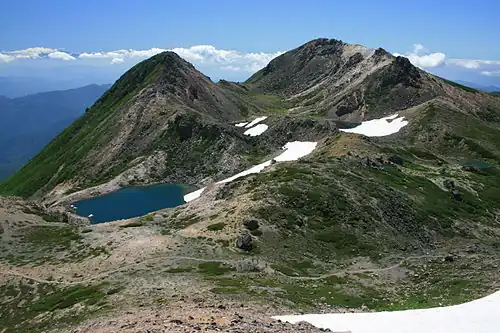
Hakusan National Park
Hakusan National Park (白山国立公園, Hakusan Kokuritsu Kōen) is a mountaino…
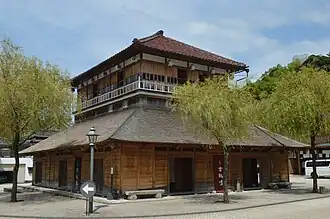
Kaga Onsen
Kaga Onsen (加賀温泉) refers to the cluster of historic hot-spring resort…
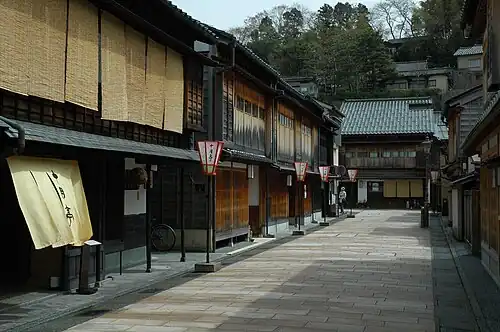
Kanazawa
Kanazawa (金沢) is a historic city in Ishikawa Prefecture and one of Ja…
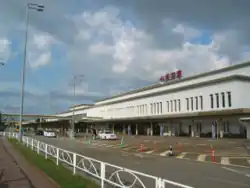
Komatsu
Komatsu (小松) is a city in Ishikawa Prefecture and the prefecture's se…
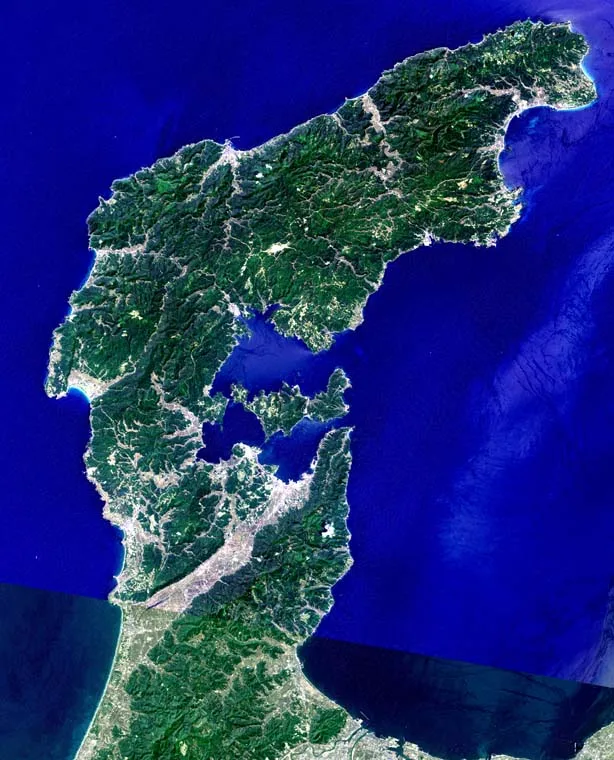
Noto Peninsula
The Noto Peninsula (能登半島, Noto-hantō) is a long, hook-shaped arm of l…
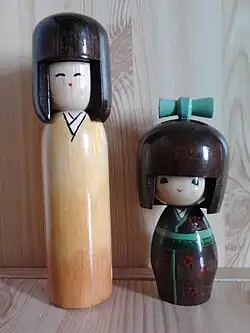
Wajima
Wajima (輪島) is a small town on the rugged northern tip of the Noto Pe…
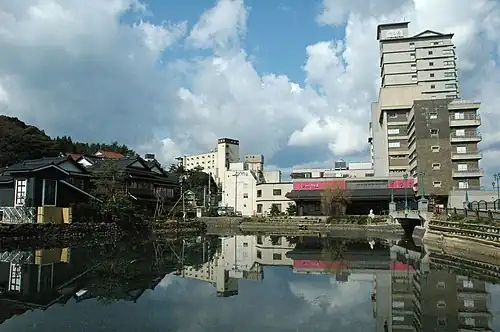
Wakura Onsen
Wakura Onsen (和倉温泉) is a hot-spring resort on the Noto Peninsula, nea…
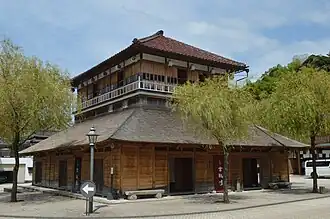
Yamanaka Onsen
Yamanaka Onsen (山中温泉) is one of the historic hot-spring towns of the…
Hakusan
Hakusan (白山) is a city in southern Ishikawa Prefecture, named after t…
Kaga
Kaga (加賀) is a city in southern Ishikawa Prefecture, renowned for its…
Nanao
Nanao (七尾) is a coastal city on the Noto Peninsula in Ishikawa Prefec…
Nomi
Nomi (能美) is a city in southern Ishikawa Prefecture, located inland b…
Nonoichi
Nonoichi (野々市) is a city in central Ishikawa Prefecture, landlocked b…
Noto
Noto (能登) is a town on the Noto Peninsula in Ishikawa Prefecture, loc…
Suzu
Suzu (珠洲) is a city at the northern tip of the Noto Peninsula in Ishi…
Yamashiro Onsen
Yamashiro Onsen (山代温泉) is one of the historic hot-spring towns of the…
Pair the highlights of Ishikawa into one easy trip — we'll plan the route.
WhatsApp
Contact Us
Get in touch with us.
Get in touch
Contact Us
Tell us where you'd like to go and how you like to travel. A real Tripcuro planner — not a bot — will craft an itinerary around you.
- Personalised, hassle-free planning end-to-end
- Transparent pricing, no hidden costs
- 24/7 support for complete peace of mind