
Miyagi
Japan · Prefecture · 15 destinations with guides
Photography coming soonWhy visit?
Miyagi Prefecture sits on the Pacific coast of Japan's Tohoku region, anchored by Sendai — the largest city in northern Honshu and a leafy, modern capital famous for its broad tree-lined boulevards. The prefecture stretches from the snowy Ou Mountains in the west, across rice-growing plains carved by the Natori and Kitakami rivers, to a deeply indented sawtooth coast in the east. That coastline produces both Miyagi's defining scenery and its defining cuisine: bays sheltered enough to grow some of Japan's best oysters, ports busy enough to be among the country's top fishing grounds, and the famously craggy pine islands of Matsushima Bay.
Historically this was the heartland of Date Masamune — the "One-Eyed Dragon" warlord who unified the region by 1589 and built his capital at Sendai in 1600. His legacy is everywhere, from the hilltop ruins of Aoba Castle to the gilded mausoleum of Zuihoden, and his taste for European exotica (he sent an envoy to Rome in 1613) still gives Sendai a slightly more outward-looking feel than other Tohoku capitals.
The prefecture was the worst hit by the 11 March 2011 earthquake and tsunami, which devastated coastal towns from Kesennuma down to Yamamoto. More than a decade on, the inland areas, hot-spring valleys, and Sendai itself operate completely normally; the rebuilt coastal route is now a moving and worthwhile travel experience in its own right, with memorial parks at Ishinomaki's Okawa Elementary School and Kesennuma's Memorial Museum.
When is the best time to visit?
Late April to mid-May is the window most travellers aim for: cherry blossoms peak in Sendai around the second week of April and roll into the mountains above Shiroishi and Funaoka by month-end, when the Hitome Senbonzakura — "a thousand cherry trees at a glance" — line the Shiroishi River with snowcapped Zao behind them.
Early August belongs to Sendai Tanabata (6–8 August), Tohoku's biggest summer festival, when the downtown arcades disappear under thousands of hand-made paper streamers. Book accommodation two months out.
Autumn (mid-October to early November) is arguably the best all-rounder: Naruko Gorge turns crimson, the onsen towns are at their most atmospheric, and the seafood season hits its stride with returning bonito and the start of oyster season in November.
Winter (December–February) is cold and snowy in the mountains — Zao's "snow monsters" (juhyo, ice-encrusted firs) are world-famous from late January to mid-February — while the Sendai plain stays drier and milder than the Sea of Japan side. Coastal Matsushima rarely gets heavy snow but can be bitter with sea wind. Miyagi sits in the rain shadow of the Ou range, so it sees noticeably less precipitation than neighbouring Yamagata or Akita year-round.
Tell us your dates and we'll shape a Miyagi route around them.
WhatsAppHow do you get around?
Sendai is the hub for everything. The Tohoku Shinkansen stops at Sendai, Furukawa, and Kurikoma-Kogen, getting you north–south through the prefecture in minutes (Sendai to Furukawa is about 14 minutes). For day trips, the workhorse is the JR Senseki Line to Matsushima-Kaigan (about 40 minutes) and onward to Ishinomaki (about 90 minutes via the Senseki-Tohoku rapid).
Other useful lines: the Tohoku Main Line south to Shiroishi (about 50 minutes from Sendai); the Senzan Line west to Sakunami and on into Yamagata; the Rikuu East Line from Kogota to Naruko Onsen (about 45 minutes); and the BRT replacement services (Kesennuma Line and Ofunato Line) that run on the former rail right-of-way along the rebuilt tsunami coast — these accept JR passes and are the easiest way to reach Kesennuma without a car.
For Zao, Akiu, and Togatta Onsen, buses from Sendai Station's west exit are the only public option and are infrequent (often 4–6 services a day) — check the last return time before setting out. Renting a car at Sendai Station or Sendai Airport (¥7,000–10,000/day) makes the inland onsen towns, the fox village at Shiroishi, and the Oshika Peninsula far easier; expressway tolls between major hubs run ¥1,500–3,000 each way. Local taxis start at around ¥680 in Sendai.
Ferries from Ajishima Line piers connect Ishinomaki to Tashirojima (Cat Island, about 75 minutes, ¥1,250 one way) and Kinkasan is reached via small boat from Ayukawa on the Oshika Peninsula.
Where should you go?
- Sendai — the prefectural capital and Tohoku's largest city; base for almost every itinerary.
- Matsushima — a bay of pine-clad islets ranked among Japan's "Top 3 Views" since the 17th century.
- Naruko Onsen — mountain hot-spring town famous for kokeshi dolls and a spectacular autumn gorge.
- Akiu & Sakunami — Sendai's two "backyard" onsen valleys, both reachable in under an hour.
- Ishinomaki — port city, Mangattan Manga Museum (Ishinomori Shotaro), and gateway to the Oshika Peninsula.
- Kesennuma — northern fishing capital, best for shark fin, sea urchin, and rebuilt-coast tourism.
- Shiroishi — castle town and home to the Miyagi Zao Fox Village.
- Zao — alpine ridge known for the Okama crater lake and winter "snow monsters".
- Tashirojima — the famous "Cat Island" off Ishinomaki.
- Kinkasan — sacred former gold-mining island with a shrine and free-roaming deer.
- Shiogama — historic salt-making port with one of Japan's densest concentrations of sushi restaurants.
Want the scenic legs and stays booked for you? Just ask.
WhatsAppWhat should you eat?
Gyutan (grilled beef tongue) is Sendai's signature: salt-cured, sliced thick, charcoal-grilled, and served with barley rice and oxtail soup. The original is widely credited to Sano Keishiro at Aji Tasuke (1948); the second floor of Sendai Station has a "Gyutan Street" with around half a dozen specialists in one corridor — expect ¥1,800–2,500 for a set.
Sushi and seafood are the other half of the story. Shiogama is the closest port to Sendai and supplies astonishing tuna; head to Sushi Tetsu or the Nakaoroshi market for cheaper kaisendon breakfasts. Matsushima and Ishinomaki are the centres for oysters (kaki) — try them raw, or as kaki-nabe hotpot, between November and March. Kesennuma is Japan's largest landing port for bonito (katsuo) and shark, and the only place where shark fin is a casual everyday food.
Sasa-kamaboko — laurel-leaf-shaped grilled fishcake — is a classic Sendai souvenir. Zunda is the prefecture's other obsession: a sweet, slightly grainy paste of mashed edamame, eaten on mochi, in shakes (the Zunda Saryo at Sendai Station is the famous one), and increasingly on everything else. Inland, look for Hatcho-mochi and kokeshi-shaped sweets around Naruko.
Drink: Miyagi is one of Japan's serious sake prefectures. The dry, food-friendly "Miyagi style" is exemplified by Urakasumi (Saura Brewery, Shiogama, founded 1724) and Ichinokura (Osaki) — both run tasting rooms. Sendai also has a strong craft beer and whisky scene, and the Nikka Whisky Sendai Factory at Miyagikyo (Sakunami) offers free tours and tastings.
Vegetarians will find Sendai workable but not easy outside the city; soba, yuba tofu skin around Akiu, and the increasing number of zunda-based sweets are the reliable options.
What is the culture like?
Sendai Tanabata Matsuri (6–8 August) is the prefecture's biggest event and one of the three great Tohoku summer festivals. The downtown shopping arcades and Sendai Station are draped in elaborate hand-made paper-and-bamboo streamers, each made by a different shop or community group, and judged for craftsmanship. A fireworks display on 5 August opens the celebrations.
Aoba Matsuri (third weekend of May) honours Date Masamune with a samurai parade through central Sendai and a suzume-odori "sparrow dance" performed by thousands of dancers in Date-clan livery.
SENDAI Pageant of Starlight (early December to end of December) wraps the zelkova trees of Jozenji-dori in around 600,000 LED lights — Tohoku's biggest winter illumination.
Shiogama Minato Matsuri (third Monday of July) is one of Japan's three great boat festivals, with two ornate mikoshi-bearing barges sailing across Matsushima Bay.
Crafts: Naruko, Togatta, and Sakunami are three of the eleven traditional kokeshi doll schools — the cylindrical, painted wooden dolls you'll see everywhere in Tohoku originated in this onsen belt. Sendai is also known for Sendai tansu (iron-fitted chests) and Tamamushi-nuri lacquerware, and the city has a strong indigo-dyeing revival around Akiu.
Travelling during a festival? We'll plan around the crowds.
WhatsAppWhat are the standout experiences?
- Cruise the islands of Matsushima Bay. A 50-minute boat from Matsushima-Kaigan pier (~¥1,500) winds between roughly 260 pine-tufted islets shaped by erosion. Combine it with Zuiganji temple — Date Masamune's family Zen monastery — and a sunrise walk across the vermilion Fukuura Bridge.
- Stand at the Okama crater lake of Mount Zao. A perfectly circular emerald volcanic lake reachable by toll road in summer (May–early November) or by ropeway from the ski side. Pair it with a soak at Togatta Onsen on the way down.
- Visit the foxes — and the dolls — of Shiroishi. Miyagi Zao Fox Village (entry ¥1,500) lets you walk among more than 100 free-roaming foxes; combine it with the reconstructed three-storey Shiroishi Castle and a bowl of umen — the local non-oily somen developed for a sick monk in the 1600s.
- Ride the rebuilt coast to Kesennuma. The BRT (bus rapid transit) running on the former JR Kesennuma Line right-of-way is a quietly powerful journey through the tsunami-rebuild zone, ending at Kesennuma's morning fish market — the only place in Japan with a daily shark auction.
- Soak through the Naruko hot-spring belt. Nine different spring chemistries cluster around one valley — making Naruko one of Japan's most varied onsen towns — and the Naruko Gorge boardwalk in late October is among the country's best autumn-leaf walks.
Top Destinations
Every destination in Miyagi with a guide — tap a place for the full guide.

Ishinomaki
Ishinomaki (石巻市) is a port city of roughly 165,000 people on the…
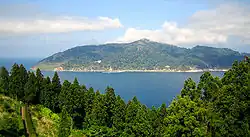
Kinkasan
Kinkasan (金華山, also written Kinkazan) is a small, steep, forested…
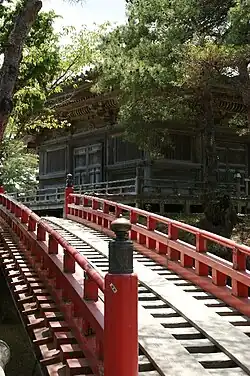
Matsushima
Matsushima (松島) is a small town in Miyagi Prefecture, northeastern…
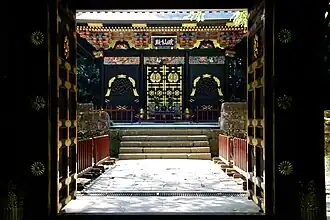
Sendai
Sendai (仙台) is the largest city in the Tōhoku region of Honshu, with…
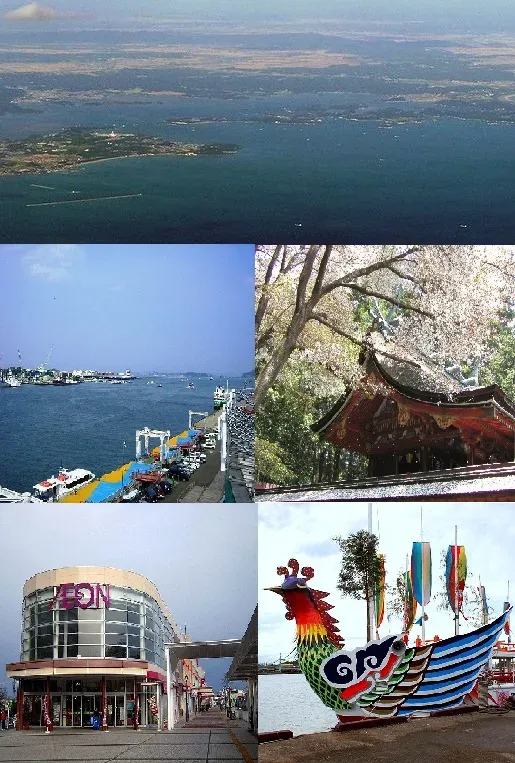
Shiogama
Shiogama (塩竈市, also written 塩釜) is a compact port city on Matsushima…
Shiroishi
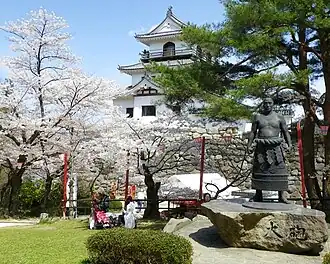
Shiroishi (白石市) is a small castle city in the far south of Miyagi…
Akiu Onsen
Akiu Onsen (秋保温泉) is one of the most accessible and historic hot…
Kesennuma
Kesennuma (気仙沼) is a port city on the Sanriku Coast in northeastern…
Naruko
Naruko (鳴子) is a town in northern Miyagi Prefecture, famous for its…
Naruko Onsen
Naruko Onsen (鳴子温泉) is a historic hot-spring town in the mountains of…
Natori
Natori (名取) is a city in central Miyagi Prefecture, located…
Osaki
Osaki (大崎) is a city in northern Miyagi Prefecture, formed through…
Shichigahama
Shichigahama (七ヶ浜) is a small coastal town in central Miyagi…
Tome
Tome (登米) is a city in northern Miyagi Prefecture, located in the…
Zao
Zao (蔵王, also written as Zaō) is an area spanning the border between…
Pair the highlights of Miyagi into one easy trip — we'll plan the route.
WhatsApp
Contact Us
Get in touch with us.
Get in touch
Contact Us
Tell us where you'd like to go and how you like to travel. A real Tripcuro planner — not a bot — will craft an itinerary around you.
- Personalised, hassle-free planning end-to-end
- Transparent pricing, no hidden costs
- 24/7 support for complete peace of mind