
Sendai
Miyagi, Japan
Why visit Sendai?
Sendai (仙台) is the largest city in the Tōhoku region of Honshu, with around a million people, and the capital of Miyagi Prefecture. Locals will tell you it is "not too big and not too small" — convenient, close to both the sea and the mountains, and an easy place to live. Although there is evidence of settlement here over 20,000 years ago, the modern city dates from 1600, when the feudal lord Date Masamune moved his capital here, built a castle on Aobayama ("Green Leaf Mountain") and laid out the town below on a grid. Date changed the characters of the name to mean "hermit on a platform," after a mythical Chinese mountain palace.
Sendai is famous as the "City of Trees" (杜の都, Mori no Miyako) — its wide main avenues are tree-lined, giving it an almost European feel, and the central shopping street, Chūō-dōri, is a covered pedestrian arcade. Several large universities give the city a youthful energy and a notably high standard of English. It is divided into five wards: Aoba-ku, Izumi-ku, Miyagino-ku, Taihaku-ku and Wakabayashi-ku. The city suffered relatively little direct damage in central areas from the 2011 disaster, though coastal districts were badly hit.
The climate is one of distinct seasons. Winters are cold, with frequent but quickly melting snow and rather rainy weather; there is a long, cool, cloudy rainy season around June; summers are warm and humid with a late-summer typhoon season. Autumn — clear, dry and sunny in October — is the most reliable season for pleasant weather, while spring brings the cherry blossom.
Planning Sendai? Tell us your dates and we’ll tailor the trip.
Ask on WhatsAppHow do you get there?
By Plane
Sendai Airport (SDJ) is the largest airport in Tōhoku, with regional flights to South Korea, Taiwan, China and Bangkok, and domestic flights from Sapporo, Nagoya, Osaka, Hiroshima, Fukuoka, Okinawa and Komatsu (Kanazawa). The airport is linked to the city by the Sendai Airport Access railway, 17–25 minutes from JR Sendai Station for ¥650, with services every 20–30 minutes. There are also direct long-distance buses to Yamagata and Tsuruoka, and in ski season to resorts such as Zaō Onsen and Appi Kogen.
By Train
Sendai is a major stop on the Tōhoku Shinkansen, about two hours from Tokyo. The most frequent service is the all-reserved Hayabusa, which reaches Sendai in about 1½ hours (¥11,200); the coupled Komachi runs the same route to Akita. The more frequent Yamabiko is a good and slightly cheaper alternative (¥10,890 reserved, ¥10,370 unreserved), stopping at more stations and taking 30–40 minutes longer. The Japan Rail Pass and JR East Rail Pass cover Ordinary and Green Car travel on all of these. The line continues north toward Morioka and Aomori.
By Car / Road
Sendai is about 360 km from Tokyo on the Tōhoku Expressway. Many highway buses serve the city: JR Bus Tōhoku and Tōhoku Kyūkō run from Shinjuku Station in Tokyo (about 5½ hours, ¥6,210), with overnight services also from Yokohama and Shinagawa, and Kintetsu's overnight "Forest" bus from Osaka and Kyoto. Willer Express offers nightly buses from Tokyo with English online booking. The Taiheiyō Ferry also runs overnight car ferries from Sendai to Nagoya and to Tomakomai in Hokkaido.
Sendai has two subway lines: the north–south Namboku Line, linking the station with the main shopping districts and the soccer stadium at Izumi-chūō, and the east–west Tōzai Line. The city is also covered by a bus network, though some routes are infrequent and crowded at rush hour. For tourists, the "Loople Sendai" loop bus circles the main attractions for ¥630 for a day pass or ¥260 per ride.
Two unlimited-travel passes are useful: the 1-day Sendai Area Pass (¥1,320 adults, for foreign temporary visitors; buy at the JR East Travel Service Center with passport) and the 2-day Sendai Marugoto Pass (¥2,720 adults, for everyone). Both cover local JR lines, the Airport Access Line, the Loople bus, city buses, the subway and more, with the Area Pass offering attraction discounts and the Marugoto Pass offering shop and restaurant discounts. The central arcades are very walkable; there is no scam culture, and Japan is very safe.
What are the things to do?
History and castle
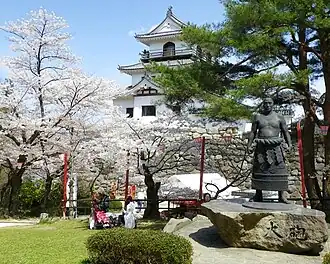
- Sendai Castle site (Aoba Castle, 青葉城) — the hilltop site of Date Masamune's castle on Aobayama, with an equestrian statue of Date, city views and the Aoba Castle Exhibition Hall.
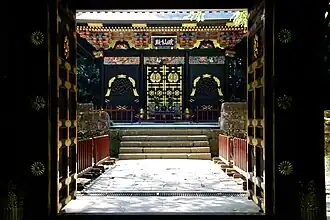
- Zuihōden (瑞鳳殿) — the lavishly decorated, colourful mausoleum of Date Masamune, set among cedars; an outstanding example of Momoyama-style architecture.
- Ōsaki Hachimangū (大崎八幡宮) — a National Treasure shrine in striking black-and-gold lacquer, also Momoyama-era.
Museums
Sendai City Museum — covers the history of the city and the Date clan, including Date-era armour and artifacts.
Tōhoku University Museum of Natural History (and other university museums) — reflecting the city's academic strength.
Ride the Loople bus — an easy way to link the castle site, Zuihōden and the main attractions.
Walk the Jōzenji-dōri and central arcades — tree-lined boulevards and covered shopping streets at the heart of the City of Trees.
Time a festival visit — the Sendai Tanabata Festival in early August is one of Japan's most famous, the central arcades draped in vast paper-and-bamboo streamers; the winter Pageant of Starlight illuminates Jōzenji-dōri.
Day-trip to Matsushima — the celebrated bay of pine-clad islands is less than an hour away.
Soak at Akiu or Sakunami onsen — hot-spring areas within the city's reach.
Planning Sendai? Want these on a customised itinerary?
Ask on WhatsAppWhere to eat?
Sendai's signature dish is gyūtan — thick-cut grilled beef tongue, usually served as a set with barley rice and oxtail soup, a postwar local invention now famous nationwide. Other specialities are zundamochi (rice cakes with bright-green sweet edamame paste) and, in season, fresh oysters and sasa-kamaboko (bamboo-leaf-shaped fish cake).
- Gyūtan restaurants — clusters of specialist beef-tongue restaurants in the station building (the "Gyūtan-dōri" floor) and around the arcades; moderate, typically ¥1,500–2,500 for a set.
- Zundamochi and zunda sweets — try the modern zunda shake and traditional zundamochi at shops in and around the station; budget.
- Seafood izakaya — moderate-priced pubs in the Kokubunchō entertainment district serving sashimi, oysters and local sake.
- Fine dining — Sendai has upscale Japanese and international restaurants, particularly around the central wards.
Vegetarian options are limited but findable in the larger city; halal options are growing but still limited — plan ahead.
Where to drink?
Sendai's nightlife concentrates in Kokubunchō, the largest entertainment district in Tōhoku, packed with izakaya, bars and clubs. Miyagi has a strong sake tradition, and local breweries' brews are widely poured. Craft beer, including the well-known local microbrews, and a lively café scene round things out. Vending machines are everywhere. Tap water in Sendai, as throughout Japan, is safe to drink.
Planning Sendai? We’ll book the stays and dining for you.
Ask on WhatsAppWhere to stay?
- Budget: Hostels and guesthouses around Sendai Station and the central wards offer dorm beds and simple rooms from roughly ¥3,000–6,000 per person; budget business hotels start around ¥6,000.
- Mid-range: A wide range of business hotels clusters near the station and along the subway lines, typically ¥8,000–14,000 per night.
- Upscale / heritage: Hotel Metropolitan Sendai, directly connected to the station, and Westin Sendai, in the city's tallest building, are leading upscale choices, with rates roughly ¥18,000–35,000.
What should you buy?
The covered arcades — Chūō-dōri (Clis Road and Marble Road) and the Ichibanchō arcade — are the heart of shopping, with department stores, fashion and specialty shops. Local specialities to look for include Sendai tansu (ornate lacquered chests), kokeshi dolls, and the city's famous zundamochi (rice cakes with sweet edamame paste) and gyūtan (beef tongue) products as edible souvenirs. The station building has extensive souvenir shopping. Prices are fixed; bargaining is not practised in Japan.
Where to go next?
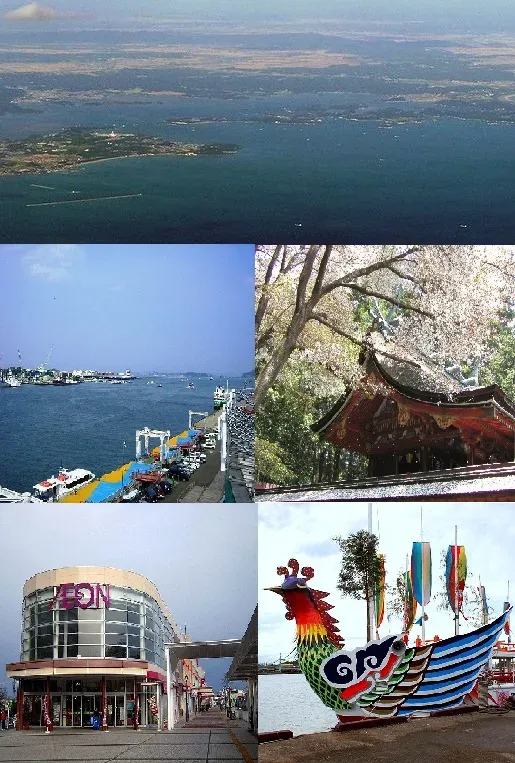
- Matsushima (~40 min) — one of Japan's "Three Great Views," a bay of pine-clad islands.
- Yamadera (~1 hour) — the spectacular cliffside temple, just over the border in Yamagata.
- Zaō Onsen (~1.5 hours) — hot springs and the famous "snow monsters" of the Zaō mountains.
- Hiraizumi (~1.5 hours by Shinkansen) — World Heritage temples and Pure Land gardens.
- Akiu Onsen (~30–40 min) — a hot-spring town within Sendai's reach, with the Akiu Great Falls.
- Yamagata city (~1 hour) — castle town and gateway to the Dewa Sanzan mountains.
Nearby in Miyagi
More places to explore around Sendai.
Guide content as of May 2026. Portions adapted from Wikivoyage, CC BY-SA 4.0.

Contact Us
Get in touch with us.
Get in touch
Contact Us
Tell us where you'd like to go and how you like to travel. A real Tripcuro planner — not a bot — will craft an itinerary around you.
- Personalised, hassle-free planning end-to-end
- Transparent pricing, no hidden costs
- 24/7 support for complete peace of mind