
Matsushima
Miyagi, Japan
Why visit Matsushima?
Matsushima (松島) is a small town in Miyagi Prefecture, northeastern Japan, facing one of the most celebrated seascapes in the country. Matsushima Bay is scattered with some 260 tiny islands and islets, each crowned with wind-sculpted pines — the name combines matsu (pine) and shima (island) — and the view is traditionally ranked as one of Japan's Three Great Views, alongside Amanohashidate and Miyajima.
The bay's beauty has inspired writers for centuries. In 1689 the haiku poet Matsuo Bashō visited on the journey recorded in Narrow Road to the Deep North; a famous verse — actually only falsely attributed to him — captures the idea that the scene leaves nothing more to say: "Matsushima ah! / A-ah, Matsushima, ah! / Matsushima, ah!" Today's Matsushima is a relaxed sightseeing town of temples, pavilions and pine-island viewpoints, and it makes one of the easiest and most rewarding day trips from Sendai. The town escaped major damage in the 2011 disaster — the islands themselves are thought to have buffered the tsunami — and its temples, shrines and sights remain intact.
The climate follows the Miyagi coastal pattern: cold winters with light snow, a cool rainy season around June, warm humid summers and a pleasant, clear autumn. Spring brings cherry blossom to the hilltop viewpoints, and autumn offers crisp weather and good light over the bay.
Planning Matsushima? Tell us your dates and we’ll tailor the trip.
Ask on WhatsAppHow do you get there?
By Plane
The nearest airport is Sendai Airport (SDJ), the largest in Tōhoku, with domestic and regional flights. From the airport, take the Sendai Airport Access line to Sendai Station and continue to Matsushima by train (see below).
By Train
Most visitors arrive on the JR Senseki Line (仙石線) between Sendai and Ishinomaki; the most convenient station is Matsushima-Kaigan (松島海岸), 40 minutes from Sendai (¥420), close to the sights and ferry pier. There are usually two departures an hour to Matsushima-Kaigan. Note that Matsushima Station on the JR Tōhoku Main Line is further inland and requires a 20-minute walk or short taxi ride to the shore. From Tokyo, take the Shinkansen to Sendai and change to the Senseki Line — about 2 hr 45 min total, ¥11,520 (free with the Japan Rail Pass). If buying tickets at machines in Sendai, have station names written in Japanese, as there is no English option.
By Car / Road
Matsushima lies just off the Sanriku Expressway, a drive of around 30–40 minutes from central Sendai. It is an easy add-on by road for those touring the Miyagi coast.
Matsushima's seaside attractions — the temples, pavilions, Godaidō and the ferry pier — are within walking distance of Matsushima-Kaigan station. The best panoramic views, however, are from hilltops not easily reached on foot: the most spectacular is from Saigyō Modoshi no Matsu Park, about a ¥660 taxi ride up from the station, beautiful under cherry blossom in spring. Other overlooks are Sōkanzan, a promontory jutting into the bay, and Ōgitani, a hill across the coastal highway. Sightseeing ferries tour the islands, and some run between Matsushima and Hon-Shiogama on the Senseki Line. There is no metro and no ride-hailing; the town is very safe.
What are the things to do?
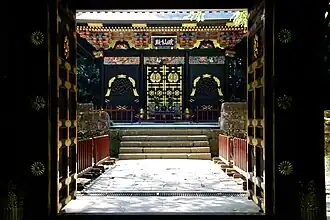
Zuigan-ji Temple (瑞巌寺) — Matsushima's principal Zen temple, with over a thousand years of history; its atmospheric approach is lined with moss-covered Kannon statues, though the temple interior is now museum-like. ¥700. 08:00–15:30 (sometimes later). Chōnai-91.
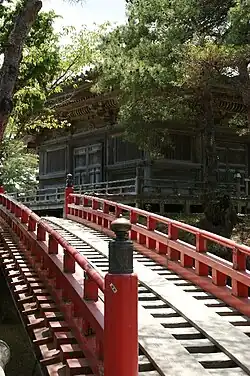
Godaidō Hall (五大堂) — a picturesque small hall on its own islet, reached by red bridges, and a well-known symbol of the town; founded in 807, the current structure dating to 1604. Free. Chōnai-111.
Kanran-tei Pavilion (観瀾亭) — a tea house originally built in Kyoto for the shogun Toyotomi Hideyoshi and moved here in 1645; the largest Momoyama-style tea house in Japan, a fine spot for a ¥200 cup of tea (with sweets) and a bay view.
Fukuura Island (福浦島) — connected to the mainland by a long red bridge, this islet is crisscrossed by paths and offers quiet, sparse beauty; a circuit takes about an hour. ¥200. (Local superstition says crossing the bridge with a partner causes a break-up.)
Kyōhei Fujita Museum of Glass (藤田喬平ガラス美術館) — a museum dedicated to glass art. Hama-1-4 Takagi.
The Museum Matsushima — three collections in one: music boxes (the Orgel Collection), fashion of 1870–1960, and the Kitahara Toy Collection of nostalgic toys.
Take a bay cruise — sightseeing ferries weave among the pine-clad islands roughly every half hour; some run to Hon-Shiogama, so you can see the islands and arrive in another town.
Climb to a viewpoint — hike or ride up to Ōtakamori (大高森), one of the "Four Great Views" of Matsushima Bay and a fine sunset spot; the 1 km trail to the top starts in Oku-Matsushima.
Visit during oyster season — from October, the town fills with oysters in every form (see the Eat section).
Stroll Fukuura Island — an easy nature walk over the long bridge.
Enjoy a tea ceremony at the Kanran-tei pavilion overlooking the bay.
Planning Matsushima? Want these on a customised itinerary?
Ask on WhatsAppWhere to eat?
Matsushima is famous for oysters grown in the bay; the season starts in October, and during it the main street from the station offers oysters in every style — fresh, fried, baked, grilled, takeaway or eat-in. Anago (conger eel) and other seafood are also local favourites.
- Oyster restaurants and stalls along the main street — budget to moderate, all-you-can-eat oyster options appear in season.
- Matsushima Italian Toto (松島イタリアン トト) — a popular pizza and pasta restaurant; lunch 11:30–15:30, dinner 18:00–21:00; moderate.
- Ungai (雲外) — a restaurant serving traditional vegetarian (shōjin-style) cuisine; a good option for non-meat-eaters. 67 Chōnai, Matsushima-aza.
Vegetarian travellers are well served by Ungai; halal facilities are not available, so plan ahead.
Where to drink?
Tea is part of the Matsushima experience — the Kanran-tei pavilion serves matcha with a bay view. Cafés along the main street offer coffee, and Miyagi's sake is poured in restaurants. Vending machines are plentiful. Tap water in Matsushima, as throughout Japan, is safe to drink.
Planning Matsushima? We’ll book the stays and dining for you.
Ask on WhatsAppWhere to stay?
- Budget: Simple minshuku and guesthouses in and around Matsushima and Oku-Matsushima run roughly ¥4,000–7,000 per person; budget business hotels are easily found in nearby Sendai.
- Mid-range: Waraku Hotel (和楽) — a hotel with rooms unusually spacious by Japanese standards; mid-range rates depending on season. Dochinhama-38-21. Tel +81 22-353-7078.
- Upscale / heritage: Several bay-view resort hotels and ryokan line the Matsushima shore, offering rooms overlooking the islands and seafood-rich kaiseki dinners; rates roughly ¥18,000–35,000 per person with meals.
What should you buy?
Matsushima's souvenir trade runs along the main street from the station, selling local sweets, seafood products and crafts; sasa-kamaboko (fish cake) and oyster-based products are popular edible souvenirs. The glass museum and other sites have their own shops. Prices are fixed; bargaining is not practised in Japan.
Where to go next?
- Sendai (~40 min) — Tōhoku's largest city, capital of Miyagi.
- Shiogama (~15 min by train or by ferry to Hon-Shiogama) — historic port with the grand Shiogama Shrine and a famous tuna market.
- Ishinomaki (~40 min) — coastal city with the Ishinomori Manga Museum.
- Higashimatsushima / Oku-Matsushima (~15–20 min) — quieter side of the bay with the Ōtakamori viewpoint.
- Kinkazan (further east) — a sacred island reached via the Ojika Peninsula.
Nearby in Miyagi
More places to explore around Matsushima.
Guide content as of May 2026. Portions adapted from Wikivoyage, CC BY-SA 4.0.

Contact Us
Get in touch with us.
Get in touch
Contact Us
Tell us where you'd like to go and how you like to travel. A real Tripcuro planner — not a bot — will craft an itinerary around you.
- Personalised, hassle-free planning end-to-end
- Transparent pricing, no hidden costs
- 24/7 support for complete peace of mind