
Mongolia
Eastern Asia · 184 destinations across 22 regions
Photography coming soonOverview
Mongolia is one of the world's last great empty places — a landlocked giant wedged between Russia and China, with the lowest population density of any sovereign nation on earth. Roughly half of its 3.4 million people live in the capital, Ulaanbaatar; the rest are scattered across a sweep of steppe, desert, forest and mountain that still sustains one of the planet's last living nomadic cultures. The appeal is the space itself: endless grassland under the "Land of Blue Skies," herders moving with their animals, and the chance to sleep in a felt ger far from any road.
This is a destination for travellers who want adventure rather than comfort. It rewards hiking, horse riding, fishing, wildlife watching and photography, and it suits those willing to trade hot showers and paved roads for genuine wilderness and warm, unhurried hospitality. Mongolia carries the weight of extraordinary history — it was the heartland of the Mongol Empire under Chinggis Khan (Genghis Khan), the largest contiguous land empire ever assembled — and that legacy is woven into the national identity, the festivals and the landscape alike.
It is not a country to rush. Distances are vast, infrastructure is thin outside the capital, and the most memorable experiences — a night with a herder family, the Naadam festival, the Gobi at dawn — come to those who slow down. Most visitors base themselves in Ulaanbaatar and travel out by jeep, domestic flight or organised tour.
Geography & Climate
Mongolia divides naturally into five regions. Central Mongolia holds Ulaanbaatar and the popular tourist country of Arkhangai. Eastern Mongolia is the birthplace of Chinggis Khan and the heart of the open steppe. The Gobi in the south is home to the immense desert of the same name — a landscape of gravel plains, sand dunes and dramatic canyons rather than continuous sand. Northern Mongolia contains the country's forests and the vast alpine Lake Khövsgöl. Western Mongolia is the most ethnically diverse region, home to Kazakh eagle hunters, the Tavan Bogd massif and Uvs Nuur lake. The country is further organised into 21 provinces (aimags) plus the capital municipality.
The climate is sharply continental and extreme. Winters are bitterly cold, with temperatures dropping to -40°C in some areas, while summers are generally hot and, outside the Gobi, can bring substantial rain. Nights remain cool even in summer, and the country enjoys around 250 sunny days a year — hence the "Land of Blue Skies" nickname. Terrain ranges from true desert in the south to forested mountains in the north and west, so conditions vary considerably between regions on any given day.
Tell us your dates and we'll tailor your Mongolia trip around them.
WhatsAppWhen to Visit
The practical travel season runs from June to early September, when the steppe is green, roads are passable and ger camps are open. July is peak season, anchored by the Naadam festival (11–13 July nationwide), and brings the warmest, busiest conditions. June and late August to early September are excellent shoulder periods — fewer crowds, comfortable days and, in early autumn, golden larch forests in the north.
Winter (November–March) is for the hardy: extreme cold, but also the time for events like the Khövsgöl Ice Festival and a chance to see the country at its starkest. Spring can bring dust storms and unreliable roads. Festivals worth planning around include Naadam (mid-July), Tsagaan Sar (the lunar new year, January or February) and the Golden Eagle Festival in Ölgii (typically early October).
Visa & Entry
Mongolia has steadily liberalised entry, and citizens of many countries can visit visa-free for short tourist stays; an electronic visa system also exists for nationalities that require a visa, with single-entry tourist e-visas issued online. Some travellers may still need to obtain a visa in advance at a Mongolian embassy or consulate.
Passports should be valid for at least six months beyond the date of entry. Overland arrivals from Russia and China are possible at designated border crossings.
Want us to time your trip around a festival? We'll handle it.
WhatsAppMoney & Costs
The currency is the tögrög (MNT), sometimes spelled tugrik. Cash is essential outside Ulaanbaatar and the larger towns; ATMs and card payment are widely available in the capital but scarce or unreliable in the countryside, so withdraw enough before heading out.
Rough daily budgets per person:
- Budget: around 70,000–140,000₮ (about USD 20–40) — guesthouse beds or shared gers, local canteens (tsainii gazar), public buses.
- Mid-range: around 180,000–400,000₮ (about USD 50–115) — comfortable hotels, ger camps with private facilities, shared jeep tours.
- Luxury: 700,000₮ and up (USD 200+) — top hotels in Ulaanbaatar, premium ger lodges, private guided expeditions.
Tipping is not deeply traditional but is increasingly expected in tourist-facing contexts; rounding up restaurant bills or tipping guides and drivers a few dollars a day is appreciated.
Getting In
The main gateway is Chinggis Khaan International Airport (UBN), about 50 km south of Ulaanbaatar, served by carriers including MIAT Mongolian Airlines and regional connections via Asian hubs. By land, Mongolia is reached overland from Russia and China — the Trans-Mongolian Railway, part of the Trans-Siberian network, runs from Russia through Sühbaatar and Ulaanbaatar to the Chinese border at Zamyn-Üüd and on to Beijing. Major road crossings include Altanbulag (with Russia) and Zamyn-Üüd (with China). There are no sea entry points.
We handle the bookings and budgeting — you just travel.
WhatsAppGetting Around
Distances are enormous and roads outside the main corridors are often unpaved tracks, so travel itself is part of the adventure. Domestic flights from Ulaanbaatar reach provincial centres such as Mörön, Khovd and Dalanzadgad, run by airlines including MIAT, Hunnu Air and Aero Mongolia — the fastest way to cover the country, though schedules thin out in winter and foreigners sometimes pay higher fares.
The Trans-Mongolian Railway links Ulaanbaatar with Darkhan, Erdenet and Sühbaatar; trains are slow but scenic. Intercity buses, microbuses and shared vans depart Ulaanbaatar's Dragon bus terminal for most aimag capitals — cheap but cramped. Within Ulaanbaatar, metered taxis and ride-hailing apps operate; informal taxis (any car will stop for a fare) are common but agree the price first. For genuine countryside travel, most visitors hire a jeep with a driver through a tour company. Common pitfalls: drivers who speed on poor roads, unofficial taxis overcharging foreigners, and overpriced "tourist" rates — confirm fares upfront.
Culture & Etiquette
Mongolians are famously hospitable, and a degree of cultural awareness goes a long way — especially when visiting a ger. Accept offered food and drink (airag, milk tea, snacks) with the right hand, or both hands, and at least taste what you are given. Move clockwise inside a ger, do not step on the threshold, and avoid pointing your feet at the hearth or at people. Receiving and passing objects with the right hand (supported at the elbow by the left) is respectful.
Dress is generally informal, but cover shoulders and knees when visiting monasteries and temples, remove hats where appropriate, and walk clockwise around stupas and temple interiors. Always ask before photographing people, monks or religious ceremonies. Don't whistle indoors, don't lean against support columns of a ger, and avoid touching another person's head. A relaxed, patient and unhurried manner is the norm.
Prefer to talk it through? We're a WhatsApp message away.
WhatsAppSafety
Mongolia is generally a safe country for travellers, with low rates of violent crime. The main urban risk is petty theft and pickpocketing in crowded areas of Ulaanbaatar, particularly markets and the central square — keep valuables secure. Excessive drinking is a visible social problem; avoid confrontations.
The real hazards are environmental. The countryside is remote with minimal emergency services, so carry supplies, communicate your route, and travel with a guide for serious expeditions. Winter cold is genuinely dangerous, dust storms occur in spring, and rivers can be hazardous to cross. Stray and herding dogs can be aggressive. For health, consult a travel clinic well before departure about routine vaccinations and rabies; tap water should be boiled or treated outside major hotels. Emergency numbers are 101 (fire), 102 (police) and 103 (medical).
Top Regions
- Central Mongolia — Ulaanbaatar plus the accessible steppe and the scenic Arkhangai country, including Karakorum and the Orkhon Valley.
- Northern Mongolia — forests, the Trans-Mongolian rail towns and the magnificent Lake Khövsgöl.
- The Gobi — the vast southern desert, with sand dunes, dinosaur fossils and the Flaming Cliffs.
- Western Mongolia — Mongolia's most diverse region, home to Kazakh eagle hunters, Tavan Bogd's glaciers and Uvs Nuur lake.
- Eastern Mongolia — the open Mongolian steppe and the homeland of Chinggis Khan.
- Khangai Mountains region — forested valleys, hot springs and the gentle highland scenery around Tsetserleg.
Tell us your dates and we'll tailor your Mongolia trip around them.
WhatsAppTop Destinations
- Ulaanbaatar — the capital and the starting point for nearly all travel, with the country's main museums, monasteries and infrastructure.
- Karakorum (Kharkhorin) — the ancient capital of the Mongol Empire, founded by Chinggis Khan's son Ögedei, beside the Erdene Zuu monastery.
- Lake Khövsgöl — a vast, deep alpine lake of exceptional clarity, ringed by forest and home to reindeer-herding communities.
- Gorkhi-Terelj National Park — dramatic granite formations and easy steppe scenery just 70 km from Ulaanbaatar.
- Gobi Gurvan Saikhan National Park — the classic Gobi circuit of Khongor sand dunes, Yol Canyon and the Flaming Cliffs of Bayanzag.
- Altai Tavan Bogd National Park — Mongolia's highest peaks and largest glaciers in the far west, with ancient petroglyphs.
- Khustai (Khustain Nuruu) National Park — the reserve where the truly wild takhi (Przewalski's) horse was reintroduced.
- Erdenet — Mongolia's second city, built around one of the world's largest copper mines, with a noted carpet factory.
- Tsetserleg — the most attractive provincial capital, set in a forested valley in the Khangai mountains.
- Ölgii — the Kazakh-flavoured western town that is the base for eagle hunters and the Altai Tavan Bogd park.
- Amarbayasgalant Monastery — one of Mongolia's three great monasteries, beautifully preserved in an isolated northern valley.
- Darkhad Valley — a remote northern basin that is home to the Tsaatan reindeer herders.
Regions & States
Mongolia has 22 regions with guides — pick one to drill into its destinations.

Arhangay
10 destinations

Bayan-Olgiy
10 destinations

Bayanhongor
10 destinations
Bulgan
9 destinations
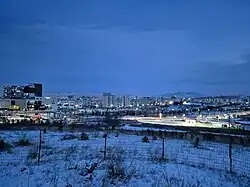
Darhan uul
5 destinations

Dornod
10 destinations

Dornogovĭ
7 destinations

Dundgovi
7 destinations

Dzavhan
7 destinations
Govi-Altay
9 destinations

Govĭ-Sümber
3 destinations

Hentiy
8 destinations

Hovd
9 destinations

Hovsgol
8 destinations

Omnogovi
11 destinations

Orhon
3 destinations

Övörhangay
9 destinations
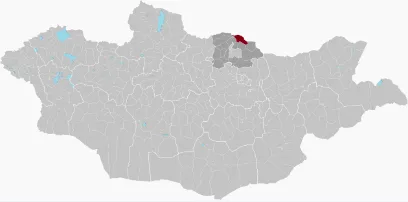
Selenge
8 destinations

Suhbaatar
6 destinations

Tov
12 destinations

Ulaanbaatar
13 destinations

Uvs
10 destinations
Not sure where to start in Mongolia? Tell us how you like to travel and we'll shape the route.
WhatsAppTop Destinations
The places first-time and returning travellers ask for most.
Altai Tavan Bogd National Park
Altai Tavan Bogd National Park (Mongolian: Алтай Таван богд) occupies…
Altanbulag
Altanbulag (Алтанбулаг) is a small border town in Selenge province in…

Amarbayasgalant Monastery
Amarbayasgalant Monastery (Амарбаясгалант хийд), the "Monastery of Tr…
Arvaikheer
Arvaikheer is the capital of Övörhangay Province (Ovorhangay Aimag),…
Baruun-Urt
Baruun-Urt (Баруун-Урт) is the capital of Sükhbaatar province in the…
Bayankhongor
Bayankhongor is the administrative capital of Bayankhongor province,…

Boon Tsagaan Lake
Boon Tsagaan Lake (Mongolian: Буун Цагаан Нуур, "Great White Lake") i…
Buir Lake
Buir Lake (Buir Nuur) is a large freshwater lake in the far southeast…
Burkhan Khaldun
Burkhan Khaldun (Mongolian: Бурхан Халдун) is a sacred mountain in th…

Choibalsan
Choibalsan (Mongolian: Чойбалсан) is the capital of Dornod province a…
Choir
Choir is the capital of Govi-Sümber, the smallest of Mongolia's provi…

Dadal
Dadal is a remote soum (district) town in the far northeast of Hentiy…

Contact Us
Get in touch with us.
Get in touch
Contact Us
Tell us where you'd like to go and how you like to travel. A real Tripcuro planner — not a bot — will craft an itinerary around you.
- Personalised, hassle-free planning end-to-end
- Transparent pricing, no hidden costs
- 24/7 support for complete peace of mind