
Hovd
Mongolia · Province · 9 destinations with guides
Photography coming soonOverview
Hovd is a sprawling province in the heart of Western Mongolia, wedged between the towering Altai Mountains and the marshy lakes of the Great Lakes Depression. It is one of the most ethnically diverse corners of the country: alongside Khalkh Mongols, the aimag is home to Kazakhs and seven distinct Oirat (western Mongolian) groups — Zakhchin, Torguud, Myangad, Oold, Uriankhai and others — each with their own dialect, dress, dance and ceremony. That mosaic of cultures, layered over thousands of years of nomadic history, is what makes Hovd a destination rather than just a transit point.
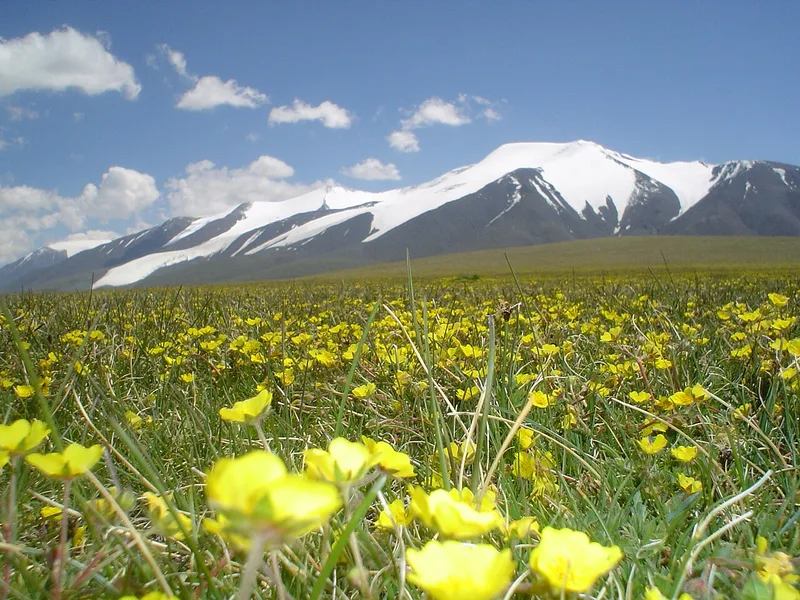
The landscape swings dramatically across the province. In the west and south the Altai Range rises in glacier-capped peaks, sheltering the Uriankhai archers of Munkhkhairkhan and Duut soums. In the east, the Khovd River feeds a chain of shallow, reedy lakes — Khar Us, Khar, Dörgön and Airag — that make up Khar Us Nuur National Park, one of Mongolia's most important migratory bird habitats. Between them lie steppe, semi-desert and river valleys grazed by semi-nomadic herders.
The provincial capital, also called Hovd (Khovd), is the political and business hub of the whole western region. It is an old town by Mongolian standards — roughly 240 years of history — with the mud-brick remains of a Manchu fort, tree-lined streets the Manchus planted, a university, a theatre and a strong cultural museum. Travellers usually base themselves here before heading out to the mountains, the lakes or the cave paintings.
When to Visit
The short window from June to early September is the only comfortable time to travel in Hovd. Summer days are warm — Khovd town regularly reaches the mid-20s°C and can spike higher — while nights stay cool. July is the festival month and the busiest; the Naadam Festival falls in the first week of July across the aimag.
Winters are brutal and best avoided by casual travellers: January and February average maximums sit well below freezing and minimums plunge toward −25°C or lower. Spring brings dust storms and unreliable river crossings as snowmelt swells the Khovd and Buyant rivers. Autumn (September) is clear and crisp, good for the mountains, but cold snaps arrive quickly. If your goal is the Uriankhai archery contests or river swimming around Khovd town, aim for July.
Tell us your dates and we'll shape a Hovd route around them.
WhatsAppGetting Around
Hovd town is the dispatch point for the entire province. Shared vehicles — UAZ jeeps, Russian "furgon" vans and cars — gather near the central market: along the main road at the north entrance, and on the road behind the market. Few carry signs, so you simply ask around until you find a driver heading your way; if they aren't, they will point you to someone who is.
Departures cluster around weekends, because that is when soum vehicles come into town for the market. Leaving on a weekday — especially Thursday, when the central market is closed — is difficult. Sample one-way fares from Khovd to the soums run roughly: Buyant ₮1,500; Khovd and Myangad soums ₮2,500; Mankhan and Dörgön ₮6,000; Zereg ₮10,000; Must, Tsetseg, Chandmani and Munkhkhairkhan ₮12,000; Altai ₮20,000; Bulgan and Uyench ₮25,000.
Within Khovd town a taxi costs about ₮500 per kilometre, and most of the compact centre — square, the "big boots" intersection, market and theatre — is walkable. For trips to neighbouring aimags or remote sites such as the Tsenkheriin Agui caves, hiring a private jeep with driver from the market is the standard approach; budget for a multi-day round trip and confirm fuel and the route in advance.
Cuisine
Hovd's food is steppe food: mutton and goat dominate, served as boiled meat, in noodle soups (guriltai shol), as steamed buuz dumplings or fried khuushuur pastries. Dairy is central — fresh yoghurt, dried curds (aaruul), clotted cream (öröm) and salty milk tea (süütei tsai) appear at every herder's ger. Summer along the Buyant River is the season of airag, mildly alcoholic fermented mare's milk.
The province's Kazakh communities add their own table: beshbarmak (boiled meat over flat noodles), horse-meat dishes and sausages, and strong tea poured from a samovar. In Khovd town itself, simple Mongolian guanz (canteens) around the central market and main square serve hearty, cheap meals. Vegetarians should plan ahead — meat-free options outside the capital are very limited, so stock up on produce and staples at the Khovd market before heading into the countryside.
Want the scenic legs and stays booked for you? Just ask.
WhatsAppCulture & Festivals
The summer Naadam Festival, held in the first week of July, is the province's biggest event, featuring the "three manly sports" of wrestling, horse racing and archery. Hovd is one of the few places where soum-level Naadams still include archery, thanks to the Uriankhai. Their archery is genuinely unique — competitors shoot rubber-tipped arrows at leather balls rather than at standard targets — and is worth seeking out in Munkhkhairkhan and Duut soums.
Khovd town's bright-red theatre, home of the well-known Altain Tsuurai ensemble, is the place to hear traditional western Mongolian music: khöömii (throat singing), long song, and the morin khuur (horsehead fiddle) and dombra (the Kazakh lute). Each of the province's many ethnic groups maintains its own costume, dance and instrument traditions, and the Khovd Museum displays full traditional outfits for ten of them. The theatre is officially open weekdays but usually only unlocked when an event is on.
Notable Experiences
- See the Tsenkheriin Agui cave paintings in Mankhan soum, around 100 km southeast of Khovd — red-ochre images of camels, ibex and other animals believed to be roughly 15,000 years old. A simpler alternative: petroglyphs on the mountain behind Khovd Airport.
- Watch Uriankhai archery, a tradition found almost nowhere else, with rubber-tipped arrows aimed at leather balls — best caught during a soum Naadam in the Altai Mountains.
- Climb Baatar Khairkhan Mountain, 6 km south of Khovd town, a historic site of the 1912 liberation from Manchu troops, with petroglyphs scattered across its southern and southwestern slopes.
- Birdwatch at Khar Us Nuur National Park, the reedy lake system east of Khovd where huge numbers of migratory waterbirds gather.
- Visit the Khovd Museum and the Manchu fort ruins, then walk the Manchu-era tree-lined streets and see the statues of regional heroes Ard-Ayush, Galdan Boshogt and Amarsanaa near the government building.
Top Destinations
Every destination in Hovd with a guide — tap a place for the full guide.

Khovd
Khovd (also spelled Hovd; Mongolian: Ховд) is the capital of Hovd Pro…
Tsambagarav Uul National Park
Tsambagarav Uul National Park protects a glaciated massif of the Mong…
Bulgan
Bulgan is a small city in western Mongolia, the centre of Bulgan sum…
Hovd
Khovd (also spelled Hovd; Mongolian: Ховд) is the capital of Khovd Pr…
Khar Us Lake National Park
Khar Us Lake National Park protects the second-largest freshwater lak…
Khar Us Nuur National Park
Khar Us Nuur National Park is a protected area in western Mongolia, l…
Mankhan
Mankhan is a soum (district) centre in Hovd Province, western Mongoli…
Monkhkhairkhan
Mönkhkhairkhan is a remote sum (district) in the southern part of Hov…
Most
Most (also spelled "Must") is a small soum (district) centre in Hovd…
Pair the highlights of Hovd into one easy trip — we'll plan the route.
WhatsApp
Contact Us
Get in touch with us.
Get in touch
Contact Us
Tell us where you'd like to go and how you like to travel. A real Tripcuro planner — not a bot — will craft an itinerary around you.
- Personalised, hassle-free planning end-to-end
- Transparent pricing, no hidden costs
- 24/7 support for complete peace of mind