
Darhan uul
Mongolia · Province · 5 destinations with guides
Photography coming soonOverview
Darkhan-Uul Province (Дархан-Уул аймаг) is one of Mongolia's smallest and most industrial provinces, covering approximately 4,200 km² in the northern part of the country, straddling the Selenge and Orkhon river basins. Despite its modest size, it plays an outsized role in Mongolia's economy as the country's third-largest city, Darkhan, serves as a major industrial and transport hub. The province was carved from Selenge Province in 1994 and centres on the city of Darkhan, a Soviet-era planned city built in the 1960s as a model industrial settlement.
The landscape is characterised by gentle river valleys, mixed taiga-steppe terrain, and patches of larch and birch forest in the northern foothills. The Selenge River, Mongolia's largest river by discharge, flows through the province, and the fertile floodplains support hayfields and small-scale agriculture. The city of Darkhan itself is a compact grid of wide avenues, Soviet-era apartment blocks, and light-industrial zones, with a population of approximately 90,000 people (2020 census) — making it the dominant urban centre in the region.
Darkhan-Uul Province is best known not as a tourist destination per se but as a stop on the Trans-Siberian railway route between Ulaanbaatar and the Russian border at Sükhbaatar. Visitors pass through or stop over on the way to Khövsgöl Lake or the Russian border crossing at Darkhan. The province's modest attractions — a small ethnographic museum, the Sharyngol pottery workshops, and the surrounding steppe landscapes — offer a glimpse into northern Mongolia's industrial heritage and rural culture.
When to Visit
The best period is June through September, when temperatures are comfortable (July highs around 24–26 °C) and the steppe is green. The Darkhan city festival is held in July alongside national Naadam celebrations, with local horse racing and wrestling. Autumn (September–October) brings crisp air and golden foliage in the birch and larch patches. Winters are harsh, with temperatures regularly dropping below −30 °C from November through March, and the city can be enveloped in freezing fog from the Selenge River. Spring (April–May) is dry and windy, with frequent dust storms. For a comfortable visit, aim for mid-July to late August.
Tell us your dates and we'll shape a Darhan uul route around them.
WhatsAppGetting Around
Darkhan is the main transport hub. The Trans-Mongolian railway passes through the city with regular passenger services connecting to Ulaanbaatar (approximately 230 km, 4–5 hours by train) and to the Russian border at Sükhbaatar (approximately 85 km, 1.5 hours by train). Daily buses and minibuses run between Darkhan and Ulaanbaatar (approximately 4–5 hours by road via the paved highway). Shared jeeps and minivans connect Darkhan to smaller settlements such as Sharyngol and Khongor within the province, though schedules are informal.
Within Darkhan, local transport consists of municipal buses (inexpensive but routes can be confusing for visitors) and taxis. A taxi across the city costs approximately 2,000–3,000 MNT. The city centre is walkable. For excursions to the surrounding countryside, hire a 4×4 through your guesthouse; expect to pay 80,000–120,000 MNT per day.
Top Destinations
- Darkhan — Mongolia's third-largest city, a Soviet-era industrial centre and major railway junction with a small ethnographic museum and active pottery workshops at Sharyngol.
- Sharyngol — settlement adjacent to Darkhan known for its artisanal pottery tradition and workshops producing hand-thrown ceramics for domestic and export markets.
- Khongor — rural sum centre in the provincial countryside, offering access to steppe landscapes and traditional nomadic herding communities.
- Orkhon — sum centre near the confluence of the Orkhon and Selenge rivers, gateway to river valley scenery and forested uplands.
Want the scenic legs and stays booked for you? Just ask.
WhatsAppCuisine
Darkhan's dining scene is modest but functional, reflecting its industrial character. Mutton buuz (steamed dumplings), khuushuur (fried meat pastries) and tsuivan (noodle stir-fry) are the staples. The city has several basic restaurants and cafeterias along the main avenue, serving Mongolian and Korean-influenced dishes. Fresh bread and dairy products are available from the central market. Vegetarian options are very limited — request simple dishes like potato stew or egg dishes where available. The market also stocks seasonal produce in summer. Water is generally safe to drink from the tap in Darkhan, one of the few Mongolian cities where this is the case, though bottled water is available.
Culture & Festivals
The Naadam festival (11–13 July) is celebrated in Darkhan with local wrestling, horse racing and archery competitions, typically held at the city sports ground. Darkhan's Ethnographic Museum (housed in the former city administration building) displays artifacts from the region's ethnic groups, the industrial development era, and pre-revolutionary religious life. The city's Soviet heritage is visible in its architecture — wide tree-lined boulevards, a central square, and monumental public buildings from the 1960s–70s. Sharyngol's pottery tradition, revived after the 1990 transition, has become a point of local pride, with workshops offering occasional demonstrations. Traditional music and throat singing (khoomei) performances are sometimes arranged for visiting groups.
Travelling during a festival? We'll plan around the crowds.
WhatsAppNotable Experiences
- Sharyngol pottery workshops — visit working ceramic studios producing traditional and contemporary Mongolian pottery; some workshops welcome visitors for demonstrations and hands-on experiences.
- Trans-Siberian railway stopover — experience the romance of the world's longest railway line with a stop in Darkhan, watching the Mongolian steppe roll by from the platform.
- Selenge River valley drives — explore the fertile river corridor and mixed forest-steppe terrain north of the city, with opportunities to visit nomadic herder families.
- Darkhan Ethnographic Museum — learn about the ethnic tapestry and industrial transformation of northern Mongolia in a compact but informative local museum.
- Steppe walks from Khongor — half-day hikes through open grassland with views toward the northern forested hills, encountering herds of horses and cattle.
Top Destinations
Every destination in Darhan uul with a guide — tap a place for the full guide.
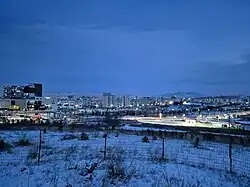
Darkhan
Darkhan is the capital of Darkhan-Uul Province and, with a population…
Kharagiin Khiid
Kharagiin Khiid (also written Kharaagiin Khiid) is the main functioni…
Khongor
Khongor is a small settlement (soum centre) in Darhan uul Province, l…
Orkhon
Orkhon is a small settlement in Darhan uul Province, northern Mongoli…
Sharyngol
Sharyngol is a small town (soum centre) in Darhan uul Province, locat…
Pair the highlights of Darhan uul into one easy trip — we'll plan the route.
WhatsApp
Contact Us
Get in touch with us.
Get in touch
Contact Us
Tell us where you'd like to go and how you like to travel. A real Tripcuro planner — not a bot — will craft an itinerary around you.
- Personalised, hassle-free planning end-to-end
- Transparent pricing, no hidden costs
- 24/7 support for complete peace of mind