
Suhbaatar
Mongolia · Province · 6 destinations with guides
Photography coming soonOverview
Sühbaatar province occupies the dry, rolling steppe of eastern Mongolia, a region of wide grassland horizons, scattered herding communities and a deep association with the Mongol heartland. It should not be confused with the city of Sühbaatar, the capital of Selenge province in the north — both take their name from Damdin Sükhbaatar, the revolutionary hero of Mongolia's 1921 revolution, whose name is also given to the central square in Ulaanbaatar.
This is one of Mongolia's quieter and less-visited provinces, far from the tourist circuits of the western mountains and the Gobi. Its character is pure eastern steppe: vast, open, sparsely populated grassland, big skies, and a way of life still organised around herding sheep, goats, cattle and horses. The provincial capital is Baruun-Urt, the administrative and transport hub for the surrounding soums.
For travellers, Sühbaatar appeals to those drawn to the genuinely off-the-beaten-track — the eastern Mongolian steppe at its most unbroken, ovoo-topped hills, extinct volcanic features and a sense of remoteness that the more developed provinces have lost. It is a destination for the steppe itself rather than for built attractions, and it rewards travellers willing to arrange their own transport and embrace long, empty distances.
When to Visit
The practical season is June to early September, when the eastern steppe is green, days are warm and travel across unpaved tracks is easiest. July is the Naadam month, celebrated in Baruun-Urt and the soum centres with wrestling, horse racing and archery. Late summer and early autumn bring golden grassland and clear skies.
Sühbaatar's eastern, low-lying steppe position gives it a sharply continental climate: long, bitterly cold and windy winters with hard frost, a brief dusty spring, and a short warm summer. The open grassland offers little shelter from wind in any season, so come prepared for exposure and large day-to-night temperature swings even in summer.
Tell us your dates and we'll shape a Suhbaatar route around them.
WhatsAppGetting Around
Sühbaatar is a remote province with limited infrastructure, and getting around means covering long distances on largely unpaved roads. Baruun-Urt, the provincial capital, is the hub: shared vans and jeeps connecting the soums gather here, generally leaving the villages in the morning and returning in the afternoon. There is no railway in the province.
Long-distance buses connect Baruun-Urt with Ulaanbaatar from the capital's eastern bus terminal, a long journey across the steppe. For travel to the soums and out into the grassland, a hired jeep with driver is the standard approach; arrange it in Baruun-Urt and confirm route, fuel and duration before departing. There are also flights linking the province with Ulaanbaatar.
Cuisine
Food in Sühbaatar is classic Mongolian herder fare, reflecting a province where livestock is the backbone of life: mutton and beef served as steamed buuz, fried khuushuur, noodle soups (guriltai shol) and khorkhog. Dairy is central — aaruul dried curds, clotted cream, yoghurt and salty milk tea (süütei tsai) — and in summer the steppe yields fermented mare's milk (airag).
Dining is overwhelmingly home- or canteen-based; expect simple Mongolian guanz canteens in Baruun-Urt rather than a restaurant scene. Vegetarians will find the food strongly meat- and dairy-based and should plan accordingly, stocking up on produce where it is available.
Want the scenic legs and stays booked for you? Just ask.
WhatsAppCulture & Festivals
The main annual event is the Naadam Festival in July, with wrestling, horse racing and archery contested in Baruun-Urt and the soum centres; the long cross-country horse races with young jockeys are a highlight of the eastern steppe. Tsagaan Sar, the lunar new year in late winter, is the major family festival, marked with feasting and visits to elders.
Culturally, the province belongs to the Khalkh Mongol mainstream, with its traditions of morin khuur (horsehead fiddle) music, khöömii throat singing, long song, and the nomadic crafts of felt-making, leatherwork and woodcarving. Ovoo cairns on hilltops remain active sites of shamanic and Buddhist offering.
Notable Experiences
- Travel the open eastern steppe — Sühbaatar offers some of the most unbroken grassland horizons in Mongolia, a landscape experience rather than a sightseeing one.
- Stay with a herding family in a soum of the province for an unfiltered look at eastern Mongolian nomadic life.
- Catch a soum Naadam in July, a small, local celebration of wrestling, horse racing and archery far from the tourist crowds.
- Visit ovoo-topped sacred hills and witness the offering rituals that mark the steppe landscape.
- Use Baruun-Urt as a base to explore the surrounding herding country and reach neighbouring eastern provinces.
Top Destinations
Every destination in Suhbaatar with a guide — tap a place for the full guide.

Baruun-Urt
Baruun-Urt (Баруун-Урт) is the capital of Sükhbaatar province in the…
Shiliin Bogd
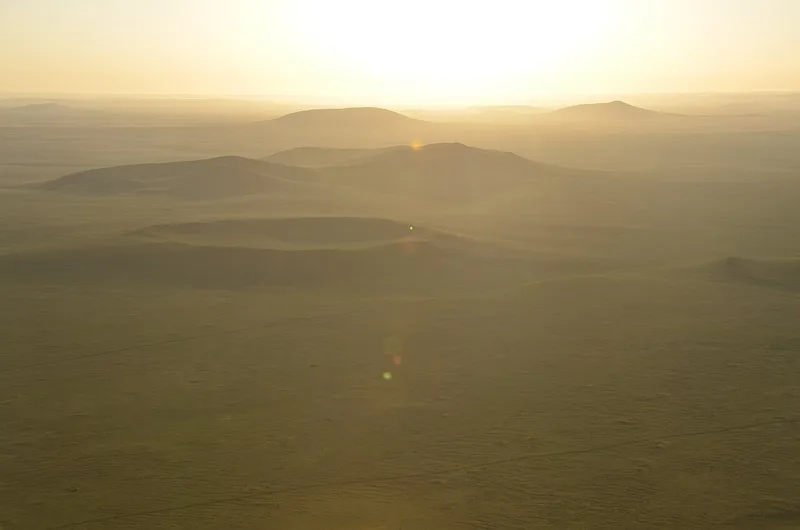
Shiliin Bogd (Шилийн Богд) is an extinct volcano in the far southeast…
Dariganga
Dariganga (Дарьганга) is a remote district and village in the far sou…
Erdenetsagaan
Erdenetsagaan is a small rural settlement in Sühbaatar Province (Suhb…
Ganga Lake
Ganga Lake (Ганга нуур) is a small freshwater lake in the Dariganga d…
Taliin Agui Cave
Taliin Agui (Талын агуй), the "Cave of the Steppe," is a large lava c…
Pair the highlights of Suhbaatar into one easy trip — we'll plan the route.
WhatsApp
Contact Us
Get in touch with us.
Get in touch
Contact Us
Tell us where you'd like to go and how you like to travel. A real Tripcuro planner — not a bot — will craft an itinerary around you.
- Personalised, hassle-free planning end-to-end
- Transparent pricing, no hidden costs
- 24/7 support for complete peace of mind