
Pafos
Cyprus · District · 17 destinations with guides
Photography coming soonWhy visit?
Pafos (also spelled Paphos) occupies the southwestern corner of Cyprus, stretching from the wide bay and resort strip of the coast up into the pine-clad heights of the Troodos foothills and out to the wild, undeveloped Akamas Peninsula. It is the island's least industrialised district — a landscape of carob and olive terraces, vineyard slopes, fishing harbours and Bronze Age ruins, all wrapped in a noticeably milder, drier microclimate than the rest of Cyprus. The district capital, the city of Pafos, was the island's capital under the Romans and is today a UNESCO World Heritage Site for its mosaics and its mythic role as the legendary birthplace of Aphrodite.
The district's character is defined by this layering of antiquity and easy seaside leisure. Along the coast, the old harbour beneath the medieval castle, the Tombs of the Kings and the Archaeological Park anchor a resort economy of hotels, tavernas and dive centres. Inland, the rhythm changes completely: stone-built wine villages such as those of the Laona and Vouni regions, Byzantine monasteries, and the Cedar Valley reward travellers willing to drive the switchbacks. The contrast between the polished waterfront of Kato Pafos and the time-stilled hill villages 30 minutes away is the essence of a Pafos trip.
What sets the district apart for travellers is breadth packed into a small area. In a single day you can swim at a sea-turtle nesting beach, walk through 4th-century Roman villa floors, taste Commandaria-style local wines, and watch the sun set over Aphrodite's Rock. It is Cyprus at its slowest and most scenic.
When is the best time to visit?
The shoulder seasons — April to early June and September to October — are the sweetest, with warm sea temperatures, wildflowers or harvest light, and far thinner crowds than midsummer. Spring brings the Akamas alive with orchids and migrating birds; autumn coincides with the grape harvest in the wine villages.
Summer (July–August) is hot and reliably dry, with coastal highs around 32–34°C tempered by sea breezes, while the Troodos foothills inland stay a few degrees cooler and make a good escape. Winter (December–February) is mild and green by Cypriot standards — daytime highs of 16–18°C on the coast — but it is also the rainy season, and Pafos genuinely empties out, with many beach tavernas shuttered. Pafos consistently records more sunshine and gentler weather than Nicosia or Larnaca, which is part of its appeal as a year-round base.
A district-specific quirk: loggerhead and green sea turtles nest on the beaches of the Akamas (notably Lara Bay) from roughly June to September, so summer visitors can sometimes see protected nesting sites — access is restricted to protect them.
Tell us your dates and we'll shape a Pafos route around them.
WhatsAppHow do you get around?
A hire car is by far the best way to experience Pafos district. The coastal towns are linked by the A6 motorway and the B6 coast road, but the hill villages, the Cedar Valley and the Akamas are effectively unreachable without your own wheels. Roads are good and quiet inland; the rough tracks into the Akamas Peninsula and to Lara Bay require a 4x4.
Buses are run by OSYPA (the Pafos regional operator). Useful routes connect Pafos city with Coral Bay, Polis, the airport and Geroskipou; fares are inexpensive (a single is around €1.50, a day ticket about €5), but services thin out dramatically in the evenings and on Sundays, and most hill villages are not served at all.
Taxis are plentiful in the city and resort strip; there are no trains anywhere in Cyprus. Rough driving distances from Pafos city: Coral Bay ~12 km (15 min), Polis ~37 km (40 min), Aphrodite's Rock ~25 km (25 min), Troodos/Cedar Valley ~60–70 km (1.5 hr on mountain roads), Limassol ~70 km (50 min on the A6). Pafos International Airport sits about 15 km east of the city.
Where should you go?
- Paphos — The district capital, a UNESCO World Heritage site renowned for its Roman mosaics, medieval fort, and seaside harbor.
- Geroskipou — A historic town east of Paphos, famous for its traditional loukoumia (Cyprus delight) and the ancient Church of Agia Paraskevi.
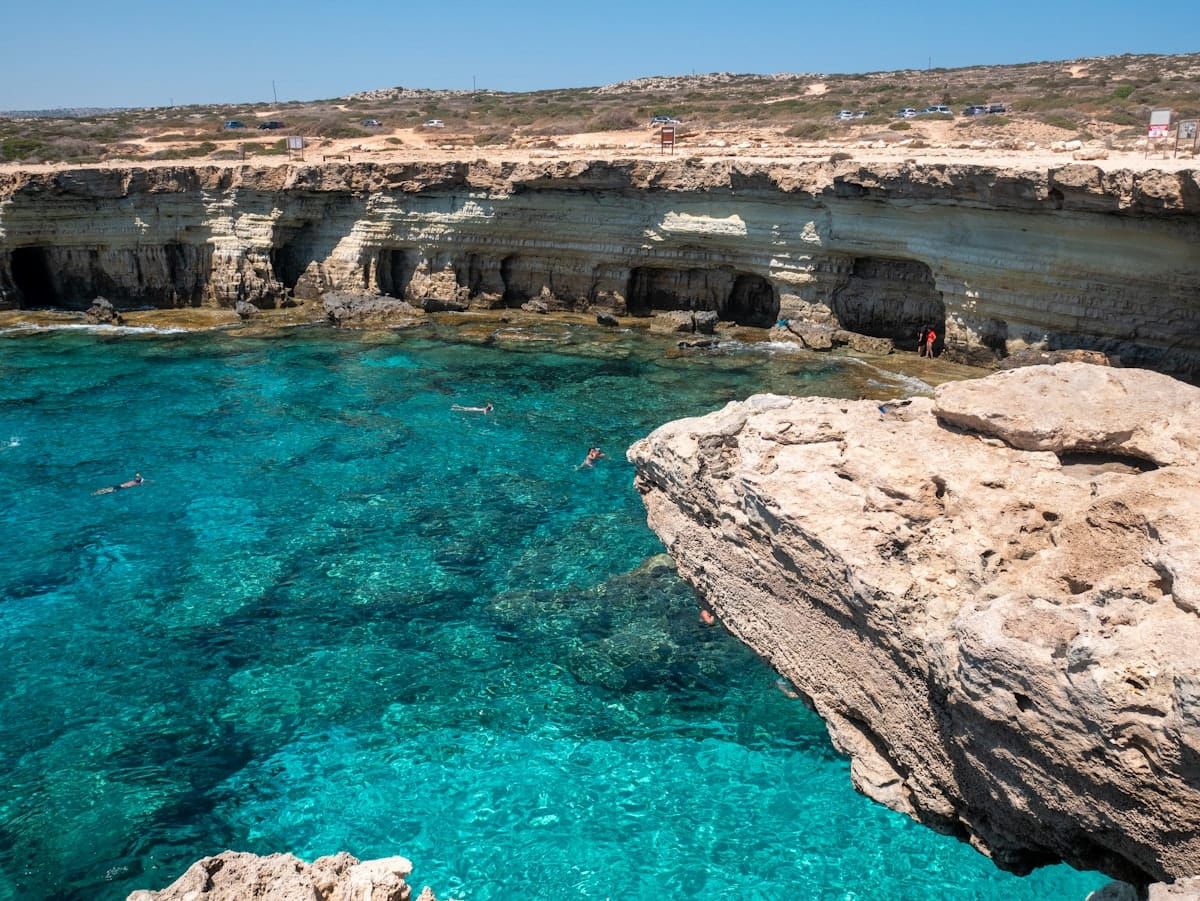
- Peyia — A hillside town overlooking the popular beach resort of Coral Bay, close to sea caves and the Paphos Zoo.
- Polis Chrysochous — A relaxed coastal town on the northwest coast, serving as the main gateway to the Akamas Peninsula.
- Latchi — A scenic fishing harbor next to Polis, popular for its seafood tavernas and boat excursions to the Blue Lagoon.
- Kouklia — A village built on the site of Palaipafos (Old Paphos), featuring the Sanctuary of Aphrodite and a medieval manor house museum.
- Akamas National Park — A wild, protected peninsula at the island's western tip, home to the Avakas Gorge and Lara turtle-nesting beach.
- Paphos Forest — A sprawling mountain forest of pine and cedar, offering scenic hiking and historic Venetian stone bridges.
Want the scenic legs and stays booked for you? Just ask.
WhatsAppWhat should you eat?
Pafos cooks the hearty, village-rooted side of Cypriot food. Look for meze spreads — long parades of small plates that may run to twenty or thirty dishes — built around grilled halloumi, sheftalia (caul-wrapped pork sausages), souvla (slow chunks of spit-roasted meat) and tavas (a clay-baked lamb-and-cumin stew). The district is also known for loukanika (wine-and-coriander sausages) and game such as wild rabbit (afelia, marinated in red wine and coriander seed).
Local specialities tie to the land: Geroskipou is famous island-wide for loukoumia (Cyprus delight) and the town carries a protected designation for it, while the surrounding villages press their own olive oil and make palouze/soutzoukos (grape-must sweets) at harvest. Pafos sits within Cyprus's wine country, so pair meals with local dry whites from Xynisteri grapes or reds from Maratheftiko; many family wineries in the hill villages offer tastings.
For dining, the old harbour of Kato Pafos is the classic (if touristy) spot for grilled fresh fish under the castle; for something more authentic, head to the tavernas of the inland villages or to Polis and the fishing village of Latchi, where seafood meze is a draw. Vegetarians are well served by the meze format — louvi (black-eyed beans), gigantes, grilled vegetables, dips and halloumi make a full meal — though strict vegans should flag dairy, as halloumi and yoghurt appear everywhere.
What is the culture like?
Pafos leans into its classical heritage. The flagship event is the Pafos Aphrodite Festival (early September), which stages a full opera in the open air against the floodlit walls of the medieval castle on the old harbour — one of the most atmospheric cultural settings in the Mediterranean. The city's stint as a European Capital of Culture (2017) left behind a strengthened year-round programme of concerts and open-air performances.
Religious and folk traditions run deep in the calendar. Easter (Orthodox Pascha), usually April or May, is the year's emotional peak, with candle-lit midnight liturgies and village feasting. Kataklysmos (the Festival of the Flood, at Pentecost, 50 days after Easter) brings water games and fairs to the coastal towns. Autumn harvest brings wine and grape festivals to the villages, and Geroskipou celebrates its loukoumi heritage.
On the crafts side, the district keeps alive the basket-weaving and pottery of villages like Geroskipou, lefkaritika-style needlework traditions found across Cyprus, and a strong winemaking culture in the hill communities. Folk music and dance — accompanied by the violin, lute and tamboutsia — feature at village panigyria (saint's-day fairs) through the summer.
Travelling during a festival? We'll plan around the crowds.
WhatsAppWhat are the standout experiences?
- Pafos Archaeological Park — walk across the astonishingly preserved Roman mosaic floors of the Houses of Dionysos, Theseus and Aion, then take in the harbour-side odeon and castle; the city's UNESCO core.
- Aphrodite's Rock (Petra tou Romiou) — visit the sea stack on the coast road where myth says the goddess of love rose from the foam; spectacular at sunset and an easy stop between Pafos and Limassol.
- The Akamas Peninsula — Cyprus's last great wilderness: a 4x4 or hiking trip to the Avakas Gorge, the Baths of Aphrodite, Blue Lagoon swimming and the turtle beach at Lara Bay.
- Tombs of the Kings — wander the monumental rock-cut necropolis of Hellenistic and Roman nobility, with Doric columns carved straight into the bedrock just north of the city.
- The wine villages and Cedar Valley drive — a day looping through stone-built hill villages for cellar tastings, then up into the endemic cedar forest of the Pafos uplands, with a chance of spotting the rare Cyprus mouflon.
Top Destinations
Every destination in Pafos with a guide — tap a place for the full guide.
Akamas National Park
Akamas National Park (often referred to as the Akamas Peninsula) is a…
Chloraka
Chloraka (also spelled Chlorakas) is a coastal village and suburb…
Drousia
Drousia (also spelled Droushia) is a picturesque traditional village…
Emba
Emba (Greek: Έμπα) is a large, traditional village located in the…
Geroskipou
Geroskipou (Greek: Γεροσκήπου) is a coastal town located immediately…
Kathikas
Kathikas is a historic, stone-built village located in the Paphos…
Kouklia
Kouklia is a historic village in the Paphos District of Cyprus, built…
Latchi
Latchi (also spelled Latsi) is a coastal fishing hamlet on Chrysochou…
Mesogi
Mesogi (Greek: Μεσόγη) is a traditional village situated in the hills…
Paphos
Paphos (Greek: Πάφος; Turkish: Baf) is a coastal city situated at the…
Paphos Forest
Paphos Forest covers approximately 60,000 hectares of the western…
Peyia
Peyia (Greek: Πέγεια, also spelled Pegeia) is a town situated on the…
Polemi
Polemi (Greek: Πολέμι) is a traditional hillside village situated in…
Polis Chrysochous
Polis Chrysochous (Greek: Πόλις Χρυσοχούς, commonly shortened to…
Pomos
Pomos (Greek: Πωμός) is a coastal village of roughly 500 inhabitants…
Tala
Tala (Greek: Τάλα) is a picturesque hillside village situated in the…
Tsada
Tsada (Greek: Τσάδα) is a small hillside village situated in the…
Sample itinerary
See how a trip to Pafos comes together — a real Tripcuro plan, day by day.
Pair the highlights of Pafos into one easy trip — we'll plan the route.
WhatsApp
Contact Us
Get in touch with us.
Get in touch
Contact Us
Tell us where you'd like to go and how you like to travel. A real Tripcuro planner — not a bot — will craft an itinerary around you.
- Personalised, hassle-free planning end-to-end
- Transparent pricing, no hidden costs
- 24/7 support for complete peace of mind