
Sichuan Sheng
China · Province · 40 destinations with guides
Photography coming soonWhy visit?
Sichuan (CN-51) is China's most geographically dramatic province, a land of two halves stitched together. The eastern Sichuan Basin — fertile, fogged, and famously dubbed the "Heavenly Storehouse" (Tiānfǔ zhī Guó) — is one of the most densely populated agricultural plains on earth, ringed by mountains that have historically sealed it off from the rest of China. Westward, the land rears up onto the eastern edge of the Tibetan Plateau, where Sichuan dissolves into the Hengduan Mountains, alpine grasslands, and a string of Tibetan and Qiang prefectures whose horizons sit above 4,000 m.
The province's character is defined by this dualism. In the basin you find Chengdu's famously slow tea-house culture, Sichuan opera, mahjong-clattering courtyards, and the world's most influential spicy regional cuisine. In the highlands you find yak herders, monasteries painted in ochre and saffron, the karst pools of Jiuzhaigou, and the snow peaks of the Daocheng-Yading reserve. Sandwiched between is a seismic belt — the 2008 Wenchuan earthquake left scars that are still visible on the road to Aba — but also one of the world's most successful conservation success stories: the giant panda, found in the wild only here and in neighbouring provinces.
For travellers, Sichuan offers a rare combination: a major culinary capital, world-class wildlife, UNESCO Buddhist sites, and genuinely high-altitude adventure, all within a single province. It's the most rewarding three-week itinerary in inland China.
When is the best time to visit?
The basin and the highlands need to be considered separately.
- Spring (March–May): the basin is mild (15–22 °C) but often overcast. Rapeseed flowers bloom across the countryside in March. Highland passes start to clear by late April.
- Autumn (September–early November): the best window overall. Jiuzhaigou and Huanglong hit peak colour from mid-October to early November and this is the single most photogenic moment of the Sichuan year — book ahead, prices double.
- Summer (June–August): hot and very wet in the basin (30 °C+, frequent thunderstorms; landslides occasionally close the Jiuzhaigou and Aba roads). It is, however, the only sensible season for Litang, Tagong, and Yading, where alpine meadows are in full bloom.
- Winter (December–February): Chengdu is grey, damp, and 4–10 °C — locals retreat to hot pot. Highland roads above 4,000 m are technically open but icy; Jiuzhaigou enters a cheaper "low season" with snowed-over pools that some travellers actually prefer.
Watch for Chinese New Year (late Jan / early Feb) and National Day Golden Week (Oct 1–7), when domestic crowds make Jiuzhaigou and Mount Emei effectively unmanageable. The Litang Horse Festival (early August, Tibetan calendar-dependent) is the highland highlight.
Tell us your dates and we'll shape a Sichuan Sheng route around them.
WhatsAppHow do you get around?
Sichuan is large (485,000 km², larger than Spain) and the basin–plateau divide makes a single rental car impractical. Mix modes.
- High-speed rail (Gāotiě): Chengdu is the hub. Chengdu–Chongqing in ~1 h 10 min, Chengdu–Leshan ~1 h, Chengdu–Emeishan ~1 h 20 min, Chengdu–Xi'an ~3 h 30 min. The Chengdu–Ya'an–Kangding line opened the eastern Tibetan foothills to a day trip from the capital.
- Conventional rail: the dramatic Chengdu–Kunming line still runs, and the new Sichuan–Tibet railway is opening in stages — Chengdu to Yibin, then onward to Lhasa over the coming years.
- Long-distance bus: still the only way to reach much of the western prefectures (Daocheng, Litang, Sertar). Expect 8–14 hour days on winding mountain roads. Buses leave from Chengdu's Xinnanmen and Chadianzi stations; book a day ahead and bring snacks.
- Domestic flights: Chengdu Tianfu (TFU) and Shuangliu (CTU) connect to Jiuzhaigou-Huanglong airport (JZH, 3,400 m — altitude can be rough on arrival), Daocheng Yading (DCY, 4,411 m, world's highest civil airport), Kangding (KGT), and Xichang.
- Ride-hail and taxi: Didi works everywhere in the basin; cash in the highlands. A Chengdu metered taxi starts at ¥9.
- Self-drive: only practical for the G318 / G317 sichuan-tibet highway if you have time, an SUV, and Chinese-language Plan-B for landslides.
Indicative road distances from Chengdu: Leshan 165 km, Emeishan 145 km, Jiuzhaigou 440 km (8–10 h drive), Kangding 350 km, Daocheng-Yading 800 km (2 days).
Where should you go?
- Chengdu — the provincial capital and culinary heart; tea houses, pandas, and the launch pad for everything else.
- Leshan — home of the 71-m Tang-dynasty Giant Buddha carved into the cliff at the confluence of three rivers (UNESCO).
- Mount Emei (Emeishan) — one of the Four Sacred Buddhist Mountains, a 3,099-m pilgrim ascent through cloud forest and macaque troops (UNESCO).
- Jiuzhaigou Valley — multi-coloured travertine lakes and waterfalls in a Tibetan-Qiang valley (UNESCO); autumn is iconic.
- Huanglong — terraced calcite pools at 3,500 m, a half-day side trip from Jiuzhaigou (UNESCO).
- Dujiangyan — the 2,200-year-old Qin-dynasty irrigation system still watering the basin today (UNESCO).
- Mount Qingcheng — birthplace of organised Daoism, a quieter, mistier counterpart to Emei (UNESCO).
- Langzhong Ancient City — one of the four best-preserved ancient towns in China; lattice courtyards, vinegar workshops.
- Kangding (Dartsedo) — Tibetan-Han trading town and gateway to the Khampa east, at 2,600 m.
- Daocheng-Yading — three sacred snow peaks, alpine lakes, and the high-altitude trekking centrepiece of western Sichuan.
- Sertar (Larung Gar) — the vast hillside Buddhist academy in Garzê prefecture (access fluctuates; check current rules).
- Songpan — Ming-dynasty walled town and horse-trekking base near Huanglong.
- Bifengxia & Wolong — the working giant-panda reserves where pandas are bred for the wild.
Want the scenic legs and stays booked for you? Just ask.
WhatsAppWhat should you eat?
Sichuan is one of China's eight great culinary traditions and arguably its most globally influential. The defining flavour profile is málà (麻辣) — the tongue-numbing tingle of Sichuan peppercorn (huājiāo) layered against dry chili heat — but the cuisine is far broader than the spice cliché suggests, with some of the country's most refined sweet-and-sour, smoke-cured, and broth dishes.
Dishes you should not leave without trying:
- Mápó dòufu — silky tofu in a fermented bean and chili sauce, ideally eaten in its birthplace at the original Chen Mapo Tofu (陈麻婆豆腐) restaurant in Chengdu (~¥45).
- Huíguō ròu — twice-cooked pork belly with leeks and broad-bean paste; the textbook home dish.
- Gōngbǎo jīdīng — kung pao chicken; the Sichuan version uses dried chilies, peanuts, and a delicate sweet-sour glaze.
- Dāndān miàn — sesame-and-chili noodles, a Chengdu street staple (¥10–15).
- Fūqī fèipiàn — "married couple's lung slices," cold spiced beef offal in chili oil; a Chengdu invention.
- Huǒguō — Sichuan hot pot. Chongqing-style is heavier on beef tallow; Chengdu-style is slightly lighter. Try Shu Jiu Xiang or any neighbourhood spot with a queue. Order the yuanyang (split) pot if your group includes spice-shy travellers.
- Chuàn'r — skewers, grilled and dunked in chili-cumin powder; hugely popular for late-night eating.
- Lèshān bōbō jī — Leshan's "skewer chicken," a regional cold-platter speciality.
Streets and markets to walk: Jinli and Kuanzhai Alley in Chengdu (touristy but a good intro), Yulin and Yulin Donglu for where locals actually eat, and the night-market lanes of Wenshu Yuan.
Dietary notes: vegetarian options exist (especially around Buddhist mountains — Emeishan and Wenshu Yuan have excellent monastic vegetarian halls) but you must specifically ask for wú ròu (no meat) and double-check broth bases. Halal Hui-Muslim food is common in Chengdu and dominant around Songpan and Aba. Sichuan peppercorn allergies are rare but real; carry a translation card.
What is the culture like?
Sichuan's cultural identity is layered: Han Chinese in the basin, Tibetan in the west (Khampa and Amdo), Qiang in the central highlands around Wenchuan and Mao County, and Yi in the southern Liangshan prefecture.
- Sichuan Opera (Chuānjù) — best known abroad for biàn liǎn (face-changing), where masked performers swap silk faces in fractions of a second. Catch a performance at Shufeng Yayun teahouse in Chengdu (¥150–320).
- Tea-house culture — Chengdu has the densest tea-house network in China. Heming Teahouse in People's Park is the institution; ¥20 for bottomless cups, ear-cleaners (掏耳朵) optional.
- Spring Festival (Chinese New Year) — late January / early February. Temple fairs at Wuhou Shrine and Wenshu Yuan in Chengdu.
- Lantern Festival — 15 days after Chinese New Year. The Zigong International Dinosaur Lantern Festival is the most spectacular in China; Zigong has been making silk lanterns since the Tang dynasty.
- Litang Horse Festival — early August (date follows the Tibetan calendar). Khampa horsemen, archery from horseback, monastic ceremonies. The single most evocative cultural event in western Sichuan.
- Torch Festival (Huǒbǎ Jié) — late July / early August in Yi areas of Liangshan; bonfires, bullfighting, courtship dances.
- Qiang New Year — late October / early November in Maoxian and Wenchuan; UNESCO-recognised intangible heritage with goat sacrifices and shibi shamanic rituals.
- Crafts — Shu brocade and Shu embroidery (one of China's four great embroidery traditions), Mianzhu New Year woodblock prints, Yi lacquerware, Tibetan thangka painting in Garzê.
Travelling during a festival? We'll plan around the crowds.
WhatsAppWhat are the standout experiences?
- Sit with the giant pandas at the Chengdu Research Base at 7:30 a.m., when the keepers bring breakfast bamboo and the cubs are actually awake (¥55, get there for opening). For a more intimate experience, head to Bifengxia in Ya'an or Wolong — these are the working reserves, with fewer crowds and more semi-wild pandas.
- Climb Mount Emei from Baoguo Temple to the Golden Summit over two days, sleeping in a working monastery. The 3,099-m summit catches a "Buddha's halo" (Brocken spectre) on clear afternoons, and the macaques along the trail are infamous — clip your snacks to your pack.
- Drive the G318 Sichuan-Tibet Highway from Chengdu over the Zheduo Pass (4,298 m) to Litang and on toward Daocheng-Yading. Five days of switchbacks, 5,000-m passes, Khampa villages, and the most varied mountain driving in Asia.
- Watch face-changing opera with jasmine tea at Shufeng Yayun, then walk Jinli alley afterwards for chuanr skewers. It's the cliché evening — and it's worth it once.
- See Jiuzhaigou's Five-Flower Lake at dawn in mid-October, before the tour buses arrive at 9 a.m. Enter on the first shuttle (7:00 a.m.), ride to the top of the Y-shaped valley, and walk back down the wooden boardwalks against the flow.
Top Destinations
Every destination in Sichuan Sheng with a guide — tap a place for the full guide.

Beichuan
The old county town, Qushan, was first badly damaged by the…

Chengdu
Chengdu's history stretches back to the Shu kingdom of the Three…

Emeishan National Park
Pilgrims have climbed these stone stairways for nearly two millennia…

Jianmen Shudao National Park
The route's history reaches back more than two thousand years and is…

Kangding
Kangding — Dardo in Tibetan — has been a frontier crossroads for…
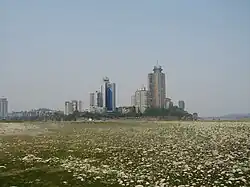
Leshan
Leshan (乐山) sits at the confluence of the Dadu, Min and Qingyi rivers…
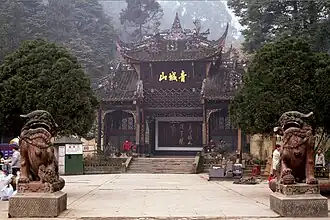
Qingchengshan-Dujiangyan National Park
Qingchengshan-Dujiangyan is a UNESCO World Heritage Site, inscribed…
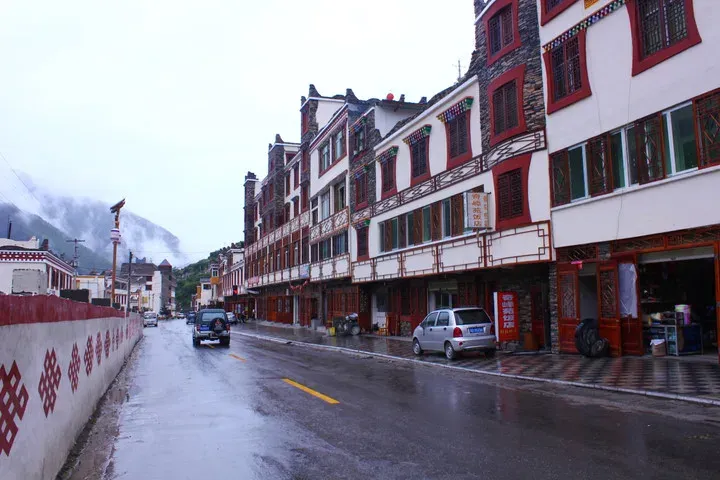
Siguniangshan
Siguniangshan — the "Four Sisters Mountain" — rises well over 200 km…
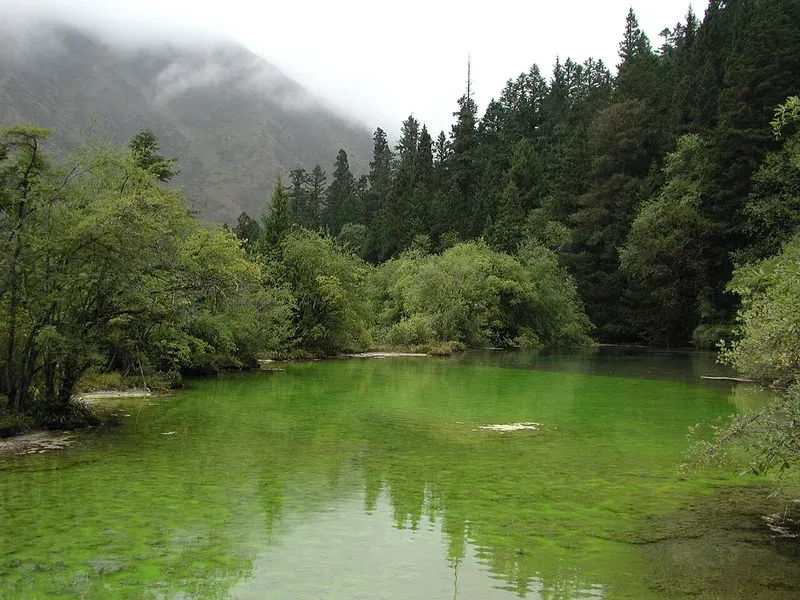
Songpan
Songpan (æ?¾æ½˜; SÅ?ngpÄ?n) is a small, walled town tucked into the…

Xichang
Xichang is the capital of Liangshan Yi Autonomous Prefecture in…
Yading
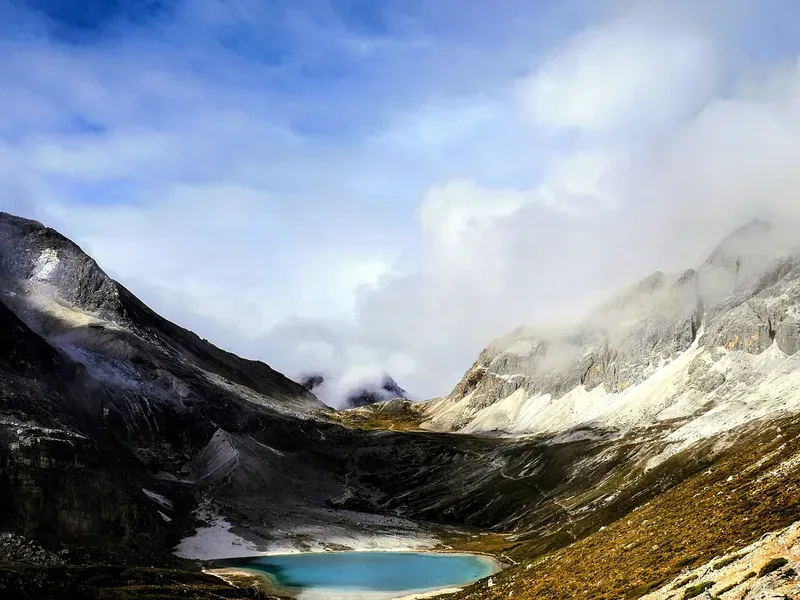
Yading (亚丁) is a remote Tibetan high-altitude wilderness in the Garzê…
Barkam
Barkam (马尔康; Mǎ'ěrkāng, also known as Ma'erkang) is the capital of…
Bazhong
Bazhong (巴中; Bāzhōng) is a prefecture-level city in northeastern…
Dazhou
Dazhou (达州; Dázhōu) is a prefecture-level city in eastern Sichuan…
Dege
Dege (å¾·æ ¼, Tibetan: Derge) is a high-altitude Tibetan town in the…
Deyang
Deyang (德阳; Déyáng) is a prefecture-level city in central Sichuan…
Dujiangyan
Dujiangyan (都江堰; Dūjiāngyàn) is a county-level city under Chengdu's…
Emeishan
Mount Emei (峨眉山; Éméi Shān) is one of the Four Sacred Buddhist…
Ganzi
Ganzi (Tibetan: Garzê; Chinese: 甘孜) sits at high altitude in a broad…
Guang'an
Guang'an (广安; Guǎng'ān) is a prefecture-level city in eastern…
Guangyuan
Guangyuan (广元; Guǎngyuán) is a prefecture-level city in northern…
Hailuogou Glacier Park
The park's headline attraction is its glacier, whose tongue descends…
Huanglongsi
The name strictly refers to a Ming-era temple at the head of a high…
Jiuzhaigou
Jiuzhaigou (九寨沟; Jiǔzhàigōu, "Valley of Nine Villages") is a UNESCO…
Kanggar Mountains National Park
Kanggar Mountains National Park sits on the rugged western edge of…
Langmusi
Langmusi (郎木寺, Lángmùsì — Tibetan: Taktsang Lhamo) is a remote…
Langzhong
Langzhong (阆中; Làngzhōng) is a historic city in northeastern Sichuan…
Luzhou
Luzhou (泸州; Lúzhōu) is a prefecture-level city in southeastern…
Meishan
Meishan (眉山; Méishān) is a prefecture-level city in central Sichuan…
Mianyang
Mianyang (绵阳; Miányáng) is the second-largest city in Sichuan…
Nanchong
Nanchong (南充; Nánchōng) is a prefecture-level city in northeastern…
Neijiang
Neijiang (内江; Nèijiāng) is a prefecture-level city in southern…
Panzhihua
Panzhihua (攀枝花; Pānzhīhuā) is a prefecture-level city in the far…
Shunan Zhuhai National Park
Shunan Zhuhai National Park (蜀南竹海), literally the "Bamboo Sea of…
Suining
Suining (遂宁; Suìníng) is a prefecture-level city in central Sichuan…
Xiangcheng
Xiangcheng (乡城; Tibetan: Chaktreng) is a remote county seat in the…
Ya'an
Ya'an (雅安; Yǎ'ān) is a prefecture-level city in western Sichuan…
Yibin
Yibin (宜宾; Yíbīn) is a prefecture-level city in southern Sichuan, at…
Zigong
Zigong (自贡; Zìgòng) is a prefecture-level city in southern Sichuan…
Ziyang
Ziyang (资阳; Zīyáng) is a prefecture-level city in central Sichuan…
Pair the highlights of Sichuan Sheng into one easy trip — we'll plan the route.
WhatsApp
Contact Us
Get in touch with us.
Get in touch
Contact Us
Tell us where you'd like to go and how you like to travel. A real Tripcuro planner — not a bot — will craft an itinerary around you.
- Personalised, hassle-free planning end-to-end
- Transparent pricing, no hidden costs
- 24/7 support for complete peace of mind