
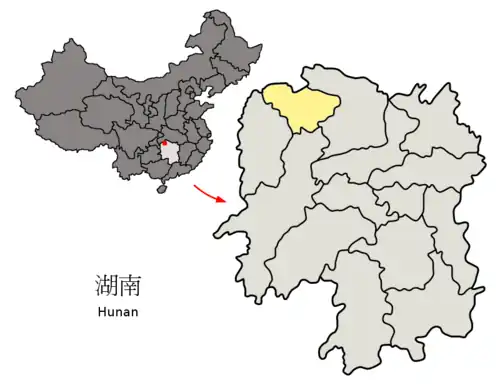
Zhangjiajie
Hunan Sheng, China
Why visit Zhangjiajie?
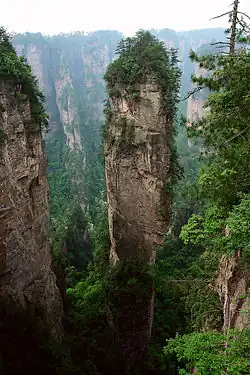
Zhangjiajie (Chinese: 张家界) is a small prefecture-level city in northwestern Hunan Province that punches far above its weight as a travel destination. Until 1994 it was known as Dayong, with a recorded history stretching back over two thousand years; the rename was a deliberate move to attach the city's identity to the spectacular Zhangjiajie National Forest Park within its borders, which had been inscribed as part of the Wulingyuan UNESCO World Heritage Site in 1992. Today nearly everyone who arrives is here for one reason: the quartz-sandstone pillar forests of Wulingyuan and the cliffs of Tianmen Mountain, the landscapes that famously inspired the floating "Hallelujah Mountains" of the film Avatar.
The city sits in the Wuling Mountains hinterland on the upper reaches of the Lishui River, a complex landscape of karst and hills — mountainous terrain accounts for the large majority of the prefecture's area. Administratively the city covers Yongding District, Wulingyuan District, Cili County, and Sangzhi County. Almost all visitors arrive in Yongding District (the main urban area, where the airport, train station, and central bus station sit) and then push out to Wulingyuan District, some distance northeast, for the parks.
Zhangjiajie has a humid subtropical monsoon climate with four distinct seasons. Summers are hot and very wet, with June through August delivering the bulk of the annual rainfall; urban temperatures can climb well into the mid-30s°C, though the mountains run noticeably cooler. Winters are short but chilly with occasional snow that dusts the peaks dramatically. Spring (April–May) and autumn (September–October) are by far the best times to visit: clearer skies, comfortable temperatures, and the famous "sea of clouds" appears more reliably after rain. Avoid the Chinese national holidays (Labour Day in early May, National Day in early October) when crowds at Wulingyuan can become overwhelming.
Planning Zhangjiajie? Tell us your dates and we’ll tailor the trip.
Ask on WhatsAppHow do you get there?
By Plane
Zhangjiajie Hehua International Airport, formerly Dayong Airport, sits a short distance southwest of the city centre. It handles a useful daily schedule of flights to major Chinese cities (Beijing, Shanghai, Guangzhou, Shenzhen, Chengdu, Xi'an) plus occasional seasonal international services.
A metered taxi to central Yongding is inexpensive, but airport drivers have a reputation for resisting the meter or inventing extra fees — call your hotel before you land and ask them to speak to the driver, or settle the price firmly before getting in. A public bus route also connects the airport to the city, running through the day on a circular route through the city, bus station, and railway station.
By Train
Zhangjiajie Station in central Yongding handles conventional services, including an overnight sleeper train from Shenzhen and several hours' journey from Changsha or Huaihua. Zhangjiajie West Station, opened in 2019, is the high-speed rail hub and cuts the Changsha journey to about three hours. It sits slightly outside the city — bus and taxi connections run to central Yongding, and direct minibuses head to Wulingyuan. Book tickets a few days ahead through the official 12306 app or via Trip.com; weekends and holidays sell out fast.
By Car / Road
Intercity buses from Changsha's western bus terminal take around five hours. Buses also connect from Yichang and Jishou. Self-driving from Changsha along the expressway takes around four hours; roads are generally good but mountain sections beyond the city can be narrow and winding.
Within Yongding, city buses cover most of what you'll need at a low flat fare. Taxis are cheap but insist on the meter — outside the airport this is usually no problem. Didi ride-hailing works well here and removes the haggling; you'll need a Chinese phone number or a linked payment account to use it.
For the parks, the workhorse is a minibus from the Zhangjiajie Central Bus Station to the National Forest Park entrance, running every 20–30 minutes through the day. Tickets aren't sold at the window — go through security and follow signage to the bus platforms. Direct minibuses also run from the Central Bus Station and Zhangjiajie West Station to Wulingyuan town, the gateway to the Forest Park's eastern entrances.
Walkability in central Yongding is fine for short distances, but the city is not a walking destination — plan to spend nearly all your time in the parks. Common scams: airport taxi overcharging (above), unlicensed "tour guides" at the bus station offering all-inclusive park packages of variable quality, and fake park tickets sold by touts near the entrances. Buy park tickets only at the official gates.
What are the things to do?
Zhangjiajie urban area
- Puguang Chan Temple — a working Chan Buddhist temple in the city centre, founded in the Ming dynasty. Worth an hour for the carved beams and quiet courtyards.
- Zhangjiajie Museum — compact but well-curated coverage of Tujia and Bai minority culture, local archaeology, and the city's revolutionary history. Closed Mondays.
- Tujia Folk Customs Park — a large theme park of Tujia ethnic culture with traditional architecture, performances, and crafts, not far from the airport; touristy but useful if you don't have time to visit a real Tujia village.
Wulingyuan & the parks
Wulingyuan Scenic Area — the UNESCO World Heritage core, encompassing Zhangjiajie National Forest Park, Suoxi Valley Nature Reserve, Tianzi Mountain Nature Reserve, and Yangjiajie. Thousands of quartz-sandstone pillars rise from the forest, threaded with streams, caves, and viewing platforms. Ticketing covers a multi-day period; inside, a free shuttle bus network and several paid cable cars and lifts get you between viewpoints.
- Huangshizhai — the classic plateau walk, with sweeping views and named rock formations.
- Yuanjiajie — home of a natural stone arch and the pillar informally tagged as the "Hallelujah Mountain" after Avatar.
- Golden Whip Stream — a flat streamside walk past named rock formations. The easiest and most photogenic introduction to the park.
- Yangjiajie — quieter, with sharper ridges and a waterfall; reach it via a glass elevator or cable car.
- Tianzi Mountain — broad summit ridges with the most expansive panoramas of the pillar forest, especially at sunrise.
The park's glass elevator — a very tall glass lift bolted to a sandstone cliff, among the tallest outdoor lifts of its kind. Ticketed separately from park admission; expect long queues at midday.
Tianmen Mountain — directly south of the city centre, reached by a separate ticket. Famous for the Tianmen Cave natural arch, a long switchback road, one of the world's longest passenger cableways, and a series of glass skywalks along the cliffs.
Maoyan River & Jiutian Cave — in Sangzhi County, west of the city. Jiutian Cave is one of Asia's largest karst caverns; the Maoyan River downstream offers gentler bamboo-raft drifting through gorges. A worthwhile day trip if you have a third day.
Hike Wulingyuan over two days. A standard "best of" itinerary: enter via the Forest Park gate at the south, walk Golden Whip Stream, take the glass elevator up to Yuanjiajie, ride the park shuttle to Tianzi Mountain for sunset, sleep on the mountain, then cover Yangjiajie and exit via the Wulingyuan gate on day two. A multi-day ticket makes this comfortable.
Walk the Tianmen Mountain glass skywalks. Trace the rim of vertical cliffs, then combine with the cableway up and a long staircase down through Tianmen Cave for a full day.
Catch a sunrise from Tianzi Mountain or Huangshizhai. Cloud seas after overnight rain are the iconic shot; aim to arrive well before official sunrise.
See an evening cultural performance — long-running, large-scale shows of Tujia, Miao, and Bai music, dance, and stunt performance are staged seasonally in Wulingyuan town; ask locally or through your hotel for current schedules.
Bamboo rafting on the Maoyan River — half-day drifts in summer through limestone gorges, with stops at small Tujia villages, running roughly June–September.
Day trip to Furong Ancient Town — a thousand-year-old Tujia town built around a waterfall, lit beautifully at night.
Planning Zhangjiajie? Want these on a customised itinerary?
Ask on WhatsAppWhere to eat?
Zhangjiajie cooking sits within the wider Xiang (Hunan) cuisine tradition — heavy on chillies, smoke, sour-pickled vegetables, and cured pork — but adds Tujia minority dishes that emphasise wild herbs, river fish, and stone-pot cooking. Signature things to try: a local three-meat hotpot braised dry in a small iron pot with chilli and garlic; wild rock fungus stewed with chicken; cured smoked pork stir-fried with green peppers; glutinous rice meatballs; and bamboo-tube rice or grilled river fish.
Budget noodle counters and street stalls around Yongding's pedestrian street sell grilled skewers, rice cakes, stinky tofu, and noodle soups; mid-range restaurants across the city serve reliable Tujia and Hunan home-cooking, with the local hotpot as the signature dish to try; Wulingyuan town's night-market restaurants grill river fish and crayfish in season; and hotel restaurants at the upscale international properties near Wulingyuan offer refined Hunan tasting menus alongside more familiar Western options.
Vegetarian dining is workable but not central to the cuisine — a few restaurants near Puguang Temple cater to genuine vegetarian meals, and most restaurants will prepare plain stir-fried vegetables on request. Halal options exist in small Lanzhou-style noodle shops scattered through Yongding. Gluten-free is difficult; flag soy sauce and wheat noodles explicitly.
Where to drink?
Tea is the dominant local drink. Hunan is a major tea-growing region — look for Junshan Yinzhen yellow tea (grown elsewhere in Hunan but widely sold here), Anhua dark tea in compressed cake form, and locally produced green tea. The Tujia ceremonial drink is a thick, savoury "pounded tea" of green tea, sesame, peanuts, ginger, and herbs ground together — try it at a Tujia restaurant or village stop.
For alcohol, rice wine and baijiu are both made locally. National beer brands (Snow, Tsingtao, Yanjing) are everywhere, and a couple of small bars near the Wulingyuan town night market pour imported drafts. For sit-down drinks, bars and low-key pubs cluster along Wulingyuan Avenue in Wulingyuan town, catering to tourists with live music; in Yongding, the pedestrian street area has low-key cafés and karaoke venues. Western-style coffee chains have arrived in central Yongding.
Tap water is not safe to drink anywhere in China, including Zhangjiajie. Use the boiled water dispensers in your hotel room, bottled water, or a filter bottle. Ice in upper-tier restaurants and chain cafés is generally fine; avoid it from street stalls.
Planning Zhangjiajie? We’ll book the stays and dining for you.
Ask on WhatsAppWhere to stay?
- Budget — national budget chains (7 Days Inn, Hanting, Home Inn) cluster around the Forest Park entrance and central Yongding; a long-running backpacker hostel in Wulingyuan town offers dorms and simple private rooms with English-speaking staff, a useful base for early park entries.
- Mid-range — a small hotel sits inside Zhangjiajie National Forest Park itself near Golden Whip Stream, letting you start hiking before the day-trippers arrive — book ahead for spring and autumn weekends. An international-standard Crowne Plaza serves Wulingyuan town with easy access to the east park entrance.
- Upscale — an international-brand Pullman property near the parks is the most polished option in the area, and a boutique design-led property using local stone and timber sits on the road into Wulingyuan, popular with domestic luxury travellers.
What should you buy?
Zhangjiajie isn't a serious shopping destination, but the local crafts are genuinely interesting because of the city's mixed Tujia, Bai, and Miao heritage. Look for Tujia brocade, handwoven geometric textiles traditionally used as wedding bedspreads and now sold as table runners and wall hangings; batik and embroidered cloth; silver minority jewellery; rattan and bamboo basketry; and kudzu-fibre cloth, a regional specialty. For edibles, the classic souvenirs are wild rock fungus from the cliffs, dried wild mushrooms, glutinous rice cakes, cured pork, and kudzu root powder.
The main shopping zones are the pedestrian streets in central Yongding for everyday shops and small craft stalls, and the Wulingyuan town market near the Forest Park east gate for souvenir-grade crafts at higher tourist prices. Bargaining is expected at street stalls and souvenir shops; in supermarkets and brand stores prices are fixed.
Where to go next?
- Wulingyuan town — a short bus or taxi ride away — gateway to the eastern park entrances and basecamp for multi-day hiking; technically still within Zhangjiajie prefecture but worth treating as its own stop.
- Fenghuang Ancient Town — several hours by bus south. A famously preserved Ming-Qing Miao river town of stilt houses along the Tuojiang River; one of China's most photographed old towns.
- Furong Ancient Town — a couple of hours by car. A Tujia waterfall-town, especially atmospheric after dark.
- Changsha — a few hours by high-speed rail. Hunan's provincial capital, for Mao Zedong's old haunts at Orange Isle, the Hunan Provincial Museum's Mawangdui Han tombs, and serious Xiang cuisine.
- Mengdong River and Xiangxi, around Jishou — limestone gorges, Tujia villages, and the Dehang Miao valley with its towering waterfalls.
- Yichang & the Three Gorges — several hours by bus or train; northern jumping-off point for Yangtze River cruises through the Xiling, Wu, and Qutang Gorges.
Nearby in Hunan Sheng
More places to explore around Zhangjiajie.
Guide content as of July 2026. Portions adapted from Wikivoyage, CC BY-SA 4.0.

Contact Us
Get in touch with us.
Get in touch
Contact Us
Tell us where you'd like to go and how you like to travel. A real Tripcuro planner — not a bot — will craft an itinerary around you.
- Personalised, hassle-free planning end-to-end
- Transparent pricing, no hidden costs
- 24/7 support for complete peace of mind