
Dehang
Hunan Sheng, China
Why visit Dehang?
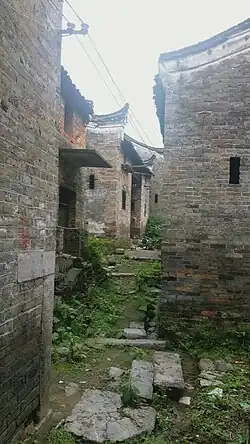
Dehang (德夯) is a small Miao ethnic village tucked into a dramatic karst canyon in Xiangxi Tujia and Miao Autonomous Prefecture, in the far west of Hunan province. The name is often translated as "beautiful valley," and the village lives up to it — wooden stilt houses cluster at the foot of sheer limestone cliffs, terraced fields climb the lower slopes, and a network of clear streams threads between the peaks. It has been settled by Miao communities for generations and remains an active village rather than a museum piece: embroidery, traditional music, and market days bring villagers down from surrounding hamlets.
For travellers, Dehang is essentially a hiking and culture destination wrapped into a single, compact scenic area. The natural attractions — a tall waterfall, a stream-gorge hike, and viewpoints over the canyon — are reachable on foot from the village. Nearby looms the Aizhai Bridge, a record-setting suspension bridge spanning the canyon at a great height above the valley floor. Cultural performances of Miao song, drumming, and traditional balancing acts take place in the village in season.
The best time to visit is April to October, when waterfalls run hard and the rice terraces are green or golden. July and August are humid and busy with domestic tourists; late September to early November offers cooler weather and clear light. Winter (December–February) is cold, often misty, and many performances pause; the waterfalls may slow to a trickle. Layout is simple: a single ticketed scenic-area entrance leads to the riverside village, from which marked trails fan out up the canyon.
Planning Dehang? Tell us your dates and we’ll tailor the trip.
Ask on WhatsAppHow do you get there?
By Plane
The nearest airport is a small regional field in neighbouring Huayuan County, roughly 80 km from Dehang. A larger and better-connected option is Zhangjiajie Hehua International Airport (DYG), about 200 km north. Tongren Fenghuang Airport (TEN) in neighbouring Guizhou is also viable.
By Train
The practical gateway is Jishou, on the conventional rail line, about 24 km from Dehang. High-speed rail connects Jishou to Changsha, Zhangjiajie, and Huaihua in a few hours. From the station, take a taxi or a local public bus to Dehang. Book Chinese rail tickets on the 12306 app or via Trip.com; ID/passport required.
By Car / Road
Dehang sits just off a major expressway corridor. Approximate drive times: Zhangjiajie roughly 2.5–3 hours; Fenghuang Ancient Town about an hour; Changsha 5–6 hours; Guiyang 4.5–5 hours.
Roads are modern expressway nearly the entire way, with the spectacular Aizhai Bridge crossing immediately before the Dehang exit. Long-distance buses to Jishou depart from Changsha, Zhangjiajie, Fenghuang, and Tongren; from Jishou take a local bus or a taxi.
Dehang itself is entirely walkable — the village is small and the scenic trails all start from within it. Inside the scenic area, expect cobbled paths, wooden bridges, and stone-cut steps; bring proper shoes as rocks are slick after rain. A shuttle sometimes runs from the main gate to the village centre during peak hours, useful if you're carrying luggage.
For getting to and from Jishou or nearby towns, use Didi (滴滴) where available, or negotiate a taxi fare in advance. Local minibuses run between Jishou and Dehang on a loose schedule through the day.
Scams are rare but watch for inflated "private guide" pricing at the gate, and confirm whether a Miao home offering "free" tea expects a tip or a hard sell of embroidery afterwards.
What are the things to do?
Liusha Waterfall (流沙瀑布) — one of the taller waterfalls in China, with a trail that winds behind the falling water. Strongest May–September. A walk of under an hour up the stream valley from the village.
Jiulong Stream Gorge (九龙溪) — a canyon walk along clear pools, wooden plank paths, and small cascades. The main day-hike from Dehang village.
Tianwen Tai (天问台) — a sheer column of rock topped with a viewing platform, reached by a steep stair climb.
Aizhai Grand Bridge (矮寨大桥) — one of the world's highest suspension bridges, with a deck several hundred metres above the canyon floor. Viewable from an observation area on the canyon rim just outside Dehang.
Miao village square — the heart of village life, with evening cultural shows in season featuring traditional pipes, drumming, and balancing performances for which Dehang is locally known.
Aizhai Old Road switchbacks — the pre-bridge mountain road carved up the cliff in a series of hairpin turns; a fascinating engineering relic visible from the new bridge.
Hike the loop from the village up through the stream gorge to the waterfall and back — allow 4–5 hours including stops.
Watch the Miao evening performance in season, held at the village square, often included with scenic-area entry or sold separately at the door.
Cross the Aizhai Bridge walkway for a vertigo-inducing look down into the canyon.
Catch a market day in a nearby township, when Miao women come in to trade silver, embroidery, and produce.
Time a visit around a festival — several Miao festivals through the year bring costume, dance, and feasting to the village and surrounding hamlets.
Day-trip to Fenghuang Ancient Town — around an hour south, the lantern-lit riverfront old town is one of China's most photographed.
Planning Dehang? Want these on a customised itinerary?
Ask on WhatsAppWhere to eat?
Western Hunan (Xiangxi) cooking is bolder, more sour, and more smoky than the chilli-forward dishes of Changsha. Pickling, smoking, and rice-fermentation dominate.
Signature dishes to seek out include sour-broth fish hotpot, smoked cured pork stir-fried with chillies or leeks, smoked tofu mixed with pork blood, hand-pounded glutinous-rice cakes grilled over coals, and fermented sour fish (an acquired taste).
Village square stalls serve bowls of rice-noodle soup and grilled rice cakes, good for a cheap breakfast. Most guesthouses in the village serve home-style set dinners; ask for jiachang cai (家常菜, home-style cooking) — hotpot is usually the highlight. A short drive out to the nearest township offers broader menus.
Vegetarians can ask for su cai (素菜); tofu, mountain greens, and bamboo are widely available, though stocks often contain pork fat — say bu yao rou, bu yao zhuyou (no meat, no pork fat). Halal options are rare in the village; Jishou has a few Hui noodle houses.
Where to drink?
- Miao rice wine (米酒) — cloudy, sweet-sour, low alcohol; often part of a welcome ritual with songs.
- Local green and white teas from neighbouring counties are served in any teahouse.
- Cold sour-plum drink (酸梅汤) — a ubiquitous summer refresher.
There are no real "bars" in the Western sense inside Dehang; nightlife is the cultural show, a wander by the stream, and shared drinks back at the guesthouse. Jishou city has a few proper bars.
Water: do not drink tap water anywhere in the region. Bottled water is cheap and ubiquitous; most guesthouses provide a kettle of boiled water for tea.
Planning Dehang? We’ll book the stays and dining for you.
Ask on WhatsAppWhere to stay?
Almost all accommodation in Dehang is small-scale and Miao-family-run — staying in a wooden stilt house is part of the visit. Rates spike on weekends, public holidays, and the summer peak.
Budget village guesthouses offer simple en-suite rooms, usually with home-cooked breakfast; walking in works off-season, but book ahead on a Chinese travel platform for July–August and major holidays. A step up in comfort brings better-finished rooms with stream views. For full-service amenities (reliable Wi-Fi, English-speaking front desk), it's more realistic to base in Jishou and day-trip in.
What should you buy?
Dehang is a place for handicrafts rather than malls. Look for:
- Miao silver jewellery — hammered neckpieces, headdresses, and earrings. Ask whether a piece is solid silver or alloy before buying.
- Embroidery and batik — cross-stitched panels and indigo-dyed cloth; quality varies considerably.
- Local herbal remedies and rice wine sold around the village square.
- Local tea — western Hunan produces good green and dark teas.
Bargaining is expected in stalls and markets — start at around 50–60% of the asking price. Fixed-price tags in formal shops are not really negotiable.
Where to go next?
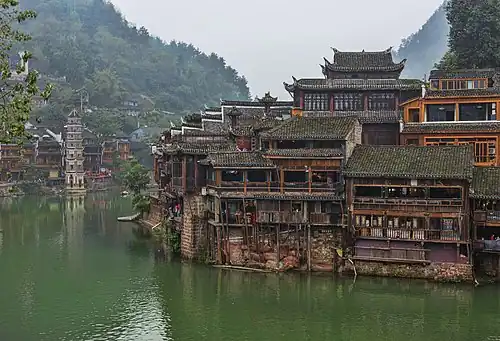
- Fenghuang Ancient Town — around an hour by road. The most-photographed old town in southern China; stilt houses lining the riverfront.
- Zhangjiajie & Wulingyuan — a few hours by road. The sandstone-pillar landscape that inspired Avatar's floating mountains.
- Furong Ancient Town — around two hours. A Tujia village built around a waterfall, dramatic at night.
- Mengdong River drifting — whitewater rafting through gorges near Yongshun, summer only.
- Jishou — about 40 minutes. Prefectural capital; useful for transit, supermarkets, and night-market food.
- Tongren and Fanjingshan, in neighbouring Guizhou — around 3 hours. A UNESCO-listed sacred Buddhist mountain with pinnacle temples.
Nearby in Hunan Sheng
More places to explore around Dehang.
Guide content as of July 2026. Portions adapted from Wikivoyage, CC BY-SA 4.0.

Contact Us
Get in touch with us.
Get in touch
Contact Us
Tell us where you'd like to go and how you like to travel. A real Tripcuro planner — not a bot — will craft an itinerary around you.
- Personalised, hassle-free planning end-to-end
- Transparent pricing, no hidden costs
- 24/7 support for complete peace of mind