
Changde
Hunan Sheng, China
Why visit Changde?
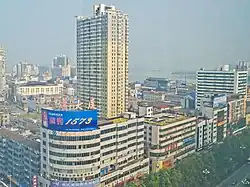
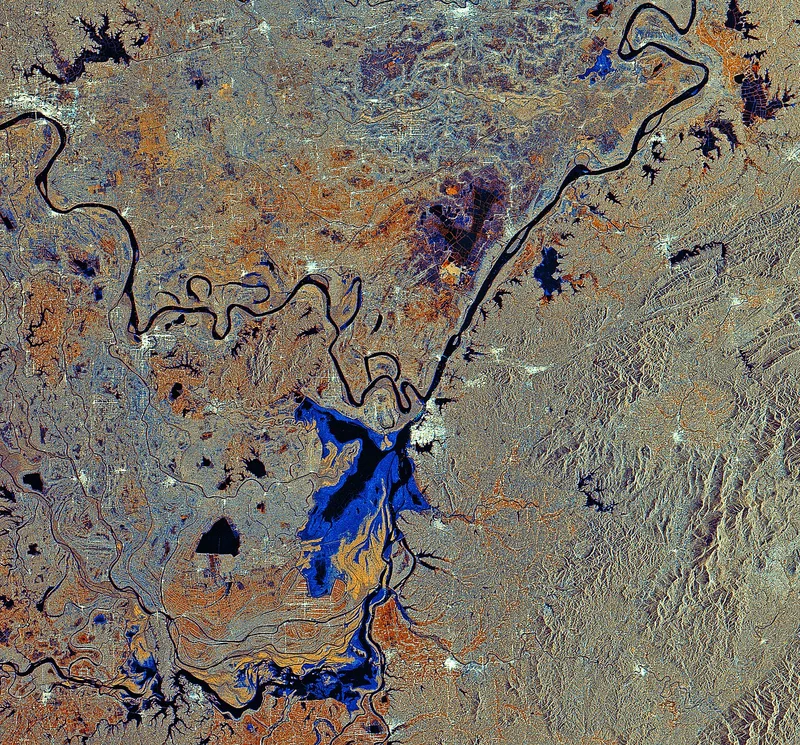
Changde has been settled for thousands of years and historically went by the name Wuling, a name that survives in its central Wuling District. The city sits on a flat river plain on the north bank of the Yuan River, and its character has long been shaped by water — fishing on Liuye Lake, river trade down to Dongting Lake, and the recurring need to manage floods (hence the Poetry Wall, which doubles as a levee). Today's urban core, spread across Wuling District and Dingcheng District, is home to well over a million people, with the broader prefecture considerably larger.
For travellers, Changde works well as a one- or two-night stop between Changsha and the Wulingyuan/Zhangjiajie scenery. The main pleasures are walkable: an evening stroll along the illuminated Poetry Wall, a bowl of the city's famous beef rice noodles, and a half-day at Liuye Lake, plus a longer day trip out to Taohuayuan. Changde isn't a major tourist draw on the scale of Changsha or Zhangjiajie, which is part of its appeal — prices are reasonable, crowds are mostly local, and the food is excellent.
Changde has a subtropical humid monsoon climate with four distinct seasons, though spring and autumn are short. Summers (June–August) are long, hot and humid, with the year's heaviest rainfall. Winters (December–February) are cold and damp. The most comfortable months to visit are mid-March to late April and late September to early November, when temperatures are mild and rainfall eases.
Planning Changde? Tell us your dates and we’ll tailor the trip.
Ask on WhatsAppHow do you get there?
By Plane
Changde Taohuayuan Airport (CGD) lies northwest of the city centre and handles domestic routes to major Chinese cities including Beijing, Shanghai, Guangzhou and Shenzhen. There are no scheduled international services. An airport shuttle bus and a dedicated city bus route connect the airport to the centre; taxis are also available on a metered fare.
By Train
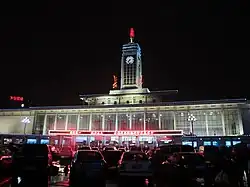
Changde Railway Station sits on the line between Changsha and Zhangjiajie, with onward connections across China's national rail network. A high-speed corridor brings the trip to Changsha down to roughly two hours; services to Zhangjiajie take a couple of hours more. Long-haul rides to Beijing are far faster by flying into CGD or taking the high-speed train via Changsha.
Book tickets via the official 12306 app or website (an English interface is available, and foreign passports are accepted) and book several days ahead around major holidays (Spring Festival, May Day, October Golden Week), when seats sell out fast. Carry your passport — it doubles as your ticket at the gate.
By Car / Road
National highways and expressways connect Changde to Changsha (roughly two and a half hours southeast), Zhangjiajie (a similar distance west) and Yueyang (around two hours east).
Long-distance buses use several terminals around the city, each oriented to a different direction — broadly north (toward Zhangjiajie and Cili), south (toward Taohuayuan), east (toward Yueyang and Huarong) and a central terminal serving Changsha and points south. Ask your hotel which terminal serves your destination, as this changes from time to time.
Changde is compact and largely flat, and the central downtown — Walking Street, the Poetry Wall and the riverside parks — is best explored on foot.
- City buses: dozens of routes with a flat, low fare on all routes except the dedicated airport line. Pay in cash or via Alipay/WeChat Pay; foreign-issued cards generally won't work on the city transit payment system, so set up a mobile payment app before you arrive.
- BRT (Bus Rapid Transit): Changde's BRT was the first in Hunan Province and is a quick way to cross the city centre on dedicated lanes.
- Taxi: a modest starting fare, then metered. Insist on the meter ("dǎ biǎo" / 打表). Have your destination written in Chinese characters.
- Ride-hailing: Didi (滴滴) works well in Changde and is generally cheaper and easier than flagging cabs at night. Link a payment method in advance.
- Walkability: the Poetry Wall, Walking Street (Buxingjie) and the Yuan River promenade form a very walkable cluster. Liuye Lake on the northeastern edge of town is a bus or taxi ride away.
What are the things to do?
Changde Poetry Wall (诗墙公园) — the city's signature sight. A multi-kilometre flood wall along the north bank of the Yuan River, engraved with hundreds of Chinese poems, set into a riverside park. Beautiful even if you can't read the characters; particularly atmospheric at night when the coloured lighting comes on. Free, open around the clock.
Buxingjie / Walking Street (步行街) — the city's main pedestrian shopping spine, lined with clothing brands, shoe shops, supermarkets and Western-style food outlets. Best in the early evening when locals are out.
Peach Flower Garden / Taohuayuan (桃花源) — in Taoyuan County, roughly 35 km southwest of the city and accessible by bus. The garden traditionally associated with Tao Yuanming's Peach Blossom Spring, the original "hidden utopia" of Chinese literary tradition. Walking paths weave through bamboo groves, peach orchards (spectacular in late March/early April when the blossoms peak), pavilions and small temples. A multi-day admission ticket is typical, so it's possible to split a visit over more than one day if you stay overnight nearby.
Bin Lake Park (滨湖公园) — a pleasant lakeside park with a small selection of family-friendly rides, making it a good stop with kids. Free entry; rides priced individually.
Liuye Lake (柳叶湖) — a large urban lake on the northeastern edge of the city, with promenades, boat hire and a surrounding scenic area. A relaxed half-day out from the centre.
Stroll the Poetry Wall after dark — go once the coloured lighting illuminates the engravings, usually in the evening. Locals come out to walk, chat and dance in the riverside park.
Day trip to Taohuayuan — leave early, allow a full day, and aim for late March/early April if you want to catch the peach blossoms.
Walking Street people-watching — Buxingjie is at its liveliest in the warm months from late afternoon onwards; pair with dinner at one of the beef noodle stalls nearby.
Bin Lake Park with kids — small-scale and cheap, a low-key family afternoon.
Boating and a lakeside walk at Liuye Lake — a relaxed way to spend a morning outside the city centre.
Planning Changde? Want these on a customised itinerary?
Ask on WhatsAppWhere to eat?
Changde sits firmly within the Hunan culinary tradition — bold, spicy, and heavy on chillies and pickled flavours — but with its own riverine specialties built around freshwater fish, beef and rice noodles. If you eat in only one place, make it a beef noodle joint for breakfast.
- Changde beef noodles (常德牛肉粉) — the city's signature dish: thick, slippery rice noodles in a spiced beef broth, topped with stewed beef. Found at neighbourhood noodle shops citywide, especially around Walking Street and near local schools. A bowl is inexpensive by any standard.
- Changde sauce-salted duck (常德酱板鸭) — crispy-skinned, tender-fleshed marinated duck, sweet-savoury and a regional point of pride. Sold by street vendors and specialty shops across town; vacuum-packed versions travel well as gifts.
- Spicy pork dishes — rich, fragrantly spicy in classic Hunan style. Most local restaurants and hotpot places carry a version; if you don't handle chillies well, ask for "bù tài là" (not too spicy).
- Sausage (香肠) — a traditional local sausage found at street food stalls and as packaged gifts at specialty shops.
Dietary notes: vegetarian options are limited — most Hunan dishes assume meat or lard. Look for Buddhist-vegetarian (素食) restaurants near temples, or stick with tofu/vegetable dishes (素菜) and noodle shops where you can order plain. Halal (清真) noodle shops, often run by Hui Chinese, are present in most Chinese cities — look for green signage with Arabic script.
Where to drink?
- Regional tea-drinks chains, including the cult Hunan tea-drinks brand that started in Changsha, have branches in Changde's shopping areas.
- Sugar water (糖水) — Hunan has a strong sugar-water tradition: red bean soup, mung bean soup and other sweet broths served chilled in summer to cool down. Sold by street vendors and many sit-down restaurants.
- Local beer and baijiu — Hunan's drinking culture leans on baijiu (white liquor) at meals; cheap, cold local lager is the everyday alternative at restaurants.
Water safety: do not drink the tap water. Boiled water is provided free at hotels and most restaurants; bottled water is cheap and ubiquitous.
Planning Changde? We’ll book the stays and dining for you.
Ask on WhatsAppWhere to stay?
Changde has the usual spread of Chinese budget-chain hotels clustered around the railway station and Walking Street, with mid-range business hotels further into the centre. Book ahead around national holidays.
What should you buy?
Shopping in Changde is local rather than touristy; the appeal is everyday markets and Hunan specialties to take home, not luxury or curated craft.
- General marketplaces south of the river bridge are the largest and cheapest in the city, sprawling across multiple buildings with clothing, shoes, household goods and toys. Bargaining is expected — start at roughly half the asked price and meet in the middle.
- Walking Street (Buxingjie) for branded clothing, shoes and modern shopping in air-conditioned complexes.
- Hunan specialty shops scattered through the centre are the place to buy local food gifts: vacuum-packed salted duck, sausage, dried chillies and Hunan tea.
Where to go next?
- Changsha — around two hours by high-speed train. Hunan's capital, famous for its food scene and historic sites including Yuelu Academy and Orange Isle.
- Zhangjiajie — a few hours by bus or train. The towering quartz-sandstone pillars of Wulingyuan / Zhangjiajie National Forest Park, a UNESCO site, are among China's most striking landscapes.
- Yueyang — around an hour by high-speed train. On the shore of Dongting Lake; visit the Yueyang Tower, one of the great classical towers of southern China.
- Jingzhou (Hubei) — a few hours by high-speed train across the provincial border. A walled ancient city with a near-complete Ming-era city wall.
- Taohuayuan / Peach Flower Garden — around an hour by bus southwest of the city. The literary "hidden utopia" of Chinese poetry; a half- or full-day trip from Changde, best in late March/early April for the peach blossoms.
- Shimen County — northwest of Changde. A quieter, mountainous corner of Hunan with tea plantations and karst scenery, useful as a stepping stone toward Zhangjiajie via a back route.
Nearby in Hunan Sheng
More places to explore around Changde.
Guide content as of July 2026. Portions adapted from Wikivoyage, CC BY-SA 4.0.

Contact Us
Get in touch with us.
Get in touch
Contact Us
Tell us where you'd like to go and how you like to travel. A real Tripcuro planner — not a bot — will craft an itinerary around you.
- Personalised, hassle-free planning end-to-end
- Transparent pricing, no hidden costs
- 24/7 support for complete peace of mind