
Changsha
Hunan Sheng, China
Why visit Changsha?
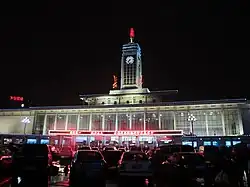
Changsha (长沙, Chángshā) is the capital of Hunan Province, a riverside metropolis of well over ten million people set along the Xiang River in south-central China. The city has more than 2,000 years of urban history on its current site — Changsha County was established in the Qin Dynasty and the Changsha Kingdom in the Western Han — and its Tang-era kilns were among the first in the world to produce underglaze polychrome porcelain, exported as far as the Persian Gulf. Modern Changsha was scarred by a devastating 1938 fire set as part of a scorched-earth policy ahead of a feared Japanese invasion, and by repeated Japanese campaigns during World War II, including the Battle of Changsha — one of the first major Chinese victories against Japan. As a result, most pre-war relics were destroyed, and the city you walk through today is overwhelmingly contemporary: glass-and-LED skyscrapers, pedestrian shopping streets and a thriving nightlife scene fuelled by Hunan Television and a young, image-conscious crowd.
Visitors come for three things: food (Hunanese cuisine is among China's spiciest and most distinctive, and Changsha's street-food culture is legendary), Mao Zedong (he was educated and converted to communism here; a large stone bust of his young self dominates Orange Island in the middle of the river), and the Mawangdui Han tombs in the Hunan Provincial Museum, where a remarkably well-preserved 2,100-year-old body remains one of the most extraordinary archaeological finds in modern China. Layout-wise, the historic centre and most nightlife sit east of the Xiang River in Furong, Tianxin and Kaifu districts; Yuelu District on the west bank is leafier, home to Yuelu Mountain, Hunan University and the historic Yuelu Academy.
The climate is humid subtropical and uncomfortable in high summer — July and August routinely hit the mid-30s°C with crushing humidity, while January and February are cold, grey and damp. The sweet spots are late March to early May and late September to early November, when temperatures sit in the high teens to mid-twenties and the rains ease. April and May are the wettest months; bring a compact umbrella year-round.
Planning Changsha? Tell us your dates and we’ll tailor the trip.
Ask on WhatsAppHow do you get there?
By Plane
Changsha Huanghua International Airport (CSX) sits about 25 km east of the city centre. It is well connected domestically (Beijing, Shanghai, Guangzhou, Shenzhen, Chengdu, Kunming, Xi'an, Hong Kong) and has some international service.
Transport to the centre:
- Maglev (Changsha Maglev Express) — links the airport to Changsha South Railway Station in under 20 minutes; from there, transfer to the metro into the centre.
- Airport bus — runs between the terminal and several points in the city; additional shuttles serve the South Railway Station and South Bus Station.
- Taxi — around 45 minutes on the expressway, metered including tolls. Queue at the official taxi rank outside arrivals; avoid touts inside the terminal.
- Didi (ride-hail) — pickup from a designated lot; often a little cheaper than a metered taxi and easier with luggage.
Visa-free transit: Changsha participates in China's visa-free transit scheme for eligible nationalities travelling onward to a third country, provided you enter and leave mainland China via CSX. Check current eligibility and time limits before relying on this, as rules and durations have changed over time. You must show an onward ticket to a third country at immigration.
By Train
Changsha has two main stations, and which one your train uses matters.
- Changsha Railway Station (长沙站) — the older downtown station, in the heart of Furong District. Conventional ("regular") trains use this station, including long-distance sleepers.
- Changsha South Station (长沙南站) — the high-speed hub on the Beijing–Guangzhou and Shanghai–Kunming corridors, reached by metro in well under an hour from the centre. High-speed trains connect Changsha South to Guangzhou, Wuhan, Beijing, Shanghai and Shenzhen in a few hours each; conventional trains from Guangzhou take much longer but cost a fraction of the high-speed price.
Tickets sell via the 12306 app/website or via Trip.com; you'll need your passport for both purchase and station entry. Buy a few days ahead for high-speed trains on holiday weekends; long-distance sleepers sell out fastest. A commuter intercity railway runs frequent services to the nearby cities of Zhuzhou and Xiangtan.
By Car / Road
Major national expressways pass through Changsha, making it an easy road hub — Wuhan, Zhangjiajie, Guangzhou and Hengyang are all reachable by expressway in a few hours to most of a day depending on distance.
Long-distance buses consolidate at several stations oriented by direction — broadly west (for Zhangjiajie), south (for southern Hunan and Guangdong) and east (for Jiangxi). Road quality on the expressway network is excellent; in-town driving is congested and not recommended for visitors — taxis and metro are faster.
Changsha is a metro-and-taxi city — you rarely need anything else.
- Metro — several lines including the maglev to the airport. Fares scale with distance; use the metro app or Alipay/WeChat Pay QR codes. Key lines for visitors link both main railway stations, the Provincial Museum, Kaifu Temple, Orange Island and Yuelu District.
- Taxis — ubiquitous and metered, with a modest flagfall by day and a small night surcharge. Few drivers speak English; have your destination written in Chinese or pinned on a map.
- Didi (滴滴出行) — works well once you link a payment method, and is generally smoother than flagging a taxi at peak hours.
- Buses — cheap and atmospheric but crowded and signage is Chinese-only.
- Walking — Wuyi Square, Huangxing Road pedestrian street, Taiping Old Street and the Xiang River promenade are all best on foot. The riverside near IFS is particularly pleasant after dark.
Scams are uncommon by Chinese-megacity standards. The usual rules apply: insist on the meter in taxis, ignore unsolicited "tea ceremony" or "art student" approaches in tourist zones around Wuyi Square, and double-check QR codes pasted over legitimate restaurant ones.
What are the things to do?
Museums
- Hunan Provincial Museum — the single must-do in Changsha. Built around the Mawangdui Han tombs, including a remarkably preserved 2,100-year-old body found with intact skin and internal organs, plus an extensive collection of silk paintings, lacquerware and early cartography. Timed-entry tickets are typically free but must be reserved in advance via the museum's official channel; a passport is required. Show up early or you may be ticketed for a slot hours later.
- Changsha Museum — a modern riverside building covering the city's history from neolithic times through the Tang-Dynasty Changsha kilns.
- Changsha Bamboo Slips Museum — houses tens of thousands of carved bamboo slips, Han- and Three Kingdoms–era administrative records unearthed in central Changsha.
- Hunan Embroidery Museum — a small museum introducing Xiang embroidery, one of China's "four great" embroidery traditions, above a working showroom.
- Geological Museum of Hunan and Hunan Science and Technology Museum — neighbouring buildings especially good with kids.
Riverside and parks
- Orange Island (橘子洲, Juzizhou) — a long sandbar in the middle of the Xiang River, the city's signature park. Dominated by a large granite bust of the young Mao Zedong, carved in the late 2000s. Free to walk; a sightseeing tram loops the island. Best at dusk for skyline views; weekend evening fireworks are a Changsha tradition, weather permitting.
- Yuelu Mountain — a forested hill on the west bank, capped with maples that draw crowds in November. Partway up is Yuelu Academy, one of China's great Song-Dynasty academies, founded in the 10th century and still part of Hunan University.
- Aiwan Pavilion — a Qing-era pavilion on Yuelu Mountain, famous for autumn maple views.
- Tianxin Pavilion — the only surviving section of the Ming-Dynasty city wall, in a quiet park.
Old streets and temples
Taiping Old Street — a short cobblestone lane in the centre lined with Qing-style shophouses, tea bars and street-food vendors. Touristy but atmospheric in the evening.
Kaifu Temple — an active Buddhist monastery with roots going back a millennium.
Eat your way through the old snack streets at night — one of the most enjoyable evenings in Changsha is working through the local street-food repertoire: fried stinky tofu, sticky rice cakes, grilled skewers and sweet rice wine. Plan two hours and arrive hungry.
Catch the weekend fireworks over the Xiang River, best viewed from Orange Island itself or the east bank.
Hike Yuelu Mountain at sunrise, climbing past Aiwan Pavilion and the academy; a cable car is available for the descent if your knees object.
Wuyi Square and the IFS shopping complex — China's largest urban shopping clusters in this area; a strong food hall and rooftop viewing terraces reward a wander even if you're not buying.
Hunan TV pilgrimage and theme parks — Mango TV's studios draw mainland fans, and a full-size theme park in the eastern suburbs is a popular family day out.
Day trip to Shaoshan — Mao Zedong's birthplace, covered under "Go Next."
Planning Changsha? Want these on a customised itinerary?
Ask on WhatsAppWhere to eat?
Changsha is one of China's great eating cities. Hunan cuisine (Xiang cai, 湘菜) is built on fresh chillies, fermented chillies, smoked pork, and the sour note of pickled vegetables — distinctly different from neighbouring Sichuan, where numbing peppercorns dominate. Signature dishes to seek out:
- Stinky tofu (臭豆腐) — black-fermented, deep-fried, served with chilli and pickle.
- Mao's red-braised pork (毛氏红烧肉) — slabs of belly pork lacquered in rock-sugar caramel and soy, reputedly the Chairman's favourite.
- Steamed fish head with chopped chillies (剁椒鱼头) — bighead carp head topped with a brick of red and yellow pickled chillies.
- Sugar-oil rice balls (糖油粑粑) — sticky rice balls glazed in dark sugar syrup.
- Crayfish (小龙虾) — the summer obsession, eaten by the kilo at riverside stalls.
- Rice noodles (米粉) — Changsha-style is round, in a clear pork broth, topped with stewed beef or pork belly. The local breakfast.
The old snack halls around Pozi Street and Taiping Street are the place for street-food grazing; look for stalls with long local queues rather than the loudest touts. For a sit-down meal, mid-range Hunan-cuisine restaurants are found throughout the city, and the immersive retro-themed food complexes near Wuyi Square (built to resemble 1980s Changsha tenements) are worth an hour even if the queue for a table runs long on weekends.
Dietary notes. Vegetarian options exist but require effort — small lard additions are common. Look for Buddhist-temple restaurants near Kaifu Temple, or order tofu, leafy greens and clay-pot mushroom dishes specifically requested without meat. Halal restaurants cluster around Changsha's Muslim community; look for the green "清真" sign. Gluten-free is difficult given the ubiquity of soy sauce and noodles.
Where to drink?
- Tea — Hunan is a major black-tea region (Anhua dark tea, Junshan silver needle from neighbouring Yueyang). A traditional teahouse on Taiping Old Street is a good place for an afternoon pot.
- Bubble tea, the Changsha way — Changsha is the birthplace of a cult mainland tea-drinks chain recognisable by its mock Ming-Dynasty packaging, with dozens of branches around the city; it is still relatively rare outside Hunan, so this is the place to try it.
- Beer and cocktails — a cluster of mid-market bars and clubs operates in the city's nightlife districts; look for streets near the universities and the riverside for the liveliest scene.
- Baijiu — Hunan's local distillates are strong (50%+ ABV) — sip, don't shoot.
- Water — tap water in Changsha is not safe to drink unboiled. Hotels provide kettles and bottled water; bottled water is cheap in any convenience store. Ice in established restaurants and chains is generally fine.
Planning Changsha? We’ll book the stays and dining for you.
Ask on WhatsAppWhere to stay?
Changsha has the full range of Chinese accommodation, from budget chain hotels near Wuyi Square and the railway stations to international five-star properties in the newer riverside business districts, including some occupying the upper floors of the city's tallest towers with commanding views. Book ahead for national holidays.
What should you buy?
- Huangxing Road Pedestrian Street — the main downtown shopping spine between Wuyi Square and Taiping Street: mid-market fashion, Chinese cosmetics, casual food.
- IFS Changsha — full-line international luxury brands alongside mainland favourites. The most efficient one-stop for international brands.
- Taiping Old Street — souvenirs, embroidered fans, dried Hunan chillies, smoked tofu and bagged spicy snacks for the journey home.
- Hunan embroidery (湘绣) — the local Xiang style is one of China's "four great" embroidery traditions, famous for double-sided pieces where front and reverse show different images. The Hunan Embroidery Museum and its attached showroom are a reliable starting point.
- Liling porcelain — produced just south of Changsha; underglaze polychrome wares are the regional speciality. The Hunan Provincial Museum gift shop carries reliable reproductions.
Bargaining norms: prices are fixed in malls, supermarkets and most restaurants. Bargain at street markets and in standalone craft shops — start around 40–50% of the asking price. Cash is rarely needed; almost everywhere takes WeChat Pay or Alipay.
Where to go next?
- Shaoshan — around 1.5–2 hours by high-speed train or tour bus. Mao Zedong's birthplace and a major pilgrimage site; expect crowds of domestic tour groups but the village setting is peaceful.
- Zhangjiajie — a few hours by high-speed train or expressway; the sandstone-pillar landscape that inspired Avatar's floating mountains. Plan at least a couple of days.
- Yueyang — around an hour by high-speed train; home to Yueyang Tower, one of the great classical towers of southern China, and the southern shore of Dongting Lake.
- Mount Heng (Hengshan) — reached via Hengyang; one of the five sacred Taoist mountains, particularly atmospheric in mist.
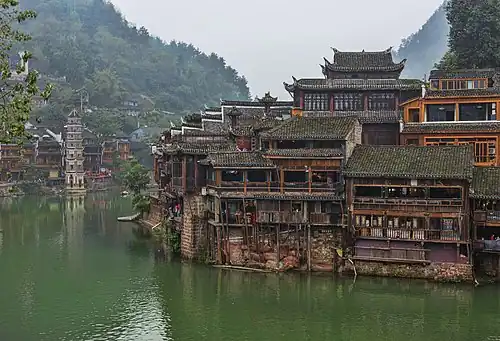
- Fenghuang — several hours by train and bus via Jishou; a Qing-Dynasty riverside old town in western Hunan, touristy but genuinely beautiful at night.
- Wuhan — a little over an hour on the high-speed line; the great Yangtze city, with the Hubei Provincial Museum as the natural counterpart to Hunan Provincial Museum.
Nearby in Hunan Sheng
More places to explore around Changsha.
Guide content as of July 2026. Portions adapted from Wikivoyage, CC BY-SA 4.0.

Contact Us
Get in touch with us.
Get in touch
Contact Us
Tell us where you'd like to go and how you like to travel. A real Tripcuro planner — not a bot — will craft an itinerary around you.
- Personalised, hassle-free planning end-to-end
- Transparent pricing, no hidden costs
- 24/7 support for complete peace of mind