
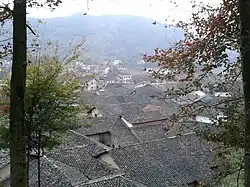
Zhangguying Village
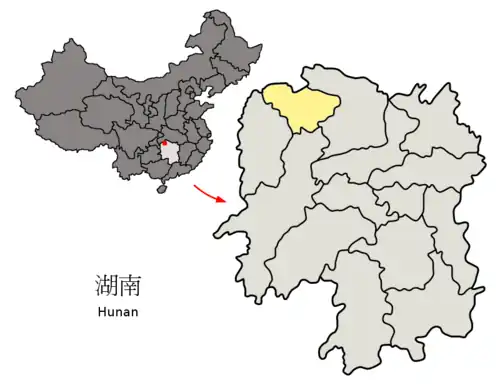
Hunan Sheng, China
Why visit Zhangguying Village?
Zhangguying Village (张谷英村) is a historic Chinese village located in Yueyang County, northeastern Hunan Province, about 70 km southeast of Yueyang city. Named after its founder, Zhang Guying, a Ming Dynasty official who established the settlement in the 14th century, the village is one of China's best-preserved examples of traditional single-family-clan architecture. The entire village was built as a continuous, interconnected complex by the Zhang family descendants over 600 years, with over 1,700 rooms connected by a network of covered corridors and courtyards.
The village's architecture is famous for its "skywell" design — open-air courtyards that collect rainwater and provide natural light and ventilation. The buildings are arranged along three winding streams, with stone bridges and water channels running through the settlement. Zhangguying has a humid subtropical climate with hot, humid summers and cool winters. Spring and autumn are the most pleasant seasons for visiting.
Planning Zhangguying Village? Tell us your dates and we’ll tailor the trip.
Ask on WhatsAppHow do you get there?
By Plane
The nearest major airport is Changsha Huanghua International Airport (CSX, IATA), about 130 km southeast (2 hours by car). Yueyang Sanhe Airport (YYA, IATA) is closer, about 70 km north, with limited domestic flights.
By Train
The nearest railway station is Yueyang East Railway Station (岳阳东站) on the Beijing–Guangzhou high-speed line. From Yueyang, take a bus or taxi to Zhangguying Village (1.5 hours, ¥150 by taxi). From Changsha, take a high-speed train to Yueyang (30 minutes, ¥60) and continue by road.
By Car / Road
Zhangguying is accessible via the G4 Beijing–Hong Kong–Macau Expressway, exiting at Yueyang and following county roads. Driving from Changsha takes about 2.5 hours, from Yueyang 1.5 hours. Direct buses from Yueyang run twice daily (¥30).
The village is entirely pedestrianised and easily explored on foot within a few hours. The main complex is divided into three sections — Dangmen, Pailou, and Xinsheng — each with its own entrances and courtyards but all interconnected.
What are the things to do?
Dangmen Compound (当大门): The main entrance complex, the largest section of the village with the ancestral hall and the most impressive courtyard architecture. Entry included in village ticket.
Pailou Compound (牌楼屋): A section known for its ornate carved wooden beams and decorative stone archways.
Xinsheng Compound (新声屋): The newer section, dating from the Qing Dynasty, with more intricate wood carvings.
Ancestral Hall (张氏宗祠): The family temple dedicated to Zhang Guying and subsequent ancestors — the spiritual centre of the village.
Streams and Bridges: The three streams (Dangmen, Pailou, and Xinsheng) that flow through the village are crossed by 62 stone bridges, many dating from the Ming Dynasty.
Zhangguying Museum: Located within the complex, housing artefacts from the Zhang family history.
Wander the covered corridors: Explore the network of 600-year-old covered walkways that connect every building in the village (the longest stretches 1 km without stepping outdoors).
Photography: The traditional architecture, roof lines, and water channels make this a photographer's paradise.
Listen to the locals' stories: Many elderly Zhang family descendants still live in the village and are happy to share its history.
Tea in a courtyard: Several courtyards have small tea tables where you can sit and absorb the atmosphere.
See traditional cooking: Some residents still cook over wood fires in the ancient kitchens — ask politely and you may be invited to look.
Planning Zhangguying Village? Want these on a customised itinerary?
Ask on WhatsAppWhere to eat?
Several village-run restaurants serve simple local fare:
- Zhangguying tofu (张谷英豆腐): Fresh local tofu served with a light soy and chilli sauce.
- Hunan smoked pork (湖南腊肉): Smoked locally and served steamed or stir-fried with garlic shoots.
- Wild vegetables (山野菜): Seasonal greens foraged from the surrounding hills.
- Farmhouse chicken (农家鸡): Free-range chicken braised with ginger and spring onions.
- Bamboo rice (竹筒饭): Sticky rice steamed in bamboo tubes.
Where to drink?
Green tea is the default beverage. There are no bars — the village is quiet after dark.
Planning Zhangguying Village? We’ll book the stays and dining for you.
Ask on WhatsAppWhere to stay?
- Budget: Village Homestays (农家乐) — simple rooms in the village's historic houses from ¥80/night.
- Mid-range: Zhangguying Holiday Hotel (张谷英度假酒店) — a modern hotel just outside the village, from ¥200/night.
- Upscale: No dedicated upscale option; the best choice is a well-rated village homestay.
What should you buy?
The village has small stalls selling local handicrafts, including bamboo weaving, embroidery, and miniature wooden models of the village architecture. Local snacks include preserved plums and sesame sweets.
Where to go next?
- Yueyang (70 km north, 1.5 hours by car) — famous for Yueyang Tower on Dongting Lake, one of China's great ancient towers.
- Changsha (130 km southeast, 2 hours by car) — Hunan's capital with the Hunan Museum, Yuelu Mountain, and Orange Isle.
- Mila Mountain (密蜡山): A scenic mountain with hiking trails and temples, about 30 km from the village.
- Dongting Lake: One of China's largest freshwater lakes, accessible via Yueyang — take a birdwatching boat trip in winter.
Nearby in Hunan Sheng
More places to explore around Zhangguying Village.
Guide content as of July 2026.

Contact Us
Get in touch with us.
Get in touch
Contact Us
Tell us where you'd like to go and how you like to travel. A real Tripcuro planner — not a bot — will craft an itinerary around you.
- Personalised, hassle-free planning end-to-end
- Transparent pricing, no hidden costs
- 24/7 support for complete peace of mind