
Mount Heng
Hunan Sheng, China
Why visit Mount Heng?
Mount Heng (衡山, Héng Shān), known formally as Nanyue Hengshan (南岳衡山, "Southern Sacred Mountain"), is the southernmost of China's Five Great Mountains and one of the country's most enduring centres of religious pilgrimage. Rising from the rolling Hunan countryside between the cities of Hengyang and Changsha, the range stretches around 150 km north–south and culminates at Zhurong Peak (roughly 1,300 m), named for the legendary fire deity. The mountain has been an imperial pilgrimage site for more than two millennia and is unusual among the Five Great Mountains in that both Buddhism and Taoism flourish here side-by-side, with active temples, monks and nuns still in residence. The town at its foot, Nanyue, is essentially one long temple street leading up to the gate of the scenic area.
The character of a visit to Hengshan is shaped above all by mist, incense and stone-paved stairs. Pilgrims still come to burn bundles of incense at the Nanyue Grand Temple, especially around the lunar 8th month, while hikers and photographers chase the mountain's famous natural spectacles: sunrise from Zhurong Peak, a sea of clouds, the winter snowscape, and a moonlit night. The mountain is heavily forested with pine, cypress and bamboo, and is one of the greener of the Five Great Mountains — locals often describe it as elegant rather than grand or dangerous, in contrast to some of the other sacred peaks.
Spring (April–May) and autumn (September–early November) are ideal times to visit — clear air, cool temperatures, and the chance of cloud-sea sunrises. Summer is warm and very crowded with domestic tourists fleeing the lowland heat; rain and afternoon storms are frequent. Winter brings genuine snow above about 800 m, which is itself a draw, but trails ice over and some facilities close. Avoid the first week of October (Golden Week) and Chinese New Year unless crowds are part of the appeal. Visitors split their time between Nanyue town (temples, food, accommodation) and the scenic area uphill, which runs from the South Heaven Gate via a mid-mountain pavilion up to Zhurong Peak.
Planning Mount Heng? Tell us your dates and we’ll tailor the trip.
Ask on WhatsAppHow do you get there?
By Plane
The nearest major airport is Changsha Huanghua International Airport (CSX), roughly 130 km north of Nanyue. From the airport, the most practical route is the airport shuttle or metro into central Changsha, then a high-speed train south. A direct taxi or chartered car from CSX to Nanyue takes about 1.5–2 hours on the expressway.
A smaller alternative is Hengyang Nanyue Airport (HNY), closer to the mountain but with limited domestic connections.
By Train
The high-speed rail station for the mountain is Hengshan West Railway Station, on the Beijing–Guangzhou HSR line, some distance from Nanyue town; frequent trains connect it to Changsha South (around 30 minutes), Hengyang East (around 15 minutes), Guangzhou South (around two hours) and Wuhan (around two hours). Shared taxis and shuttle buses run from the station forecourt into Nanyue; agree the fare before getting in.
An older conventional-rail station in town still sees slower trains and is more convenient if you happen to be on one of those services. Book HSR tickets via the 12306 app or Trip.com a few days ahead in peak season.
By Car / Road
Nanyue sits just off a major north–south expressway. Approximate drive times: Changsha around two hours, Hengyang around 50 minutes, Wuhan five to six hours, Guangzhou six to seven hours.
Road quality on the expressway is excellent; the final approach into Nanyue town is a wide boulevard. Long-distance coaches connect Nanyue's bus station with Changsha, Hengyang and nearby cities.
In Nanyue town, almost everything of interest — the Grand Temple, the food street, the scenic area gate — is within a 15–20 minute walk. A local bus loops between the HSR station, the bus station and the mountain entrance.
To go up the mountain, you have three options, often combined:
- Sightseeing bus — a compulsory shuttle from the main gate up to the South Heaven Gate. Buy the ticket together with your scenic-area entry.
- Cable car — from a mid-mountain point up to near the South Heaven Gate, useful if you want to skip the lower forest section.
- Hike — the classic stone-step ascent from the foot of the mountain to Zhurong Peak is a serious undertaking, roughly 15 km one-way, taking a fit walker several hours. Most visitors hike one direction and use the bus/cable car the other.
Ride-hailing: Didi works in Nanyue, though supply is thin late at night. Cash, WeChat Pay and Alipay are universally accepted; foreign cards are not. Scams: outside the scenic area gate, freelance "guides" and incense-sellers can be pushy — official incense is available inside the temples and there is no need to buy large bundles outside. Agree any private-car or unmetered taxi fare in writing before setting off.
What are the things to do?
Temples and religious sites
- Nanyue Grand Temple — the largest temple complex in southern China and the single most important sight in town. A nine-courtyard imperial-style compound modelled in part on the Forbidden City, with Taoist halls on one side and Buddhist halls on the other. Located at the north end of Nanyue town, a short walk from the scenic area gate.
- Zhusheng Temple — an important Chan (Zen) Buddhist monastery in Nanyue town, much quieter than the Grand Temple and a good place to see daily monastic life.
- Nantai Temple — a mid-mountain Buddhist temple, considered an ancestral site of an important Zen lineage and a pilgrimage point for some Japanese Buddhists.
- Fuyan Temple — a historic temple associated with an important Chan Buddhism lineage, set among ancient trees on the mountainside.
- A small library pavilion, prized as much for the surrounding old-growth forest as for the building itself.
Peaks and viewpoints
- Zhurong Peak (roughly 1,300 m) — the summit, crowned by a small stone temple to Zhurong, the god of fire. The classic spot for sunrise over the sea of clouds; dress for sub-zero wind chill even in summer.
- A purpose-built sunrise-viewing terrace just below the summit, with railings and steps.
- Secondary peaks reachable by short detours from the main ridge.
Natural features
A waterfall pool on the lower slopes, traditionally one of the region's famous natural features.
A quiet mid-mountain pond and pavilion, associated with a famous Chan Buddhism story about polishing a tile into a mirror.
Climb for the sunrise. The standard pilgrim experience: arrive at Nanyue by afternoon, sleep at a guesthouse near the South Heaven Gate or at the summit, then walk the final stretch to Zhurong Peak in the dark for first light. Bring a head torch, gloves and a windproof layer.
Burn incense at Nanyue Grand Temple. Hengshan is considered especially efficacious for prayers about longevity, family and exam success — you'll see students in spring and elderly devotees year-round. Buy a modest bundle at an official stall inside the complex rather than outside.
Walk the full stone-step pilgrim route. The traditional ascent past the mid-mountain pavilion to the summit is a serious half-day hike and the most rewarding way to experience Hengshan.
Stay overnight on the mountain. A handful of guesthouses cluster around the South Heaven Gate, so you can be on the summit within half an hour or so of waking.
Day-trip to Hengyang. The city south of the mountain is home to the historic Shigu Academy and Huiyan Peak, the southernmost peak of the Hengshan range.
Autumn maple viewing along the ridge trails, peaking from late October into November.
Planning Mount Heng? Want these on a customised itinerary?
Ask on WhatsAppWhere to eat?
Hunan cuisine (Xiang cài, 湘菜) is one of China's major regional traditions, and it is famously hot, smoky and sour — chilli is used more aggressively here than in better-known Sichuan cooking, but with less mouth-numbing peppercorn. Around Hengshan the cuisine takes on a mountain twist with wild bamboo shoots, mushrooms, and freshwater fish; there is also a sizeable vegetarian tradition driven by the Buddhist monasteries, and most temple restaurants serve excellent meat-free set meals.
Signature dishes to look for include a multi-course vegetarian temple banquet built from tofu, gluten and mushroom in place of meat; a famous rich braised pork dish associated with Mao Zedong, who was born in nearby Shaoshan; smoky cured pork steamed with dried vegetables; fried stinky tofu; and a vinegar-and-chilli braised chicken dish that is a classic Hunan banquet order.
The food street running from the Grand Temple toward the scenic-area gate in Nanyue town has dozens of small family restaurants; look for one busy with locals and order a rice-noodle breakfast, chilli-fried river fish, or stir-fried wild bamboo. Most mid-range hotels in Nanyue have a dedicated Xiang-cuisine restaurant aimed at domestic tour groups, with generous portions and reasonable prices. The dining hall at Nanyue Grand Temple and the canteens at smaller temples serve simple, cheap monastic meals, while several private restaurants on the temple approach specialise in elaborate vegetarian banquets.
Dietary notes: vegetarian options are unusually easy here thanks to the temple tradition. Halal restaurants are limited but present in Hengyang city. Gluten-free is difficult — soy sauce, wheat noodles and gluten-based mock meat are pervasive.
Where to drink?
Hunan is tea country, and a teahouse afternoon is part of the Hengshan experience. A local green tea grown on the lower mountain slopes is sold loose at almost every souvenir shop and brewed by the pot in temple courtyards. Yellow tea from elsewhere in Hunan also features.
Local rice wine and baijiu appear at every meal; a well-known premium baijiu distilled in western Hunan is the best-known of the province. Beer drinkers will find mainstream domestic lagers everywhere, with a small craft scene emerging only in Changsha. For non-drinkers, the bottled-tea, herbal-tea and fresh-juice culture is excellent — try a chilled sour-plum drink in summer.
Bars and cafés: nightlife in Nanyue town is low-key — a few KTV places and tea houses rather than Western-style bars. For an actual bar scene, day-trip to Changsha or Hengyang.
Water safety: tap water in Hunan, including in Nanyue, is not safe to drink unboiled. Hotels provide a kettle and bottled water; boiled water (开水) is freely available in temples, train stations and most public buildings.
Planning Mount Heng? We’ll book the stays and dining for you.
Ask on WhatsAppWhere to stay?
Most visitors stay in Nanyue town at the base; a smaller number sleep on the mountain near the South Heaven Gate to get the sunrise.
Budget guesthouses cluster along the lanes south of the Nanyue Grand Temple — basic twin or double rooms, communal corridors, often family-run; bargain on arrival in shoulder season. Spartan summit guesthouses near the South Heaven Gate are invaluable if you want the sunrise, though prices rise sharply on weekends and holidays. Mid-range three- and four-star business hotels line the main approach to the scenic-area gate, typically with on-site Hunan restaurants and parking.
For a higher-end stay, many travellers base themselves in Changsha (numerous international five-star hotels, around two hours away by HSR and shuttle) or Hengyang and visit Hengshan as a long day trip.
What should you buy?
Nanyue town's main souvenir streets run along the approaches to the Grand Temple and the scenic area gate. Typical buys:
- Incense and prayer items — Hengshan is one of China's most active incense-pilgrimage sites, and the local bundles, prayer beads and amulets are the iconic souvenir.
- Hunan tea — including yellow tea from elsewhere in the province and locally grown green teas; small shops near the Grand Temple are reasonable, though prices for premium grades reward bargaining.
- Xiang embroidery (湘绣) — Hunan is one of China's "Four Great Embroidery" traditions; small framed pieces make a portable souvenir.
- Bamboo crafts and walking sticks — practical for the climb and a traditional Hengshan keepsake.
- Dried local produce — bamboo shoots, mountain mushrooms, chilli pastes.
Bargaining: expected at souvenir stalls and tea shops; less so in supermarkets, chain stores or restaurants.
Where to go next?
- Hengyang — around 50 km / 50 minutes by road, 15 minutes by HSR. Shigu Academy, Huiyan Peak (the southernmost of the Hengshan range), and a good base for Hunan-cuisine eating.
- Changsha — around 150 km / 30 minutes by HSR. Hunan's provincial capital: the Hunan Provincial Museum (Mawangdui Han tombs), Yuelu Academy, Orange Isle, and the country's most famous night-market food scene.
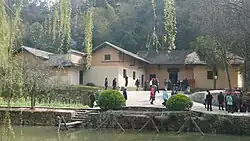
- Shaoshan — around 120 km / two hours by road from Nanyue. Mao Zedong's birthplace and a major "red tourism" pilgrimage site; pairs naturally with Changsha.
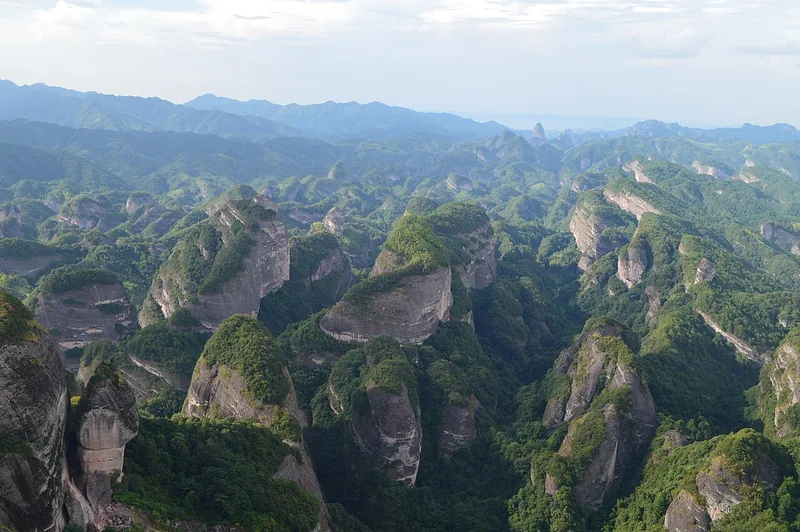
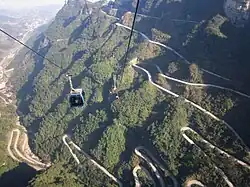
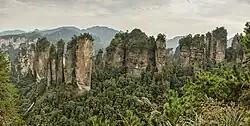
- Zhangjiajie — around 450 km / four hours by HSR via Changsha. Quartz-sandstone pillar landscapes that inspired the floating mountains of Avatar; the headline natural sight of Hunan.
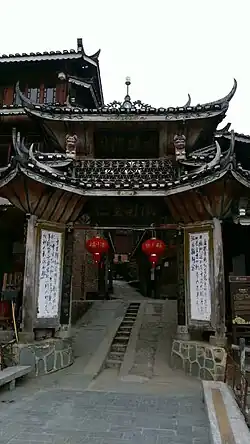
- Fenghuang Ancient Town — around 500 km / five to six hours via Zhangjiajie or Jishou. Riverside Miao-and-Tujia old town of wooden stilt houses; often combined with Zhangjiajie on a single trip.
- Mount Heng (Shanxi) — the other Mount Heng, the Northern Sacred Mountain, near Datong in Shanxi, famous for the Hanging Monastery. A natural pairing if you're collecting the Five Great Mountains, though it's a long way north.
Nearby in Hunan Sheng
More places to explore around Mount Heng.
Guide content as of July 2026. Portions adapted from Wikivoyage, CC BY-SA 4.0.

Contact Us
Get in touch with us.
Get in touch
Contact Us
Tell us where you'd like to go and how you like to travel. A real Tripcuro planner — not a bot — will craft an itinerary around you.
- Personalised, hassle-free planning end-to-end
- Transparent pricing, no hidden costs
- 24/7 support for complete peace of mind